
The contemporary wellness landscape is increasingly dominated by a singular, ambitious goal: the radical extension of both healthspan and lifespan. Driven by high-profile figures such as Dr. Peter Attia, Dr. Andrew Huberman, and biohacker Bryan Johnson, the longevity movement has shifted from a niche scientific interest to a mainstream cultural phenomenon. Millions of people are now seeking to optimize their biology, using data-driven protocols to fend off age-related disease and maintain youthful physiological function into their 90s and beyond. However, this pursuit of the "optimal" has introduced a complex, often expensive, and time-consuming barrier to entry for the average person. While the desire to control one’s health trajectory is understandable, emerging data suggests that the quest for perfection may be unnecessary, and in some cases, counterproductive.

The Myth of the Complex Protocol
A pervasive belief within the longevity community is that the "basics"—standard exercise, a balanced diet, and adequate sleep—are insufficient for those who wish to live well beyond the average life expectancy. This mindset has fostered an industry built on fringe strategies, including extreme dietary restrictions, frequent vitamin infusions, and the use of unproven longevity supplements.

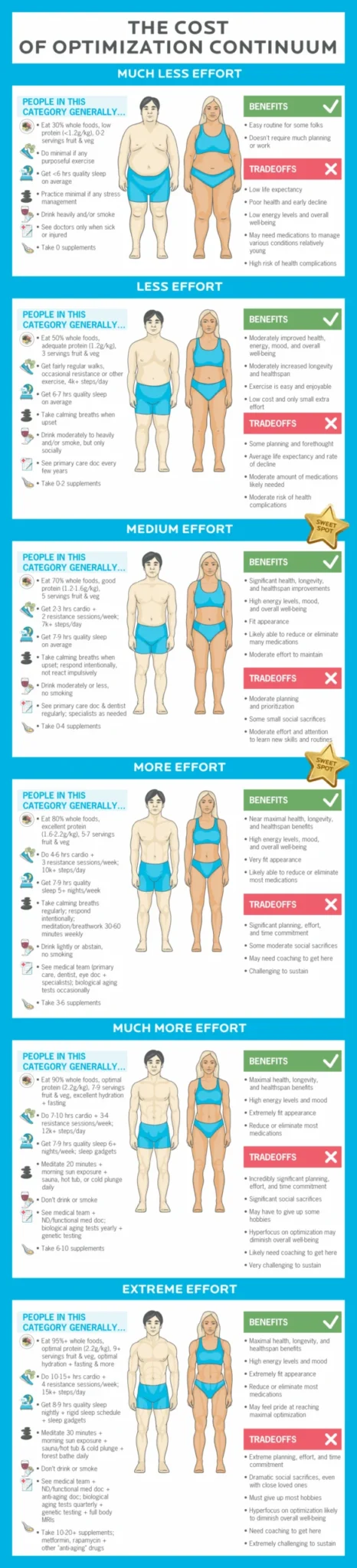
However, empirical evidence indicates that the most significant health outcomes are achieved through consistent adherence to foundational behaviors. According to health data, the primary reason for sub-optimal health in the general population is not a lack of access to "cutting-edge" biohacks, but rather a failure to maintain consistent, simple, and sustainable health habits. Research consistently demonstrates that practicing core health-promoting behaviors with 80 to 90 percent consistency is often enough to reach a state of peak physiological optimization.

The Law of Diminishing Returns in Wellness
As with many biological systems, the relationship between health effort and longevity benefits follows a U-shaped curve, characterized by the law of diminishing returns. Initial investments in health—such as moving from a sedentary lifestyle to moderate physical activity—yield dramatic improvements in health markers and mortality risk. Conversely, as an individual moves toward the extreme end of the "optimization" spectrum, the marginal gains decrease significantly while the costs in time, financial resources, and mental bandwidth escalate.

The financial burden of this "optimizer" lifestyle is substantial. Beyond the baseline costs of nutritious food and gym memberships, the inclusion of frequent biomarker testing, specialized therapies, and high-end supplementation can easily exceed $10,000 annually. For many, the mental toll of managing such a complex regimen can lead to "protocol fatigue," which frequently results in the total abandonment of all healthy habits.

Foundational Pillars of Longevity
If the secret to longevity does not lie in fringe technology, what does the evidence support? The scientific consensus points toward several pillars of health that, when practiced with moderation, provide the highest return on investment.

1. Physical Activity and the U-Shaped Curve
Exercise is arguably the most potent tool for longevity. Studies, including long-term tracking of Harvard alumni, confirm that physical activity reduces all-cause mortality regardless of genetics or initial body weight. The greatest benefits are observed when individuals reach 7.5 to 15 MET-hours per week. However, the "Extreme Exercise Hypothesis" suggests that beyond a certain point—likely 10 hours of intense cardio per week—the risks of cardiovascular issues, such as atrial fibrillation and myocardial fibrosis, begin to rise. Therefore, the objective is to hit the "sweet spot" of moderate to high activity rather than maximum output.

2. The Nutrient-Rich Diet
Nutrition remains a central, yet often over-complicated, pillar. The data is clear: diets high in whole and minimally processed foods are associated with lower rates of cardiovascular disease, type 2 diabetes, and cancer. The goal for most individuals should be a diet where 70 to 80 percent of calories come from whole foods. Furthermore, the "five-a-day" rule for fruits and vegetables remains a gold standard for mortality reduction, with benefits plateauing after five daily servings.

3. The Critical Role of Sleep
Sleep is the physiological foundation upon which health is built. Research indicates that individuals who secure 7 to 9 hours of quality sleep per night live significantly longer than those who do not. Chronic sleep deprivation is a major risk factor for dementia and cardiovascular disease, as sleep provides the brain with the necessary time to clear metabolic toxins.

4. Stress Management and Social Connection
Longevity is not merely physical. The Harvard Study of Adult Development, which has spanned over eight decades, identified strong social relationships as the single most significant predictor of life satisfaction and longevity. The mortality risk associated with chronic social isolation is comparable to smoking 15 cigarettes per day. Concurrently, managing stress is essential; however, the goal is not the elimination of all stress, but rather the development of resilience and the ability to return to a state of equilibrium.

The Socioeconomic Reality
While these foundational behaviors are theoretically accessible, it is imperative to acknowledge the "social determinants of health." Factors such as poverty, systemic racism, and environmental instability create significant barriers to practicing these habits. For many, the privilege of "optimizing" health is a reality reserved for those with the time and financial security to do so. Public health discourse must remain grounded in the understanding that, for much of the population, the challenge is not choosing between two expensive biohacks, but rather finding the resources to maintain basic preventative care.

Implications for the Future
The current obsession with "optimizing" health can, if taken to an extreme, bleed into the territory of orthorexia and obsessive-compulsive behaviors. When the pursuit of health begins to detract from one’s ability to enjoy life, participate in social activities, or pursue personal goals, it ceases to be a health-promoting behavior.

The evidence suggests that the most effective path to a long, high-quality life is not found in the latest fad, but in the sustained, modest application of the basics. By focusing on consistent movement, whole foods, adequate sleep, social connection, and the avoidance of known harms like smoking and excessive alcohol consumption, individuals can achieve the vast majority of longevity benefits without the psychological and financial strain of extreme optimization.

Ultimately, the most successful health strategy is one that is sustainable. As the longevity industry continues to grow, it is critical for individuals to prioritize the "deep health" that encompasses emotional, mental, and existential well-being, rather than viewing the body as a machine to be tuned to peak, yet potentially unsustainable, specifications. The takeaway for the average person is empowering: you are likely closer to your health potential than you realize, provided you remain consistent with the fundamental, science-backed habits that have sustained human longevity for generations.