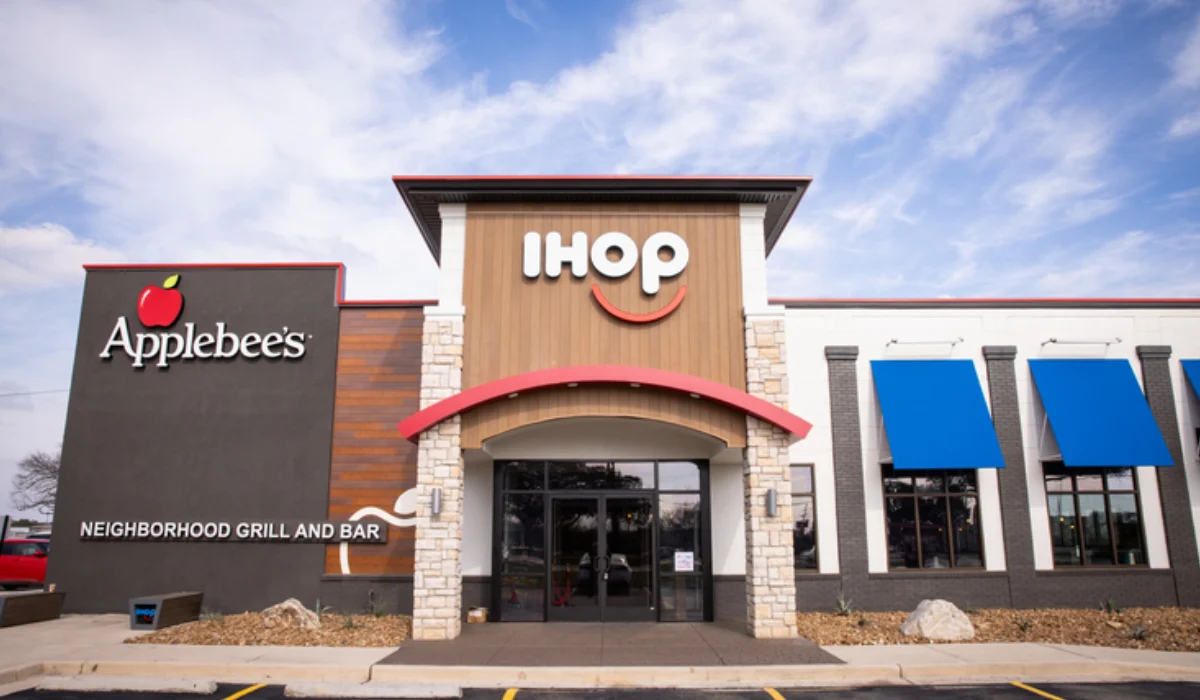

A significant legal battle has erupted within the casual dining industry as a prominent group of Applebee’s franchisees has filed a lawsuit against their franchisor, alleging that the company’s aggressive rollout of dual-branded Applebee’s-IHOP locations violates long-standing territorial exclusivity agreements. The complaint, filed in the U.S. District Court for the District of Kansas, represents a major fracture between Dine Brands Global—the parent company of both Applebee’s and IHOP—and one of its most substantial domestic operators, SSCP Management.
The plaintiffs in the case include Apple Texas Restaurants, Apple Houston Restaurants, Apple Cal, and Apple Vir, all of which are subsidiaries of the Texas-based SSCP Management. Collectively, these entities operate approximately 70 Applebee’s locations across Texas, California, and Virginia. The lawsuit alleges breach of contract, claiming that the franchisor has disregarded protected development zones to facilitate the growth of its new dual-branded concept, a move the franchisees argue will cannibalize their existing sales and devalue their multi-million dollar investments.
The Core of the Dispute: Territorial Exclusivity and Encroachment
At the heart of the legal filing is the concept of "territorial exclusivity." When SSCP Management’s subsidiaries entered into their franchise and development agreements—some dating back to acquisitions made in 2008 and 2012—they were granted specific geographic areas where they held the sole right to operate Applebee’s-branded restaurants. These protections are standard in the franchise industry, designed to ensure that a franchisor does not open a competing location so close to an existing one that it "encroaches" on the original operator’s customer base.
According to the complaint, the franchisor is "contractually prohibited from authorizing Applebee’s restaurants owned by parties other than Plaintiffs to be opened and operated in Plaintiffs’ areas of exclusivity." However, the plaintiffs allege that Dine Brands has signaled a clear intent to ignore these boundaries in favor of its new strategic priority: the dual-branded Applebee’s-IHOP prototype.
The lawsuit specifically highlights a recently opened dual-branded location in Euless, Texas, which the plaintiffs claim sits directly within their protected territory. Furthermore, the filing indicates that the franchisor has announced plans to allow other third-party franchisees to open additional dual-brand units in other exclusive markets controlled by SSCP. The plaintiffs argue that because these dual-brand units feature a full Applebee’s menu and branding, they are, for all legal and practical purposes, Applebee’s restaurants that compete directly for the same pool of casual dining consumers.
The Rise of the Dual-Branded Prototype
To understand why Dine Brands is pushing so aggressively into dual-branding, one must look at the financial performance of these units. The concept involves a single physical building with a shared kitchen that serves both the Applebee’s and IHOP menus. This model is designed to maximize "daypart" efficiency—IHOP dominates the breakfast and brunch hours, while Applebee’s excels during lunch, dinner, and late-night hours.
Before arriving in the United States in early 2025, the dual-branded format saw significant success in international markets. For Dine Brands, the domestic rollout is viewed as the company’s most aggressive growth driver in a decade. Data integrated into the company’s corporate strategy reveals that these stores can achieve 1.5 to 2.5 times higher revenue than a single-brand location. Because the two brands share labor, real estate, and kitchen equipment, the "payback period" for investors is often less than three years—a remarkably fast return for the restaurant industry.
Currently, there are 32 dual-branded prototypes operating in the U.S., including three company-owned sites. Dine Brands has publicly stated its expectation to open at least 50 additional domestic dual-branded stores by 2026. However, this lawsuit suggests that the path to that expansion may be fraught with legal challenges if existing franchise agreements are not reconciled with the new model.
Retaliation Allegations and the Logan’s Roadhouse Conflict
The legal tension between SSCP Management and Applebee’s took a sharp turn toward the personal and operational in April 2025. The lawsuit alleges that after SSCP raised formal objections to the territorial violations, the franchisor retaliated by issuing a "Notice of Default" against the franchisee entities.
This notice was tied to SSCP Management’s recent acquisition of Logan’s Roadhouse, a casual steakhouse chain, from SPB Hospitality. SSCP Management is a diversified holding company with a portfolio that includes Cicis Pizza, Corner Bakery Cafe, and the fine-dining brand Roy’s. The franchisor’s Notice of Default alleged that by owning Logan’s Roadhouse, SSCP was in violation of a noncompete clause that prohibits franchisees from owning a "Competitive Business."
The franchisor demanded that SSCP "cease all involvement in the operation, management, or ownership of Logan’s Roadhouse" or face the immediate termination of their 70 Applebee’s franchise agreements.
SSCP has hit back at this claim in the lawsuit, calling the noncompete allegation unfounded and selective. They argue that Logan’s Roadhouse operates under a "vastly different model" than Applebee’s, focusing on a steakhouse-centric menu and different service formats. Furthermore, the plaintiffs allege that Dine Brands has historically allowed other Applebee’s franchisees to operate brands that are even more similar to Applebee’s without taking any enforcement action. This, the plaintiffs claim, proves that the Notice of Default was a retaliatory tactic intended to silence their opposition to the dual-branded rollout.
Economic Implications and Potential Labor Impact
The stakes of this legal battle extend far beyond a boardroom dispute. SSCP Management represents a massive portion of the Applebee’s footprint in key states. The lawsuit warns that if the franchisor moves forward with terminating the franchise agreements, the consequences would be catastrophic for both the business and the communities it serves.
Specifically, the filing notes that a termination would lead to:
- Operational Cessation: The immediate closure of approximately 70 restaurant locations across three states.
- Mass Layoffs: The displacement of thousands of employees who staff these locations, ranging from servers and cooks to regional managers.
- Capital Loss: The destruction of a franchise enterprise that represents more than $150 million in private investment by SSCP Management.
The plaintiffs are seeking a court declaration affirming that their development agreements remain valid and that they are not in breach of any noncompete clauses. They are also requesting an immediate injunction to prevent Dine Brands from opening any more dual-branded locations within their territories and to block any attempts to terminate their current franchise agreements while the litigation is pending.
A Watershed Moment for the Franchise Model
Industry analysts suggest that this case could serve as a bellwether for the future of multi-branding in the restaurant industry. As parent companies like Dine Brands (Applebee’s/IHOP), Inspire Brands (Arby’s/Dunkin’/Buffalo Wild Wings), and Focus Brands (Auntie Anne’s/Cinnabon) look to co-locate their assets to save on real estate costs, the legal definitions of "territory" are being pushed to their limits.
"The traditional franchise agreement was written for a world where one building equaled one brand," says a legal expert specializing in franchise law. "When you introduce a second brand into that same footprint, you create a hybrid entity. If that hybrid entity is being operated by a different franchisee than the one who owns the territorial rights to one of those brands, you have a classic encroachment scenario."
The case also highlights the shifting power dynamics between large-scale "mega-franchisees" like SSCP and their corporate franchisors. As franchisees grow larger and acquire their own independent brands (like SSCP’s acquisition of Logan’s Roadhouse and Corner Bakery), the potential for conflict regarding noncompete clauses increases.
Chronology of the Conflict
- 2008–2012: SSCP subsidiaries acquire development rights for Applebee’s in Texas, California, and Virginia, securing territorial exclusivity.
- Early 2024: Dine Brands begins discussing the domestic rollout of dual-branded Applebee’s-IHOP units following international success.
- Late 2024: SSCP acquires Logan’s Roadhouse, expanding its diverse hospitality portfolio.
- Early 2025: The first domestic dual-branded units open. SSCP identifies a unit in Euless, Texas, as a violation of its territory.
- April 2025: Applebee’s issues a Notice of Default to SSCP, citing the Logan’s Roadhouse acquisition as a breach of the noncompete agreement.
- Mid-2025: SSCP files a lawsuit in the U.S. District Court for the District of Kansas seeking injunctive relief and damages.
Looking Ahead
As the legal proceedings move forward, the casual dining sector will be watching closely. If the court sides with the franchisees, Dine Brands may be forced to pause its dual-branded expansion or negotiate expensive buyouts of territorial rights from existing operators. If the franchisor prevails, it could signal a new era where corporate entities have more flexibility to innovate with brand-sharing, even at the expense of traditional territorial protections.
For now, the 70 Applebee’s locations operated by SSCP remain open, but the relationship between the brand and its operator has reached an all-time low. With $150 million and thousands of jobs on the line, the resolution of this case will likely define the strategic direction of Dine Brands for years to come.