
Culinary science, the intersection where rigorous physical and chemical principles meet the sensory art of cooking, has experienced a remarkable renaissance in recent years. As home cooks and professional chefs alike seek to demystify the mechanisms behind flavor development, texture manipulation, and chemical reactions in the kitchen, the publishing industry has responded with an influx of authoritative literature. After a prolonged hiatus from curating reading lists that began following his 2014 recommendations, the proprietor of the prominent food science blog Khymos has returned to the digital space to highlight the most significant contributions to culinary science text published in 2020. This curated selection bridges the gap between complex laboratory science and everyday kitchen execution, reflecting a growing global appetite for evidence-based gastronomy.
The Evolution and Main Facts of Culinary Science Publishing
The landscape of food science literature has expanded significantly from its academic origins into mainstream culinary culture. Historically, texts detailing the physics and chemistry of food were largely confined to university curricula, food science degree programs, and technical manuals for industrial food production. However, seminal works over the past few decades have successfully democratized this knowledge, transforming complex molecular gastronomy concepts into accessible guides for domestic kitchens.
The 2020 publishing cycle marked a particularly robust period for this genre, yielding a diverse array of titles that address everything from the neurology of smell to the precise thermodynamic principles of haute cuisine. Prominent among these releases are comprehensive deep-dives into aromatic compounds, pedagogical texts born out of Ivy League classrooms, regional explorations applying scientific scrutiny to traditional spice integration, and instructional workbooks designed to introduce younger generations to foundational STEM concepts through cooking.
Chronology and Historical Context
To understand the weight of the 2020 releases, one must examine the timeline of modern food science literature. The movement gained significant global momentum in the late 1980s and 1990s, anchored by Harold McGee’s groundbreaking publication, "On Food and Cooking: The Science and Lore of the Kitchen." McGee’s work fundamentally altered how writers and cooks approached the kitchen, establishing a precedent for questioning traditional culinary dogma through empirical science.
Throughout the 2000s and 2010s, this foundation enabled the rise of molecular gastronomy popularized by chefs like Ferran Adrià and Heston Blumenthal, alongside academic initiatives such as Harvard University’s Science and Cooking general education course, launched in 2010. By 2020, the genre had matured past mere novelty. Rather than focusing solely on foams, liquid nitrogen, and spherification, authors began turning their attention inward—exploring everyday cooking techniques, global flavor pairings, and the fundamental chemistry of diverse regional cuisines. This evolution set the stage for the wave of literature published in 2020, which emphasized practical applicability, inclusivity of global culinary traditions, and sensory education.
Detailed Analysis of Key 2020 Publications
The 2020 literary crop offers specialized perspectives on how humans interact with food, each bringing a unique methodology to the culinary science discourse.
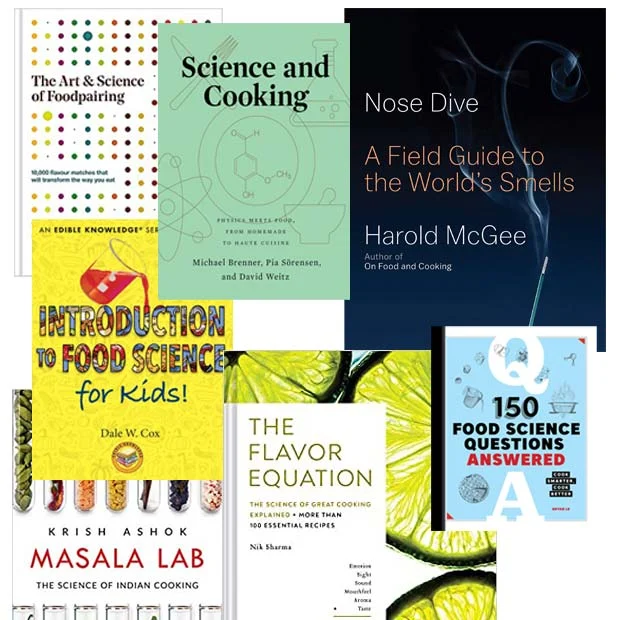
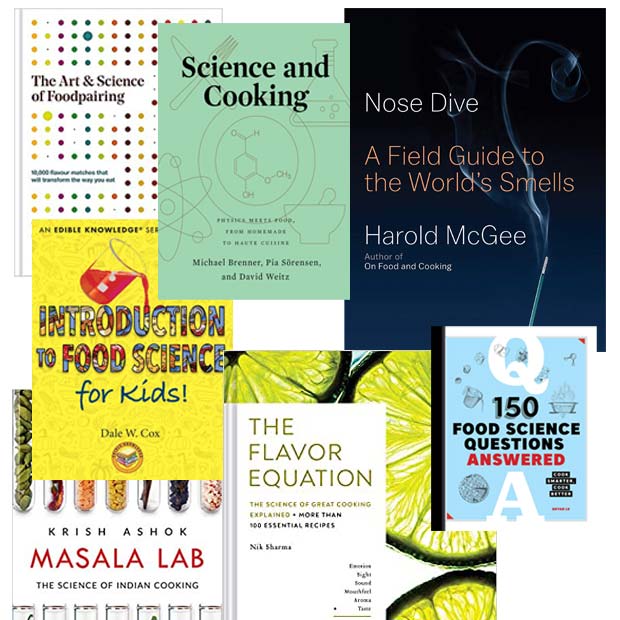
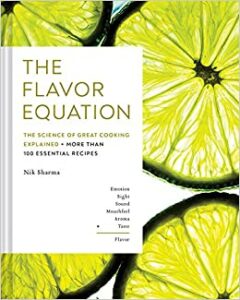
The Flavor Equation by Nik Sharma
Spanning 352 pages, this work integrates approximately 100 distinct recipes with empirical science. What distinguishes Sharma’s approach is the systematic inclusion of "The Flavor Approach" hints embedded within individual recipes, making complex chemical interactions immediately actionable for the home cook. Crucially, the volume dedicates one-third of its content to examining flavor from multi-disciplinary perspectives—including sight, sound, touch, and olfaction—while maintaining accessible language and utilizing metric units for international precision.
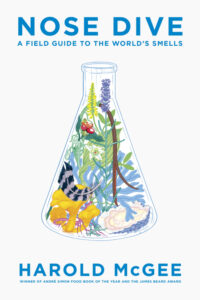
Nose Dive: A Field Guide to the World’s Smells by Harold McGee
As a monumental 688-page reference work, McGee’s latest publication shifts focus from general kitchen physics to the comprehensive study of volatile organic compounds and human olfaction. Moving beyond strictly culinary contexts, the book catalogs smells encountered across the natural and built environments. Although it meticulously identifies volatile molecules, the text is structured to remain approachable to enthusiasts without advanced chemical degrees, cementing McGee’s legacy as the preeminent chronicler of sensory science.
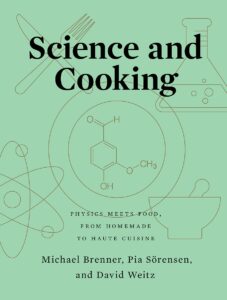
Science and Cooking: Physics Meets Food, From Homemade to Haute Cuisine by Michael Brenner, Pia Sørensen, and David Weitz
Emerging directly from a decade of classroom experience at Harvard University, this 320-page textbook encapsulates a curriculum that has routinely featured world-class chefs and leading scientists. Authored by faculty members whose expertise spans applied mathematics, chemistry, and physics, the book pairs rigorous academic principles with practical recipes. The inclusion of metric measurements further enhances its utility as both an educational resource and a functional kitchen guide.
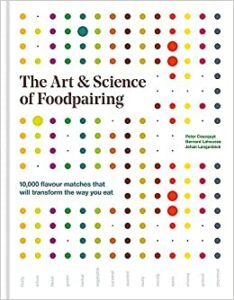
The Art and Science of Foodpairing by Peter Coucquyt, Bernard Lahousse, and Johan Langenbick
Building upon pioneering digital frameworks established by the Foodpairing company—concepts previously debated and analyzed in academic and culinary forums such as The Flemish Primitives conferences—this 388-page book explores the analytical methodology of combining ingredients based on shared aromatic profiles. Acknowledging the debates surrounding flavor pairing algorithms, the authors successfully delineate where empirical data concludes and intuitive culinary artistry begins.
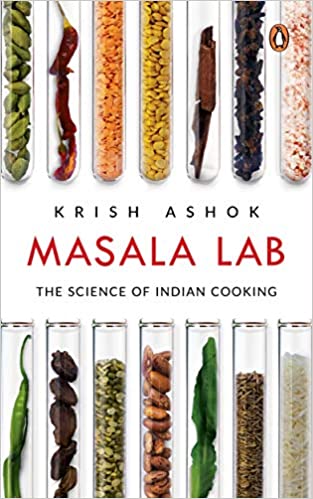
Masala Lab by Krish Ashok
Representing a critical step forward in the globalization of food science, this 280-page text by software engineer Krish Ashok applies rigorous chemical and physical analysis to regional Indian cooking. By investigating the thermodynamic behavior of spices, the Maillard reactions in traditional onion browning, and the protein structures in dairy and legumes, the book validates traditional techniques through modern scientific lenses, bridging a historical gap in culinary literature.
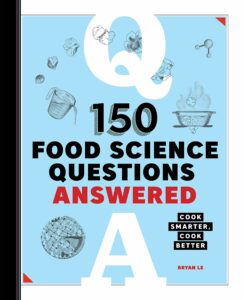
150 Food Science Questions Answered: Cook Smarter, Cook Better by Bryan Le
Structured around a clear, question-and-answer format across 198 pages, Bryan Le’s book categorizes kitchen inquiries into fundamental concepts of cooking, flavor dynamics, ingredient classifications, and food safety storage. It serves as an optimal entry point for individuals seeking to cultivate a scientific mindset without wading through dense academic prose.
Introduction to Food Science for Kids!: A Kitchen-Based Workbook by Dale W Cox
Targeting younger audiences across 112 pages, this workbook leverages the domestic kitchen as an experimental laboratory. By transforming everyday cooking tasks into controlled observations of physical and chemical changes, the book lays an early educational foundation for STEM learning.
Statements, Industry Reception, and Expert Consensus
The broader culinary community and academic institutions have largely praised the shift toward practical, scientifically grounded cooking literature. Culinary educators note that books incorporating metric units and actionable sidebars—such as Sharma’s and the Harvard team’s publications—significantly improve the reproducibility of recipes in professional and domestic settings.
Furthermore, the inclusion of regional perspectives, exemplified by Krish Ashok’s work on Indian cuisine, has been lauded by food historians and scientists alike. Critics and reviewers emphasize that for decades, food science literature heavily favored Western culinary traditions, particularly French and American techniques. The expansion of empirical analysis into diverse global pantries marks a maturation of the genre, validating diverse culinary histories through reproducible science.
Broader Impact and Economic Implications
The proliferation of accessible food science literature carries significant implications for both consumer behavior and the publishing industry. As home cooks become more literate in thermodynamics, food safety, chemical leavening, and sensory perception, consumer habits shift toward ingredient-driven purchasing and precision cooking equipment, such as kitchen scales, immersion circulators, and digital thermometers.
Economically, the success of these titles demonstrates sustained consumer demand for intellectually engaging culinary content that transcends traditional celebrity chef memoirs and basic recipe compilations. By equipping home cooks with the underlying "why" behind culinary techniques, these publications empower individuals to innovate, reduce food waste through better safety and storage understanding, and develop a deeper appreciation for the chemistry of everyday meals. As the boundaries between the laboratory and the home kitchen continue to blur, literature of this caliber ensures that the principles of food science remain accessible, engaging, and practically applicable for generations to come.