
The intersection of culinary arts and analytical chemistry has long been a playground for food scientists and enthusiastic home hobbyists alike. In recent years, this convergence has found one of its most ardent disciples in the realm of specialty coffee preparation. What was once considered an intuitive morning ritual reliant on tradition and basic kitchen implements has evolved into a disciplined pursuit governed by fluid dynamics, thermodynamic principles, and precise measurement metrics. As specialty coffee culture continues to expand globally—particularly driven by Scandinavia’s vibrant third-wave coffee movement—chemists, baristas, and researchers are dissecting every micro-variable involved in transforming a roasted seed into a complex beverage.
The Evolution of Modern Coffee Science
The contemporary understanding of coffee extraction is deeply rooted in developments that have accelerated over the past decade. Historically, home brewing relied heavily on generalized heuristics: a scoop of coffee per cup, water just off the boil, and a standard drip machine. However, the proliferation of specialty single-origin beans, lighter roasts, and subscription services has forced consumers to reevaluate these traditional methods.

The catalyst for this analytical shift often begins with realization and frustration. Enthusiasts attempting to replicate café-quality pour-overs at home frequently encounter inconsistent results, leading them down a complex rabbit hole of variables. This modern investigative approach draws heavily on scientific literature published in recent years, bridging the gap between academic fluid mechanics and practical kitchen execution. Rather than relying on guesswork, the modern coffee practitioner treats the kitchen counter as an analytical laboratory, utilizing quantitative metrics to eliminate variance.
Core Analytical Parameters in Coffee Extraction
To understand the mechanics of a superior cup of coffee, researchers and home scientists focus on several interdependent parameters. Mastery of these metrics allows for precise control over the final flavor profile, body, and strength of the beverage.
Brew Ratio (BR)
The foundation of any repeatable coffee recipe is the brew ratio, defined numerically as the mass of water relative to the mass of dry coffee grounds. Analogous to the baker’s percentages used in artisan bread making, a standard starting point for filter coffee typically sits around a ratio of 16.7 (60 grams of coffee per 1,000 grams of water). Brew ratios for black coffee generally fluctuate within a 15 to 25 range, providing a scalable framework that allows enthusiasts to adapt recipes seamlessly regardless of batch size.
Total Dissolved Solids (TDS) and Strength Measurement
Evaluating coffee strength has traditionally been a subjective exercise, often conflating genuine chemical concentration with astringency or bitterness. In scientific terms, strength is quantified by Total Dissolved Solids (TDS)—the measure of extracted soluble compounds present in the finished beverage.
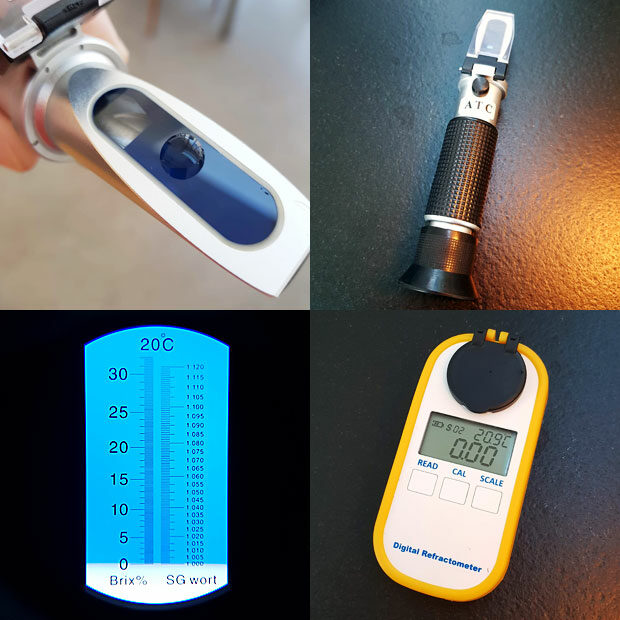
While gravimetric analysis (evaporating a weighed sample of coffee to dryness) offers absolute precision, it is entirely impractical for daily use due to the minute quantities involved. A standard cup of black coffee typically exhibits a TDS range of 1.2% to 1.5%, meaning the beverage consists of more than 98% water. To measure this efficiently without laboratory-grade balances, practitioners utilize handheld optical refractometers. By measuring the refractive index of light through a liquid sample—often measured in degrees Brix and converted via a standard multiplier—users can quickly ascertain whether their brew falls within the target extraction window.
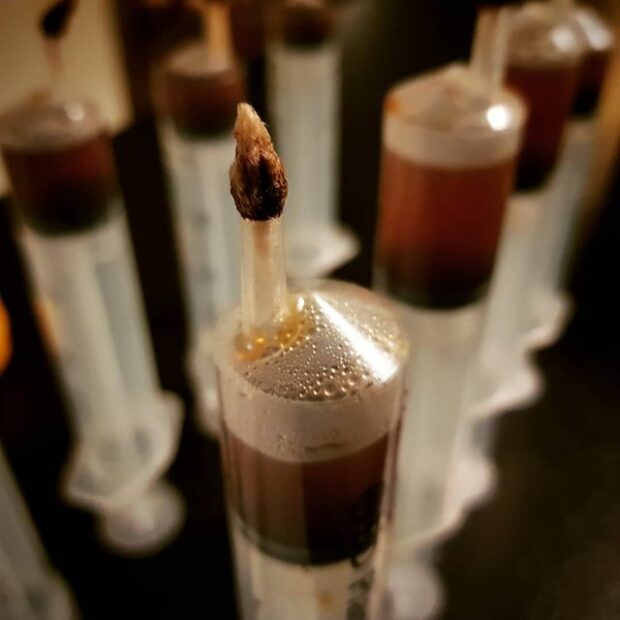
For accurate readings during active extraction experiments, samples must be rapidly filtered while hot to arrest extraction, typically utilizing simple DIY syringe filters packed with cotton plugs, then allowed to cool completely to prevent evaporation artifacts from skewing the refractive index.
Extraction Yield (EY and EEY)
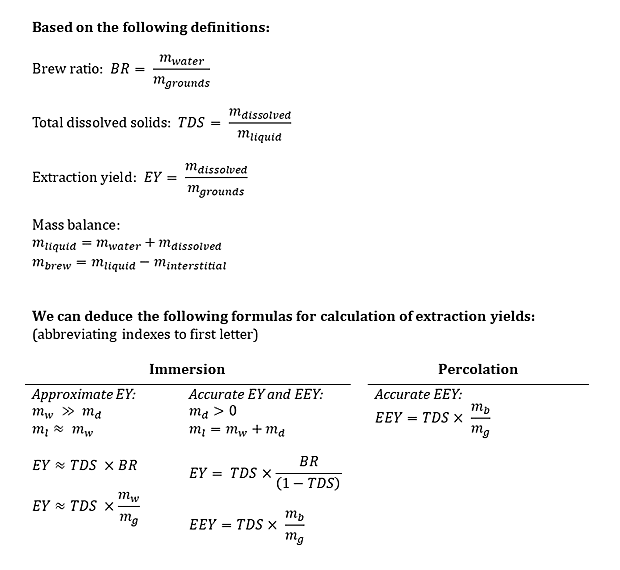
Once TDS is established, calculating the Extraction Yield (EY) reveals what percentage of the original dry coffee mass has been successfully dissolved into the liquid. However, calculating yield introduces mathematical complexities depending on the brewing method utilized: immersion versus percolation (pour-over).
In immersion brews, such as a French press, the entire liquid mass interacts uniformly with the grounds. Conversely, percolation methods involve continuous fresh water passing through a bed, leaving behind interstitial liquid that never makes it into the final cup. To address this discrepancy, researchers distinguish between traditional Extraction Yield (EY) and Effective Extraction Yield (EEY), which strictly measures the solutes delivered to the final vessel. Understanding these distinctions helps explain why immersion and percolation brewing methods yield distinct chemical compositions and sensory profiles, even when utilizing identical coffee beans and ratios.
Particle Size Distribution and Grinding Mechanics
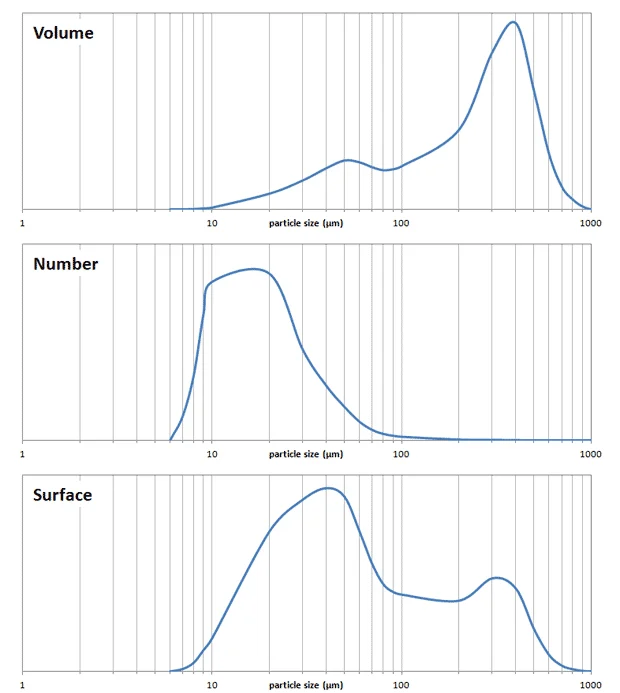
The physical preparation of the coffee bean—grinding—introduces one of the most significant variables in the extraction process. When a roasted bean is fractured by a grinder burr, it does not yield uniform particles. Instead, it shatters into a heterogeneous mixture ranging from large fragments ("boulders") to microscopic particles ("fines" typically defined as particles smaller than 100 micrometers).
Advanced particle size distribution (PSD) analysis reveals that while larger particles dominate the overall volume of a coffee bed, the vast majority of surface area—and consequently, a significant portion of extraction—occurs across these microscopic fines. Preliminary industry data suggests that water extracts coffee solids only to a finite depth of approximately 100 micrometers. Consequently, the cores of larger coffee particles often remain entirely unextracted, serving primarily structurally to maintain permeability and control the draw-down time of water through a filter bed.
The choice of grinding equipment dictates the uniformity of this distribution. Traditional blade grinders produce excessive fines and inconsistent particle geometry, leading to channeling and over-extraction. Conversely, high-end conical and flat-burr grinders offer greater control, though researchers note that industrial roller mills achieve the most uniform distributions. While pre-ground specialty coffee packaged in inert nitrogen atmospheres offers remarkable uniformity, exposure to ambient oxygen upon opening initiates rapid oxidation and staling within days, necessitating whole-bean grinding for optimal freshness.
Environmental and External Variables
Beyond the physical mechanics of the coffee bed and extraction math, several external factors heavily influence the final cup:
- Water Composition: Because a cup of coffee is over 98% water, mineral content plays a critical role in extraction efficiency. Calcium and magnesium ions act as binding sites for flavorful aromatic compounds, prompting advanced hobbyists to formulate custom mineral waters using targeted salt additions to optimize extraction.
- Temperature: Thermal energy dictates both solubility and diffusion rates. Higher water temperatures (approaching 100°C) maximize extraction speed and yield, whereas cold-brew methods rely on extended contact times at low temperatures to selectively extract a different spectrum of chemical compounds, resulting in reduced acidity and altered sensory perception.
- Filter Material: Paper filters remain the gold standard for achieving a "clean" cup, as cellulose effectively retains both microscopic fines and hydrophobic coffee oils. Metal and cloth filters allow these elements to pass through, enhancing body and mouthfeel at the expense of sediment clarity.
Implications and the Future of Home Brewing
The growing accessibility of analytical tools—such as affordable refractometers, particle sifters, and digital logging apps—signals a maturation in how consumers approach artisanal beverages. By stripping away subjectivity and applying empirical measurement to variables like brew ratio, TDS, and grind distribution, enthusiasts can systematically diagnose extraction flaws.
Industry analysts note that this scientific rigor does not diminish the artistry of coffee cultivation; rather, it honors the intricate supply chain—from agricultural producer to local roaster—by ensuring that the final execution in the cup accurately reflects the inherent potential of the bean. As ongoing scientific research continues to publish findings on fluid dynamics and extraction chemistry, the boundary between industrial coffee science and the home kitchen will continue to narrow.