
The release of the March/April 2026 edition of Zymurgy magazine, the official publication of the American Homebrewers Association (AHA), marks a significant editorial shift toward addressing the "pivot"—a concept defined by the industry’s need to adapt to unprecedented environmental, economic, and cultural fluctuations. As the craft beer movement enters a more mature and volatile phase, this latest issue provides a comprehensive roadmap for both hobbyists and professional brewers to navigate a landscape defined by climate instability and shifting consumer preferences. Through a blend of historical reclamation, regional case studies, and technical instruction, the publication reinforces its role as the primary intellectual resource for the fermentation community.
Historical Context and the Evolution of Zymurgy
Founded in 1978 by Charlie Papazian, the American Homebrewers Association was established during a period when homebrewing was still technically illegal under federal law in the United States. Following the signing of H.R. 1337 by President Jimmy Carter, which legalized homebrewing at the federal level in 1979, Zymurgy became the foundational text for a revolution that would eventually spawn thousands of craft breweries. Over nearly five decades, the magazine has evolved from a grassroots newsletter into a sophisticated technical journal.

The March/April 2026 issue arrives at a time when the AHA continues to advocate for the rights of homebrewers while addressing the modern pressures of the "post-craft" era. With the global craft beer market projected to reach a valuation of over $200 billion by 2030, the technical proficiency of homebrewers remains the bedrock of commercial innovation. Under the leadership of Editor-in-Chief Dave Carpenter, who has steered the publication since 2019, Zymurgy has increasingly focused on the intersection of traditional brewing science and contemporary social and environmental challenges.
Adapting to Climate Instability and Economic Pressures
The central theme of the current issue, "The Pivot," is an acknowledgment of the external forces currently reshaping the brewing world. Chief among these is climate change, which has significantly impacted the production of the "four pillars" of beer: water, malt, hops, and yeast. Data from the last five years indicates a 10% to 15% fluctuation in alpha acid levels in traditional European noble hops due to rising temperatures in the Hallertau and Tettnang regions. Similarly, in North America, drought conditions in the Pacific Northwest have forced growers to prioritize heat-resistant hop cultivars, requiring brewers to pivot their recipes to maintain flavor profiles.
Economically, the brewing industry has faced a "perfect storm" of rising aluminum costs for canning, increased energy prices for brewhouse operations, and a global supply chain that remains sensitive to geopolitical tensions. The March/April issue provides fact-based analysis on how brewers are mitigating these costs by sourcing local "adjunct" grains and optimizing yeast propagation to reduce reliance on commercial labs. The "pivot" is not merely a choice but a survival strategy for those looking to maintain the sustainability of their craft.
Community and Philanthropy: The Stoney Creek Weikel Memorial Scholarship
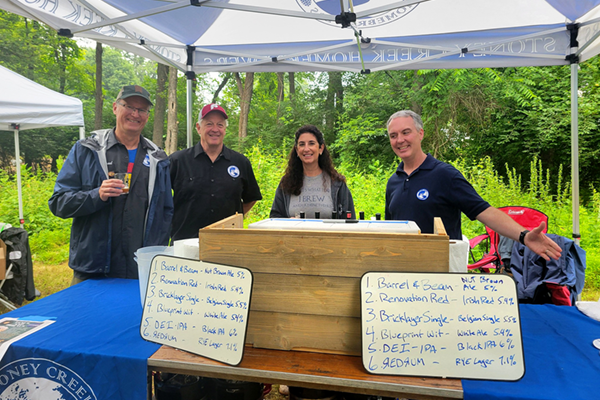
A cornerstone of this issue is the feature by Josh Weikert regarding the Stoney Creek Homebrewers and the establishment of the Weikel Memorial Scholarship Fund. This narrative serves as a case study in the social utility of homebrew clubs. Founded in 2007 in Philadelphia, the Stoney Creek Homebrewers transitioned from a social gathering to a philanthropic entity following a tragic loss within their community.
The Weikel Memorial Scholarship Fund is designed to support the next generation of brewing professionals, providing financial assistance for brewing education and certification. This initiative highlights a broader trend within the AHA: the professionalization of the hobby. By funding education, homebrew clubs are ensuring that the high standards of technical brewing are preserved even as the industry faces economic contraction. Weikert’s reporting underscores the "pivot" from individual recreation to community-focused legacy building.
Reclaiming the History of the Brewsters
The March/April 2026 issue also engages in a critical historical "pivot" by examining the role of women in brewing history. For centuries, brewing was a domestic task primarily managed by women, known as "brewsters" or "alewives." However, with the industrialization of the 19th century and the rise of commercial lager production, women were largely pushed out of the industry, and their contributions were minimized in the historical record.

This feature explores the global legacy of women in fermentation, from the ancient Ninkasi-worshipping brewers of Sumeria to the contemporary women leading some of the world’s most innovative craft breweries. By painting a global portrait of these figures, Zymurgy seeks to correct the narrative that brewing has always been a male-dominated field. This historical reclamation is essential for a culture that is currently striving for greater diversity and inclusion.
Regional Evolution: The New Orleans Lager Scene
The geographic focus of the issue highlights New Orleans, a city traditionally associated with a "lager desert" where the Abita Brewing Company stood as one of the few exceptions for decades. In the last five years, however, a significant shift has occurred. The "lager pivot" in New Orleans mirrors a national trend where brewers are moving away from heavily hopped IPAs in favor of technically demanding, clean-finishing bottom-fermented beers.
The growth of the New Orleans lager scene is attributed to a combination of improved water treatment technologies and a growing consumer demand for "crisp" beers that suit the city’s humid subtropical climate. The issue details how local brewers are adapting German and Czech traditions to the Big Easy, proving that even in regions with deep-seated cocktail and spirits cultures, there is significant room for the evolution of beer styles.

Indigenous Traditions and Extreme Fermentation
Further expanding the scope of the pivot, Art Fitzsimmons contributes a study on indigenous fermentation practices in the hottest regions of North America. This research focuses on how indigenous peoples have historically fermented native fruits and succulents—such as prickly pear, mesquite, and agave—to create beverages that are both culturally significant and biologically resilient to extreme heat.
This section provides a vital link between ancient survival strategies and modern climate adaptation. As brewers look for ways to create sustainable products in a warming world, these indigenous methods offer a blueprint for low-impact fermentation using hardy, drought-resistant ingredients. Fitzsimmons’ work suggests that the "pivot" of the future may involve looking back at the resilient practices of the past.
International Perspectives: Islay Ales and Scottish Craft Brewers
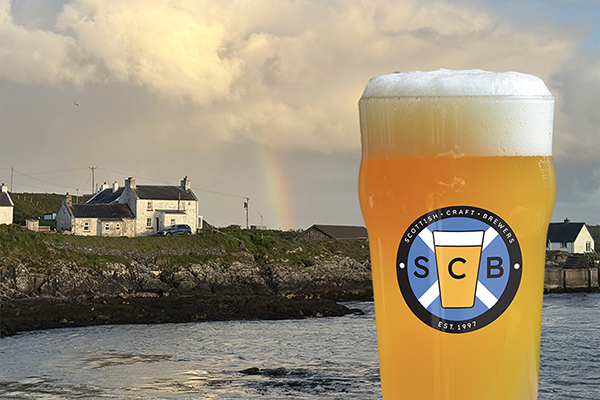
The issue also travels to the Isle of Islay in Scotland. While Islay is globally renowned for its peated whiskies, Donald MacKenzie and Mackay Smith are leading a brewing movement that takes inspiration from the Scottish Craft Brewers homebrew club. Their work represents a pivot from the dominance of spirits toward a localized beer culture that incorporates the unique environmental characteristics of the island.

The inclusion of Islay Ales highlights the global nature of the homebrewing community. By utilizing local resources and drawing on the expertise of organized clubs, MacKenzie and Smith have successfully introduced a diverse range of ales to an audience that has traditionally favored malted barley in distilled form. This case study illustrates how small-scale brewing can thrive even in regions dominated by multi-billion-dollar spirits industries.
Technical Guidance and Economic Implications
To support the theme of adaptation, the March/April 2026 issue includes 12 validated recipes that reflect current market trends and ingredient availability. These recipes range from traditional styles to experimental brews that utilize climate-resilient ingredients. The inclusion of these recipes is a hallmark of Zymurgy’s commitment to providing "unmatched resources" for its members.
From an economic perspective, the magazine addresses the rising costs of membership and subscription by offering a digital-first approach. With the AHA paywall and member-only content, the association is pivoting its business model to ensure the longevity of the publication. The $4.99 subscription model is a response to the shifting media landscape, where niche, high-quality journalism requires direct support from its audience to remain independent and objective.
Analysis of Future Implications
The "Pivot" issue of Zymurgy serves as a bellwether for the broader beer industry. The implications of the data and narratives presented suggest that the era of "easy growth" in craft beer has concluded. The future will be defined by:
- Technical Precision: As consumers become more discerning, the margin for error in brewing—particularly in lagers—is narrowing.
- Environmental Resilience: Successful brewers will be those who can adapt their grain bills and hopping schedules to the realities of a changing climate.
- Social Awareness: Reclaiming the history of marginalized groups, such as women and indigenous brewers, is not just a moral imperative but a way to broaden the market and foster a more robust community.
- Localism: The success of regional scenes in New Orleans and Islay suggests that the next phase of growth will be hyper-local and deeply tied to regional identity.
Under Dave Carpenter’s editorial direction, Zymurgy continues to bridge the gap between the hobbyist in their garage and the professional on the brewdeck. By focusing on the "pivot," the magazine ensures that its readers are not just observers of change, but active participants in the evolution of beer culture. As the industry looks toward the late 2020s, the March/April 2026 issue stands as a definitive guide for surviving and thriving in a world of constant fermentation.