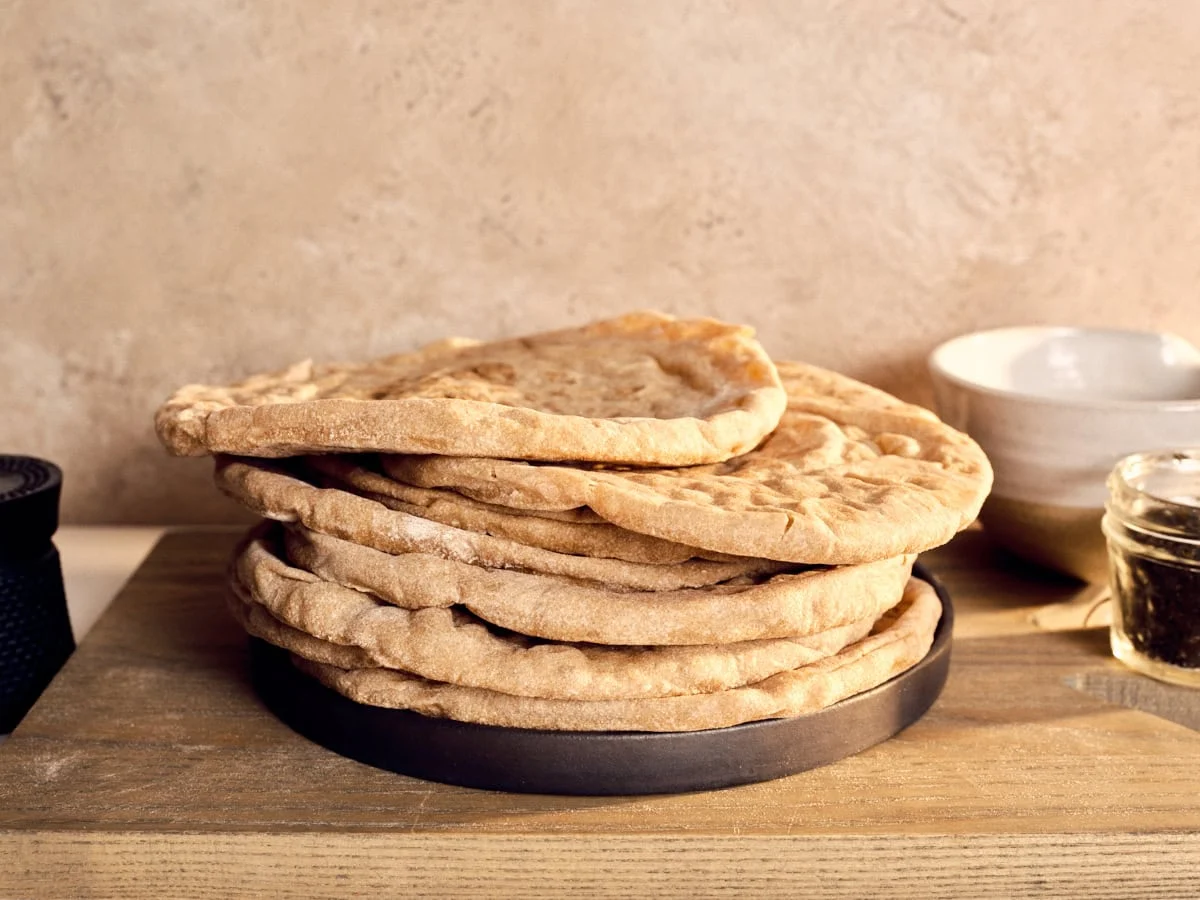

The aroma of freshly baked bread, particularly sourdough, evokes a sense of comfort and tradition. This sentiment is at the heart of a recently developed recipe for Whole Wheat Sourdough Pita, a creation inspired by a collaborative baking class and a deep appreciation for high-quality, locally sourced grains. The recipe, shared by a prominent baker and educator, offers a unique take on the classic pita, emphasizing the hearty flavor and beneficial qualities of 100% whole wheat flour, fermented through the time-honored sourdough process.
The genesis of this recipe traces back to a baking class co-taught last year at Chimacum Valley Grainery in Washington. This event brought together members of "The Baker’s Corner" community with baker Graison Gill, a recognized figure in artisanal bread making. Among the diverse array of breads featured on the class menu was a whole-grain sourdough pita, meticulously developed by Gill himself, utilizing barley. The resulting bread was described as robust, tender, and imbued with a natural sweetness characteristic of freshly milled grains. This memorable experience, set against the backdrop of the Pacific Northwest’s often rainy climate and the unique setting of a farm and mill, left a lasting impression, prompting the development of this new recipe.
This is not the author’s first foray into sourdough pita. Previous iterations have appeared in published works and unpublished projects. A lighter, more ethereal version was featured in the author’s first cookbook, and another, incorporating sweeteners and ancient grains, has been developed but not yet released. However, this latest recipe represents a distinct evolution, aiming for a fully whole-grain pita that delivers exceptional softness, a reliable "puff" during baking, and the complex flavor profile that arises from the synergy of sourdough fermentation and premium whole-grain flour. The author notes that while each previous version held its own merits, this iteration stands apart due to its textural qualities and profound flavor. The inherent satisfaction derived from consuming whole grains prepared in this manner serves as a personal validation of the recipe’s success.
Mastering the Pita Puff: Key Baking Insights
Achieving the characteristic puff in pita bread is a culinary feat that relies on a combination of dough preparation and precise baking conditions. The author emphasizes that the thickness of the dough during rolling is a critical factor. For optimal puffing, the dough should be rolled out to approximately 1/8-inch thickness. This uniformity ensures that steam generated during baking can rapidly expand the dough, creating the signature pocket.
Beyond dough preparation, the oven environment plays a crucial role. High heat is paramount. Preheating the oven to its maximum setting, typically 550°F (290°C), with a baking steel or stone positioned on the middle rack, is essential. This intense heat allows the dough to rapidly cook and expand. The surface of the baking steel or stone needs to be thoroughly heated to transfer heat efficiently to the dough from below.
Additionally, preventing the dough from drying out is vital. A dry surface can form a skin, which hinders the dough’s ability to expand freely and thus prevents puffing. Ensuring the dough remains pliable and moist throughout the proofing and rolling stages is key.
Flour Selection: The Foundation of Flavor and Nutrition
The foundation of this whole wheat sourdough pita recipe is the flour. The author specifies 100% whole wheat flour, highlighting Chimacum Valley Grainery’s Bread Flour as an exemplary choice due to its quality and origin. This particular flour is noted for its contribution to the bread’s hearty texture and inherent sweetness.
For those seeking to introduce further complexity or explore different flavor profiles, the recipe allows for a degree of flexibility. Up to 20% of the whole wheat flour can be substituted with other whole-grain flours. Examples provided include whole triticale and whole spelt, each offering a unique nuance to the final product. This adaptability caters to a range of preferences and ingredient availability, while still maintaining the core integrity of a whole-grain bread.
Baking Schedule: Integrating Sourdough into a Busy Week
A significant consideration in developing this recipe was its practicality for everyday baking. The author’s intention was to create a quick yet profoundly nourishing bread that could be prepared even during a demanding workweek. The recipe typically calls for an overnight levain, a crucial component in sourdough baking that contributes to leavening and flavor development.
However, a convenient alternative is to utilize a ripe sourdough starter directly. This adjustment allows for the dough to be mixed in the morning, with fresh pita ready for dinner. This approach not only streamlines the process but also plays a role in managing the sourdough’s characteristic tang. Keeping the overall fermentation timeline controlled is important for preventing excessive sourness, especially when working with a high proportion of whole-grain flour. The result is a pita that exhibits a mild, yet deeply satisfying flavor.
For individuals who prefer to prepare dough in advance, the recipe offers the option of bulk retarding. This involves refrigerating the dough after an initial bulk fermentation period. The dough can then be taken out the following day to continue with the dividing and shaping stages. This flexibility accommodates varying schedules without compromising the quality of the final product.
Vitals and Formula: Precision in Baking
The recipe is designed to yield ten individual pita, each weighing approximately 120 grams. However, the quantities can be easily adjusted – halved or doubled – to cater to different batch sizes.
Key Recipe Metrics:
- Total Dough Weight: 1,320 grams
- Prefermented Flour: 9.5%
- Levain in Final Dough: 22.0%
- Hydration: 84.0%
- Yield: Ten 120-gram pita
Total Formula Breakdown:
- Whole Wheat Flour (Chimacum Valley Grainery Bread Flour): 699g (100.0% of total flour)
- Extra-Virgin Olive Oil: 14g (2.0%)
- Water (Levain and Mix): 503g (72.0%)
- Water (Mix): 84g (12.0%)
- Fine Sea Salt: 14g (2.0%)
- Ripe Sourdough Starter (100% hydration): 7g (0.95%)
The target final dough temperature for this recipe is between 77-78°F (25-26°C), a critical factor in ensuring optimal fermentation and dough development.
The Whole Wheat Sourdough Pita Method: A Step-by-Step Guide
1. Prepare the Levain (Approx. 9:00 PM):
A dedicated levain is prepared by mixing 66g of whole wheat flour, 66g of water, and 7g of ripe 100% hydration sourdough starter. This mixture is left to ripen overnight at a controlled temperature of 74-76°F (23-24°C). Alternatively, a mature sourdough starter can be used directly in the morning. It’s important to note that if the starter contains any white flour, the final pita will not be 100% whole grain.
2. Mix the Dough (Approx. 9:00 AM):
The main dough ingredients are combined: 632g whole wheat flour, 437g water (Water 1), 84g water (Water 2), 14g fine sea salt, 139g ripe levain, and 14g extra-virgin olive oil. While an autolyse step is often beneficial for whole-grain flours, this recipe opts for a concise mixing process with a brief rest period.
- Mechanical Mixer: The dough can be efficiently mixed using a spiral mixer in stages.
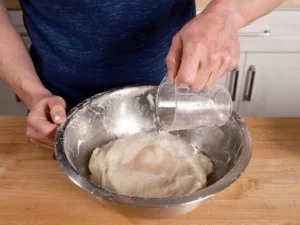
- By Hand: Combine flour, levain, salt, and Water 1 in a bowl. Mix thoroughly with wet hands or a dough whisk. Knead for 6-8 minutes using the slap-and-fold technique or the folds-in-the-bowl method until the dough is smooth. Rest for 5 minutes. Incorporate Water 2 gradually while kneading for an additional 6-7 minutes until the dough is smooth and cohesive. Transfer to a bulk fermentation container and cover.
3. Bulk Fermentation (Approx. 9:30 AM to 12:30 PM – 3 hours):
At a warm room temperature of 74-76°F (23-24°C), bulk fermentation typically takes around 3 hours. This stage involves two sets of stretch-and-folds, performed at 30-minute intervals. After the stretches and folds, the dough is left undisturbed to complete its bulk fermentation, aiming for approximately a 25% increase in volume.
4. Divide and Shape (Approx. 12:30 PM):
Once bulk fermentation is complete, the dough should appear puffy and smooth. Lightly flour a half sheet pan. Gently turn the dough out onto a floured surface. Using a bench knife, divide the dough into ten equal portions of 120 grams each. Shape each piece into a tight ball by degassing, folding in the sides, and then creating surface tension by dragging the dough on the work surface. Pinch the seam closed on the bottom and place the shaped balls on the prepared baking sheet, ensuring adequate spacing.
5. Proof (Approx. 1:00 PM to 2:00 PM – 1 hour):
The shaped dough balls are covered and allowed to proof for approximately 1 hour. Concurrently, the oven should be preheated to its maximum temperature (550°F / 290°C) with a baking steel or stone in place for at least one hour.
6. Bake (Approx. 2:00 PM):
The dough is ready for baking when it has increased in volume by about 30% and feels soft to the touch, passing a gentle poke test. The dough is carefully rolled out to a diameter of 7 inches and a thickness of 1/8 inch, using flour to prevent sticking and avoiding excessive pressure to maintain airiness.
Each flattened dough round is transferred to a floured pizza peel and slid into the preheated oven. The pita bakes for 1-2 minutes until it puffs up significantly. It is then carefully flipped with a fish spatula and baked for another minute on the second side. The cooked pita is immediately transferred to a towel-lined container and covered to retain moisture and softness. This process is repeated for the remaining dough portions.
These whole wheat sourdough pitas can be stored in a sealed bag at room temperature for up to a week. Reheating in a low oven or toaster oven for a few minutes before serving will restore their warmth and texture.
Frequently Asked Questions About Sourdough Pita
A common challenge encountered by home bakers is achieving the characteristic puff in pita bread. Several factors can contribute to this issue. The thickness of the rolled dough is paramount; aiming for approximately 1/8 inch is crucial. Inadequate oven heat or a poorly preheated baking surface can also prevent proper puffing. Ensuring the dough does not dry out during preparation is equally important, as a skin formation can impede expansion.
Occasionally, only half of a pita may puff, or the bread may develop large, irregular bubbles instead of a full puff. These occurrences can be attributed to uneven rolling of the dough, leading to inconsistent thickness. In the case of large bubbles, it might indicate that the dough is close to overproofing, causing it to form larger pockets rather than a uniform expansion. Adjusting proofing times in future bakes can address this.
The Broader Impact: Nourishment and Community
This Whole Wheat Sourdough Pita recipe transcends a simple culinary instruction; it represents a confluence of culinary tradition, a dedication to wholesome ingredients, and the power of community. The inspiration drawn from a collaborative learning environment and the partnership with local grain producers like Chimacum Valley Grainery underscore the growing movement towards supporting regional agriculture and artisanal foodways.
The emphasis on whole grains speaks to a broader trend in health-conscious eating, where the nutritional benefits of unprocessed foods are increasingly recognized. Sourdough fermentation, known for its potential to improve digestibility and nutrient availability, further enhances the health profile of this pita.
Ultimately, this recipe serves as an invitation to bakers to connect with their food, their local producers, and their communities. It is a testament to how shared experiences and a passion for quality ingredients can inspire creations that are both deeply satisfying and profoundly nourishing. For those seeking further exploration into related baked goods, sourdough tortillas offer a complementary option for various culinary applications.