
The burgeoning scientific approach to coffee brewing is transforming a daily ritual into a precise, analytically driven pursuit, as evidenced by a recent intensive exploration into the intricate parameters governing coffee extraction. This shift, spearheaded by enthusiasts with scientific backgrounds, moves beyond traditional intuition to embrace quantitative measurements and chemical principles, aiming to unlock the optimal flavor profile in every cup. This deep dive into brew ratio, total dissolved solids, extraction yield, particle size distribution, and other critical factors highlights a broader trend in the coffee world towards meticulous control and understanding.
The Rise of Scientific Coffee: A Third Wave Phenomenon
The appreciation for coffee has undergone a significant evolution over the past two decades, marked by the rise of the "Third Wave Coffee" movement. This era emphasizes quality, traceability, and the nuanced flavors inherent in specialty beans, moving far beyond commodity coffee’s focus on volume and convenience. Originating in regions like Scandinavia, the Third Wave scene has fostered a culture of meticulous sourcing, expert roasting, and sophisticated brewing techniques. This shift from casual consumption to a connoisseur’s pursuit has encouraged many, including those with scientific backgrounds, to delve into the underlying chemistry and physics of coffee preparation.
The year 2020, with its unprecedented global events and increased time spent at home, served as a catalyst for many to explore hobbies with renewed vigor. For some, this translated into a profound investigation into home coffee brewing. What began as an appreciation for lightly roasted, single-origin specialty coffees, often discovered through curated monthly subscriptions from roasters across Norway, Sweden, and Denmark, soon escalated into a rigorous scientific inquiry. Experiences like a 24-day blind-tasting coffee advent calendar not only provided enjoyment but also sharpened sensory perception and highlighted the dramatic impact of bean origin and processing on flavor. Initial frustrations with inconsistent pour-over results, particularly when experimenting with various hand grinders alongside established equipment, underscored the need for a more systematic, reproducible approach. This personal journey into the complexities of coffee brewing reflects a growing trend among consumers seeking to master the craft through scientific understanding.
The academic landscape has also evolved considerably, with a substantial increase in scientific publications relevant to coffee brewing in both professional cafés and home settings over the last decade. This wealth of information empowers enthusiasts to move beyond anecdotal evidence, providing data-driven insights into optimizing every stage of the coffee-making process.

Deconstructing the Brew: Key Parameters Explored
From the moment a Coffea arabica fruit is harvested, countless hands and processes influence the final beverage. While many factors remain outside the control of the home brewer—such as cultivation, harvesting, and initial processing—the choices made once specialty beans arrive in the kitchen offer significant opportunities for impact. Several critical parameters, measurable and controllable, define the quality and consistency of the brewed coffee.
Brew Ratio (BR): The Foundation of Consistency
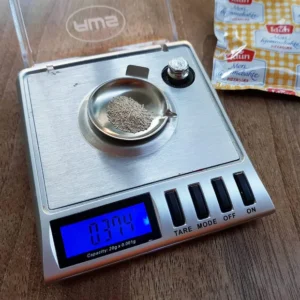
The brew ratio (BR) is a fundamental metric, defining the amount of water used relative to the amount of coffee grounds. Expressed as a ratio, typically grams of water to grams of coffee, it serves as the cornerstone for any repeatable coffee recipe. A common starting point, often recommended by the Specialty Coffee Association (SCA), is approximately 60 grams of coffee per 1000 grams of water, yielding a BR of 16.7 (1000/60). For black coffee, brew ratios typically fall within the range of 15 to 25. This simple numerical representation makes scaling recipes up or down straightforward, ensuring consistent strength regardless of batch size. For instance, a 1:16 ratio means 1 gram of coffee for every 16 grams of water.
Total Dissolved Solids (TDS): Quantifying Strength
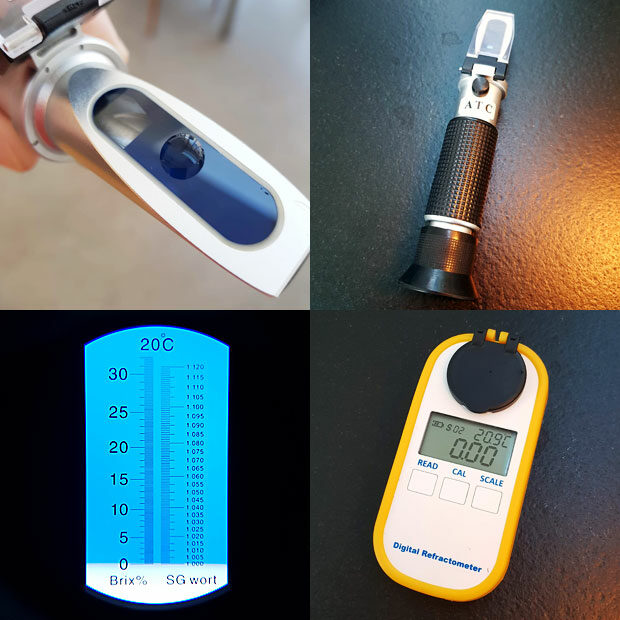
Beyond subjective taste, Total Dissolved Solids (TDS) offers an objective measure of coffee strength. This parameter quantifies the percentage of soluble material extracted from the coffee grounds and dissolved in the water. High TDS values often correlate with a strong, potentially bitter coffee, while low values might indicate a weak, underdeveloped brew. The SCA generally recommends a TDS range of 1.15% to 1.35% for optimally brewed drip coffee.
Traditionally, measuring TDS involved gravimetric analysis—evaporating a precisely weighed coffee sample to dryness and weighing the residue. However, this method is impractical for home use, requiring highly accurate laboratory balances capable of detecting milligram differences. A more accessible and practical method involves refractometry. Refractometers measure the refractive index of a liquid, which changes based on the concentration of dissolved solids. Analog handheld refractometers, often equipped with a %Brix scale, offer an affordable entry point. A conversion factor (e.g., %TDS = %Brix x 0.85) allows for approximation. While handheld units provide a resolution of 0.0-0.2 %Brix, sufficient to determine if a brew is within a typical range or significantly off, they lack the precision for fine-tuning. Digital refractometers, though more expensive, offer superior accuracy (e.g., 0.01 °B readout) and often automatically convert to %TDS, making them preferred by serious enthusiasts and professionals.
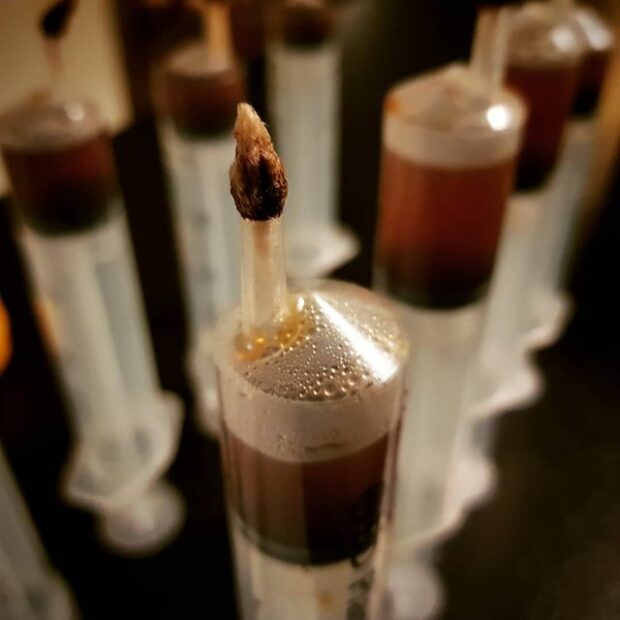
For accurate TDS measurements, especially during extraction profiling, coffee samples must be hot-filtered to halt further extraction and then cooled completely, as temperature significantly affects refractive index. A cost-effective DIY method involves using plastic syringes with a cotton plug for hot filtering, followed by cooling. This approach minimizes evaporation and allows for efficient sample collection without the need for costly lab-grade syringe filters.
Extraction Yield (EY) and Effective Extraction Yield (EEY): Unpacking Efficiency and Flavor
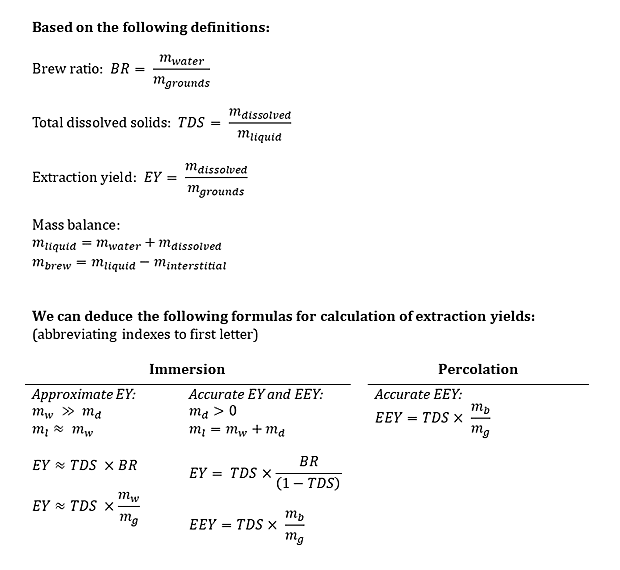
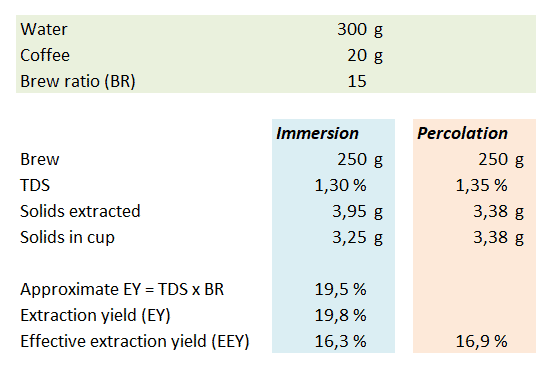
Once TDS is determined, the next step is calculating the extraction yield (EY), which represents the percentage of soluble material removed from the coffee grounds. This metric provides deeper insights into the brewing process than TDS alone. The article distinguishes between two types of extraction yields:
- Extraction Yield (EY): This refers to the total mass of dissolved solids relative to the initial mass of dry coffee grounds. For immersion brews (where all grounds are steeped in all the water, like a French press), the calculation is more straightforward, accounting for the dissolved solids adding to the total liquid mass.
- Effective Extraction Yield (EEY): This focuses specifically on the dissolved solids that end up in the cup relative to the initial mass of dry coffee grounds. This is particularly relevant for percolation brews (like pour-over), where some liquid, termed "interstitial liquid," remains trapped within the spent grounds and never makes it into the final beverage.
For percolation brews, EY and EEY are often considered equivalent if one assumes the interstitial liquid does not contribute meaningfully to the cup’s composition. However, experts like Scott Rao and Jonathan Gagné have detailed the complexities of these calculations. The distinction is crucial: EEY reflects the economic efficiency and the actual content of the beverage, while EY indicates the total material removed from the grounds, potentially influencing the broader flavor profile. An example calculation reveals that a percolation method can deliver more solids to the cup (higher EEY), while an immersion method might extract more total solids from the grounds (higher EY) due to the complete mixing, even if not all those solids make it into the final poured cup. This difference in extracted mass (e.g., 3.95g vs. 3.38g in a given example) directly explains the sensory variations between immersion and percolation coffees, as the composition of extracted compounds will differ.
The SCA’s "Golden Cup Standard" recommends an extraction yield of 18% to 22%. Achieving this range consistently, in conjunction with an optimal TDS, is the goal for many brewers. Precision in weighing coffee grounds and measuring brew water, alongside accurate TDS readings, is paramount for reliable yield calculations. Minor inaccuracies in TDS measurement, especially with handheld refractometers, can lead to significant variations in calculated EY, underscoring the importance of equipment precision for serious experimentation.
Grind Size and Particle Size Distribution (PSD): The Unseen Influence
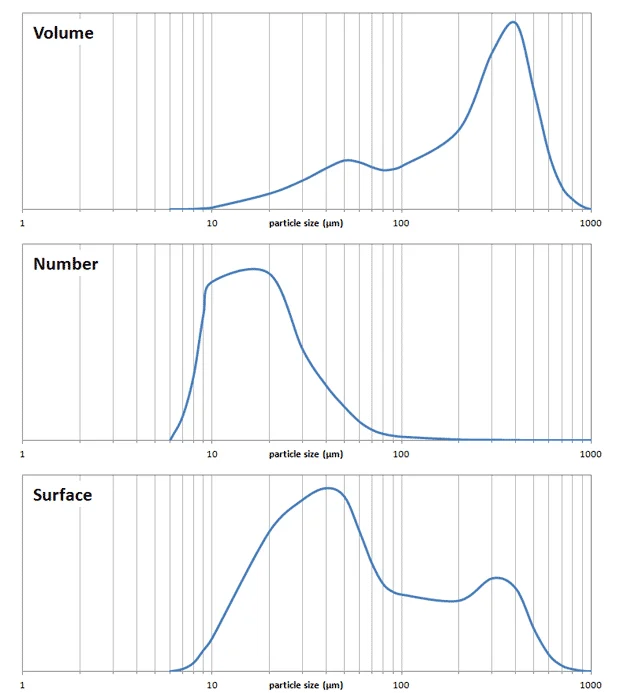
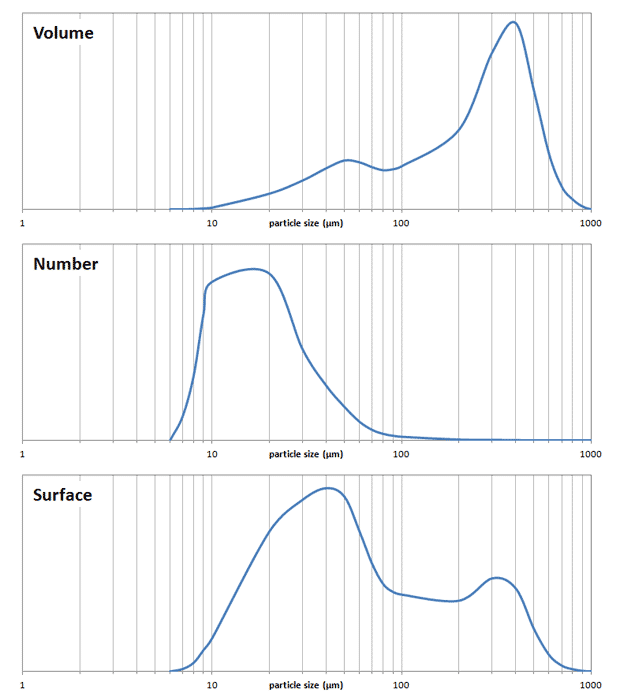
The grinding of roasted coffee beans is a critical step, fundamentally altering the surface area available for extraction. However, grinding is not a uniform process; beans shatter into a wide array of particles, from large "boulders" to microscopic "fines" (typically defined as particles smaller than 100 µm). Understanding the Particle Size Distribution (PSD) is crucial because it profoundly impacts both extraction efficiency and brew flow rate.
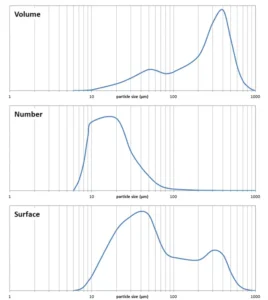
Visualizing PSD can be complex. While volume distribution (showing the proportion of total ground coffee volume at different particle sizes) is common, it often misrepresents the impact of fines. A distribution by the number of particles reveals the sheer quantity of fines, despite their low volume. Most critically, a surface area distribution provides the most accurate picture of extraction potential, as extraction occurs at the particle surface. For instance, more than half of the total extraction surface area might come from particles smaller than 100 µm, even if they constitute a small fraction of the total volume. This is highly significant, particularly in light of research suggesting that coffee particles are only extracted to a depth of approximately 100 µm. This implies that the core of larger particles (boulders) may remain unextracted, representing "wasted" coffee. Despite this, larger particles play a vital role in forming a porous filter bed, which is essential for managing flow rates and preventing clogging in pour-over methods.
The ideal grind size and distribution are hotly debated. For pour-over, a narrow particle distribution is generally favored, as it promotes higher, more consistent flow rates and reduces clogging caused by excessive fines. Cheap blade grinders, which violently chop beans, produce an extremely inconsistent grind with a high proportion of fines, rendering them unsuitable for quality coffee brewing. Burr grinders, available in manual and electric forms, are the standard, offering superior consistency. These come with either conical or flat burrs, each with distinct geometries and materials. High-end machines often feature larger-diameter flat burrs, with specific designs optimized for espresso (which benefits from some fines for crema and body) versus pour-over (where fines are generally undesirable). Hand grinders typically use conical burrs due to their compact design.
Industrial-scale grinders, such as cylindrical mills, can achieve extremely narrow PSDs, potentially yielding a more uniform extraction than smaller-scale home equipment. This raises an interesting point: filter-ground coffee, professionally packaged in inert atmospheres, might offer superior grind consistency. However, the rapid oxidation of ground coffee upon exposure to air typically outweighs this advantage, making fresh grinding of whole beans the preferred method for specialty coffee. Experimentation with double grinding (coarse followed by fine) or pre-crushing with tools like grain mills might offer avenues for home brewers to achieve narrower PSDs, though proper evaluation requires accurate PSD measurement tools like sifters (e.g., Kruve) or image analysis software.
The Critical Role of Bean Freshness
Freshly roasted beans are paramount for optimal flavor. Roasted coffee beans undergo degassing, releasing carbon dioxide, and are highly susceptible to oxidation. Exposure to oxygen causes oils to go rancid and aromatic compounds to degrade, leading to stale, off-flavors. Therefore, storing beans in airtight, opaque bags, ideally purged of air, and minimizing exposure once opened, is crucial. For longer-term storage, freezing can significantly slow down oxidation, preserving freshness. Grinding coffee immediately before brewing is essential, as the massive increase in surface area upon grinding accelerates oxidation exponentially, leading to rapid flavor degradation within days or even hours.
Water Chemistry: The Silent Flavor Architect
Water is far from a neutral medium in coffee brewing; its mineral composition profoundly influences the final taste. Just as with beer brewing, specific mineral profiles can enhance or detract from coffee flavors. For instance, magnesium ions are known to enhance sweetness and body, while bicarbonates can buffer acidity, affecting perceived brightness. Highly mineralized "hard" water can lead to over-extraction and dull flavors, while excessively "soft" water might result in under-extracted, sour coffee.
Many regions, particularly in Scandinavia, have naturally soft water, which may benefit from mineral additions. Conversely, areas with hard water often require filtration or the use of distilled water with precisely added mineral salts. DIY mineral water recipes and calculators, often found in the specialty coffee community, enable brewers to adjust their tap water to mimic ideal profiles, such as those recommended by the SCA for optimal extraction. These resources typically allow users to input their local water’s mineral content and calculate the necessary salt additions to achieve a balanced profile.
Temperature’s Thermochemical Command
Temperature is a critical variable, directly impacting the solubility of chemical compounds and the rate of diffusion during extraction. Generally, higher temperatures increase solubility and diffusion rates, leading to faster and more complete extraction. Optimal brewing temperatures for hot coffee typically fall within the 90-96°C (195-205°F) range, as recommended by the SCA. Brewing too cold can result in under-extraction and sourness, while excessively hot water can lead to over-extraction and bitterness, particularly with certain compounds.
The effect of temperature is not limited to extraction kinetics; it also influences the sensory perception of the brewed beverage. Sweetness and bitterness tend to be attenuated as a beverage cools, while sourness and saltiness remain more stable. This is why a coffee might taste balanced when hot but become noticeably sour or bitter as it cools. Cold brew, an increasingly popular method, intentionally utilizes cold water (often brewed overnight in a refrigerator) to slow down extraction. This results in a distinct flavor profile, often characterized by lower acidity and bitterness, reflecting the different solubilities and extraction rates of compounds at lower temperatures.
Filter Material: Shaping Clarity and Mouthfeel
The choice of filter material significantly affects the clarity, body, and overall mouthfeel of the brewed coffee. Paper filters are the most common and effective at retaining fine particles, producing a "clean" cup. The human palate is surprisingly sensitive to particle size; for example, in chocolate, differences of just 5 µm can be perceived. This explains why a French press, which uses a metal mesh filter, often tastes "muddy" or has a pronounced "body" due to the presence of microscopic fines, whereas a Chemex with its thick paper filter yields a remarkably "clean" and sediment-free cup.
Beyond particle retention, paper filters also absorb some coffee oils, which contribute significantly to mouthfeel and taste, especially in espresso. Experimenting with metal filters, which allow oils to pass through, can provide insight into the impact of these oils on the sensory experience. Reusable metal, cloth, or nylon filters offer a cost-effective alternative to disposable paper, though cloth and nylon can discolor over time.
Within paper filters, choices abound, including bleached and unbleached varieties. While some prefer unbleached for environmental reasons, bleached filters, which have had lignin and hemicellulose removed, generally impart fewer paper-derived flavors to the coffee. Modern bleaching processes typically avoid chlorine, utilizing other oxidizing agents. The porosity and thickness of paper filters also vary widely, influencing flow rate and filtration efficiency. Research, such as detailed microscopy comparisons of filters from brands like Hario, Chemex, and Cafec, reveals significant differences in pore size and structure. It’s also important to note that cellulose fibers swell when wet, potentially altering the filter’s actual pore size and performance during brewing.
The Path to Precision: A Prioritized Approach
For enthusiasts embarking on their journey to master coffee brewing, a systematic approach to optimizing these parameters is recommended. The following hierarchy provides a logical framework for experimentation:
- Brew Ratio, Total Dissolved Solids, and Extraction Yield: These three are interconnected and form the foundational understanding of your brew’s strength and efficiency. Before delving into other variables, ensuring these are within desired ranges is crucial. Using a coffee compass (such as the one developed by Barista Hustle) can be an invaluable diagnostic tool, guiding adjustments based on taste feedback (e.g., if coffee is "sour," increase extraction; if "bitter," decrease extraction).
- Grind Size and Particle Size Distribution: Once the fundamental extraction metrics are in check, refining the grind becomes the next critical step. This directly impacts both extraction kinetics and flow dynamics.
- Freshness of Beans: While essential, even the freshest beans cannot compensate for poor brewing parameters. However, once the first two points are addressed, maintaining bean freshness through proper storage and immediate grinding becomes paramount for preserving flavor integrity.
- Temperature: Fine-tuning brewing temperature allows for precise control over extraction kinetics and the solubility of various compounds, further shaping the flavor profile.
- Water Composition: This is often considered an advanced adjustment. While highly impactful, it typically makes sense to tackle water chemistry once other variables are consistently managed. The ideal water profile can vary slightly depending on the specific beans and desired flavor characteristics.
- Filter Material: Experimenting with different filter types can alter mouthfeel and clarity, offering a final layer of refinement to the brewing process.
This iterative process of adjustment and measurement allows brewers to systematically isolate and optimize each variable. For instance, a chemist’s ongoing experimentation with brew strength, extraction, and various brewing process ideas means that water adjustments are currently on hold, as the frequent switching between diverse coffee beans also complicates consistent water profiling.
Future Outlook: The Evolving Science of Coffee
The scientific exploration of coffee brewing continues to evolve rapidly. Ongoing research in areas such as advanced grinder technology, optimized water chemistry, and the thermodynamics of extraction promises even greater precision and understanding. As tools for measurement become more accessible and the body of scientific knowledge expands, the distinction between the "art" and "science" of coffee brewing continues to blur. This systematic approach not only empowers home brewers to achieve consistently excellent results but also drives innovation across the entire coffee industry, ensuring that the pursuit of the perfect cup remains an exciting and ever-deepening journey.