
The burgeoning landscape of professional coaching often sees practitioners armed with deep knowledge but grappling with the realities of building a sustainable practice and effectively serving diverse clients. At the forefront of addressing these challenges is Kate Solovieva, a distinguished figure in the coaching community whose unique perspective, drawn from her background as a former professor of psychology, a Precision Nutrition (PN) master coach, and PN’s director of community engagement, offers invaluable guidance. Solovieva, known for her candid tagline, "I work with coaches and other people who know too much," brings a wealth of experience from coaching thousands of clients and, crucially, a specialty in mentoring fellow coaches. This intimate understanding of the coaching ecosystem, from observing countless victories and blunders, positions her as a pivotal voice in refining best practices. Her insights, particularly regarding three common mistakes, aim to empower coaches towards greater success and impact.
The Evolving Landscape of Professional Coaching
The professional coaching industry has experienced remarkable growth over the past decade, transforming from a niche service into a global phenomenon. According to a 2023 report by Grand View Research, the global coaching market size was valued at approximately USD 16.12 billion in 2022 and is projected to expand at a compound annual growth rate (CAGR) of 15.3% from 2023 to 2030. This expansion is fueled by increasing demand for personalized guidance in health, fitness, career development, and personal growth. Organizations like Precision Nutrition (PN) have been instrumental in professionalizing the health and nutrition coaching sector, offering rigorous certifications that equip individuals with scientific knowledge and practical skills.
Kate Solovieva’s role within this ecosystem is multifaceted. As an instructor for PN’s Level 2 Master Health Coaching Certification, a facilitator for PN’s private online coaching communities, and a coach in her private practice, she occupies a unique vantage point. This exposure grants her a "front-row view" of the myriad questions and challenges confronting both nascent and veteran coaches. Her academic grounding in psychology provides a robust framework for understanding human behavior and motivation, which she seamlessly integrates into practical coaching methodologies. It is from this informed position that she identifies critical areas where coaches frequently falter, often despite their best intentions and extensive knowledge.
Mistake #1: Prioritizing Coaching Expertise Over Business Acumen
One of the most pervasive errors Solovieva observes among coaches is an overwhelming focus on perfecting their coaching skills at the expense of developing essential business and sales capabilities. She likens a coaching business to a three-legged stool, where coaching, selling, and marketing are equally crucial for stability. However, the majority of aspiring coaches instinctively gravitate towards the "coaching leg," driven by a laudable desire to be the most knowledgeable and effective practitioner possible.
"The vast majority of folks who get into coaching start with the coaching leg," Solovieva states. "They want to become the best coach they can be, which is amazing. However, to become the best coach you can be, information and theory only get you so far." This sentiment underscores a critical paradox: true coaching mastery is not achieved in theoretical isolation but through practical application with real clients. Solovieva emphasizes that "You cannot become the best coach you can be in a vacuum, talking to yourself in your office."
This predisposition often leads to a delay in launching services, as coaches feel compelled to accumulate numerous certifications before they deem their knowledge "complete." While continuous learning is vital, an excessive pursuit of credentials without actively engaging clients can be detrimental. Coaches who embrace selling their services earlier, even with a foundational level of expertise, gain a significant advantage. They begin accumulating practical experience, refining their methods, and building their business simultaneously. This hands-on approach allows for organic growth in competence, often outpacing those who defer client interaction until they feel "ready," a state that might never fully materialize.
Solution: Embodying the Coach, Not Just the Expert
The inclination to become an "expert" with all the answers stems from a natural desire to perform well and instill confidence. However, Solovieva posits that this belief—that a coach must be an infallible authority—is often a misassumption. While a baseline of knowledge is non-negotiable (e.g., understanding protein sources for a nutrition coach), the role of a coach fundamentally differs from that of a lecturer or an encyclopedia. Clients typically do not need more raw information; they need guidance on how to integrate that information into actionable change.
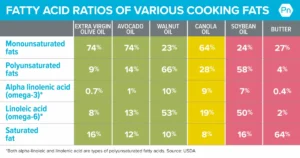
Consider a client asking about the optimal omega-3 to omega-6 ratio in flax oil or the intricacies of the Krebs cycle. While an expert might launch into a detailed scientific explanation, a coach’s more productive response, Solovieva suggests, is often to probe deeper. "If a client asks you about seed oils, you can simply say, ‘That’s a great question. I can get you some information on that if you’d like, but I’m curious, why do you ask?’" This approach shifts the dynamic from information dissemination to client-centered inquiry.
By asking "why," the coach uncovers the client’s underlying motivation. The client might reveal that their friend Susan lost ten pounds after eliminating seed oils, and they are exploring a similar strategy for weight loss. This deeper understanding allows the coach to address the client’s true objective (weight loss) with more relevant and effective strategies that may have little to do with the minutiae of seed oil biochemistry. This exemplifies the distinction: an expert provides answers, while a coach facilitates discovery and action. This paradigm shift not only empowers clients but also liberates coaches from the impossible burden of knowing everything. It allows them to focus on the process of behavioral change, which is their true domain.
Implications of Mistake #1: Coaches who defer selling risk professional stagnation and financial instability. The coaching industry, while rewarding, requires a sustainable business model. By focusing too heavily on accumulating theoretical knowledge without practical application, coaches miss opportunities to develop crucial entrepreneurial skills, test their methodologies, and build a client base. This can lead to burnout, disillusionment, and ultimately, the abandonment of a potentially impactful career. Embracing the sales aspect is not merely about securing income; it’s about creating the very environment in which coaching skills can be honed and applied.
Mistake #2: The Pitfall of Assuming Client Homogeneity
A second common pitfall, often subtle, is the unconscious assumption that clients share the same values, motivations, and life circumstances as the coach. While seemingly obvious that clients are unique individuals, this distinction can blur, especially when a coach feels a strong rapport or identifies with a client’s superficial characteristics.
Coaches, by nature, are often deeply invested in health, fitness, and personal development. They chose their profession because they value these aspects of life. It is easy, therefore, to project these values onto clients, assuming that their motivations for seeking coaching are identical. However, Solovieva cautions against this: "There’s nothing inherently superior about valuing your health. If you do, yes, you’ll probably experience better health and live longer. But not everyone shares those values. That’s a tough one to swallow."
This assumption can manifest in various ways. A coach passionate about marathon running might inadvertently push a client towards ambitious fitness goals that conflict with their actual priorities or physical limitations. A coach who thrives on meticulous meal prepping might recommend strategies unsuitable for a client with limited time, resources, or culinary skills. When coaches fail to recognize and respect their clients’ unique preferences, values, biological predispositions, and social contexts, they risk recommending actions that are either impossible, undesirable, or simply not meaningful to the client. This misalignment inevitably leads to client frustration, feelings of being misunderstood, and a sense of inadequacy for both parties.
Solution: Cultivating Deep Client Understanding and Readiness Assessment
The antidote to assuming client homogeneity is to consciously approach each interaction with an open, curious mind, free of biases and preconceptions. This involves actively listening and asking incisive questions designed to uncover the client’s true internal landscape. Solovieva recommends questions such as: "What inspired you—or pushed you—to come in today?" and "Why is that goal meaningful to you?" and "What skills do you have today that might help you achieve your goal? What skills do you feel you might be missing?"
Even when coaches share seemingly similar experiences with clients—being a single parent, training for a specific event, or overcoming a particular health challenge—it is crucial to remember that individual experiences are deeply nuanced. Solovieva suggests acknowledging shared ground while immediately inviting the client to articulate their unique journey: "I know what [insert shared experience] has been like for me, but what has [insert shared experience] been like for you?" This validates the client’s experience while emphasizing its distinctiveness.
Once a clear picture of the client’s values, priorities, and motivations for change emerges, the coach can then assess their "readiness, willingness, and ability" to take specific actions. This assessment should be collaborative and non-judgmental. For instance, while a coach might find meal prep simple and efficient, it’s vital to ascertain if the client shares this view or possesses the necessary resources (time, kitchen access, skills) to implement it. Tools like PN’s "Ready, Willing, and Able Worksheet" can facilitate this critical step, ensuring that proposed strategies are genuinely feasible and aligned with the client’s capacity for change.
Implications of Mistake #2: Failing to personalize coaching strategies based on individual client needs and values significantly reduces the likelihood of adherence and long-term success. It can erode trust, foster resentment, and lead to client attrition. From a broader perspective, it undermines the very essence of client-centered coaching, transforming it into a prescriptive, one-size-fits-all model that often proves ineffective. The ability to truly "see" and adapt to each client’s unique world is a hallmark of an effective and ethical coach.
Mistake #3: Excessive Emotional Investment in Client Outcomes
The third common error stems from one of a coach’s greatest strengths: empathy and a genuine desire to help. "There’s a reason we go into coaching. It’s because we care and we want to help clients. We want to see them succeed," Solovieva acknowledges. However, this profound caring can become a "double-edged sword" when it morphs into an over-attachment to client results.
Coaches meticulously craft plans, suggest habits, and provide support. But ultimately, the execution of these plans and the attainment of results rest squarely with the client. "And then they walk off and either do the thing or don’t do the thing. That’s brutal," Solovieva observes. It is natural for coaches to feel frustrated, disappointed, or even heartbroken when clients don’t follow through or fail to achieve their desired outcomes, particularly after significant emotional investment.
Solovieva clarifies that feeling these emotions is not inherently wrong; it often signifies that the work holds deep meaning for the coach. The danger arises "when we can start caring more than the client themselves." This is where the concept of "care units" becomes particularly relevant, a metric often discussed at PN. Care units represent the amount of time, energy, attention, authenticity, and "heart" a coach invests in their clients. Clients also possess a finite number of care units for their own change and growth projects. The challenge arises when a coach’s investment surpasses the client’s, creating an imbalance that can lead to coach burnout and client disempowerment. The guiding principle suggested is to "care one care unit less than your client does."
Solution: Establishing Clear Boundaries and Delineating Responsibilities
Maintaining an appropriate level of emotional investment while still effectively supporting clients requires clear delineation of responsibilities. Solovieva stresses the importance of defining the coach’s role explicitly. "If you are very, very clear on what your role is as a coach, then you can sort of go through the list, and check in with yourself: ‘Did I show up? Did I follow up? Did I coach this person to the best of my ability?’"
A coach’s responsibilities typically include providing structured programming, offering feedback, checking in regularly, adapting strategies as needed, and maintaining professional boundaries. Conversely, clients are responsible for showing up for sessions, engaging honestly, completing assigned tasks, communicating challenges, and ultimately, taking ownership of their journey.
This clear separation of roles should be established early in the coaching relationship, ideally during the initial consultation. Some coaches prefer an open discussion, while others incorporate these expectations into a formal coaching agreement or contract. This early communication serves not only to set expectations but also as a "vetting" process for coach-client fit. If a prospective client expects the coach to assume an inordinate amount of responsibility (e.g., daily texts, grocery delivery), it signals a potential mismatch, allowing the coach to gracefully decline if the expectations are beyond their scope or philosophy.
Such clear boundaries mitigate future friction and prevent coach burnout. It reduces the likelihood of client disappointment arising from uncommunicated assumptions and protects coaches from shouldering an unsustainable emotional burden. Even in challenging scenarios, such as a client "ghosting" before a contract concludes, clear boundaries provide a framework for professional conduct. Solovieva exemplifies this: "When somebody doesn’t reply to me, I don’t take it personally. It’s not their job to reply, but it is my job to check in." This professional detachment, rooted in clearly defined roles, allows coaches to fulfill their obligations without succumbing to personal distress.
Implications of Mistake #3: Over-attachment to client results is a primary driver of coach burnout. It can lead to resentment, emotional exhaustion, and an inability to serve other clients effectively. Furthermore, it can inadvertently disempower clients by implying that their success is more contingent on the coach’s effort than their own. Establishing clear responsibilities fosters client autonomy, promotes self-efficacy, and creates a healthier, more sustainable coaching relationship for both parties.
A Crucial Bonus: Acknowledging Your Own Efforts
Beyond these three common pitfalls, Solovieva offers a vital "bonus" insight: the importance of self-acknowledgment for coaches. In a profession dedicated to guiding others towards success, coaches often neglect to celebrate their own efforts and progress. While identifying and rectifying mistakes is essential for growth, it is equally important to recognize that these "mistakes" often stem from a deep well of caring and dedication.
If a coach has found themselves making any of the described errors—becoming overly focused on expertise, assuming client similarity, or getting too attached to outcomes—it is likely a testament to their passion for the work. This passion, while sometimes misdirected, is a fundamental strength. The journey of coaching, like any professional endeavor, involves continuous learning and adaptation. Embracing these insights not as failures but as opportunities for refinement allows coaches to evolve, enhance their impact, and build more resilient and fulfilling practices.
The Broader Impact and Future of Coaching
Kate Solovieva’s insights serve as a critical compass for the coaching profession. By demystifying common challenges and offering actionable solutions, she contributes to the professionalization and long-term sustainability of the industry. Her emphasis on business acumen, client individuality, and professional boundaries not only benefits individual coaches by reducing burnout and increasing effectiveness but also elevates the overall quality and reputation of coaching services.
For aspiring and current coaches, these lessons underscore that true mastery involves a holistic approach: combining deep knowledge with astute business sense, cultivating profound empathy with clear boundaries, and fostering client autonomy while providing unwavering support. As the demand for personalized guidance continues to grow, coaches equipped with these nuanced understandings will be best positioned to make a significant and lasting positive impact on the lives of their clients and the broader community. The work of Precision Nutrition, through leaders like Kate Solovieva, continues to shape a generation of coaches who are not only knowledgeable but also wise, resilient, and profoundly effective.