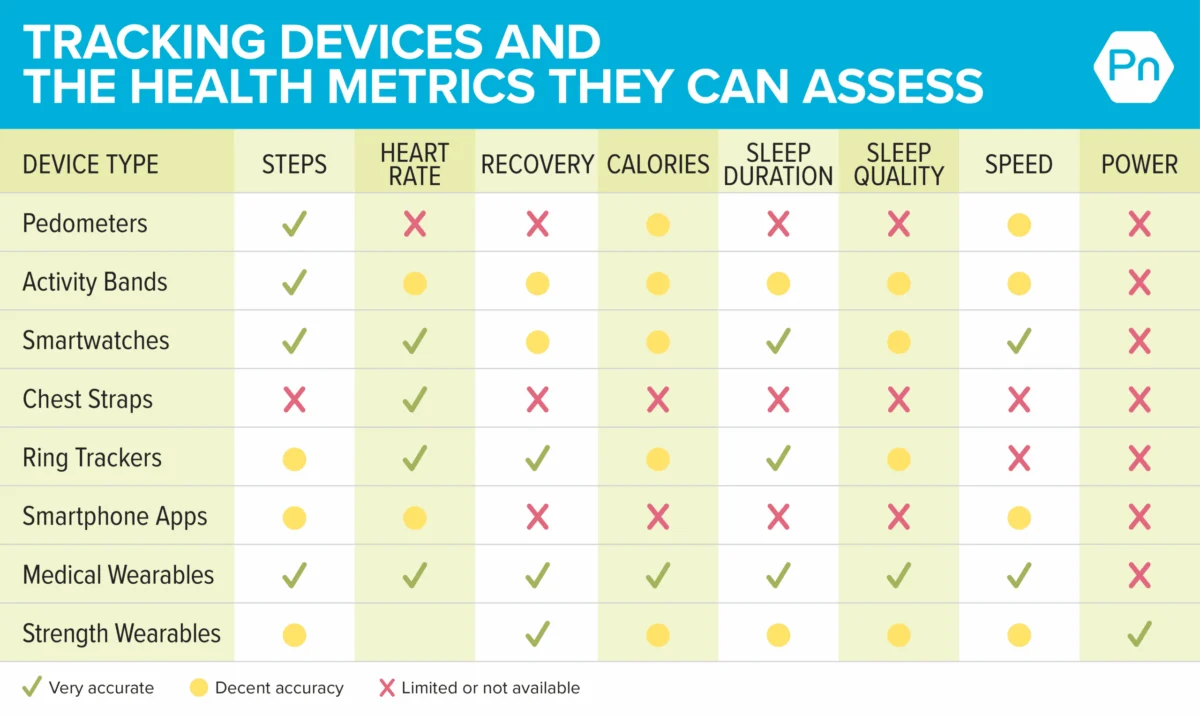

While our ancestors relied solely on their intrinsic senses to gauge their physical state and wellbeing, contemporary society has increasingly pivoted towards sophisticated gadgets for these vital assessments. Today, individuals possess an unprecedented capacity to quantify various physiological metrics—from heart rate and step count to exercise intensity and sleep quality—often consolidated within a single, elegantly designed device. This technological evolution marks a significant paradigm shift, establishing a crucial bridge between subjective personal feelings and objectively measurable physiological data.
This convergence of personal perception and empirical data represents a generally remarkable advancement. Human subjective feelings and self-assessments, while invaluable for qualitative experience, are not always the most reliable indicators of precise physiological realities. Humans, by nature, often lack the innate ability to quantify their experiences and behaviors with cold, impartial precision. A classic illustration involves an individual who meticulously believed they maintained a specific caloric intake, only to discover, through diligent tracking, an additional 500 calories consumed daily, largely attributable to an overlooked ingredient like barbecue sauce. Such anecdotes underscore the inherent fallibility of self-estimation.
However, human capacity for self-assessment exists on a spectrum. Legendary figures like Canadian sprinter Ben Johnson were reportedly capable of estimating their 100-meter sprint times within a tenth of a second of the official stopwatch readout. While such an ability represents an extreme outlier performance, it prompts a fundamental inquiry: How adept are individuals at assessing their own physiological states and behaviors? And, more critically, how can this accuracy be enhanced through the judicious application of technology—such as fitness trackers—to inform superior health decisions?
This article delves into these questions, examining the reliability of contemporary health trackers, identifying scenarios where data-driven insights prove most beneficial, and outlining practical strategies for integrating technology to refine personal self-assessment.
The Rise of the Quantified Self and Wearable Tech Evolution
The advent of accessible wearable technology has democratized personal health monitoring, moving it from the exclusive domain of medical professionals and elite athletes into the hands of the general public. This phenomenon is deeply intertwined with the "Quantified Self" movement, which emerged in the early 2000s, advocating for self-knowledge through numbers. What began with rudimentary pedometers and heart rate monitors has rapidly evolved into a sophisticated ecosystem of smartwatches, rings, chest straps, and specialized sensors, each promising deeper insights into the human body.
This technological progression is underpinned by advancements in microelectronics, sensor technology, and data processing. Modern devices integrate optical sensors for heart rate variability, accelerometers and gyroscopes for motion detection, GPS for location and speed, and even electrodermal activity sensors for stress detection. The continuous collection of these data points, coupled with increasingly complex algorithms, aims to paint a comprehensive picture of an individual’s health trajectory. The global market for wearable technology is projected to continue its rapid expansion, reflecting a societal trend towards proactive health management and personalized wellness.
Chronology of Self-Tracking Technology
The journey from rudimentary personal tracking to today’s advanced wearables has been incremental, yet transformative:
- Early 20th Century: Mechanical pedometers emerge, primarily used for counting steps. These simple devices offered the first widely accessible means of quantifying physical activity outside of a laboratory setting.
- 1970s-1980s: Early heart rate monitors are developed, primarily for athletes and medical use. These devices were often bulky and expensive, requiring chest straps for accurate readings, making them largely inaccessible to the general public.
- 1990s: Digital pedometers become more common, offering increased accuracy and digital displays. Early GPS devices begin to appear, mainly for navigation, not yet integrated for personal health tracking.
- Early 2000s: The "Quantified Self" movement gains traction, fueled by early blogs and communities focused on self-tracking using spreadsheets and basic digital tools. Companies like Fitbit (founded 2007) begin to commercialize activity trackers, bringing them to a wider consumer base with wrist-worn devices that track steps and basic sleep.
- 2010-2015: An explosion of wearable devices occurs. Smartwatches (e.g., Apple Watch, Android Wear) enter the market, integrating multiple sensors and offering diverse functionalities beyond simple activity tracking, including advanced heart rate monitoring and smartphone notifications. Sleep tracking becomes a prominent feature. The development of sophisticated smartphone applications for nutrition tracking (e.g., MyFitnessPal) further empowers users to log dietary intake.
- 2015-Present: Miniaturization and advanced sensor integration lead to less intrusive form factors like smart rings (e.g., Oura Ring). The focus shifts from mere data collection to providing actionable insights, recovery scores, and personalized coaching feedback powered by artificial intelligence and machine learning algorithms. Continuous Glucose Monitors (CGMs) gain popularity among non-diabetics for "biohacking" and optimizing metabolic responses to food. Ethical discussions around data privacy, security, and the potential for digital addiction intensify as these devices become ubiquitous.
This timeline illustrates a clear trend: from simple step counting to a holistic, data-rich approach to personal health, with an ever-increasing emphasis on predictive analytics and personalized recommendations.

Understanding the Accuracy and Limitations of Tracking Devices
Despite the proliferation of these devices, it is crucial to recognize that not all data is created equal. The accuracy and utility of health metrics vary significantly based on the device, the quality of its hardware and software, and the specific physiological parameter being measured. Health tech analysts note that while the industry is rapidly innovating, a lack of standardized clinical validation for all consumer devices means users must approach data with informed skepticism.
Accuracy Variances Across Metrics and Devices
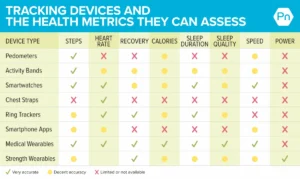
Generally, metrics such as heart rate and step count are considered to be relatively reliable across a wide range of consumer-grade devices. Optical heart rate sensors, common in wrist-worn trackers, have shown good correlation with electrocardiogram (ECG) measurements, particularly during steady-state activities. Step counts, derived from accelerometer data, also exhibit high accuracy for most walking and running activities. These core metrics form the foundation of most fitness trackers.
However, the precision declines substantially for other outputs. Calorie expenditure estimations, for instance, are notoriously challenging to quantify accurately. These calculations often rely on generalized algorithms that take into account factors like age, weight, height, and activity type, but struggle to account for individual metabolic variations, body composition, and exercise efficiency. Research consistently indicates significant margins of error for calorie burn estimates, sometimes exceeding 20-30% compared to gold-standard metabolic measurements. Similarly, metrics like sleep quality, recovery scores, and movement velocity can be more inferential and less directly measurable, introducing greater potential for inaccuracies. Sleep tracking, while useful for identifying trends in sleep duration, often struggles with accurately discerning sleep stages (REM, deep, light) compared to polysomnography in a lab setting.
The fidelity of data also depends heavily on the device type and its placement. Chest straps, utilizing electrical signals (ECG), typically offer the most accurate heart rate data, often considered the benchmark by sports scientists. Smartwatches and activity bands, while convenient, can be influenced by movement artifacts, poor skin contact, and even skin tone variations. Ring trackers, positioned on the finger, offer an alternative measurement site that can sometimes provide more stable readings, especially for sleep metrics. Specialized medical wearables, designed for clinical accuracy and often FDA-approved, represent the highest tier of precision but are not typically consumer-facing and are used under medical supervision.
Consumers are advised to approach all data with a degree of critical awareness, understanding that while trends and relative changes can be highly informative, absolute values for certain metrics may carry substantial error margins. Health professionals often recommend using these devices as tools for self-awareness and motivation, rather than as definitive diagnostic instruments.
The Paradox of Information: Navigating Data Overload
While the proliferation of data offers unprecedented opportunities, it also presents a significant challenge: the paradox of tracking. As computer scientist Samantha Kleinberg notes, "even a tiny amount of surplus information has a big negative effect on our decision-making." This observation highlights an inverted U-shaped relationship between the amount of relevant information available and the ability to make effective decisions. There exists a "sweet spot"—an optimal amount of information—beyond which, additional data can hinder rather than help, leading to "analysis paralysis."
This phenomenon is readily apparent in daily life. Consider the overwhelming experience of sifting through hundreds of online reviews for a simple task like choosing a local restaurant. What began as a quest for a decent meal quickly devolves into indecision due to an excess of conflicting opinions and minutiae. In the realm of health and fitness, this "data fatigue" is exacerbated by an industry constantly striving to offer "more science, more customization, and more complexity." When information blurs into an indistinct mass without clear pathways for action, its utility diminishes. Psychologists studying decision-making have long identified this cognitive overload, where too many variables can overwhelm the brain’s processing capacity, leading to inaction or poor choices.
For individuals grappling with this data deluge, a fundamental question serves as a compass: "Does tracking genuinely enhance my wellbeing and performance?" A clear affirmative or negative answer provides immediate guidance: either continue with the current tracking regimen or disengage from the device. When the answer is ambiguous, specific indicators can help discern whether the technology is serving its intended purpose.
When Tracking Becomes a Catalyst for Positive Change
Effective data tracking serves as a powerful tool when it aligns with an individual’s goals and psychological state. There are three primary indicators that suggest tracking is genuinely beneficial:

1. Reducing Stress and Validating Methods
For many, objective data provides crucial reassurance, particularly when implementing new or counter-intuitive health strategies. Take Zak, a dedicated individual whose coach championed "Zone 2 cardio"—a low-intensity exercise that felt deceptively easy. Despite his coach’s expert guidance, Zak, accustomed to pushing his limits, struggled to trust that something so effortless could be effective. His heart rate monitor, however, provided undeniable validation. As weeks progressed, his resting heart rate steadily decreased, and his recovery times from more intense runs improved. This objective feedback allowed Zak to relax into the process, leading to further physiological improvements. In such cases, tracking devices calibrate subjective perceptions, making them more accurate and realistic. For coaches, this means empowering clients by spotlighting existing performance, bolstering expert assurance with reliable data, and alleviating anxiety about perceived inadequacy.
Conversely, tracking becomes counterproductive when it needlessly increases stress without offering any actionable upside. A new parent, already sleep-deprived by a newborn, receiving consistently poor sleep quality scores from a tracker, exemplifies this. Such data, while accurate, reports on circumstances largely beyond immediate control and can induce guilt or anxiety rather than facilitate positive change. In these situations, pausing tracking until priorities or circumstances shift is a more beneficial approach, allowing individuals to focus on primary responsibilities without additional digital pressures.
2. Enhancing Motivation and Ability Through Clear Feedback
According to behavioral models, a behavior is most likely to occur when there is sufficient motivation, adequate ability, and a clear prompt. Fitness trackers excel at providing this crucial "prompt" when motivation and ability are already present. Consider Margaret, who habitually consumed a glass of wine each night, convinced it aided her sleep. Upon wearing a sleep tracker, she observed a significant decline in her sleep quality scores on nights she imbibed. This clear, objective feedback—her sleep score—acted as a powerful prompt, leading her to adjust her evening routine. Highlighting key data points can illuminate the optimal choices, often creating an "aha!" moment where once a truth is seen, it cannot be unseen. This direct feedback loop can be a potent driver of behavioral change, transforming abstract health goals into tangible, measurable progress.
The flip side occurs when data collection inadvertently diminishes motivation or ability. Jan, an avid recreational cyclist, initially thrived on using his tracker to demolish local trail records. However, his relentless pursuit of speed led to overtraining, under-recovery, and ultimately, burnout. When workouts transition from being about technique, experience, or enjoyment to an obsessive focus on numerical targets, tracking has likely ceased to be helpful. The intrinsic joy of the activity can be supplanted by the extrinsic pressure of data, leading to a detrimental shift in motivation and potentially fostering unhealthy competitive behaviors.
3. Deepening Self-Understanding and Optimizing Performance
The conventional wisdom often dictates that "the harder you work, the better your results." While true to a point, this belief can lead individuals, particularly "grinders," into unproductive patterns, where they inadvertently inhibit performance and recovery by overtraining. Conversely, many chronically underestimate their effort and capacity, missing opportunities for growth. In both scenarios, objective data can provide a more accurate understanding of personal potential.
Take high-intensity interval training (HIIT). While HIIT protocols prescribe fixed periods of intense effort and rest, these rest durations are often generalized estimates. Heart rate data, however, can provide an individualized picture of actual recovery needs, which may be faster or slower than anticipated. The mind might be ready for the next interval, but the heart—and the data—might signal "not quite yet." A skilled coach leverages such real-time metrics to prevent clients from accumulating "junk volume"—fatigue-inducing effort that yields no performance improvement—thereby optimizing training and recovery efficiency. This personalized approach to training, informed by data, represents a significant advancement in sports science.
However, an over-reliance on data can lead to a disconnection from one’s own internal senses. The infamous "MyFitnessPal Blackout" of 2019, which saw the popular calorie-tracking app go offline for a day, illustrated this vividly. Many users,