
The past year has indelibly etched the concept of exponential growth into the global consciousness, largely through the stark lens of the SARS-CoV-2 virus’s relentless spread. This often-counterintuitive phenomenon, famously illustrated by the ancient wheat and chessboard problem where seemingly small increments quickly lead to astronomical numbers, explained the sudden and dramatic surge in COVID-19 cases that appeared to materialize "out of nowhere." Yet, amidst this somber context, exponential growth also played a surprisingly positive, albeit understated, role in mitigating a different kind of shortage that swept through households worldwide: the scarcity of baking yeast. As lockdowns afforded countless individuals unprecedented free evenings and weekends, a global baking renaissance ignited, leading to an unprecedented demand for baking ingredients, particularly yeast, which vanished from supermarket shelves for weeks and even months in many regions, including Norway.
The Great Baking Boom and the Vanishing Act of Yeast
The early months of 2020 marked a pivotal shift in consumer behavior as governments globally implemented stringent lockdown measures to curb the spread of COVID-19. With restaurants closed and social gatherings restricted, millions found themselves with more time at home, seeking comfort, productivity, and a sense of normalcy. This environment proved fertile ground for a resurgence in home cooking and, more specifically, home baking. Bread-making, once a niche hobby for dedicated enthusiasts, suddenly became a mainstream activity. Social media platforms overflowed with images of freshly baked sourdough loaves, elaborate cakes, and rustic artisan breads, fostering a collective culinary exploration.
This widespread enthusiasm, however, quickly exposed vulnerabilities in the supply chain for basic pantry staples. Flour mills struggled to keep up with retail demand, but it was the humble sachet of yeast that became one of the most elusive commodities. From major metropolitan centers to smaller towns, grocery stores reported unprecedented sell-outs. Consumers, accustomed to readily available ingredients, faced empty shelves, leading to frustration and a scramble for alternatives. The global demand surge for baking yeast, a seemingly minor ingredient, underscored the interconnectedness of consumer behavior and industrial production, highlighting how a change in daily routines could ripple through the global economy.
Unpacking Exponential Growth: The Microscopic Marvel of Yeast
The scarcity of yeast, ironically, brought into focus the very principle of exponential growth that defined the pandemic itself. Yeast, primarily Saccharomyces cerevisiae, is a single-celled microorganism renowned for its ability to convert sugars into carbon dioxide and alcohol through fermentation. This process is fundamental to baking, where the carbon dioxide inflates the dough, giving bread its characteristic airy texture. The magic of yeast lies in its astonishing reproductive capability.
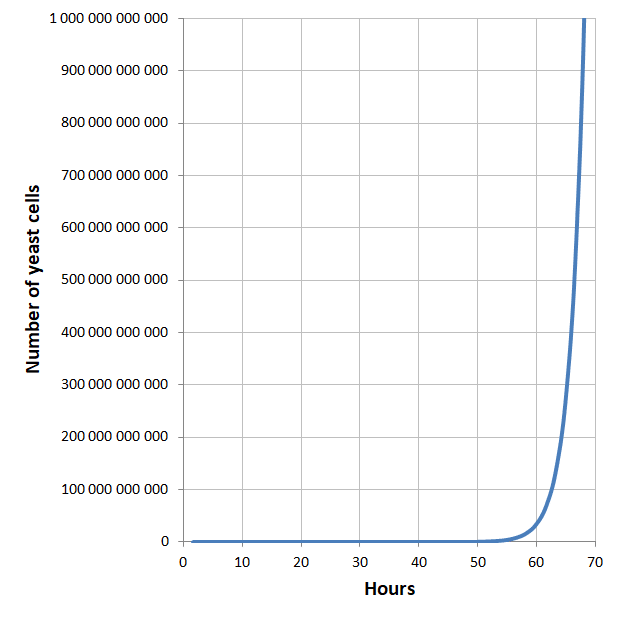
Under ideal conditions – a warm, nutrient-rich environment with adequate oxygen – a single yeast cell can reproduce by budding, effectively splitting into two identical cells. This entire life cycle can occur in as little as 100 minutes, meaning that in just over an hour and a half, a population of yeast can double. This rapid doubling time leads to an exponential explosion in numbers. After another 100 minutes, the two cells become four; after a mere 24 hours, the initial single cell would have multiplied into approximately 16,000 cells. The growth accelerates dramatically, reaching an estimated 268 million cells after 48 hours. By the time three days have elapsed, the descendants of that single yeast cell could number in the order of a trillion (1,000,000,000,000). To put this into perspective, a typical 50-gram block of fresh compressed yeast contains a similar astronomical number of yeast cells. This astounding rate of proliferation, while achievable in optimized commercial bioreactors for limited periods, explains how yeast manufacturers can produce vast quantities of this essential ingredient, yet also how a sudden, unexpected spike in demand can quickly deplete stock.
The Science of Leavening: Beyond Quantity to Quality
Understanding yeast’s exponential growth provided savvy home bakers with a crucial advantage during the shortages. Instead of relying on the standard amounts specified in recipes – which often prioritize speed – many realized that the solution lay not in more yeast, but in more time. The principle is simple: if yeast multiplies exponentially, a smaller initial quantity, given sufficient time, will eventually produce the same leavening power as a larger quantity over a shorter period.
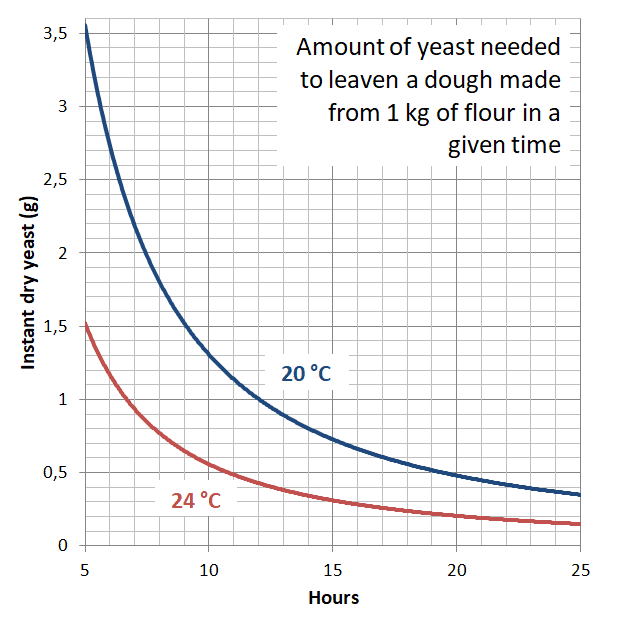
This insight was particularly valuable for "direct dough" or "straight dough" methods, where all ingredients are mixed at once without a preferment. For instance, a dough made with 1 kilogram of wheat flour, typically calling for a significant amount of instant dry yeast for a quick rise, requires only about 0.48 grams of instant dry yeast if allowed to ferment for 20 hours at a moderate temperature of 20°C. This method, known as "long bulk fermentation," not only conserves yeast but also profoundly enhances the flavor profile of the final product. During extended fermentation, lactic acid bacteria, naturally present in flour and the environment, also begin to flourish. These bacteria produce organic acids that contribute complex, nuanced flavors, resulting in bread with greater depth and aroma than quick-risen loaves.
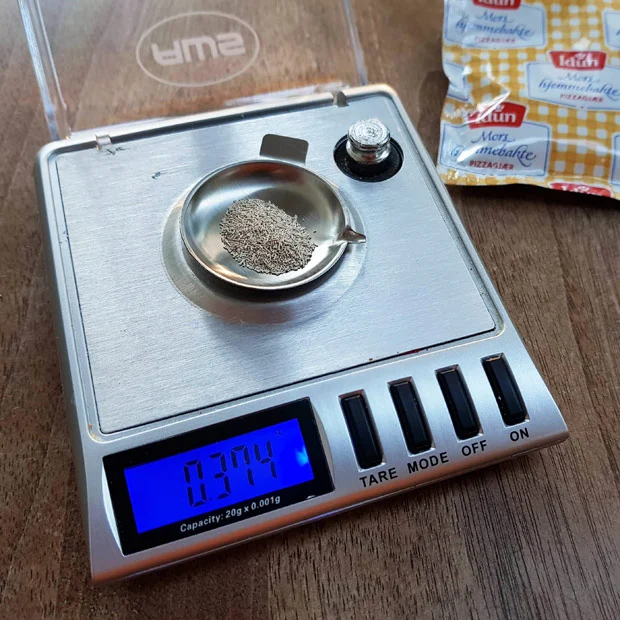
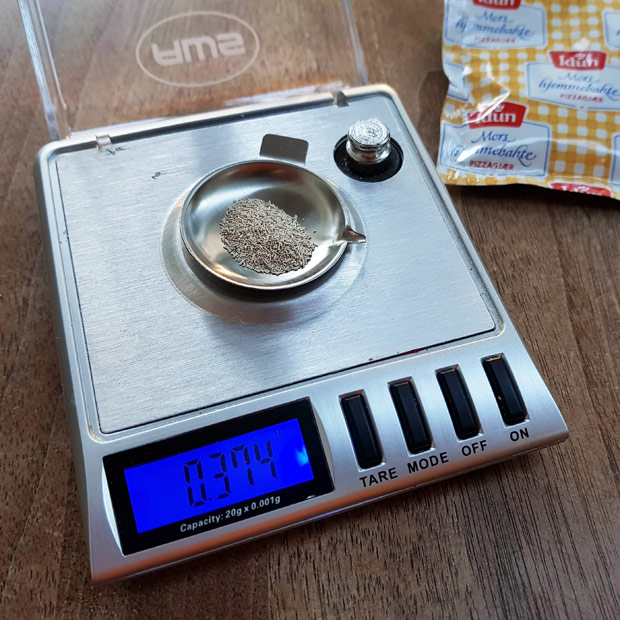
To facilitate this precise approach, home bakers increasingly turned to specialized tools. Digital balances capable of measuring minute quantities, down to 0.001 grams, became highly sought after. While not laboratory-grade equipment, these affordable kitchen scales offered the accuracy needed to measure the tiny amounts of yeast required for extended fermentation. Additionally, mobile applications like PizzApp+ (for Android) emerged as invaluable resources. These apps allow users to input parameters such as flour weight, desired fermentation time, and temperature, then calculate the precise amount of yeast needed. They even offer options for different yeast types—fresh compressed, active dry, instant dry, and even various sourdough starters—empowering bakers to tailor their approach and make the most of limited supplies.
Industry Responses and Broader Implications
The sudden and sustained surge in demand for baking ingredients presented both challenges and opportunities for the food industry. Yeast manufacturers, accustomed to stable supply chains and predictable demand, had to rapidly scale up production. This involved optimizing bioreactor usage, sourcing additional raw materials (like molasses, a common substrate for yeast growth), and adjusting logistics to meet unprecedented retail demand. While specific figures on production increases are often proprietary, the observable return of yeast to supermarket shelves over time suggests a significant, albeit delayed, industry response.
Beyond manufacturers, the broader food ecosystem also felt the impact. Flour mills likewise saw record demand, leading to similar production challenges. Packaging companies experienced increased orders for smaller retail-sized bags of flour and yeast. The renewed interest in home baking also provided a boost to kitchenware retailers selling everything from stand mixers to bread lame.
From a consumer perspective, the yeast shortage, while initially frustrating, fostered a renewed appreciation for basic culinary skills and the science behind everyday foods. It encouraged experimentation, led many to explore sourdough baking as a complete alternative (thereby eliminating the need for commercial yeast entirely), and highlighted the benefits of patience in the kitchen. The allure of instant dry yeast, however, remains strong for its convenience and reliability, ensuring its continued place in many home pantries.
A Lasting Legacy: The Future of Home Baking
The "Great Baking Boom" of the pandemic era is likely to leave a lasting legacy. While the extreme demand for yeast and flour has largely subsided, a significant portion of the population rediscovered the joys and therapeutic benefits of baking. This cultural shift suggests a potential sustained increase in home baking activities compared to pre-pandemic levels. Consumers are now more informed about ingredients, more willing to experiment with longer fermentation times, and more equipped with the tools and knowledge gained during a period of enforced culinary self-reliance.
The experience also served as a stark reminder of the delicate balance within global supply chains and how quickly unexpected events can disrupt the availability of even the most fundamental goods. It underscored the importance of resilience, adaptability, and informed decision-making, both for individuals in their kitchens and for industries worldwide. In a world grappling with the invisible forces of exponential spread, the microscopic power of yeast offered a tangible, comforting, and ultimately enriching counter-narrative, turning scarcity into an opportunity for culinary exploration and deeper understanding.