
The pursuit of an exceptional cup of coffee has evolved significantly from a routine morning ritual into a sophisticated blend of art and applied science. Driven by a burgeoning appreciation for nuanced flavors and a desire for reproducibility, enthusiasts and professionals alike are increasingly turning to scientific principles to demystify the brewing process. This shift is exemplified by individuals transitioning from casual coffee consumption to a meticulous exploration of parameters that dictate the final beverage’s quality, strength, and flavor profile.
The Third Wave and a Personal Awakening
The global coffee landscape has undergone a profound transformation with the advent of the "Third Wave of Coffee." Emerging in the late 20th and early 21st centuries, this movement moved beyond the commoditization of coffee (first wave) and the rise of espresso bars (second wave) to emphasize coffee as an artisanal product. Central to the Third Wave is a focus on high-quality, single-origin beans, meticulous roasting, and precise brewing techniques that highlight the inherent characteristics of the coffee plant itself. This ethos has fostered a vibrant community of roasters, baristas, and consumers dedicated to transparency, sustainability, and sensory excellence.
For many, the journey into this intricate world begins unexpectedly. What starts as a functional need for caffeine, perhaps spurred by demanding professional schedules and lengthy commutes, gradually gives way to an appreciation for coffee’s complex sensory dimensions. For one individual, a PhD in chemistry and the demands of a new job, including a one-hour commute, initially solidified coffee as a necessity. Over 15 years, this relationship deepened, transforming into a connoisseurship focused on lightly roasted, single-sourced specialty coffee. This personal evolution mirrors the broader societal trend, where a functional beverage becomes an object of sensory exploration.
Scandinavia, in particular, has become a hotbed for Third Wave coffee culture. Monthly subscriptions, such as those offered by Kaffebox, deliver curated selections from acclaimed roasters across Norway, Sweden, and Denmark, exposing subscribers to a diverse range of origins, processing methods, and flavor profiles. The extraordinary circumstances of 2020, with reduced social interaction during holiday periods, provided an unexpected opportunity for deeper engagement with this passion. A "Coffee Advent Calendar" offering 24 days of blind tasting proved to be an invaluable educational tool. This immersive experience highlighted the subtle yet significant impact of bean origin and processing on flavor, underscoring that while some distinctions are readily apparent, others demand a trained palate and an analytical approach. The adage "when you win, you win – when you lose you learn" aptly summarized the blend of joy and revelation found in correctly identifying a coffee’s characteristics or discovering the profound influence of processing techniques.
This period of heightened focus also brought to light a crucial deficiency: the lack of reproducible control in brewing pour-over coffee. Experimenting with various hand grinders alongside a trusty Rancilio Rocky espresso grinder introduced a frustrating variability, a feeling akin to "panta rhei" – everything flows, unpredictably. This initial frustration, however, became a catalyst for intensive research and learning, pulling the individual into the surprisingly deep rabbit hole of coffee science.

A History of Extraction: From Water to Coffee
The concept of extraction, the process of separating desired components from a mixture using a solvent, is a recurring theme in chemistry and culinary arts. Previous explorations have spanned diverse applications, from extracting flavors using water, oil, and ethanol in various food preparations, to the complex extraction processes involved in brewing beer. Within the realm of coffee, earlier forays included examining the unique method of Norwegian egg coffee, the convenience of the Aeropress for travel, and even the counterintuitive practice of adding salt to coffee, a technique famously explored with coffee expert Tim Wendelboe. Early investigations also touched upon the intricacies of espresso extraction.
However, the recent deep dive into coffee science revealed the vastness of knowledge accumulated over the past decade, particularly concerning pour-over and drip coffee. The proliferation of scientific publications directly relevant to coffee brewing, both in commercial cafés and home settings, signifies a maturation of the field. This wealth of information provides a robust framework for understanding and optimizing every step of the brewing process.
Decoding Extraction: Key Parameters for Precision Brewing
Achieving an optimal cup of coffee involves influencing a series of critical parameters, starting from the moment high-quality, single-origin beans, carefully processed and roasted by skilled artisans, arrive on the kitchen counter.
1. Brew Ratio (BR): The Foundation of Strength
The brew ratio (BR) is the most fundamental parameter in coffee brewing, defining the proportion of water to coffee grounds. It is typically expressed as the mass of water in grams divided by the mass of coffee grounds in grams. A common starting point for black coffee is 60 grams of coffee per 1000 grams of water, resulting in a BR of approximately 16.7 (1000g water / 60g coffee). This ratio is analogous to a baker’s percentage, providing a concise "recipe" for strength. Brew ratios for black coffee generally fall within the range of 15 to 25. For instance, the Specialty Coffee Association (SCA) often recommends a brew ratio of 1:18 (55 grams of coffee per liter of water) for their "Golden Cup" standard, though personal preference and coffee type can lead to significant variations. The utility of BR lies in its scalability, allowing brewers to easily adjust recipes for different serving sizes while maintaining consistency.
2. Total Dissolved Solids (TDS): Quantifying Coffee Strength
While subjective taste perception is paramount, Total Dissolved Solids (TDS) offers an objective metric for measuring coffee strength. TDS quantifies the percentage of non-water components dissolved in the brewed coffee. A typical cup of black coffee contains 1.2-1.5% TDS, meaning it is over 98% water. This seemingly small percentage of dissolved solids, comprising a complex array of organic acids, sugars, melanoidins, and other aromatic compounds, is responsible for all of coffee’s flavor.
The realization that overly strong coffee can mask delicate flavors, often perceived as bitterness, highlights the importance of TDS. Adding a small amount of hot water can sometimes unlock a cascade of fruity notes, transforming a harsh brew into a vibrant one. However, this retrospective adjustment is not ideal for systematic exploration.
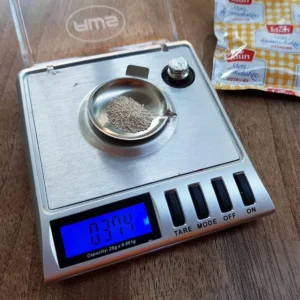
Traditionally, TDS was measured gravimetrically: evaporating a known volume of coffee to dryness and weighing the residue. This method, while accurate, is impractical for home or café use due to the need for highly accurate balances (sensitive to 0.0001 g for the small amounts of residue) and the time involved. Moreover, volatile aromatic compounds would evaporate alongside water, though their mass contribution to the overall residue is minimal.
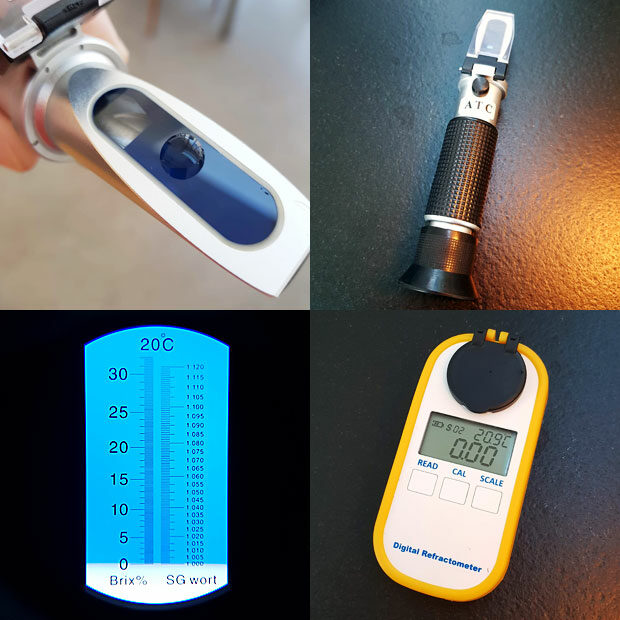
Fortunately, refractometry provides a more accessible and rapid method. Light travels at different speeds through substances of varying densities, causing a phenomenon known as refraction. A refractometer measures this change in refractive index, which correlates directly with the concentration of dissolved solids.
- Handheld Refractometers: These analogue devices, often equipped with a %Brix scale, offer an affordable entry point. Brix (degrees Brix, °B) is a measure of sugar content, but for coffee, it can be converted to %TDS by multiplying by a factor of approximately 0.85 (%TDS = %Brix x 0.85). This conversion factor can be easily validated using instant coffee, which provides a known mass of dissolved solids. While handheld refractometers provide a resolution of 0.0-0.2 %Brix, allowing brewers to confirm if their coffee falls within the typical 1.2-1.5% TDS range, they lack the precision for fine-tuning. Their versatility, however, extends beyond coffee, making them useful kitchen tools for measuring sugar content in sorbets (e.g., aiming for 26 %Brix) or specific gravity in homebrewed beer (if equipped with an SG scale).
- Digital Refractometers: These devices offer superior accuracy (e.g., 0.01 °B readout) and often feature automatic conversion to TDS, making them invaluable for precise brewing. However, their higher cost can be a barrier for many enthusiasts.
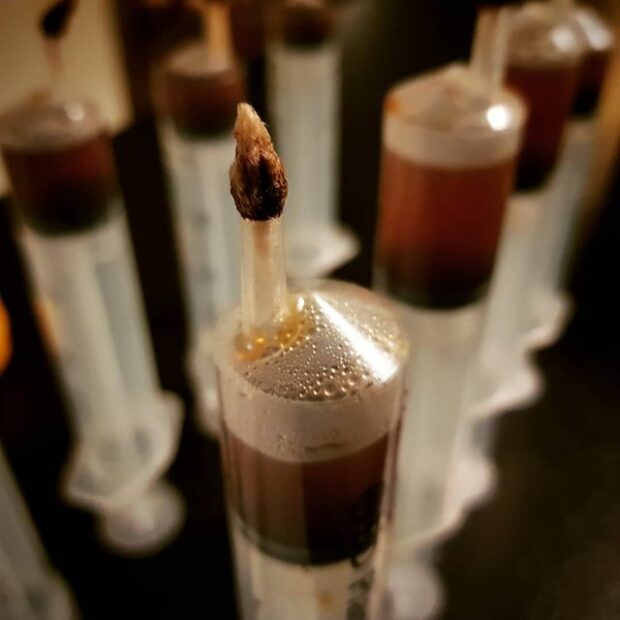
For accurate TDS measurements, especially during the extraction process, samples must be hot-filtered to immediately halt extraction and then cooled completely before measurement. A practical and cost-effective DIY method involves using plastic syringes with a small cotton plug for hot filtering. The cotton acts as a filter, and the syringe provides an airtight environment for cooling, minimizing evaporation. Once cooled, the plunger delivers the precise amount of sample needed, eliminating the need for additional pipettes. This method, though simple, yields reliable results without the expense of laboratory-grade syringe filters.
3. Extraction Yield (EY and EEY): Measuring Efficiency and Flavor Profile
Once TDS is measured, calculating the extraction yield (EY) is the next logical step. EY represents the percentage of soluble material extracted from the dry coffee grounds. It is a critical metric because it correlates directly with the flavor profile:
- Under-extracted coffee (low EY) often tastes sour, grassy, or thin, indicating that desirable flavor compounds have not been fully dissolved.
- Over-extracted coffee (high EY) typically tastes bitter, astringent, or hollow, signifying the dissolution of undesirable compounds.
- The generally accepted ideal extraction yield for a balanced cup often falls within the 18-22% range, as per the SCA’s "Golden Cup" standard.
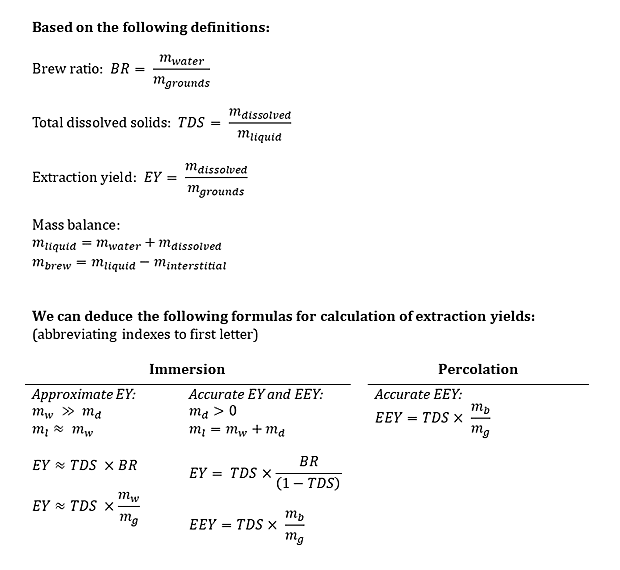
The calculation of EY can become complex, particularly when distinguishing between immersion brews (like French press) and percolation brews (like pour-over). The challenge arises from the "interstitial liquid" – the water remaining within the coffee bed after brewing.
- Immersion Brews: In an immersion brew, all the water and grounds are mixed together. The dissolved solids are uniformly distributed. The total liquid mass includes the initial water plus the mass of dissolved solids.
- Percolation Brews: In a percolation brew, fresh water continuously passes through the coffee bed. The interstitial liquid, which remains trapped, has a different composition from the liquid that ends up in the cup.
To address this complexity, two definitions of extraction yield can be considered:
- Extraction Yield (EY): Focuses on the total mass of solids removed from the coffee grounds into the entire liquid mass (including interstitial liquid).
- Effective Extraction Yield (EEY): Focuses on the total mass of solids delivered to the cup.
For percolation brews, EY and EEY are often considered equivalent if one assumes the interstitial liquid does not contribute to the final beverage composition. However, experts like Scott Rao and Jonathan Gagné have detailed the nuances of these calculations, highlighting the ongoing discussion within the coffee science community. The distinction becomes relevant when analyzing economic efficiency (EEY focuses on what the consumer gets) versus the chemical transformation of the coffee grounds (EY reflects what has been extracted).
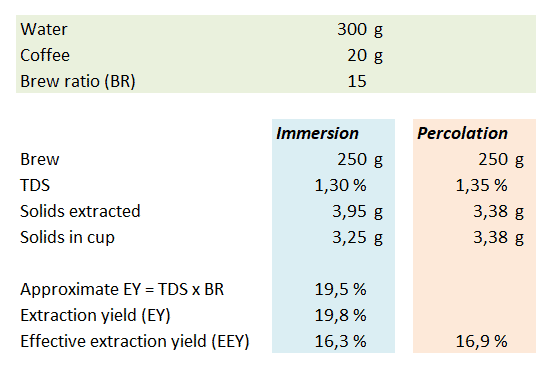
Let’s illustrate with an example: Using 300g of water and 20g of coffee, yielding 250g of brewed coffee in the cup (Brew Ratio = 15).
- Immersion Brew: If the brew measures 1.30% TDS, the total dissolved solids (mdissolved) in the entire liquid mass (300g water + 1.30% solids) would be approximately 3.95g. The precise EY = TDS x BR / (1-TDS) = 1.30% x 15 / (100%-1.30%) = 19.8%. The effective extraction yield (EEY) in the cup = TDS x mbrew / mgrounds = 1.30% x 250g / 20g = 16.3%.
- Percolation Brew: Assuming a slightly higher TDS of 1.35% in the cup (due to fresh water continuously extracting), the mdissolved in the cup = 1.35% x 250g = 3.38g. This results in an EEY = 1.35% x 250g / 20g = 16.9%.
This comparison reveals a crucial insight: while immersion methods may extract more total solids from the grounds into the entire liquid, percolation methods are more efficient at delivering those solids to the cup. The difference in extracted mass (e.g., 3.95g vs. 3.38g in the example) directly contributes to the distinct flavor profiles of immersion and percolation brews. Given the hundreds of chemical compounds in coffee, a 0.57g difference in extracted solids implies a significant shift in the final chemical composition and, consequently, the sensory experience.
For accurate yield calculations, often overlooked factors include water evaporation during brewing (which alters the effective brew ratio) and the inherent moisture content of roasted coffee beans (typically 1-4%). The precision of weighing coffee grounds and measuring TDS directly impacts the accuracy of EY calculations. For instance, a +/- 0.1% uncertainty in TDS from a handheld refractometer can lead to a +/- 1.7% uncertainty in EY for a 15.0g coffee dose, highlighting the need for higher precision equipment for fine-tuning.
4. Grind Size and Particle Size Distribution (PSD): The Surface Area Dictator
The grinding of roasted coffee beans is not merely about breaking them down; it’s about controlling the surface area available for extraction. When a bean shatters, it produces a spectrum of particles: large "boulders," medium-sized particles, and very fine particles, often termed "fines" (typically defined as particles smaller than 100 µm). Ground coffee therefore exhibits a Particle Size Distribution (PSD), rather than a uniform size.
Measuring PSD accurately is challenging. Mechanical sifters, like those offered by Kruve, or laboratory-grade mesh test sieves, can separate particles by size. More sophisticated industrial equipment (e.g., MicroTrac, Sympatec) utilizes laser diffraction. For home users, image analysis tools, such as Python apps, can estimate particle sizes from micrographs, though they often underestimate fines due to agglomeration.
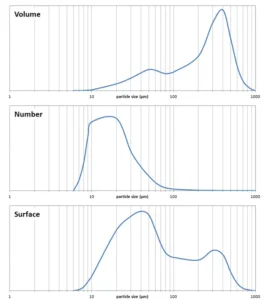
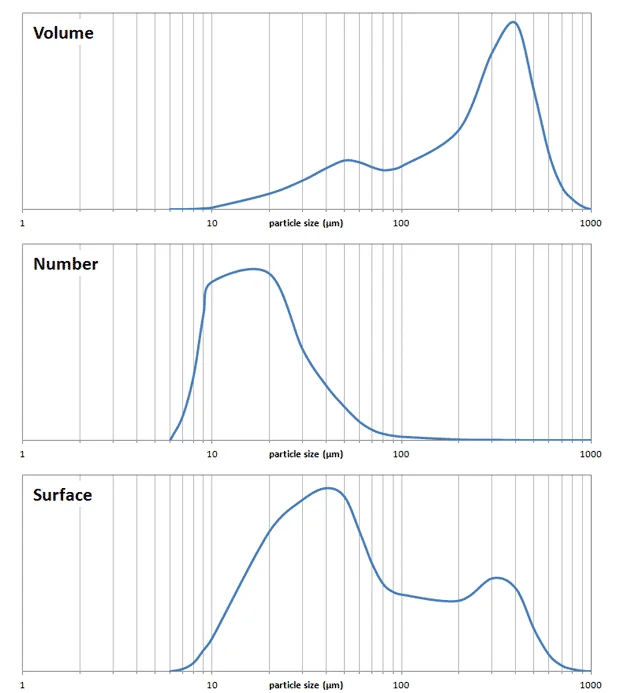
The way PSD is visualized significantly impacts its interpretation.
- Volume Distribution: Commonly displayed, it shows the proportion of total coffee volume contributed by different particle sizes. While "correct," it can obscure the impact of fines, which contribute little volume.
- Number Distribution: Shows the sheer quantity of particles at different sizes. This reveals the immense number of fines, even if their total volume is small.
- Surface Area Distribution: In the context of extraction, this is arguably the most relevant visualization. Extraction primarily occurs at the particle surface. A surface area distribution often reveals that a significant portion of extraction (e.g., over half) occurs on particles smaller than 100 µm, even if they represent a small fraction of the total volume.
This has profound implications for brewing efficiency. Preliminary research, notably by Matt Perger of Barista Hustle, suggests that coffee particles may only extract to a depth of approximately 100 µm. This implies that the core of larger particles remains unextracted, representing "wasted" coffee. However, larger particles are not useless; they form the structural bed in percolation brewing, facilitating water flow and preventing clogging, thereby regulating "drawdown time."
For pour-over coffee, a narrow particle size distribution, with minimal fines, is generally preferred. Fines can lead to over-extraction (due to their vast surface area), clogging filters, and increasing drawdown time, resulting in a bitter, astringent, and muddy cup. Conversely, a grind that is too coarse will lead to under-extraction, resulting in a sour and weak brew. The ideal grind finds a balance, allowing for sufficient extraction while maintaining an optimal flow rate. Espresso, however, benefits from a certain proportion of fines to create resistance for pressurized extraction and contribute to crema.
The choice of grinder is paramount. Inexpensive blade grinders ("knife grinders") produce highly inconsistent grinds with a high proportion of fines and boulders, making them unsuitable for quality coffee. Burr grinders, the standard for home and café use, employ two abrasive surfaces (burrs) to crush beans. These come in various materials, geometries (conical or flat), and sizes. Flat burrs, often found in higher-end machines, are generally favored for their ability to produce more uniform grinds. Different burr designs are optimized for specific brewing methods; some excel at espresso (where controlled fines are needed), while others are designed for pour-over (minimizing fines). Hand grinders almost exclusively use conical burrs due to their compact design.
While industrial cylindrical grinders can achieve extremely narrow PSDs, offering a potentially superior grind quality compared to smaller-scale equipment, the benefits of grinding fresh beans at home typically outweigh this. Pre-ground coffee, even if industrially ground and packaged in an inert atmosphere, begins to oxidize rapidly once the bag is opened, leading to stale flavors as oils go rancid. This degradation can occur within days.
Advanced grinding techniques, such as double grinding (a coarse grind followed by a finer one), could potentially narrow the PSD by reducing the stress on the burrs in a single step. However, properly evaluating such techniques requires accurate PSD measurement, which remains a challenge for most home brewers.
5. Freshness of Beans: The Battle Against Oxidation
The freshness of coffee beans is a non-negotiable factor for optimal flavor. Roasted coffee contains volatile aromatic compounds that degrade rapidly upon exposure to oxygen, leading to oxidation and the development of stale, cardboard-like flavors. Beans should be stored in an airtight, opaque container, ideally with a one-way valve to allow off-gassing while preventing oxygen ingress. For longer storage, freezing can significantly slow down oxidation, especially for larger quantities. Crucially, coffee should only be ground immediately before brewing. Grinding vastly increases the surface area, accelerating oxidation exponentially.
6. Water Composition: The Unsung Hero of Flavor
Water is not merely a solvent; its mineral content profoundly influences coffee extraction and flavor. Just as in beer brewing, specific mineral profiles can enhance or detract from a coffee’s sensory attributes.
- Minerals and Flavor: Calcium and magnesium ions, for example, can bind with certain flavor compounds, enhancing their extraction and perception. Bicarbonates act as buffers, influencing the pH of the brew and affecting the perception of acidity.
- Hard vs. Soft Water: Hard water, rich in minerals, can sometimes lead to over-extraction or muddy flavors. Soft water, conversely, might result in under-extracted, flat coffee if insufficient minerals are present to facilitate optimal extraction.
- DIY Mineral Water: The concept of "DIY mineral waters," involving the precise addition of mineral salts to distilled or very soft tap water, allows brewers to tailor water composition to specific coffee profiles or established recipes (e.g., those from Jonathan Gagné’s Coffee Ad Astra blog). This approach, though requiring some chemical understanding and a good spreadsheet calculator, offers unparalleled control over a crucial brewing variable. The Specialty Coffee Association has also published guidelines for "ideal" brewing water, typically recommending a balance of alkalinity, hardness, and pH.
7. Temperature: The Catalyst for Extraction
Temperature is a critical kinetic factor in coffee extraction.
- Solubility and Diffusion: Higher temperatures generally increase the solubility of chemical compounds and accelerate the rate of diffusion, meaning more solubles are extracted more quickly.
- Optimal Range: For hot brewing, temperatures typically range from 90-96°C (195-205°F). Below this, under-extraction can occur; above it, rapid over-extraction and the dissolution of undesirable bitter compounds are more likely.
- Cold Brew: Cold brewing intentionally lowers the temperature, drastically slowing extraction kinetics. This extended steeping, often overnight, results in a brew with a distinct flavor profile, typically lower in acidity and bitterness compared to hot coffee, due to the differential solubility of compounds at lower temperatures.
- Sensory Perception: The temperature at which coffee is consumed also affects its sensory profile. Sweetness and bitterness tend to be attenuated as a beverage cools, while sourness and saltiness remain more stable. This underscores the importance of evaluating coffee at consistent temperatures.
8. Filter Material: Shaping Clarity and Mouthfeel
The filter material significantly impacts the final cup, influencing both clarity and mouthfeel.
- Particle Retention: Paper filters are highly effective at retaining fine particles, leading to a "cleaner" cup with less sediment, often described as having a lighter "body" or "texture." This contrasts sharply with French press coffee, which leaves a significant amount of microscopic sediment, contributing to a "muddy" or heavier "body." Research on chocolate has shown that humans can detect particle size differences as small as 5 µm, explaining why these subtle differences in filtration are perceptible.
- Oil Retention: Paper filters also retain coffee oils, which contribute significantly to mouthfeel and some aromatic compounds. Metal filters, conversely, allow oils to pass through, resulting in a richer, fuller-bodied coffee, similar to espresso. Experimenting with metal filters can reveal what is "missing" when using paper.
- Paper Filter Variations: Within paper filters, choices range from bleached to unbleached. While environmental concerns often favor unbleached, bleached filters typically offer a more neutral flavor profile due to the removal of lignin and hemicellulose. Modern bleaching processes largely avoid chlorine, using other oxidizing agents. The variety of paper filters, often differentiated by pore size, density, and flow rate, is vast (e.g., Whatman filter papers offer a wide range for scientific filtration). The filter’s performance is further complicated by the swelling of cellulose fibers when wet, which can alter effective pore size.
A Structured Path to Brewing Excellence
For those embarking on a scientific approach to coffee brewing, a systematic exploration of these parameters is key. A logical progression would be:
- Brew Ratio, Total Dissolved Solids, and Extraction Yield: These three are inextricably linked and form the foundation for understanding coffee strength and flavor balance. Mastering their measurement and adjustment is paramount.
- Grind Size and Particle Size Distribution: Once the fundamental strength and extraction are understood, optimizing the grind becomes crucial for consistent extraction kinetics and flow.
- Freshness of Beans: While essential, even the freshest beans cannot compensate for fundamental errors in strength or extraction.
- Water Composition: This is a more advanced parameter, best explored once the first three are well-controlled and consistent.
- Temperature: Fine-tuning temperature allows for subtle adjustments to extraction speed and solubility.
- Filter Material: Experimenting with different filters offers a final layer of control over clarity and mouthfeel.
This hierarchical approach ensures that fundamental issues are addressed before delving into more nuanced adjustments. Tools like the "Coffee Compass" from Barista Hustle provide a practical framework for diagnosing sensory issues (e.g., sour, bitter, weak, strong) and guiding corrective actions, linking subjective taste back to objective brewing parameters.
Ultimately, the integration of scientific understanding into coffee brewing transforms it from a hit-or-miss endeavor into a reproducible and deeply rewarding experience. By meticulously controlling variables and understanding their impact, home brewers and professionals alike can unlock the full potential of specialty coffee, pushing the boundaries of flavor and consistency, and bridging the gap between artisan and scientist. The ongoing research and collaborative spirit within the coffee community promise even deeper insights into this beloved beverage.