
The global landscape of 2020 and 2021 was profoundly shaped by the rapid, often counterintuitive, dynamics of exponential growth. While public discourse predominantly focused on the alarming spread of the SARS-CoV-2 virus, another, more benign manifestation of this mathematical principle was simultaneously unfolding in kitchens worldwide: the exponential proliferation of yeast, catalyzing an unprecedented surge in home baking. This duality of exponential phenomena underscored both the challenges and the unexpected silver linings of a world in lockdown, transforming grocery aisles and culinary habits alike.
The Global Pandemic and the Rise of Home Baking
As nations implemented stringent lockdown measures to curb the spread of COVID-19, millions found themselves confined to their homes, leading to significant shifts in daily routines and consumption patterns. The initial shock of the pandemic quickly gave way to new domestic realities, characterized by remote work, virtual schooling, and a dramatic reduction in external social activities. This newfound time at home, coupled with anxieties about food security and a search for comforting activities, sparked a remarkable resurgence in home baking. From sourdough starters to simple loaves of bread, baking became a pervasive trend, a therapeutic escape, and a practical means of feeding families.
Reports from around the globe painted a consistent picture: grocery stores struggled to keep pace with demand for essential baking ingredients. Flour mills operated at maximum capacity, yet shelves often remained bare. Yeast, in particular, became a coveted commodity. In Norway, as in many other countries, instant dry yeast sachets were sold out for weeks and even months. This phenomenon was not isolated to specific regions; anecdotal and commercial data from North America, Europe, and Australia all confirmed a global surge in baking supply purchases. Major yeast manufacturers reported unprecedented demand, with sales skyrocketing by 40% to 60% in some markets compared to pre-pandemic levels. The once-niche hobby of home baking transformed into a widespread activity, driven by necessity, novelty, and the simple joy of creating something tangible in uncertain times.
Understanding Exponential Growth: From Virus to Yeast
The concept of exponential growth, previously a subject often confined to scientific and economic discussions, entered mainstream consciousness with the advent of the pandemic. The rapid escalation of COVID-19 cases, often appearing to "skyrocket out of nowhere" after a period of seemingly slow progression, served as a stark, real-world illustration of this phenomenon. The human mind often struggles to intuitively grasp exponential increases, a challenge famously demonstrated by the ancient "wheat and chessboard problem," where the number of grains of wheat doubles on each successive square, leading to an unfathomable quantity by the end.
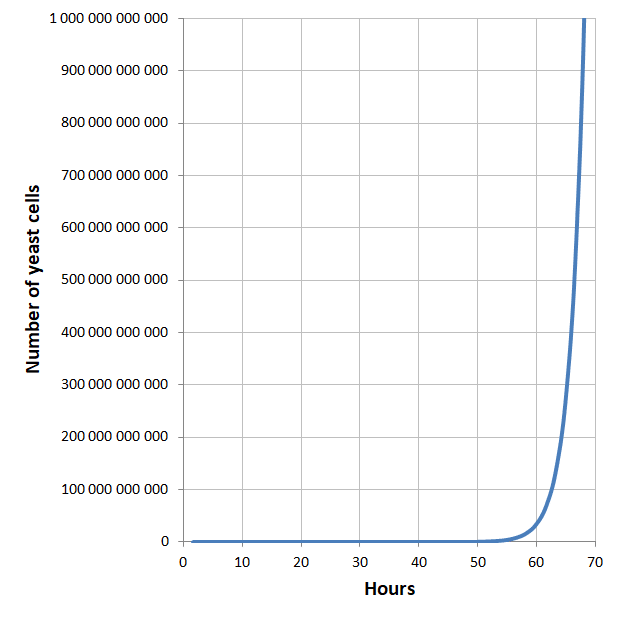
Yet, this same powerful, counterintuitive principle was simultaneously at work in every batch of rising dough. Yeast, a single-celled fungus belonging to the species Saccharomyces cerevisiae, thrives under optimal conditions by reproducing through a process called budding. This asexual reproduction allows a single yeast cell to grow, develop a small bud, and then split into two identical daughter cells. Under ideal laboratory conditions, with ample nutrients (sugars), oxygen, and the right temperature (typically around 25-30°C), a single yeast cell can complete its entire life cycle and divide in approximately 100 minutes—less than two hours.
This rapid doubling rate leads to staggering numbers in a surprisingly short time. If conditions remain ideal:
- After 100 minutes: 1 cell becomes 2
- After 200 minutes: 2 cells become 4
- …
- After 24 hours (approximately 14.4 doubling cycles): A single cell would theoretically multiply into about 16,000 cells.
- After 48 hours: This number would explode to approximately 268 million cells.
- Before 72 hours (3 days) have passed: The initial single cell could give rise to an astonishing one trillion (1,000,000,000,000) yeast cells.
To put this into perspective, a standard 50-gram block of compressed fresh yeast contains roughly a trillion yeast cells. This demonstrates the immense biological potential packed into even a tiny quantity of yeast. While such ideal conditions are rarely sustained for prolonged periods in a typical bread dough – factors like nutrient depletion, accumulation of waste products, and changing pH levels eventually slow down or halt growth – the initial stages of fermentation still exhibit this powerful exponential increase, explaining why even a small amount of yeast can eventually leaven a large volume of dough given sufficient time.
Navigating the Yeast Shortage: Consumer Adaptations and Industry Response
The sudden, overwhelming demand for yeast posed significant challenges for both consumers and manufacturers. For home bakers, the empty shelves prompted ingenuity and a deeper understanding of the fermentation process. Many learned to drastically reduce the amount of yeast traditionally called for in recipes, extending the fermentation time to compensate. A standard 12-gram sachet of instant dry yeast, which might typically be used for 1-2 loaves, could be stretched to last for many more baking sessions by leveraging the exponential growth principle.
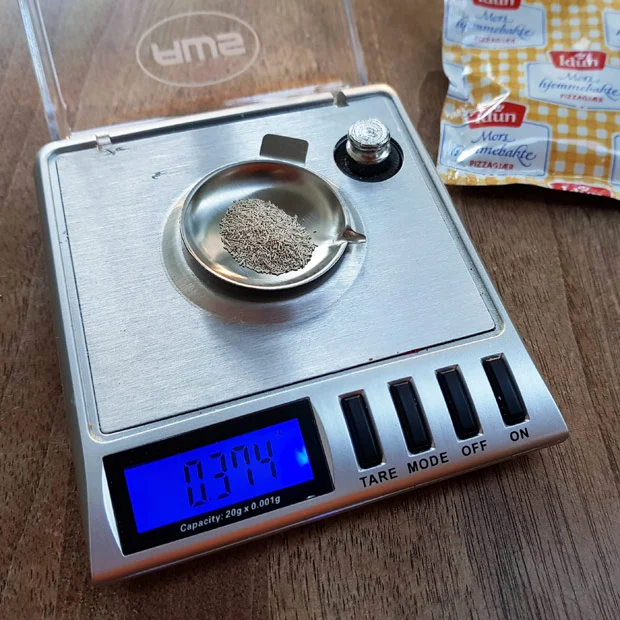
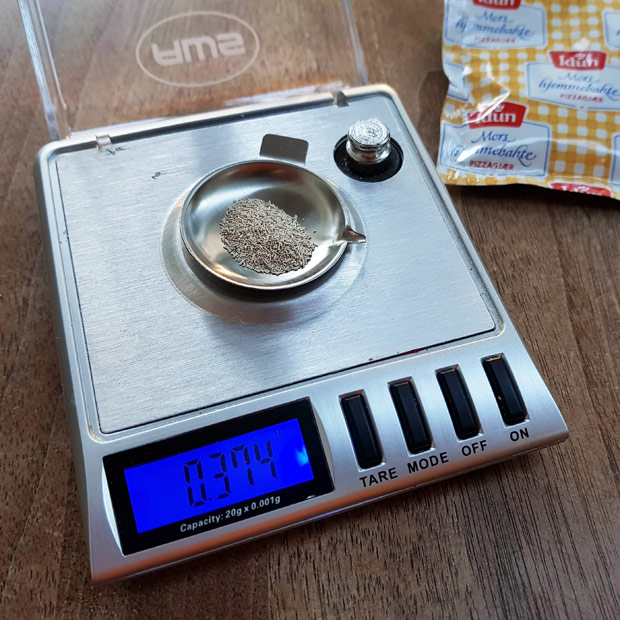
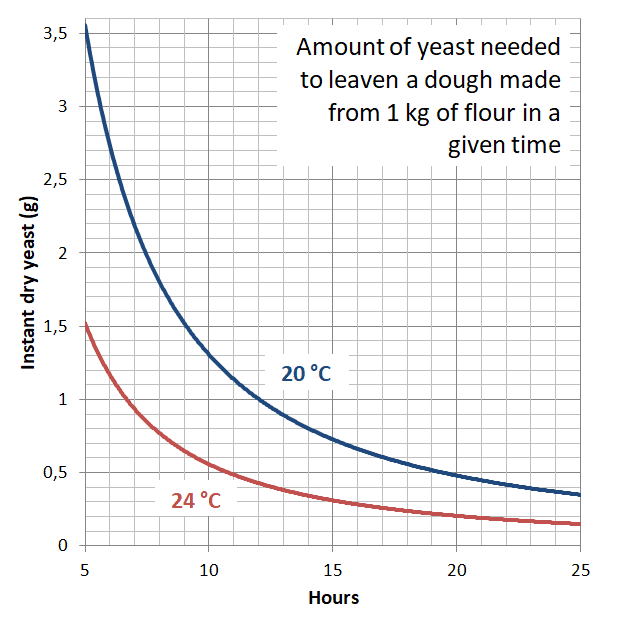
This adaptation was facilitated by accessible tools and a renewed appreciation for precision in the kitchen. Digital balances capable of measuring quantities as small as 0.001 grams, once considered niche laboratory equipment, became highly useful for home bakers rationing their precious yeast supply. These relatively inexpensive scales allowed for accurate measurement of minute quantities, ensuring consistency even with minimal yeast. For example, a dough made with 1 kilogram of wheat flour could be effectively leavened with just 0.48 grams of instant dry yeast if allowed to ferment for 20 hours at a moderate temperature of 20°C. This level of precision, previously overlooked by many casual bakers, became a critical skill during the shortage.
Technological aids further empowered this shift. Mobile applications, such as PizzApp+ (available for Android), gained significant traction. These apps offered sophisticated calculators that allowed users to input desired dough weight, flour type, hydration, fermentation time, and temperature, then precisely determine the required amount of various yeast types (fresh compressed, active dry, instant dry, and even sourdough starters). Such tools demystified the science of fermentation, making it accessible and manageable for a new generation of home bakers.
On the industry side, yeast manufacturers faced immense pressure to scale up production. Companies like Lesaffre, AB Mauri, and Lallemand, major global players in yeast production, ramped up operations, often running factories 24/7 to meet the surging demand. This involved optimizing fermentation tanks, streamlining packaging, and adjusting supply chain logistics. While some initial delays and shortages were inevitable due to the sudden and unprecedented nature of the demand spike, the industry demonstrated remarkable resilience in adapting to the changed market conditions, ensuring that essential baking ingredients eventually returned to shelves.
The Science of Slow Fermentation and Flavor Development
Beyond the practical necessity of conserving yeast, the trend towards using smaller quantities and longer fermentation times had a significant positive impact on the quality of baked goods. Slow fermentation, often referred to as "cold proofing" or "long bulk fermentation," is a technique long favored by artisan bakers for its ability to develop complex flavors and superior textures.
When yeast ferments rapidly, it primarily produces carbon dioxide, which leavens the dough, and ethanol. However, during a prolonged, slower fermentation, particularly at cooler temperatures, a more diverse range of metabolic processes occurs. This extended period allows for the development of organic acids, such as lactic acid and acetic acid, which are produced by lactic acid bacteria naturally present in flour or introduced by sourdough starters. These acids contribute significantly to the characteristic tangy flavor, aroma, and crust development found in artisanal breads. The enzymatic activity also has more time to break down complex carbohydrates and proteins in the flour, improving digestibility and creating a more open, airy crumb structure.
The use of apps like PizzApp+ highlighted the delicate balance between time, temperature, and yeast quantity. For a simple "direct dough" or "straight dough" (without a preferment like a poolish, biga, or levain), understanding these variables is crucial. By extending the fermentation duration, bakers can drastically reduce the yeast content, achieving the desired rise while simultaneously enhancing the dough’s flavor profile. This approach also allows for greater flexibility in baking schedules, as dough can be prepared in advance and refrigerated for several hours or even days, retarding fermentation until ready for baking.
While sourdough baking offers the ultimate self-sufficiency and flavor complexity, relying on a naturally occurring symbiotic culture of yeast and bacteria, the convenience of instant dry yeast remained an alluring option for many. Its reliability, consistent performance, and immediate availability made it the go-to choice, even for those embracing longer fermentation techniques. The pandemic era thus fostered a hybrid approach, where the ease of instant yeast was combined with the artisan principles of slow fermentation.
Beyond the Pandemic: Lasting Impacts on Baking and Consumer Habits
As the world gradually moves beyond the immediate crisis of the pandemic, the question arises whether the home baking boom represents a fleeting trend or a lasting shift in consumer behavior. Evidence suggests a mixed outcome. While the initial frenzy for flour and yeast has subsided, a significant segment of the population appears to have sustained their interest in home baking. Many who discovered or rediscovered the joys of baking during lockdown have integrated it into their regular routines, appreciating the control over ingredients, the cost savings, and the satisfaction of creating food from scratch.
This sustained interest has broader implications. It has contributed to an increased awareness of food origins, ingredient quality, and the science behind cooking. The focus on precise measurements, understanding yeast activity, and appreciating the nuances of fermentation has elevated the culinary literacy of many home cooks. Furthermore, the global sharing of recipes, tips, and baking triumphs on social media platforms has fostered a vibrant online community, democratizing baking knowledge and inspiring continued experimentation.
The pandemic also served as a powerful reminder of the interconnectedness of seemingly disparate elements: a microscopic organism (yeast), a fundamental mathematical principle (exponential growth), and a global health crisis. It illustrated how basic scientific concepts have profound implications for everyday life, from understanding disease transmission to mastering the art of bread-making.
Ultimately, the global baking boom of the pandemic era was more than just a temporary diversion. It was a testament to human adaptability, a catalyst for renewed culinary exploration, and a widespread, albeit sometimes challenging, practical lesson in the powerful and often counterintuitive dynamics of exponential growth. The experience of making bread at home, fueled by tiny, exponentially multiplying yeast cells, offered comfort, creativity, and a tangible sense of control in an otherwise unpredictable world, leaving a lasting legacy on our kitchens and our understanding of fundamental scientific principles.