
For millennia, human beings navigated the challenges of health and physical performance by relying exclusively on internal sensory feedback. Our ancestors gauged their exertion by the depth of their breath, their hunger by the signals of their gut, and their recovery by the presence of muscle soreness or cognitive fatigue. Today, that internal barometer is being increasingly supplemented—and sometimes supplanted—by a sophisticated array of digital hardware. From sleek smartwatches monitoring heart rate variability to rings tracking sleep cycles, modern consumers have access to a level of objective data that was once the exclusive domain of elite sports science laboratories.
This shift represents a fundamental transformation in how individuals approach personal wellness. At its core, the rise of wearable technology serves as a bridge between subjective experience and empirical measurement. While our internal senses are powerful, they are often prone to bias and lack the cold precision required to identify subtle shifts in health. However, as the market for these devices expands, researchers and health professionals are beginning to examine the unintended consequences of this reliance on data, specifically concerning decision-making accuracy and the psychological impact of constant self-monitoring.
The Evolution of Personal Data Tracking
The history of wearable tracking is a relatively short but explosive trajectory. It began with simple mechanical pedometers in the mid-20th century, but the true paradigm shift arrived with the integration of miniaturized sensors into consumer-grade electronics. By the early 2010s, activity trackers entered the mainstream, promising users a "quantified" view of their daily lives.
The progression has been rapid. By 2015, optical heart rate sensors became standard in wrist-worn devices, moving beyond simple step counting to assess cardiovascular effort. Today, we are in the era of "health optimization," where devices measure blood oxygen levels, skin temperature, and even electrodermal activity. Yet, the rapid deployment of this technology has outpaced the general public’s ability to interpret the data effectively. As the volume of information increases, so too does the risk of what computer scientist Samantha Kleinberg describes as a negative impact on decision-making: the paradox of too much information leading to paralysis.

The Accuracy Gap: Not All Metrics Are Created Equal
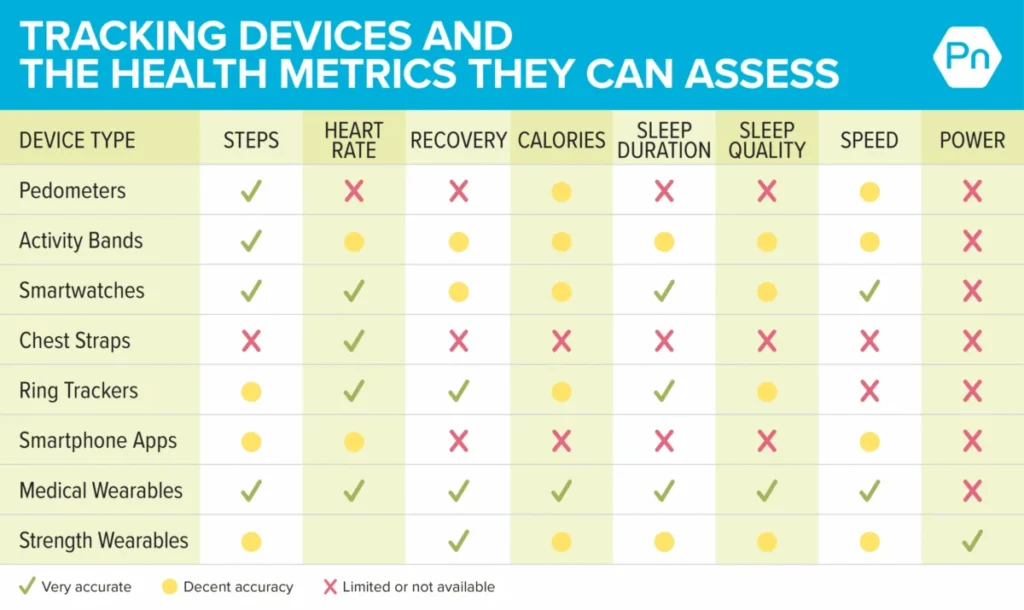
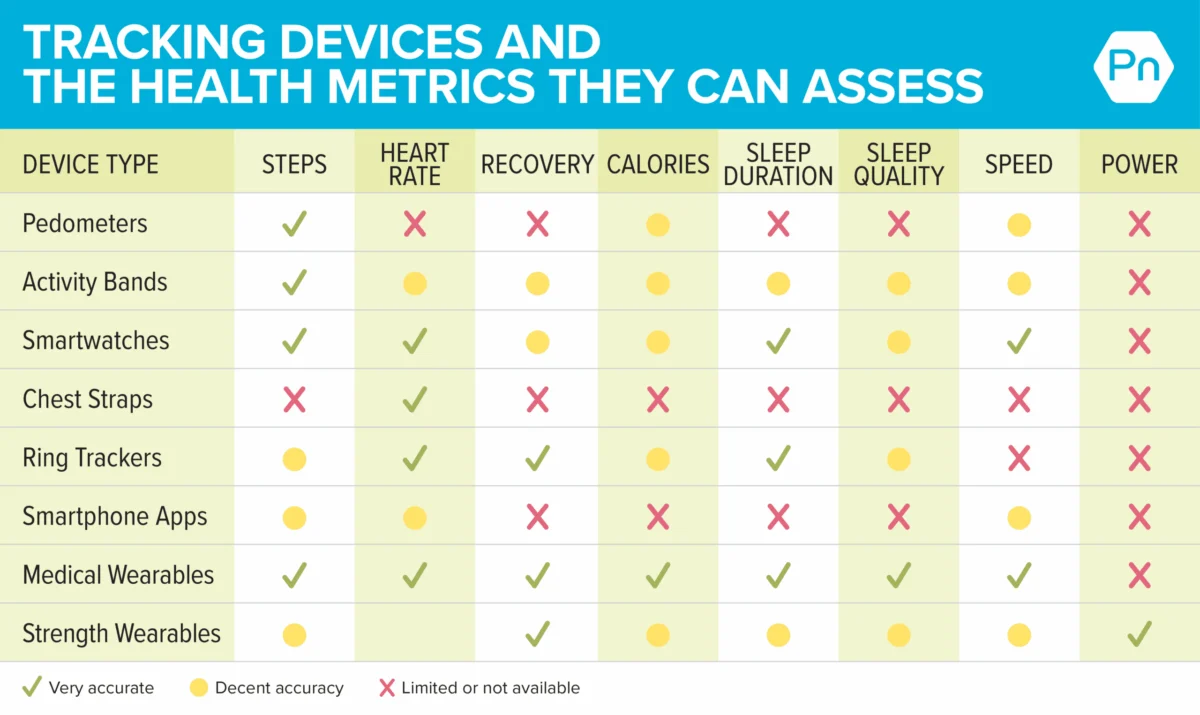
A central challenge in the adoption of wearable technology is the disparity in accuracy across different metrics. While heart rate monitoring and step counting have reached high levels of reliability, other metrics remain estimates based on proprietary algorithms. For instance, "calories burned" is a calculation based on heart rate, age, weight, and movement, and it is prone to significant margins of error—often off by 20% to 30%. Similarly, sleep stage tracking, while improving, still struggles to match the precision of polysomnography conducted in clinical settings.
This inaccuracy poses a risk when individuals make high-stakes health decisions based on these numbers. If a user restricts their caloric intake because a watch underestimates their burn, or if they push themselves through an injury because a device suggests they are "recovered," the reliance on data becomes a liability. Understanding the hierarchy of data reliability—where simple physiological markers like heart rate generally trump complex calculations like sleep stage or metabolic expenditure—is essential for any user looking to integrate these tools into a sustainable health regimen.
The Psychological Impact: When Data Becomes a Stressor
The psychological implications of constant tracking are profound. For many, the initial period of using a tracker is characterized by a "gamification" of health, which can foster positive behavioral change. However, for others, the feedback loop can become a source of significant anxiety.
The phenomenon is often observed among individuals who suffer from "orthosomnia"—an obsession with achieving perfect sleep scores. When a device informs a user that their sleep quality was "poor," the resulting stress can paradoxically make it harder to sleep the following night. This creates a cycle where the technology, intended to alleviate uncertainty, generates new, artificial stressors.
Data from behavioral studies suggest that the "sweet spot" for information is narrow. When information is scarce, users may be aimless; when information is excessive, users become bogged down in the minutiae, losing sight of the broader patterns that actually dictate long-term health. The most effective users are those who view their data as a trend-line rather than a daily scorecard, focusing on longitudinal changes over weeks and months rather than the fluctuations of a single 24-hour cycle.

Calibrating the Human Instrument
The most effective approach to modern health management is not to abandon technology, but to learn to calibrate it against one’s own internal sensations. This process involves a three-step methodology for better self-assessment:
- Pre-Data Reflection: Before looking at a screen, a user should perform a subjective check-in. Ask: "How energetic do I feel?" or "How intense was this workout on a scale of one to ten?" Once that assessment is made, the data can be consulted as a secondary reference. Over time, this trains the brain to recognize the internal physiological markers that correspond to the numbers on the screen.
- Developing Heuristics: Use data to establish mental shortcuts. For instance, if an athlete knows their heart rate is consistently 150 beats per minute during a specific level of perceived exertion, they can eventually use that level of effort as a proxy for the data, reducing the need for constant device checking.
- Sensory Re-engagement: Humans possess an internal network of proprioception, interoception, and kinesthetic awareness that technology cannot replicate. Regularly engaging in activities without tracking—such as a "naked" run or a meal eaten without caloric counting—helps maintain the connection between the mind and the body’s natural signals.
Implications for the Future of Wellness
The broader impact of this technological integration is that we are moving toward a hybrid model of health management. In this model, the wearable device acts as a diagnostic tool, while the individual acts as the primary analyst. For those working with professional coaches, this data-sharing dynamic can significantly improve the efficacy of training programs. By providing coaches with objective metrics on recovery and output, athletes can avoid the "junk volume" trap—training that produces fatigue without yielding performance gains.
However, the cautionary tale remains: technology is a servant, not a master. When the device is absent—as evidenced by the 2019 outage of popular tracking applications—those who have lost touch with their internal cues are often left feeling adrift. The ultimate goal of using fitness trackers should be to refine one’s own ability to sense the body’s needs, not to create a permanent dependency on an algorithm.
As we move forward, the sophistication of these devices will only increase. We will likely see more integration of continuous glucose monitors and advanced biometric sensors in everyday wearables. While these tools offer unprecedented opportunities for health optimization, they also necessitate a higher degree of media and health literacy.
To succeed in this landscape, users must cultivate a relationship with their devices that is skeptical, analytical, and ultimately secondary to their own lived experience. By balancing the precision of the sensor with the wisdom of the senses, we can leverage the best of modern innovation without sacrificing the intuitive awareness that has sustained humanity for generations. In the end, the most accurate health tracker remains the one that cannot be bought: a well-calibrated, mindful, and responsive human nervous system.