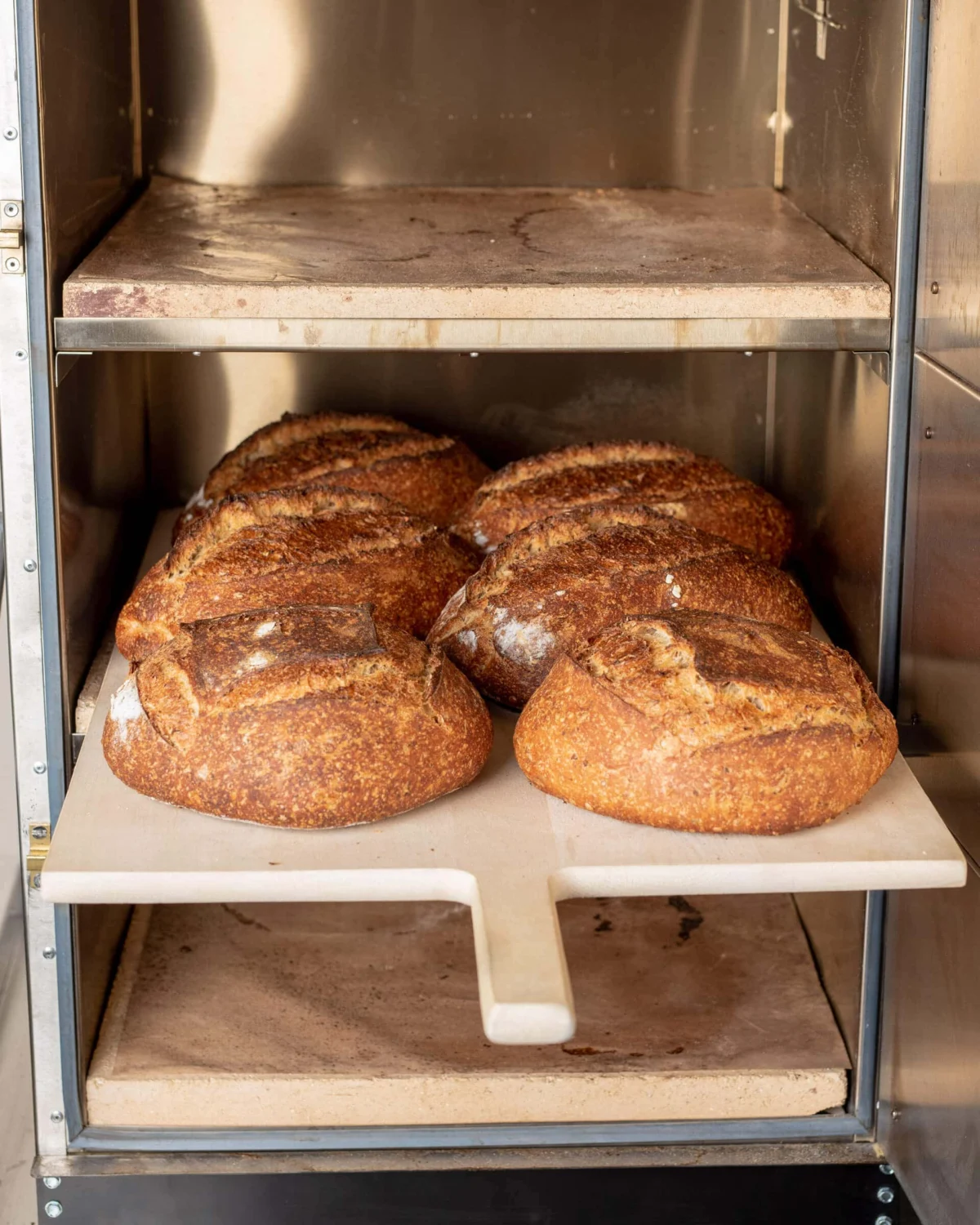

The transition from standard domestic baking to high-capacity home production is a critical juncture for serious culinary artisans. As home bakers progress in their craft, the limitations of traditional kitchen appliances—typically designed for single loaves or small casseroles—often necessitate a significant equipment upgrade. For many dedicated bread makers, this evolution leads directly to specialized commercial-grade machinery, most notably the Belgian-engineered Rofco brick oven. This comprehensive analysis examines the mechanics, operational strategies, spatial optimization, and industry implications of integrating a professional deck oven into a residential or nano-bakery setting.
Introduction to the Rofco Bread Oven Architecture
Manufactured in Belgium, the Rofco line of electric stone deck ovens has established itself as the gold standard for advanced home bakers and emerging micro-bakery entrepreneurs. Unlike standard convection or radiant kitchen ovens, the Rofco is purpose-built for artisan bread production, utilizing heavy refractory chamotte stones to store and distribute thermal energy evenly across multiple enclosed chambers.
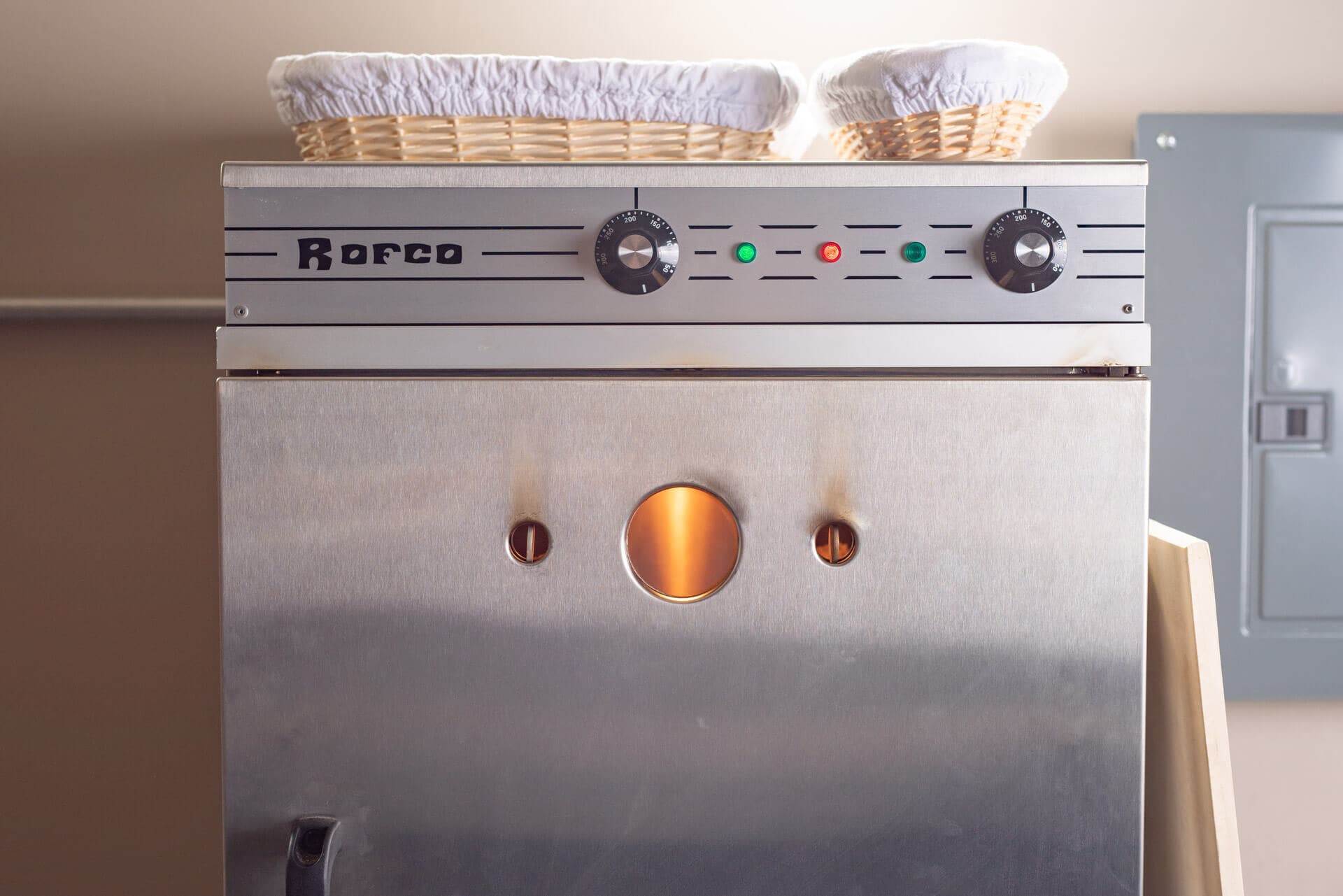
The flagship model among home-compatible options, the Rofco B40, features three independent square baking decks, each measuring approximately 18.9 by 18.9 inches. The structural integrity of the appliance relies on thick 1-3/8-inch refractory stone decks that retain immense thermal mass. This heat retention capacity is vital for maintaining consistent baking temperatures during high-volume, back-to-back production cycles where doors are opened frequently to load and unload dough.
Electrical requirements for the unit typically involve a 220V AC single-phase power supply, necessitating professional installation by a licensed electrician to configure a dedicated circuit breaker and receptacle. Despite its high output, the Rofco is engineered with a compact, no-nonsense footprint. Its insulated, sealed chamber minimizes external radiant heat emission, allowing the appliance to be positioned safely near residential walls or standard kitchen cabinetry.
Spatial Optimization and Deck Tetris: Maximizing Baking Capacity
Operating a multi-deck stone oven efficiently requires strategic spatial planning, often likened to a high-stakes game of physical Tetris. To maximize output while preventing loaves from fusing together during the oven spring, bakers must master precise dough positioning on the chamotte decks.
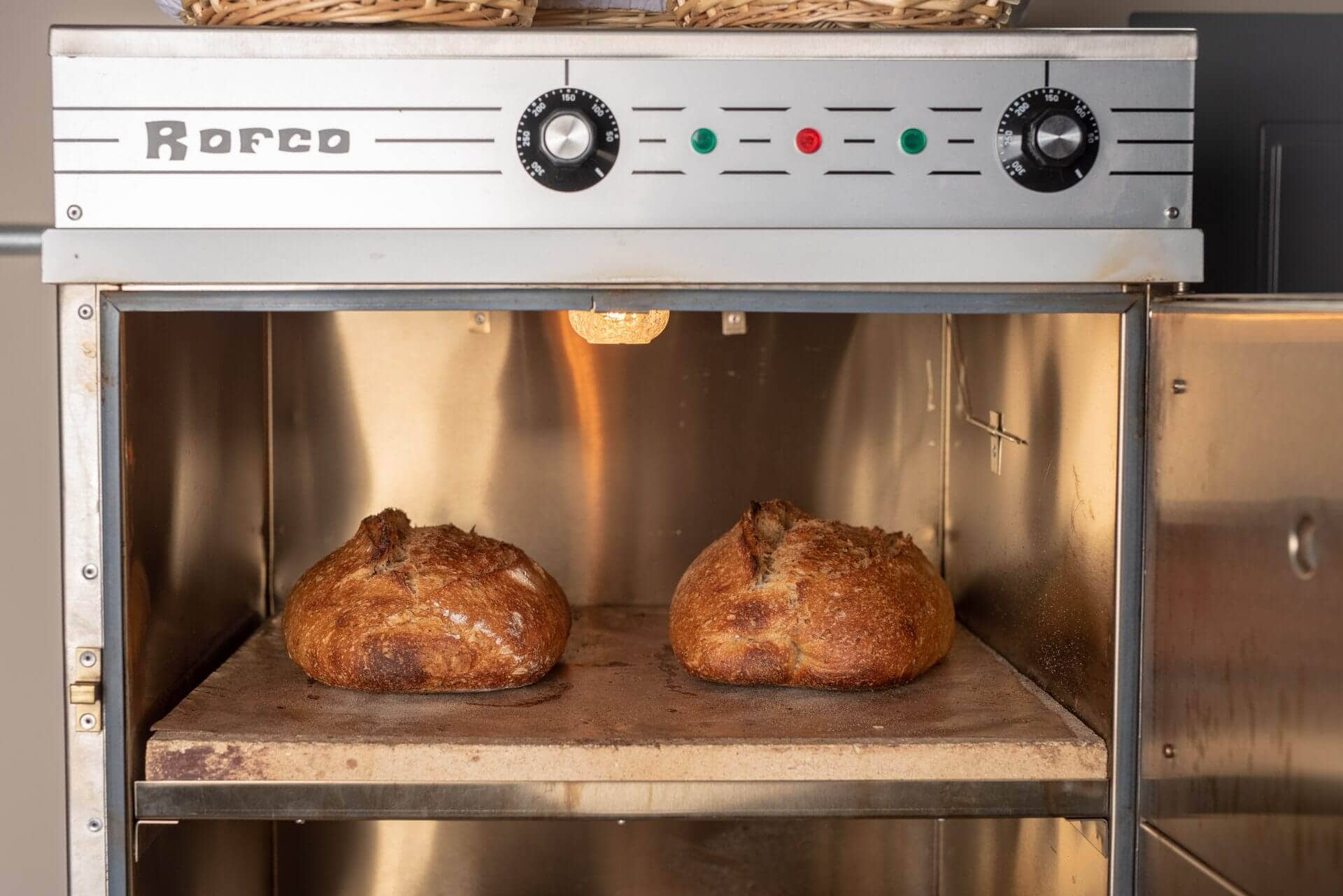
For a standard batch in a Rofco B40, bakers generally utilize one of three primary configurations per deck:
- Two large batards (approximately 900 grams each) oriented horizontally or vertically.
- Two large boules (approximately 800 grams each).
- Four smaller loaves or boules (approximately 700 grams each).
When producing smaller items such as artisanal rolls, buns, or flatbreads, operators frequently employ the square steel trays included with the unit. These trays streamline the transfer process for multiple items while containing potential spills, protecting the refractory stone from direct sugar or oil contamination.
Thermal Dynamics and Steaming Methodologies
Achieving optimal oven spring and a blistered, glossy crust requires rapid and effective steam injection during the initial phases of the bake. Because the Rofco features a sealed baking chamber—lacking active exhaust fans that prematurely vent humidity—it creates an ideal microclimate for gelatinizing starches on the dough’s surface. However, unlike automated industrial rack ovens, the Rofco does not feature a push-button steam injection system, requiring manual intervention by the baker.

Operators generally choose between two primary steaming protocols:
High-Pressure Spraying
The prevailing method among advanced users involves a commercial-grade electric or hand-pump pressure sprayer filled with water. Immediately after loading the dough onto the decks, the baker mists the interior walls and chamber air for 10 to 12 seconds per deck, working methodically from the bottom up. Care must be taken to avoid striking the glass-enclosed interior lighting fixtures with cold water, which can cause thermal shock and breakage. A final misting is applied just before fully sealing the door.
Integrated Steam Pods
Alternatively, bakers can install optional rectangular steel steam pods along the left and right perimeters of each deck. Preheated alongside the stones, these pods receive measured quantities of water or ice cubes immediately upon loading, instantly generating voluminous steam. While highly effective, these pods occupy valuable lateral deck space, leading many high-capacity bakers to favor external pressure sprayers to preserve maximum baking surface area.

Step-by-Step Baking Chronology and Parameters
Standardizing the baking process ensures consistent crumb structure, crust development, and thermal recovery between batches. While hydration levels and flour compositions require minor adjustments, a typical multi-stage baking profile for a preheated Rofco oven follows a strict chronology:
- Thermal Preheating: The oven is powered on with an empty interior (free of silicone baking sheets) and both top and bottom heating elements set to 240°C. A mandatory preheat duration of 1.5 hours ensures that the heavy chamotte stones are thoroughly saturated with thermal energy.
- Initial Steam Bake: Loaves are loaded onto silicone sheets using an 18-inch wooden pizza peel cut to the exact width of the B40 decks. Steam is manually injected, and the temperature is adjusted to 150°C for the first 20 minutes to allow maximum vertical expansion and crust setting.
- Steam Venting: After 20 minutes, the oven door is briefly cracked to exhaust residual humidity, and the circular brass vents on the door are swiveled open. The temperature is increased to 220°C for 10 minutes to drive moisture evaporation.
- Final Browning: The temperature is returned to 150°C for a final 20 to 30 minutes, allowing the crust to caramelize fully and the crumb to dry out. Loaves may be reshuffled between decks during this phase if uneven coloring is observed.
Upon completion, baked goods are immediately transferred to wire cooling racks using the peel, and proofing baskets (bannetons) can be placed inside the residual heat of the cooling oven to rapidly dry damp cloth liners and prevent fungal growth.
Essential Auxiliary Equipment
To operate a Rofco oven at peak efficiency, professional-grade ancillary tools are frequently integrated into the workflow:
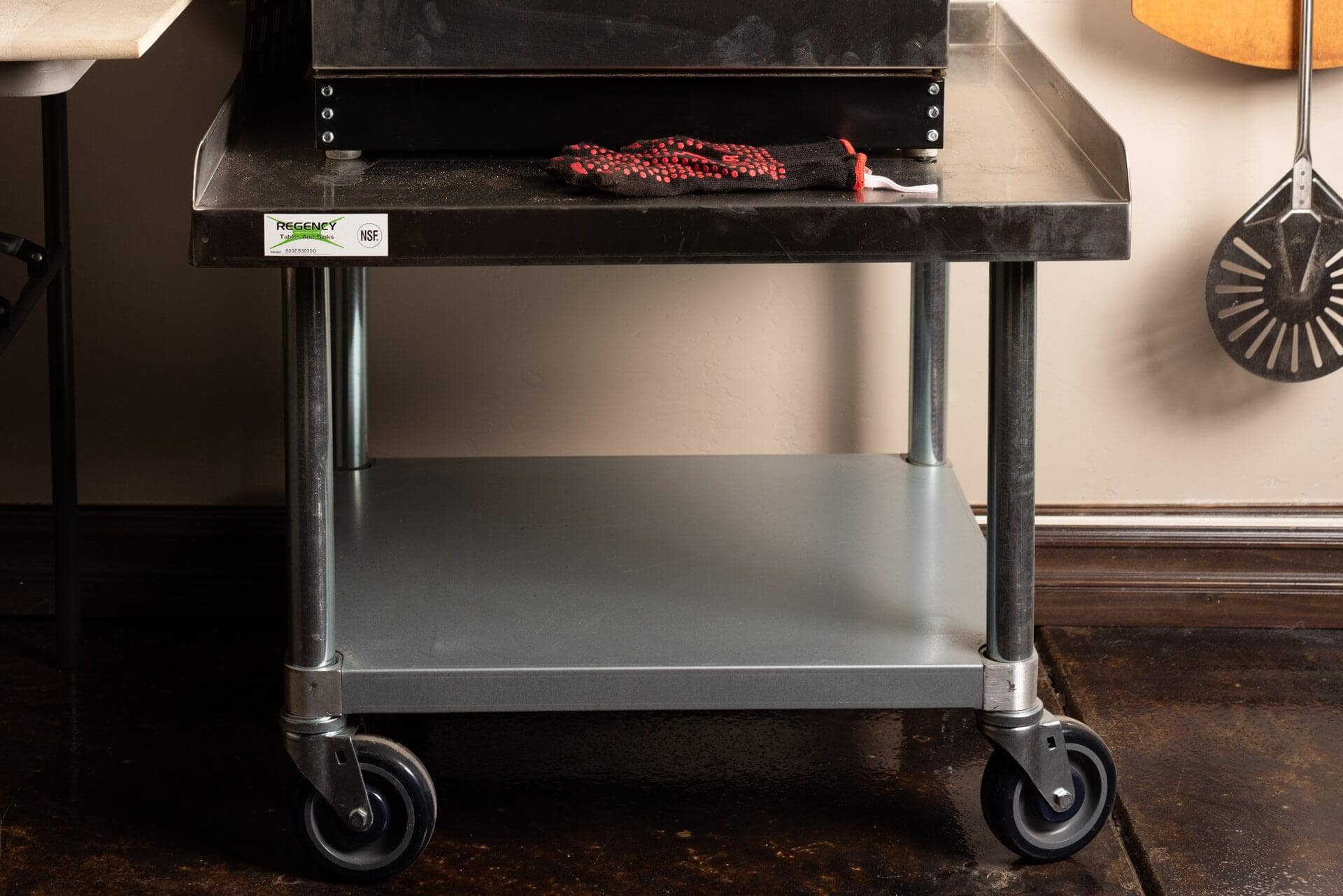
- Equipment Stands: Given its substantial weight and low profile, elevating the oven is critical for ergonomic loading and unloading. Custom-cut stainless steel equipment stands (such as 16-gauge Regency models) fitted with locking casters raise the unit by approximately 18 to 20 inches, providing structural stability and mobility.
- Specialized Peels: An 18-inch wide wooden or composite pizza peel matches the exact interior clearance of the B40 decks, enabling seamless, single-motion transfers of multiple loaded silicone sheets without risking dough deformation.
- High-Capacity Mixers: To support the output capacity of a three-deck Rofco, bakers frequently pair the oven with commercial spiral dough mixers—such as Famag or Ooni industrial units—capable of processing 8 kilograms or more of high-hydration dough in a single operation.
Industry Implications and Market Trends
The growing popularity of appliances like the Rofco reflects a broader structural shift in the culinary landscape: the rise of the nano-bakery and advanced cottage food industry. Driven by changing consumer preferences toward localized, high-quality artisanal goods and supported by evolving regulatory frameworks for home-based food businesses, culinary entrepreneurs are increasingly investing in professional-grade micro-equipment.
Industry analysts note that equipment capable of bridging the gap between domestic kitchen constraints and industrial manufacturing allows micro-entrepreneurs to test market viability with minimal capital expenditure compared to traditional brick-and-mortar storefronts. By utilizing compact, high-output tools, independent bakers can achieve commercial-grade consistency, quality, and volume directly from residential or shared commercial kitchen spaces, fundamentally altering the economics of local food production.