
Dough hydration, a fundamental yet often misunderstood aspect of sourdough bread baking, represents the intricate relationship between flour and water, dictating the texture, crumb, and overall character of the final loaf. While seemingly a simple numerical ratio, this element reveals itself as a dynamic conversation, influenced by a myriad of factors including flour type, ambient humidity, and even the time of year. This comprehensive guide delves into the science and practical application of dough hydration, drawing upon years of dedicated baking experience to unlock the secrets behind consistently exceptional sourdough.
At its core, dough hydration is defined as the total amount of water in a recipe, expressed as a percentage of the total flour weight. The calculation is straightforward: (weight of water / total weight of flour) x 100. For instance, a recipe calling for 1,000 grams of flour and 700 grams of water yields a hydration of 70%. This percentage serves as an initial blueprint for bakers, offering a preview of the dough’s expected behavior before the mixing process even begins.
However, seasoned bakers understand that this percentage is merely a guideline, not an immutable rule. Flour, far from being a static ingredient, exhibits considerable variability. Differences in milling, protein content, and even the specific bag of flour can significantly impact its water absorption capabilities. Furthermore, environmental conditions, particularly dramatic shifts in humidity, can subtly alter dough consistency. A dough that feels perfectly manageable on a dry day might require adjustments when faced with the increased moisture of a rainy afternoon. This inherent variability underscores the need for a more intuitive approach, one that prioritizes observing and understanding the dough’s tactile feedback over rigid adherence to numbers.
The Critical Role of Hydration in Bread Characteristics
The significance of hydration lies in its profound impact on the final loaf’s characteristics. Water is the transformative agent that converts dry flour into a pliable, living dough, enabling it to capture and retain the gases produced during fermentation. Insufficient water results in a dense, resistant dough, while an excessive amount can lead to a slack, unmanageable mixture that struggles to hold its shape.
The spectrum between these extremes allows for a diverse range of bread styles. Lower-hydration loaves (typically 60-68%) often exhibit a more substantial crust, a chewier texture, and are generally easier to handle during shaping and proofing. These characteristics make them well-suited for applications like bagels, pretzels, and some pan loaves, where a firmer structure is desirable. They are also an excellent starting point for novice bakers, providing a more forgiving introduction to sourdough.
Conversely, higher-hydration loaves (75-85% and beyond) are celebrated for their tender crumb, often described as custardy, and a delicate, brittle crust. This increased moisture content contributes to a melt-in-your-mouth quality, a hallmark of artisanal sourdough. However, achieving these desirable traits with high-hydration doughs requires a greater degree of skill and understanding. Pushing hydration too high can lead to an overly soft texture, a loss of structural integrity post-baking, and a faster staling rate, particularly if not stored correctly. The goal, therefore, is to find a hydration level that achieves the desired textural outcomes without compromising volume, crumb quality, or the overall eating experience.
The Science Behind the Numbers: Flour and Water Interaction
The interaction between flour proteins and water is the fundamental mechanism driving gluten development. Proteins like glutenin and gliadin, when hydrated, form a complex network of gluten strands. This network is responsible for trapping the carbon dioxide produced by the sourdough starter’s yeast and bacteria, leading to the dough’s rise and the bread’s airy interior.
- Protein Content: Flours with higher protein content, typically found in "bread flour" (around 12-14%), generally possess a greater capacity to absorb water. This robust gluten network can hold more moisture, leading to a more open crumb and a tender texture. In regions where flours naturally have lower protein content, bakers may need to adjust hydration levels downwards to avoid overly sticky and unmanageable dough.
- Whole Grain Flours: The presence of bran and germ in whole grain flours, such as whole wheat and rye, significantly increases water absorption. These components are highly hygroscopic, meaning they readily attract and retain moisture. Consequently, recipes incorporating a substantial percentage of whole grains necessitate higher hydration levels to achieve optimal dough consistency and a desirable crumb. For example, a 50% whole wheat sourdough might comfortably handle 82% hydration, a level that would be challenging with 100% white flour.
- Freshly Milled Flour: Flour that has been recently milled, even after sifting, often requires increased hydration compared to aged flour. The cellular structure of freshly milled flour may be more receptive to water absorption, impacting dough consistency.
- Ash Content: A less commonly discussed factor, ash content, which reflects the mineral content of the flour, can also influence water absorption. Flours with higher ash content may require more water.
Environmental Influences on Dough Hydration
Beyond the inherent properties of flour, the baking environment plays a crucial role. Climate and altitude can dramatically alter the amount of water a dough requires. Bakers in arid, high-altitude regions like New Mexico, for instance, often find themselves using higher hydration percentages than those in more humid, lower-altitude locations. The drier air can cause flour to lose moisture more readily, necessitating additional water to achieve the desired dough consistency.
Conversely, in humid environments, the flour may absorb ambient moisture, leading to a naturally stickier dough. Experienced bakers learn to account for these subtle shifts, often adjusting water additions based on the prevailing weather conditions. A day with high humidity might require holding back a small portion of the planned water to maintain the desired dough feel.
Visualizing Hydration Levels: An Observational Approach
Ultimately, the most reliable method for determining adequate hydration is by observing the dough’s appearance and feel. This "baker’s intuition" is developed through practice and a keen awareness of how the dough behaves at different stages.
- Under-Hydrated Dough (Approximately 62% or less): This dough will appear dry, stiff, and may exhibit a crumbly texture. It will likely resist stretching and feel difficult to knead, clinging to itself rather than developing a smooth, elastic surface. The final loaf may have a dense crumb and a thick, hard crust.
- "Just Right" Hydration (Approximately 68-75%): Dough at this hydration level will strike a balance between being manageable and yielding. It should feel pliable, slightly tacky, but not overly sticky. When stretched, it should form a cohesive mass and develop a smooth, elastic surface. This range often results in a good balance of crumb openness and crust tenderness, making it ideal for many classic sourdough loaves and a good starting point for beginners.
- Over-Hydrated Dough (Approximately 75%+): This dough will appear wet, slack, and may spread significantly. It will be very sticky and challenging to shape, often requiring wet hands or a bench scraper to manage. While capable of producing an exceptionally open and custardy crumb, it demands advanced handling techniques and a deeper understanding of gluten development to prevent collapse.
The Technique of Bassinage: Mastering High Hydration
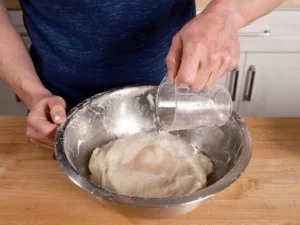
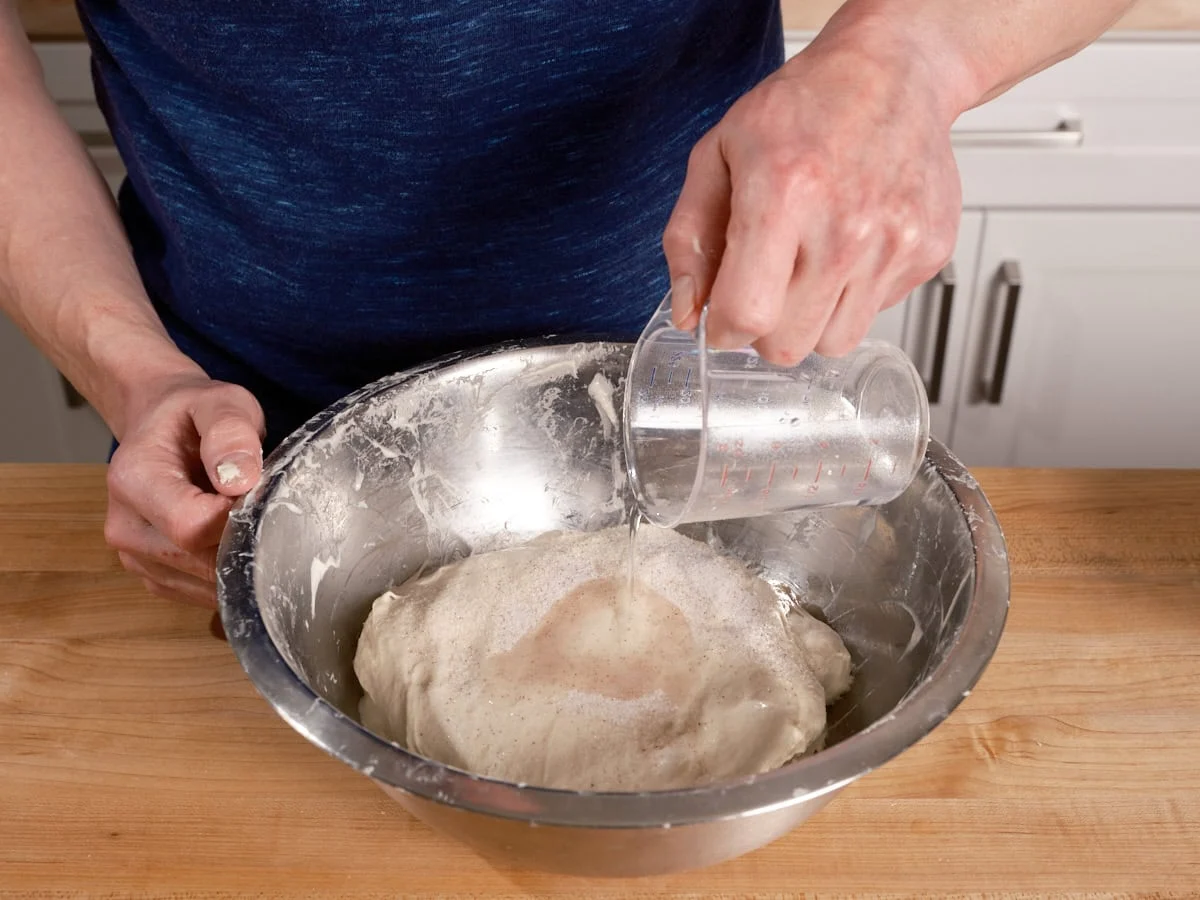
For those seeking to achieve the delicate crumb and tender crust associated with high-hydration sourdoughs, the technique of bassinage, or "double hydration," is invaluable. This method involves holding back a portion of the total water and adding it incrementally during the later stages of mixing.
The benefits of bassinage are twofold:
- Facilitated Gluten Development: By initially mixing with a slightly lower hydration (around 80-90% of the total water), bakers can more effectively develop the gluten network. The reduced water content allows for greater friction during mixing, which is crucial for strengthening the gluten. As the dough develops, the reserved water is gradually incorporated, allowing the starches to absorb moisture and the gluten matrix to expand without becoming unmanageable. This technique enables bakers to push hydration levels higher without resorting to excessively long mixing times or risking under-developed dough.
- Assessing Dough Strength: Holding back water provides a critical opportunity to gauge the dough’s developing strength. As the reserved water is added, bakers can assess whether the dough can handle the additional moisture. If the dough feels too slack, the remaining water can be omitted. Conversely, if the dough feels robust and capable of absorbing more, the reserved water can be slowly incorporated, fine-tuning the final consistency. Many recipes illustrate this by specifying "Water 1" and "Water 2," with the latter being the reserved bassinage water.
Factors Influencing Water Needs: A Detailed Breakdown
Understanding the variables that affect water absorption is paramount for consistent baking success:
- Flour Type and Protein Content: As previously discussed, higher protein flours generally absorb more water. American bread flours, often high in protein, may require higher hydration to achieve optimal texture. Conversely, softer flours common in other parts of the world may benefit from reduced hydration.
- Whole Grain Content: The bran and germ in whole grains are significant moisture absorbers. Recipes with higher percentages of whole grains will naturally require more water.
- Freshly Milled Flour: The cellular structure of freshly milled flour can lead to increased water absorption.
- Climate and Environment: Humidity levels and altitude directly influence how much water flour absorbs. Bakers in dry climates typically need higher hydration, while those in humid areas may need less.
- Flour Age and Storage: Flour can lose moisture over time if not stored properly, potentially affecting its absorption rate.
Addressing Sticky Dough: Common Culprits and Solutions
Sticky dough is a frequent source of frustration for sourdough bakers, often stemming from issues with hydration, dough strength, or a combination of both.
- Excessive Hydration: The most direct cause of sticky dough is simply too much water relative to the flour’s absorption capacity.
- Insufficient Gluten Development: A weak gluten network struggles to encapsulate the water, leading to a sticky, slack dough. This can be due to inadequate mixing, insufficient kneading time, or using flour with low protein content.
- Flour Type: Certain flours, particularly lower-protein or finely milled flours, may appear stickier even at moderate hydration levels.
- Temperature: Warmer dough can feel stickier due to increased enzyme activity and a more relaxed gluten structure.
- Over-Fermentation: An over-fermented dough can break down its gluten structure, becoming sticky and difficult to handle.
Practical Tips for Managing High-Hydration Doughs
As hydration levels increase, dough stability decreases, pushing the gluten matrix to its limits. Successful management of high-hydration doughs involves several key strategies:
- Gentle Handling: High-hydration doughs are delicate. Avoid aggressive kneading or shaping. Employ gentle folds and turns to build strength without deflating the dough.
- Utilize Wet Hands or Tools: Keeping hands slightly damp or using a bench scraper can prevent the dough from adhering excessively during manipulation.
- Develop Strength Gradually: Employ techniques like stretch and folds or coil folds over a period of time to build dough strength without overworking it.
- Proper Proofing: Ensure the dough is adequately proofed but not over-proofed, as this can lead to a loss of structure.
- Bench Scrapers and Dough Scrapers: These tools are indispensable for maneuvering and shaping sticky dough.
- Flour Your Workspace Sparingly: While a light dusting of flour can be helpful, excessive flouring can alter the dough’s hydration and texture.
Hydration Quick Reference Chart
| Hydration Level | Characteristics | Best For |
|---|---|---|
| 60-65% | Stiff, easy to handle, potentially thicker crust | Bagels, pretzels, pizza, some pan loaves |
| 65-70% | Balanced, manageable, good structure | Classic breads, beginner-friendly sourdough |
| 70-75% | Moderately open crumb, thin crust | Classic country loaves, baguettes |
| 75-80% | Requires longer mixing, tender crumb, requires skill | Ciabatta, focaccia, open-crumb loaves, sandwich loaves |
| 80%+ | Requires longer mixing, more open crumb, custard-like | High-hydration loaves, challenging to shape |
Common Questions About Dough Hydration
Why can’t I just add more flour if my dough is too wet?
Adjusting flour affects all the ingredient ratios calculated by baker’s percentages. Modifying water only impacts hydration in isolation. While a small amount of flour can be added as a last resort if the dough is completely unmanageable, it’s best to record this deviation for future reference and adjust the water in subsequent bakes.
Does higher hydration mean a more open crumb?
Not necessarily. Hydration is one of many factors influencing crumb structure. Proper fermentation, shaping technique, and baking all play critical roles. Focus on mastering all fundamentals rather than solely increasing water.
What hydration should I start with as a beginner?
A hydration level of 68-70% with a quality bread flour is recommended for beginners. This offers a manageable dough while still producing excellent results. As confidence grows, hydration can be gradually increased.
What is the ideal hydration for bread dough?
There is no single ideal hydration. It is entirely dependent on the flour used and the desired final bread characteristics. Most bread doughs fall within the 60-80% range, though variations exist.
Cultivating Baker’s Intuition
Ultimately, mastering dough hydration is about developing "baker’s intuition"—the ability to perceive and respond to what the dough is communicating. This intuitive understanding transcends rigid adherence to recipes and embraces the dynamic nature of ingredients and environment. Keeping detailed notes on hydration levels, dough feel, environmental conditions, and final loaf outcomes is an invaluable practice. Over time, this consistent observation and reflection will foster a profound understanding of hydration that no guide can fully replicate. The journey of sourdough baking is a continuous conversation with your ingredients, and hydration is a pivotal element in that dialogue.