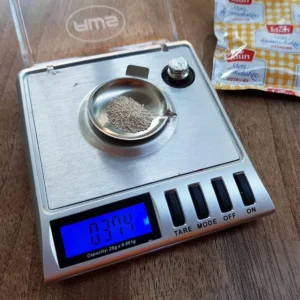
The intersection of culinary arts and analytical chemistry has long been a playground for food scientists, but recent advancements in specialty coffee brewing have brought rigorous laboratory techniques straight to the home kitchen. Over the past decade, the global specialty coffee scene—particularly the Scandinavian third-wave movement—has shifted from an artisanal craft relying on intuition to an exact science governed by data. Driven by accessible measurement tools and an influx of peer-reviewed scientific literature, home enthusiasts and professional baristas alike are re-evaluating the physical and chemical variables that dictate what ends up in the cup.
Background Context and the Evolution of Home Extraction

Historically, coffee preparation relied heavily on qualitative assessments: taste, aroma, and visual cues. While these sensory evaluations remain central to cupping and professional quality control, they offer limited insight into the underlying physical mechanisms of extraction. The past ten years have marked a paradigm shift. Researchers, specialty roasters, and mathematically inclined coffee hobbyists have begun publishing extensive analyses on fluid dynamics, thermodynamics, and particle-size distributions.
This analytical wave gained significant momentum during the pandemic years of 2020 and 2021. With global social restrictions prompting individuals to spend more time at home, many consumers turned their analytical gaze toward daily rituals. For scientists and engineers accustomed to controlled environments, the realization that standard pour-over techniques yielded highly variable results sparked deep investigations into extraction reproducibility. The resulting deep dive into coffee literature revealed a wealth of empirical data that had previously been confined to industrial research and development laboratories.
Decoding the Core Parameters: Brew Ratio, TDS, and Extraction Yield
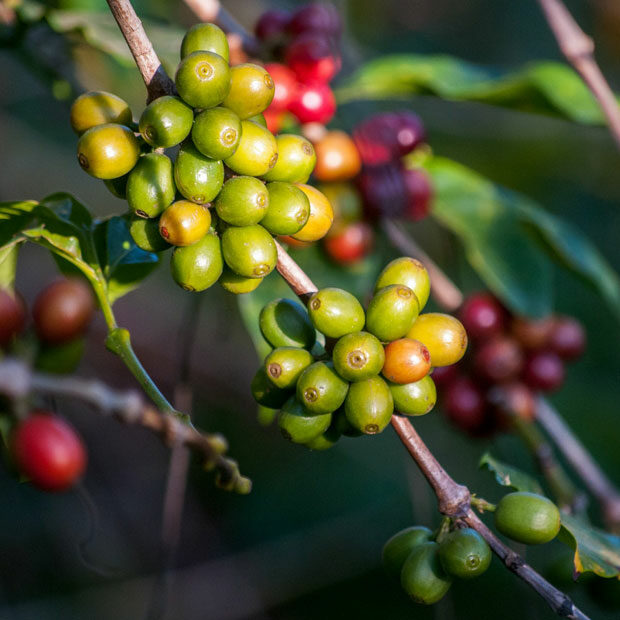
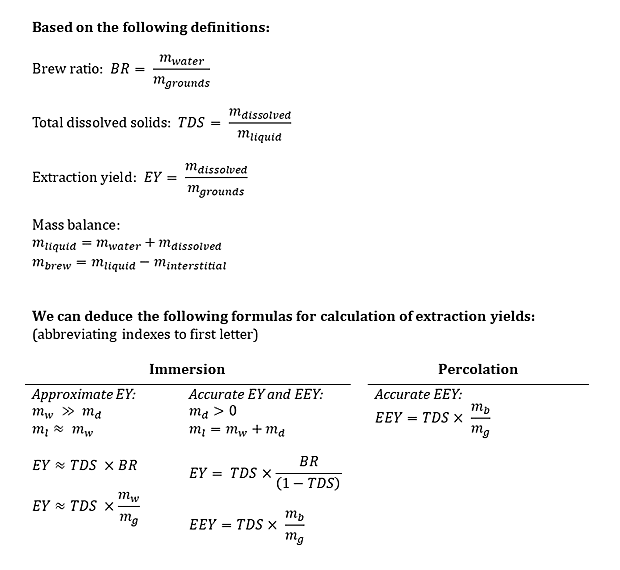
Achieving consistency in coffee extraction requires precise control over fundamental variables, starting with the brew ratio (BR). Defined as the mass of water relative to the mass of coffee grounds, a typical standard for filter coffee hovers around 16.7 (60 grams of coffee per 1,000 grams of water). This metric serves as a foundational baseline, allowing brewers to scale recipes seamlessly up or down.
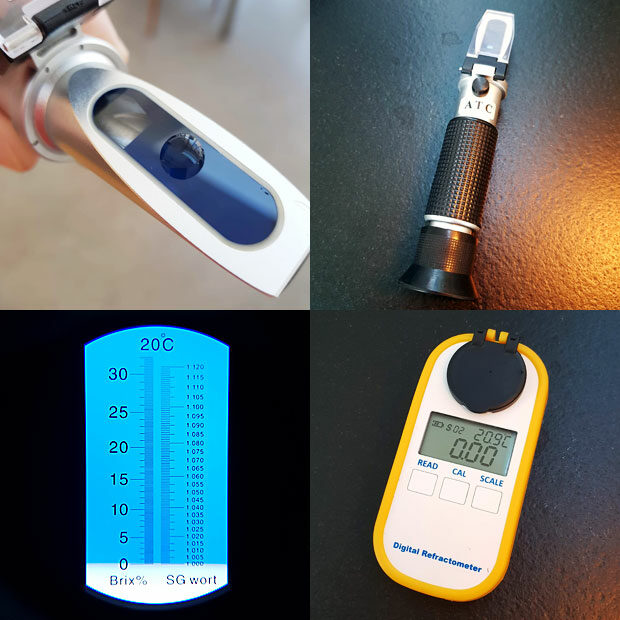
However, understanding the concentration of the final beverage requires measuring Total Dissolved Solids (TDS). TDS quantifies the amount of soluble matter extracted from the coffee grounds into the water. While traditional gravimetric methods—evaporating a weighed sample of coffee to dryness—are impractical for daily kitchen use due to the high-precision equipment required, optical refractometry offers a rapid alternative.
By measuring the refractive index of light through a liquid sample, a handheld or digital refractometer can quickly determine the Brix value, which is then converted to percentage TDS. Standard brewed coffee typically registers between 1.2% and 1.5% TDS, meaning that a standard cup of black coffee consists of more than 98% water.
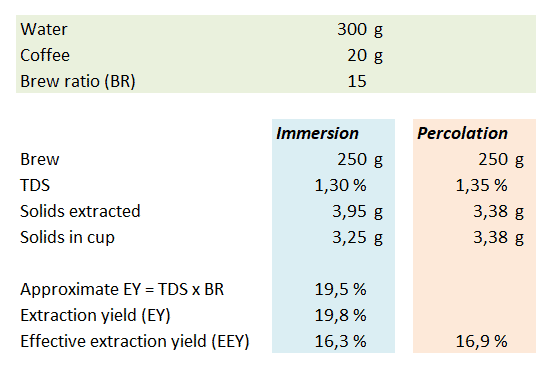
Building upon TDS is the calculation of Extraction Yield (EY), which determines the percentage of the original dry coffee mass that successfully dissolved into the beverage. Depending on whether the brewing method relies on immersion (such as a French press or Aeropress) or percolation (such as a V60 pour-over), calculations must account for interstitial liquid—the water trapped between coffee grounds that never makes it into the final cup. Differentiating between immersion extraction yield and effective extraction yield (EEY) clarifies why immersion and percolation methods produce distinct flavor profiles, as percolation consistently delivers a different proportion of soluble compounds to the vessel.
Particle Size Distribution and the Mechanics of the Grind
Beyond liquid chemistry, solid-state physics plays a critical role in extraction efficiency. When a roasted coffee bean is fractured in a grinder, it produces a heterogeneous mix of particles, ranging from large boulders to microscopic dust known as "fines."
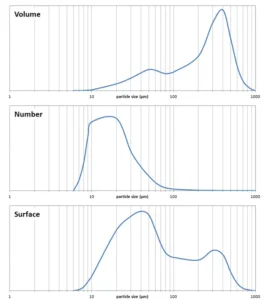
Advanced particle-size distribution (PSD) analysis reveals that surface area dictates extraction dynamics far more than total volume. Research popularized by industry educators indicates that extraction primarily occurs within the outer 100 micrometers of a coffee particle. Consequently, the cores of larger particles often remain unextracted, functioning essentially as structural filler that facilitates water drainage through the filter bed.
This dynamic highlights the importance of grinder technology. Traditional blade grinders produce excessive fines and inconsistent particle sizes, leading to uneven extraction and channel formation. Conversely, high-end burr grinders—particularly those utilizing flat burrs designed specifically for filter coffee—offer tighter particle distributions that minimize clogging and promote balanced extraction flow rates.
Secondary Variables: Water Composition, Temperature, and Filtration
While grind size and brew ratios form the primary triad of extraction control, secondary parameters dictate the final sensory experience. Water composition, long scrutinized by the brewing beer industry, has become a critical focal point for coffee chemistry. Because tap water mineral content varies significantly by region, enthusiasts increasingly utilize customized mineral waters—adding precise amounts of magnesium and calcium ions to distilled bases—to optimize the extraction of delicate fruit and floral notes.
Temperature similarly governs both solubility and diffusion rates. Operating close to 100°C maximizes extraction efficiency, though lower temperatures are intentionally utilized in cold-brew methods to alter the chemical profile of the final beverage. Furthermore, the choice of filter material introduces another layer of physical filtration. Paper filters excel at retaining microscopic fines and lipid oils, yielding a clean cup with high clarity. Metal and cloth filters, by contrast, permit oils and finer particles to pass through, resulting in a heavier body and a more textured mouthfeel at the expense of cup clarity.
Implications and the Future of Analytical Brewing
The democratization of laboratory instruments—such as refractometers, precision scales, and digital particle-sifting tools—has permanently altered the landscape of specialty coffee. While casual consumers may find these granular metrics excessive, the broader implication for the industry is clear: reproducibility and quality control are no longer exclusive to industrial manufacturing.
As ongoing scientific research continues to decode the complex matrix of hundreds of volatile and non-volatile compounds found in roasted coffee, the gap between home preparation and scientific experimentation will continue to narrow. For those willing to navigate the complexities of fluid dynamics and chemical extractions, the pursuit of the optimal cup has transformed from an art form into an exact science.