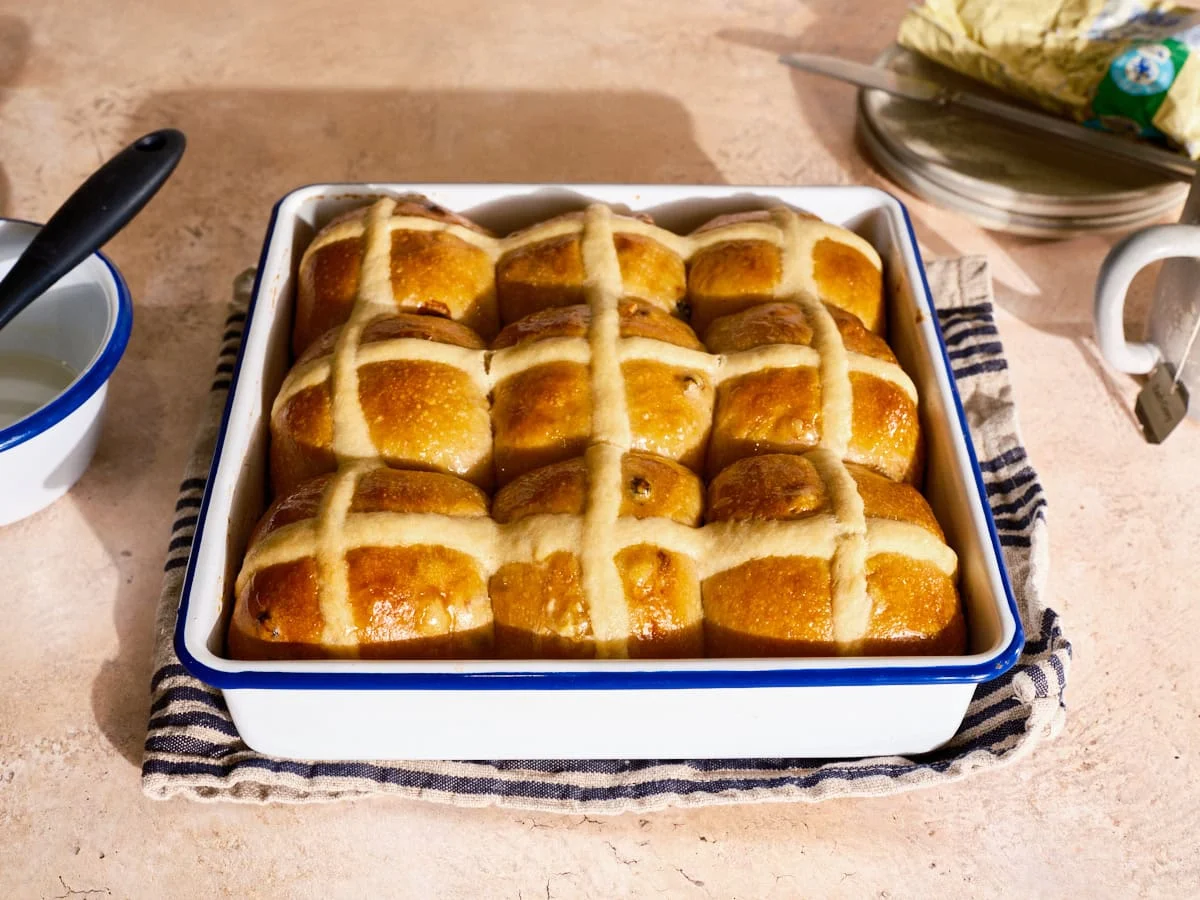

As the chill of winter recedes and the promise of Easter approaches, a particular baking tradition begins to capture the attention of many: hot cross buns. While historically associated with Good Friday, these spiced, fruit-studded buns have evolved into a broader symbol of spring’s arrival. This year, an updated recipe drawing from the acclaimed cookbook "The Perfect Loaf" offers a refined take on this classic, incorporating the innovative tangzhong technique to achieve an unparalleled level of softness and tenderness.
The genesis of this particular hot cross bun recipe lies in the author’s personal connection to seasonal baking. The transition from hearty winter fare to lighter spring flavors is perfectly embodied by the combination of warm spices, bright citrus zest, and plump dried fruits encased in a yielding, enriched dough. This recipe, adapted from "The Perfect Loaf," introduces a tangzhong—a cooked flour and liquid paste—which acts as a moisture-trapping marvel. The result is a bun with a pillowy, pull-apart texture that remains exceptionally soft for an extended period, surpassing the traditional enriched bun.
The foundational ingredients of milk, egg, and butter, coupled with the classic trio of cinnamon, sugar, and a medley of fruits, contribute to a dough that requires patience. Its richness naturally slows the fermentation process, a characteristic that ultimately rewards the baker with a deeply flavorful bun. The subtle sourdough tang, a hallmark of natural leavening, provides a nuanced counterpoint to the inherent sweetness of the fruit and the final glaze, creating a complex and satisfying flavor profile.
The Sourdough Advantage: A Deeper Flavor Profile
The divergence from conventional hot cross bun recipes begins with the leavening agent. While commercial yeast offers speed, it often sacrifices depth of flavor. The use of sourdough, a living culture of wild yeasts and bacteria, imbues these buns with a more intricate and rounded taste. The gentle acidity from the sweet levain, a key component in this recipe, harmonizes beautifully with the sweetness of the other ingredients, preventing the buns from becoming cloyingly sweet. This natural leavening also contributes to a more complex crumb structure and a slightly chewy texture that is highly sought after.
Key elements that distinguish these sourdough hot cross buns include:
- Tangzhong Technique: This Chinese cooking method, involving cooking a portion of the flour and liquid into a paste before adding it to the main dough, significantly enhances moisture retention. This translates to a luxuriously soft and tender crumb that stays fresh longer.
- Sourdough Levain: Utilizing a sweet levain, rather than a standard sourdough starter, provides a controlled rise and a milder tang, perfectly complementing the enriched dough without overpowering the delicate spice notes.
- Careful Ingredient Integration: The recipe emphasizes the importance of properly developed dough before the addition of butter and inclusions, ensuring a smooth, extensible dough that can hold its shape and structure.
A Meticulous Baking Schedule for Optimal Results
This recipe follows a primarily same-day direct bake methodology, with the exception of the overnight levain preparation. The levain and an optional fruit soaker are prepared the evening before, setting the stage for the subsequent day’s activities.
For those planning to serve these delights on Easter morning, a strategic timeline is recommended. The levain should be mixed on Friday night. The dough can then be prepared and allowed to ferment until it is halfway through its bulk proofing stage. At this point, the dough can be refrigerated overnight. On Easter morning, the dough is removed from the refrigerator to complete its final proofing for approximately one to two hours before baking. This overnight refrigeration method not only streamlines the Easter morning baking process but also can further develop flavor and texture.
Essential Baking Equipment
Successful execution of this recipe relies on a few key pieces of equipment, ensuring efficiency and quality:
- A digital kitchen scale for precise ingredient measurements.
- A stand mixer or spiral mixer for optimal dough development, particularly with enriched doughs.
- A 9-inch square baking pan for exceptionally soft, pull-apart buns, or a larger sheet pan for buns with a firmer crust.
- A pastry bag or a resealable plastic bag with a corner snipped for piping the cross mixture.
- An instant-read thermometer to ensure buns are baked to the correct internal temperature.
Understanding Baker’s Percentages: A Foundation for Precision
For those keen on delving deeper into the science of baking, understanding baker’s percentages is invaluable. This system expresses ingredient quantities as a percentage of the total flour weight, allowing for easy scaling and modification of recipes. For instance, the total dough weight for these hot cross buns is 1,150 grams, with a pre-fermented flour percentage of 15.5% and a levain contributing 48.6% to the final dough. The overall hydration, excluding milk, stands at 31.0%. This formula typically yields 9 generously sized hot cross buns, each weighing approximately 115 grams.
The Complete Formula: Ingredients and Proportions
The meticulous balance of ingredients is crucial for achieving the desired texture and flavor in these sourdough hot cross buns.
Total Formula
- Desired dough temperature: 78°F (25°C).
- High-protein white flour (~12-14% protein): 454g (92.0% Baker’s Percentage)
- Tangzhong: High-protein white flour: 39g (8.0% Baker’s Percentage)
- Tangzhong: Whole milk: 178g (36.0% Baker’s Percentage)
- Egg, beaten (1 medium): 49g (10.0% Baker’s Percentage)
- Unsalted butter: 69g (14.0% Baker’s Percentage)
- Superfine sugar: 39g (8.0% Baker’s Percentage)
- Thompson raisins or candied orange peel: 74g (15.0% Baker’s Percentage)
- Dried currants or chocolate chips: 49g (10.0% Baker’s Percentage)
- Ground cinnamon: 3g (1 teaspoon) (0.6% Baker’s Percentage)
- Ground allspice: 1g (1/2 teaspoon) (0.2% Baker’s Percentage)
- Freshly ground nutmeg: 1g (1/2 teaspoon) (0.2% Baker’s Percentage)
- Zest of 1 lemon
- Zest of 1 orange
- Water: 153g (31.0% Baker’s Percentage)
- Fine sea salt: 9g (1.9% Baker’s Percentage)
- Ripe sourdough starter (100% hydration): 31g (6.2% Baker’s Percentage)
Additional ingredients for egg wash: 1 egg and 1 tablespoon milk.
Cross Mixture
- White flour: 50g
- Water: 35g
- Orange juice (or more water): 15g
- Vegetable oil: 15g
- Pinch of salt
Simple Syrup Glaze
- Water: 50g
- Sugar: 50g
The Method: A Step-by-Step Guide to Sourdough Hot Cross Buns
The creation of these exceptional buns involves several distinct stages, each contributing to the final product’s superior quality.
1. Prepare the Sweet Levain and Fruit Soaker – Evening (Approx. 9:00 p.m.)
- Sweet Levain: Combine 77g high-protein white flour, 19g superfine sugar, 77g water (warmed to approximately 78°F/25°C), and 31g ripe sourdough starter (100% hydration) in a large bowl. Mix until well incorporated. This sweet levain is designed to foster efficient yeast activity in an enriched dough while moderating the overall sourness. Allow it to ferment in a warm place for 12 hours, ensuring the container has ample space for significant rise.
- Optional Fruit Soaker: If your dried fruits and candied peel are particularly dry, a brief soak can rehydrate them. Place 74g raisins or candied orange peel and 49g dried currants in a medium bowl. Cover with water and let soak until the bulk fermentation stage. Drain any excess water before incorporating into the dough.
2. Make the Tangzhong and Prepare Butter – Morning (Approx. 8:00 a.m.)
- Butter Preparation: Cut the 69g of unsalted butter into roughly 1/2-inch thick pats and set aside at room temperature to soften for easy incorporation.
- Tangzhong: In a medium saucepan over medium-low heat, whisk together 39g tangzhong flour and 178g tangzhong milk. Cook, whisking continuously, until a thick paste forms, approximately 5 to 8 minutes. Begin with vigorous whisking to break up any flour clumps and continue to prevent scorching. Once thickened, spread the tangzhong onto a small plate to cool rapidly.
3. Mix the Dough – Morning (Approx. 8:30 a.m.)
- Dough Temperature: Aim for a desired dough temperature (DDT) of 78°F (25°C).
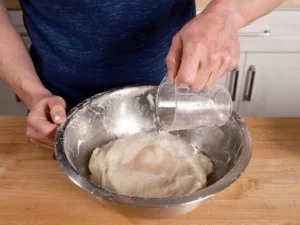
- Initial Mix: In the bowl of a stand mixer fitted with the dough hook, combine the cooled tangzhong, 378g high-protein white flour, 49g beaten egg, 20g superfine sugar, spices, citrus zests, 77g water, 9g fine sea salt, and 202g ripe levain. Mix on low speed for 1-2 minutes until just combined.
- Develop Gluten: Increase mixer speed to medium and mix for 5 minutes. The dough should begin to tighten and cling to the hook. Allow the dough to rest for 5 minutes.
- Continue Mixing: Resume mixing on medium speed for another 3-6 minutes, until the dough is smooth and strong, exhibiting the windowpane test (a translucent membrane forms when a small piece is stretched). If necessary, mix for an additional 2 minutes.
- Incorporate Butter: With the mixer on low speed, gradually add the softened butter, one pat at a time, allowing each piece to be mostly absorbed before adding the next. Continue mixing on medium speed for 1-2 minutes until the dough is silky smooth, elastic, and shiny.
- Add Inclusions: Finally, add the raisins, candied peel, currants, or chocolate chips. Mix on the lowest speed until evenly distributed throughout the dough.
4. Bulk Fermentation – Morning (Approx. 9:00 a.m. to 1:00 p.m. – ~4 hours)
- Environment: Allow the dough to ferment in a warm place, ideally between 74-76°F (23-24°C).
- Folds: Perform two sets of stretch and folds at 30-minute intervals. After the second set, cover the bowl and let the dough rest for the remainder of the bulk fermentation period. This gentle handling helps develop the dough’s structure without overworking it.
5. Divide and Shape – Early Afternoon (Approx. 1:00 p.m.)
- Prepare Pan: Generously butter a 9-inch square baking pan.
- Check Dough: At the end of bulk fermentation, the dough should appear puffy and airy. A gentle poke should leave a slight indentation.
- Divide and Shape: Gently turn the dough onto a lightly floured surface. Using a bench knife, divide the dough into 9 equal portions, each weighing approximately 115g. Shape each portion into a tight ball, ensuring a smooth surface. Place the shaped rounds into the prepared baking pan in a 3×3 grid. Cover the pan with a reusable plastic bag.
6. Proof – Early Afternoon to Late Afternoon (Approx. 1:30 p.m. to 5:30 p.m. – ~4-5 hours)
- Environment: Place the covered pan in a warm location to proof. Due to the enriched nature of the dough, this process can take around 4 hours, potentially longer in cooler kitchens.
- Readiness: The buns are ready when they are visibly puffy, soft to the touch, and have risen to just below the rim of the pan. Patience is key here; do not rush this final proofing stage.
7. Prepare Glaze, Cross Mixture, and Bake – Late Afternoon (Approx. 5:30 p.m.)
- Oven Preheat: Preheat the oven to 400°F (200°C) with an oven rack positioned in the middle.
- Simple Syrup Glaze: Combine 50g water and 50g sugar in a small saucepan over medium heat. Bring to a boil and simmer for 2-4 minutes until clear. Let cool to room temperature.
- Cross Mixture: In a small bowl, whisk together 50g white flour, 35g water, 15g orange juice (or water), 15g oil, and a pinch of salt to form a thick paste. Adjust consistency with a small amount of water if too thick. Transfer to a pastry bag or a plastic bag with a snipped corner.
- Egg Wash and Cross Piping: Whisk together 1 egg and 1 tablespoon milk for the egg wash. Brush a light layer of egg wash over the proofed buns. Pipe thin lines of the cross mixture onto each bun, forming a cross.
- Bake: Bake for 15 minutes. Rotate the pan, reduce the oven temperature to 350°F (175°C), and bake for an additional 10-15 minutes, or until the internal temperature reaches 195°F (90°C) and the buns are golden brown.
- Glaze and Cool: Immediately upon removing from the oven, brush the tops of the buns with the prepared simple syrup glaze. Let cool in the pan for 5 minutes before transferring to a wire rack to cool completely, or serve warm directly from the pan.
These sourdough hot cross buns are best enjoyed on the day they are baked, ideally served warm with a generous spread of high-quality salted butter. They can be stored in an airtight container for up to one day and can be gently reheated in a low oven.
Looking Ahead: A Continued Culinary Tradition
Since the initial development of this recipe for "The Perfect Loaf" cookbook, these sourdough hot cross buns have become a cherished spring tradition for many bakers. This revised version, with its enhanced softness and depth of flavor, promises to elevate the experience even further. For those inspired by enriched sourdoughs, exploring recipes for super-soft sourdough rolls or sourdough pumpkin dinner rolls offers further avenues for delicious exploration. The journey of sourdough baking continues to unfold, offering new and exciting ways to enjoy classic comforts.