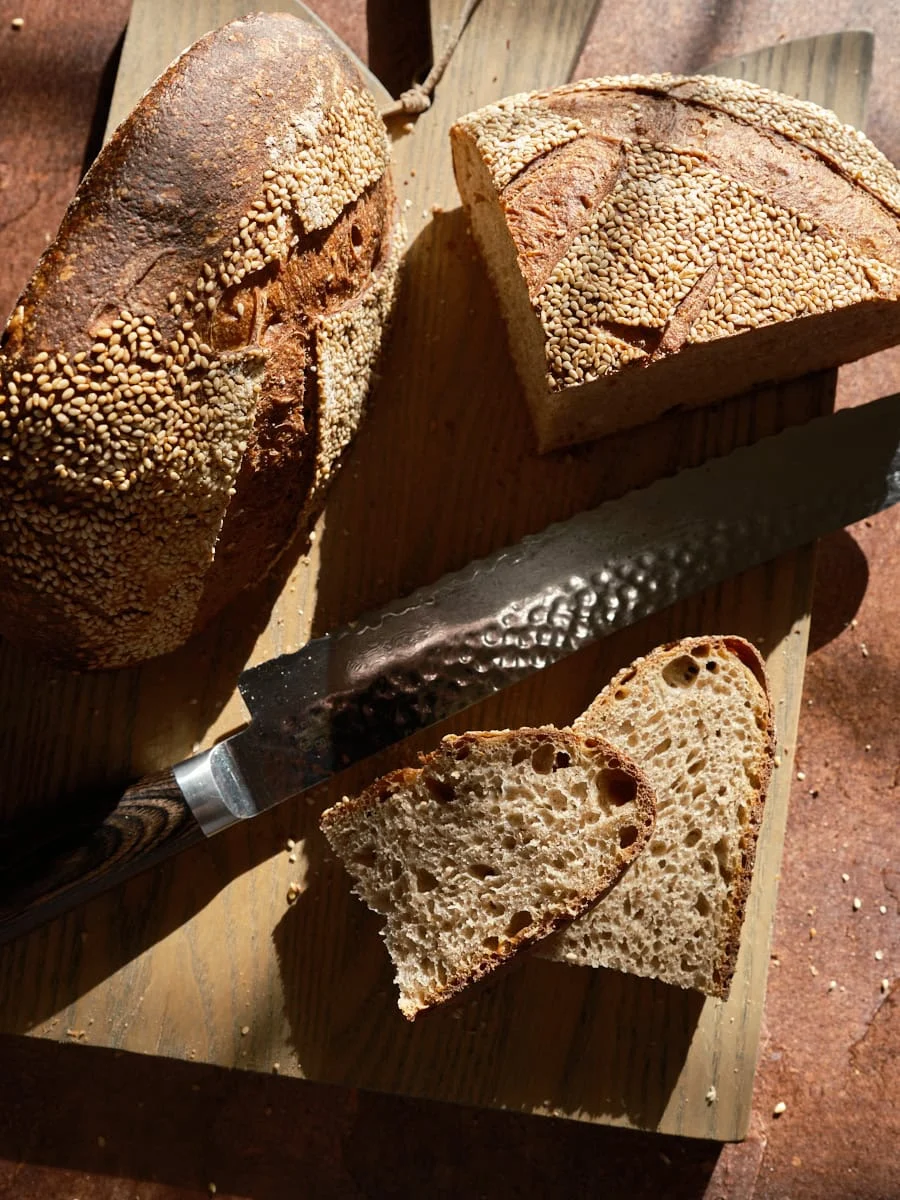

The persistent chill that has gripped the region for an extended period has found a comforting antidote in a meticulously crafted sourdough bread, featuring a unique blend of buckwheat, malt, and the aromatic punch of anise. This hearty loaf, designed to warm from the inside out, offers a complex flavor profile that makes even the most frigid days more bearable. The act of baking itself, with the oven radiating warmth and the promise of a well-proofed dough, becomes a welcome ritual, a stark contrast to the early darkness and dry air. Fortunately, the process of creating this bread—from the pungent aroma of freshly ground anise to the sweet richness of malt, the visually appealing buckwheat-speckled dough, and the silken texture imparted by a flour scald—provides a delightful distraction from the lingering cold.
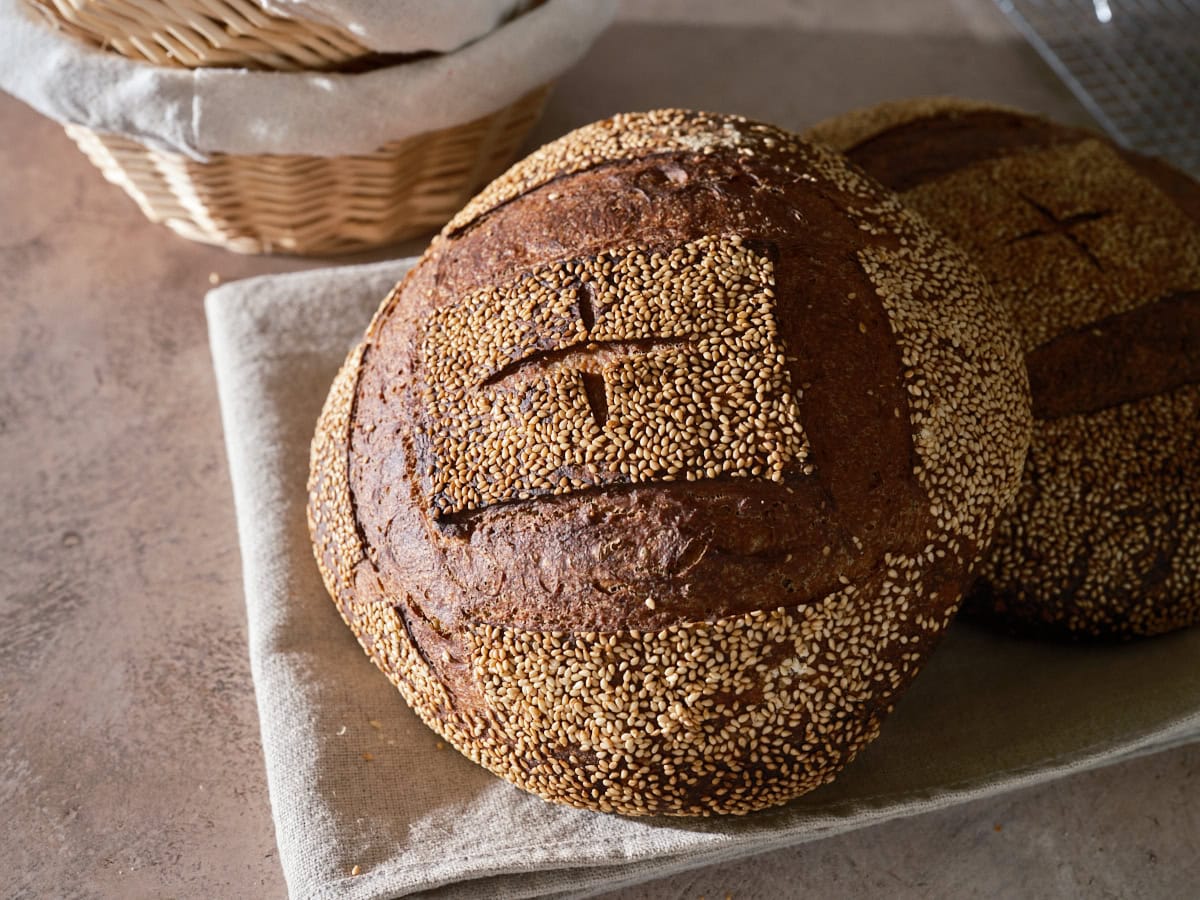
Anise, a spice renowned for its assertive licorice-like fragrance, has long been a favored ingredient in baking. While often found whole in recipes like sourdough discard biscotti, its ground form has been explored in numerous cookies and pastries. However, its integration into a large, rustic loaf of bread was a novel exploration, yielding a surprisingly balanced and utterly irresistible result. The characteristic boldness of anise, which doesn’t merely hint at its presence but announces it with confidence, pairs exceptionally well with the earthy, mineral, and slightly tannic notes of buckwheat. This symbiotic relationship creates a sourdough that is both robust and refined. To complete the sensory experience, the loaf is often finished with striking white sesame seeds, which not only complement the spice and sweetness but also provide a visually stunning contrast against the whole-grain crumb.
The Science Behind the Scald: Enhancing Flavor and Texture
A key technique employed in this recipe is the flour scald, a method that significantly elevates both the flavor and texture of the final bread. Scalding flour involves mixing it with boiling water, which gelatinizes the starches, transforming the mixture into a thick, smooth paste. This process is closely related to techniques like Yudane and Tangzhong, commonly used in Asian baking to achieve exceptionally soft and moist bread.
The benefits of the flour scald extend beyond moisture retention. The gelatinized paste is intensely aromatic and flavorful, contributing a depth to the bread that is otherwise difficult to achieve. More importantly, it acts as a powerful moisture trap within the dough, effectively delaying the staling process and keeping the bread softer for a considerably longer period. This technique, while simple to execute, adds a noticeable "something extra" to each loaf, making it a valuable tool for bakers seeking to enhance their creations.
Flour Selection: A Foundation of Heartiness and Nutrition
The choice of flours plays a crucial role in defining the character of this sourdough. To achieve the desired heartiness, perfect for sandwiches and robust enough to stand on its own, a high-extraction (Type 85) flour forms the base. Cairnspring’s Trailblazer, a high-extraction flour, is a favored choice for its versatility and the added nutritional benefits it brings to the bread, thanks to its higher content of bran and germ compared to refined white flours.
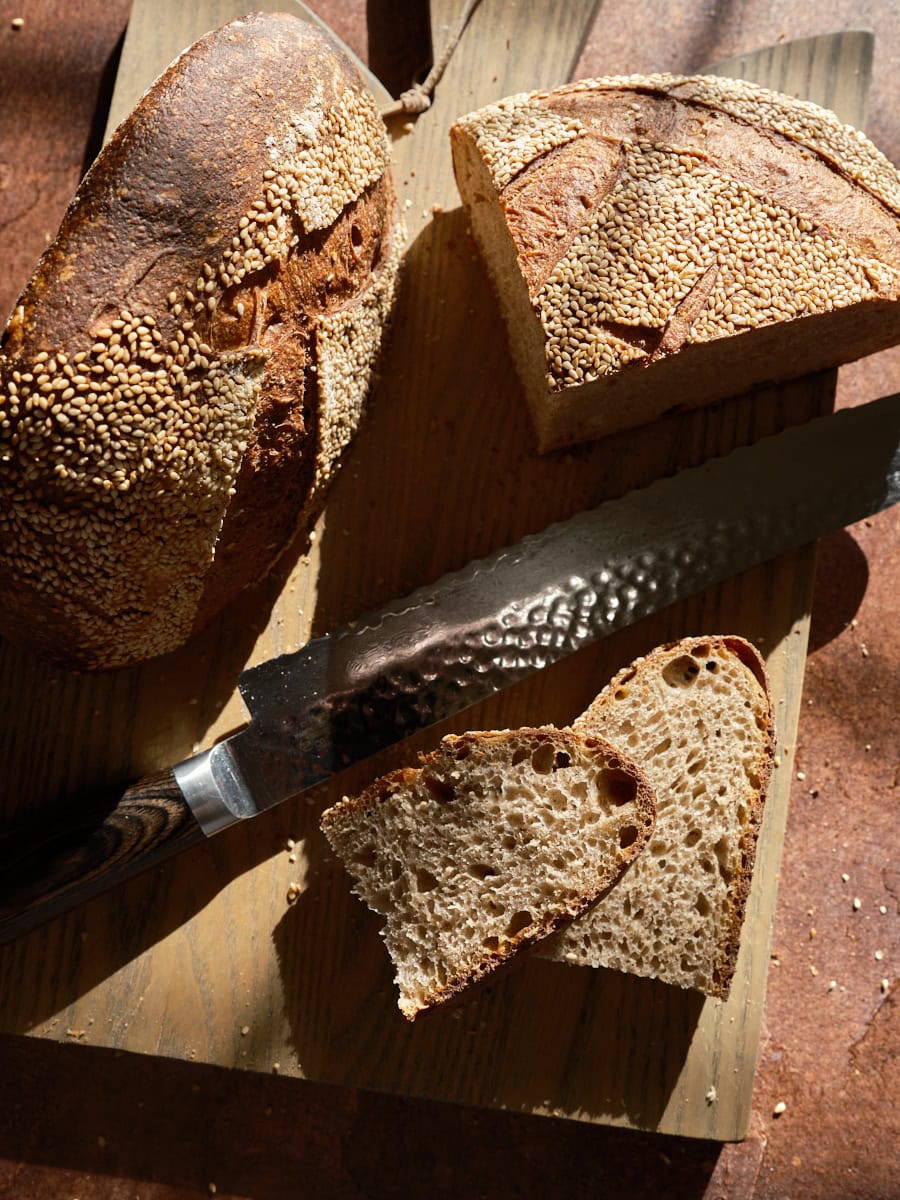
Buckwheat, while not possessing the same gluten-forming capabilities as wheat, introduces a distinct earthiness and a beautiful hue to the final loaf. Even in small percentages, buckwheat can influence the crumb structure, sometimes leading to a slightly tighter crumb, but the trade-off is well worth the intense flavor and visual appeal it imparts.
A Calculated Baking Schedule: Efficiency and Patience
This sourdough recipe is thoughtfully designed to be executed over a two-day period, requiring minimal active baker intervention. The bulk fermentation phase necessitates only occasional attention, with the dough undergoing a period of cold proofing overnight after shaping. This extended cold proof allows for the development of complex flavors and ensures the dough is perfectly chilled for baking the following morning. Alternatively, the dough can be retarded in the refrigerator until the evening, providing freshly baked bread for dinner.
Recipe Vitals and Formula Breakdown
This recipe yields two substantial loaves, each weighing approximately 900 grams. For bakers wishing to adjust the quantities, a comprehensive spreadsheet is available to facilitate scaling up or down.
Dough Vitals:
- Total Dough Weight: 1,800 grams
- Prefermented Flour: 5.8%
- Levain in Final Dough: 18.5%
- Hydration: 75.0% (calculated at 83% when including the water from the flour scald)
- Yield: Two 900g loaves
The target final dough temperature for this recipe is 78°F (26°C). Achieving the correct dough temperature is critical for optimal fermentation and is a factor discussed in detail in resources dedicated to baking science.
Total Formula:
| Weight (g) | Ingredient | Baker’s Percentage |
|---|---|---|
| 46 | Scald: Buckwheat flour (e.g., Anthony’s Organic Buckwheat Flour) | 5.0% |
| 73 | Scald: Water | 8.0% |
| 687 | High-extraction wheat flour (Type 85; e.g., Cairnspring Trailblazer) | 75.0% |
| 183 | Whole wheat flour (e.g., Camas Country Hard Red Wheat) | 20.0% |
| 46 | Barley malt syrup | 5.0% |
| 6 | Aniseed, ground | 0.6% |
| 596 | Water 1 (for levain and autolyse) | 65.0% |
| 92 | Water 2 (for final mix) | 10.0% |
| 18 | Fine sea salt | 2.0% |
| 53 | Ripe sourdough starter, 100% hydration | 5.8% |
Method: A Step-by-Step Guide to Crafting the Loaf
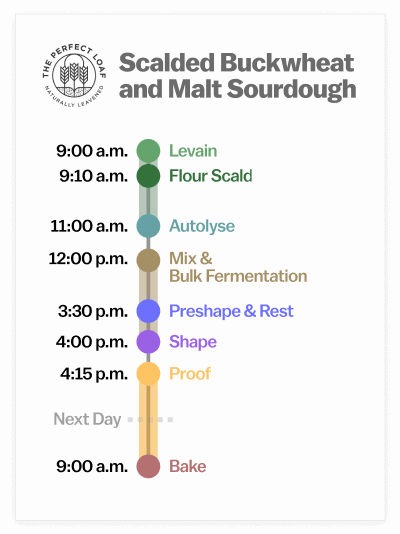
1. Prepare the Levain (Day 1, 9:00 a.m.)
A small, highly active levain is prepared using high-extraction wheat flour and water. This mixture is left to ripen for approximately three hours at a controlled temperature of 74-76°F (23-24°C). For bakers looking to modify the recipe or prepare multiple starters simultaneously, a specialized sourdough starter and levain calculator is available.
- Levain Ingredients:
- 53g High-extraction wheat flour
- 53g Water
- 53g Ripe sourdough starter (100% hydration)
2. Prepare the Flour Scald (Day 1, 9:10 a.m.)

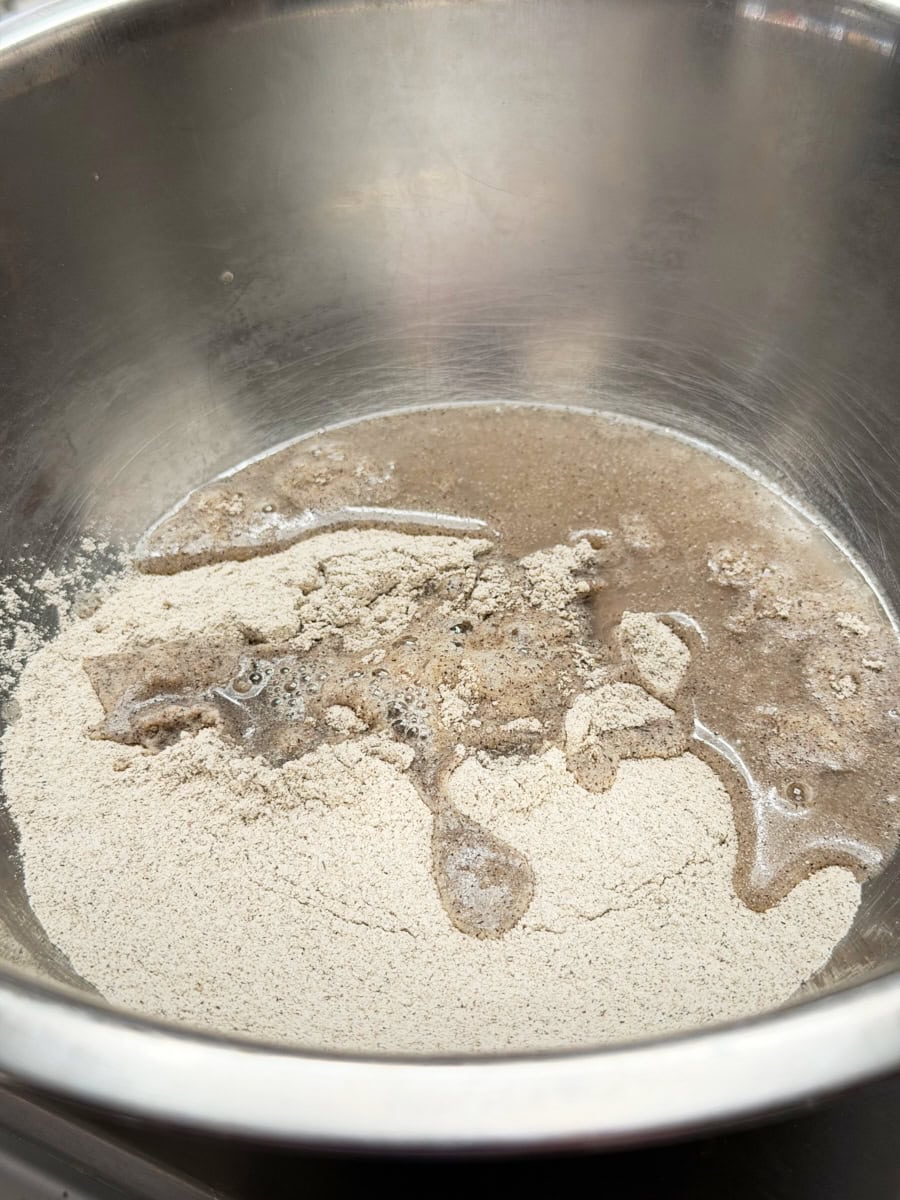
Simultaneously, the flour scald is prepared by combining buckwheat flour with boiling water. The mixture is stirred vigorously until a smooth paste forms. If the consistency is too dry, an additional small splash of boiling water is added. This aromatic paste is then set aside to cool.
- Flour Scald Ingredients:
- 46g Buckwheat flour
- 73g Boiling water
3. Autolyse (Day 1, 11:00 a.m.)
The autolyse stage involves combining the main flours (high-extraction wheat and whole wheat), the water designated for autolyse, and the prepared flour scald. The water temperature is adjusted using a water temperature calculator to ensure the final dough reaches the target temperature of 78°F (25°C). The ingredients are mixed by hand or with a mixer until no dry flour remains, creating a shaggy dough. This mixture is covered and allowed to rest for one hour, during which time the flour hydrates and gluten development begins.
- Autolyse Ingredients:
- 634g High-extraction wheat flour
- 183g Whole wheat flour
- 543g Water 1 (autolyse)
- All of the prepared flour scald
4. Mix the Dough (Day 1, 12:00 p.m.)
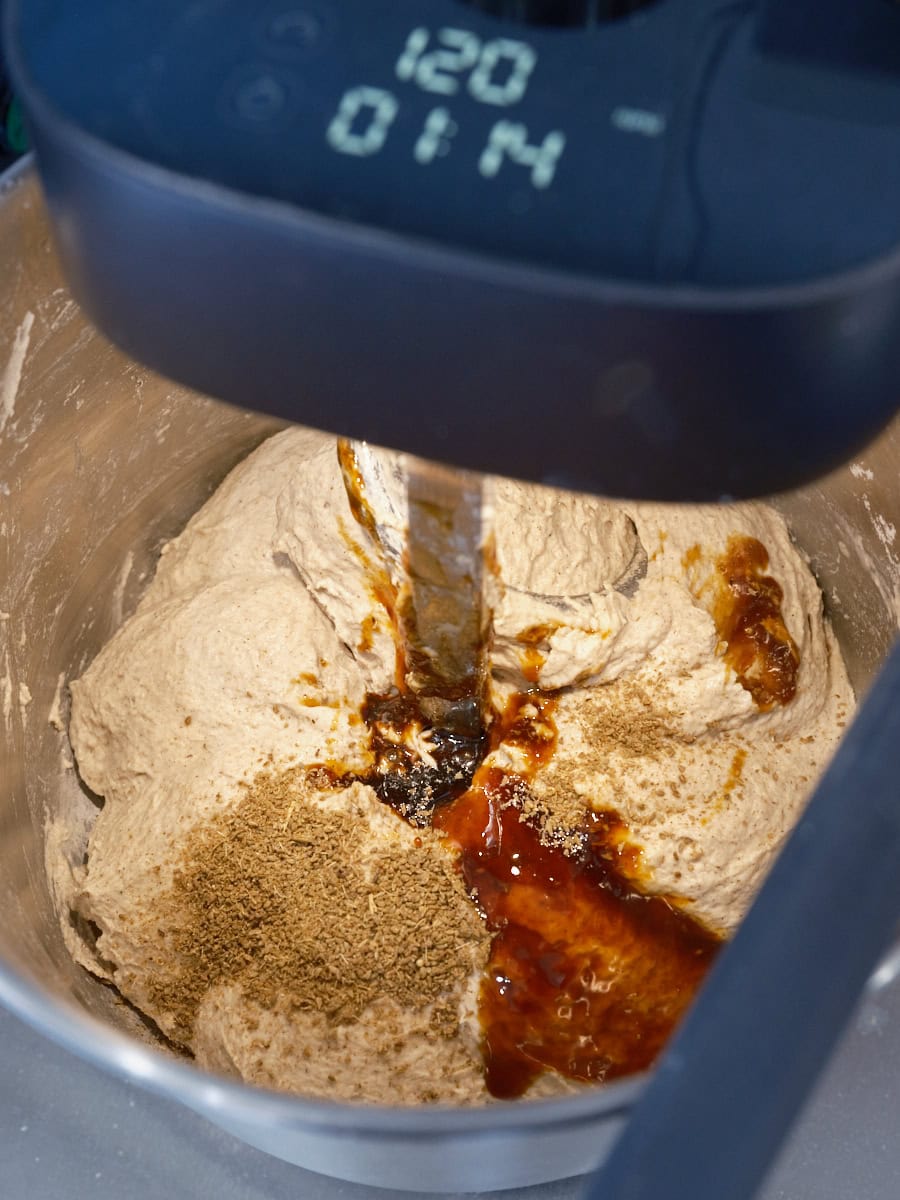
Following the autolyse, the salt, remaining water (Water 2), and the ripe levain are incorporated into the dough. This recipe features a high hydration level, and the dough will feel slack and sticky. The technique of holding back a portion of the water (Water 2) and adding it gradually, known as "bassinage," helps to manage the high hydration and ensure the dough remains cohesive.
Mixing can be done by hand or using a mechanical mixer. The dough is kneaded for several minutes until it becomes smooth and cohesive. For hand-kneading, techniques such as the slap-and-fold or folds-in-the-bowl method can be employed. After initial kneading, the dough rests for 10 minutes before any remaining water is incorporated, if necessary. The dough is then transferred to a bulk fermentation container.
- Main Dough Additions:
- 92g Water 2 (mix)
- 18g Fine sea salt
- 159g Ripe levain
5. Bulk Fermentation (Day 1, 12:30 p.m. to 3:30 p.m.)
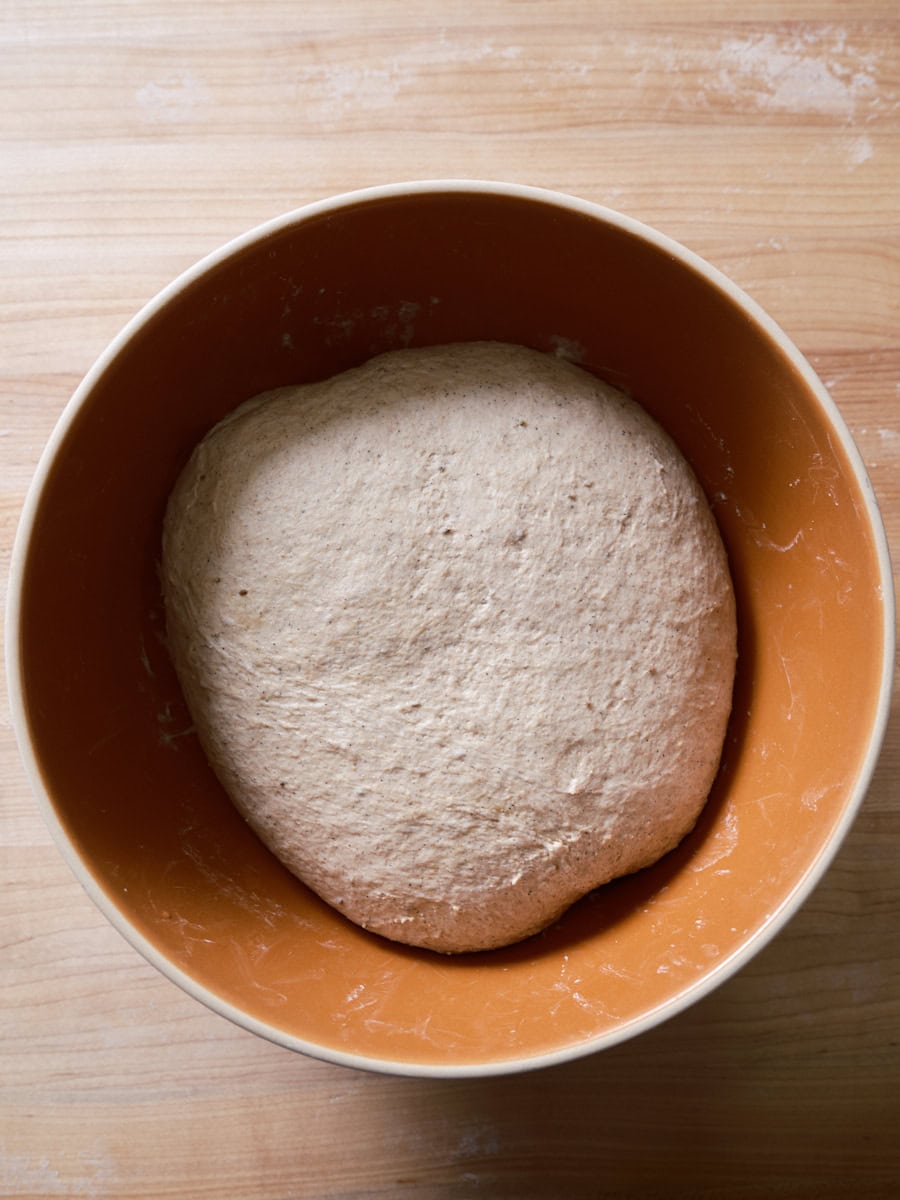
Bulk fermentation, typically lasting about three hours at a warm room temperature of 74-76°F (23-24°C), involves two sets of stretch-and-folds performed at 30-minute intervals. These folds develop the dough’s structure and strength. After the second set of folds, the dough is left undisturbed, covered, for the remainder of the bulk fermentation. The dough should appear smooth, puffy, and have increased in volume by approximately 30%.
6. Pre-shape (Day 1, 3:30 p.m.)
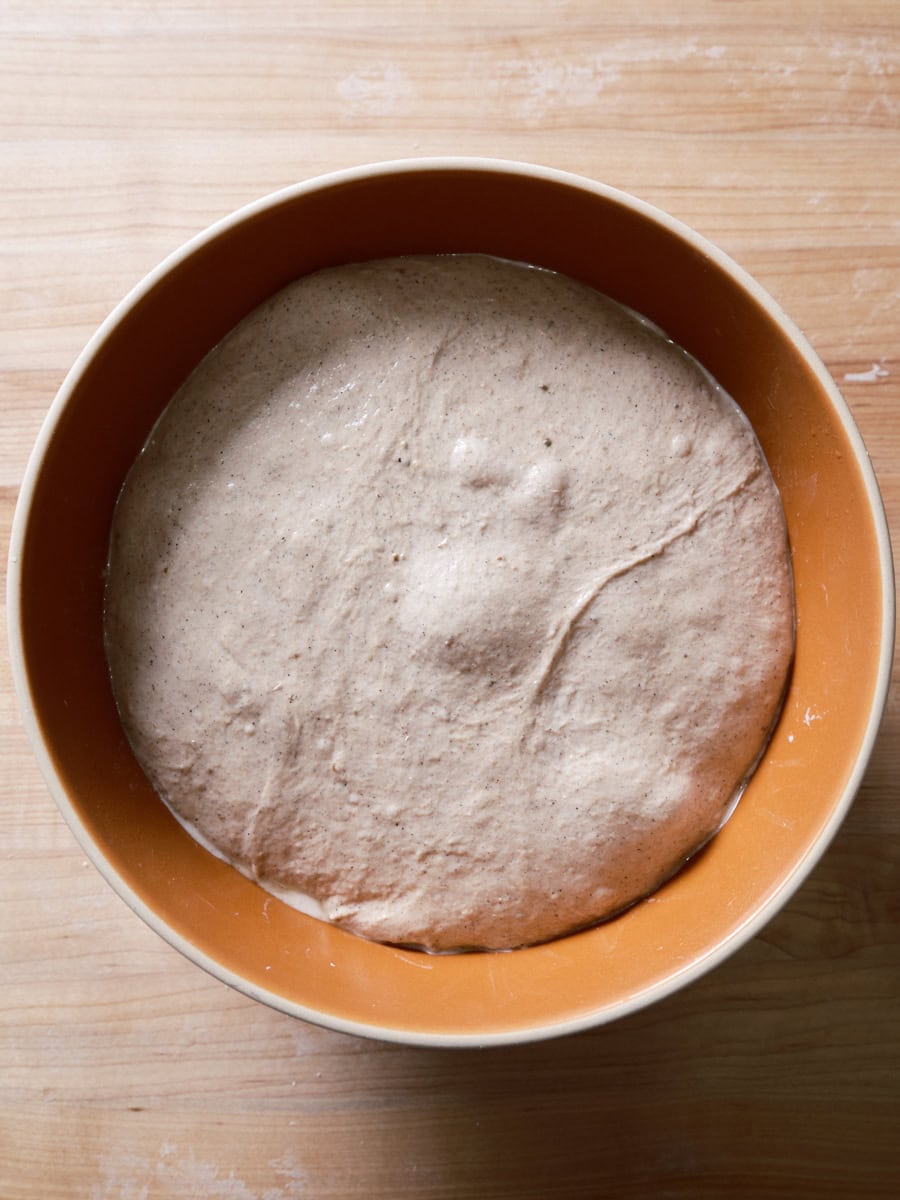
The dough is gently turned out onto a lightly floured surface, divided in half, and pre-shaped into loose rounds. This brief resting period of 30 minutes, uncovered, allows the gluten to relax before the final shaping.
7. Shape (Day 1, 4:00 p.m.)
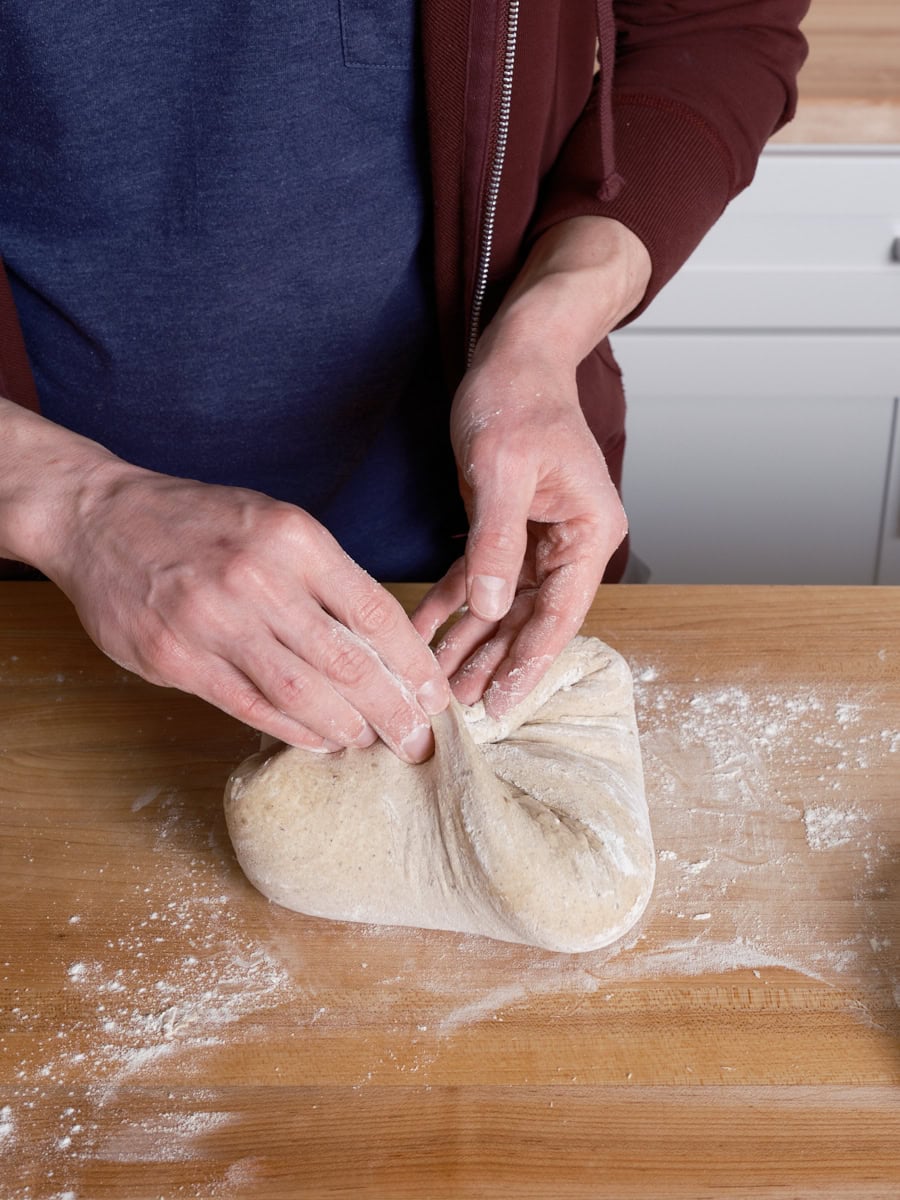
Before shaping, the tops of the dough rounds are sprinkled with raw white sesame seeds. A "gather up" method is used for shaping, where the dough is folded into the center and then tension is created by dragging the dough towards the baker. The shaped dough is then carefully placed, seam-side up, into a well-floured proofing basket.
8. Proof (Day 1, 4:15 p.m. to Day 2, 9:00 a.m.)
The proofing baskets are covered with reusable plastic bags and sealed. The dough is then placed in the refrigerator for an overnight cold proof. This slow, cold fermentation is crucial for developing flavor and achieving the desired oven spring.
9. Bake (Day 2, 9:00 a.m.)

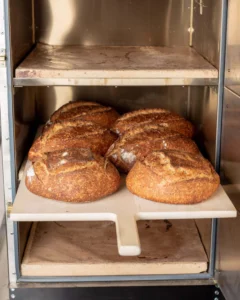
The oven is preheated to 450°F (230°C) with a Dutch oven or baking stone/steel inside. One loaf is removed from the refrigerator, inverted onto parchment paper, scored, and then carefully transferred into the preheated oven. The bread is baked for 20 minutes with steam (achieved by covering the Dutch oven or adding ice to a pan at the bottom of the oven). After 20 minutes, the steam is released by removing the lid or steaming pans, and the baking continues for another 30 minutes, until the crust is deeply colored and the internal temperature reaches approximately 204°F (95°C). The process is repeated for the second loaf. The baked loaves are then cooled on a wire rack for at least one to two hours before slicing.
Frequently Asked Questions
What can I use instead of aniseed?
Caraway seeds offer a similar aromatic profile and would be a suitable substitute, providing comparable spice notes.
What can I use instead of barley malt syrup?
For a flavor profile that is both bitter and sweet, blackstrap molasses is an excellent alternative. Alternatively, honey can be used for a more floral sweetness that harmonizes beautifully with anise.

Exploring Further
For those intrigued by the use of buckwheat in sourdough, the Soft Honey Buckwheat Sandwich Bread offers a rich yet sweet loaf, showcasing another delightful application of this versatile grain. The journey into crafting this Scalded Buckwheat and Malt Sourdough Bread is a testament to the rewarding nature of artisanal baking, offering a delicious and comforting experience, particularly when the weather outside calls for warmth and heartiness.