
The world of coffee has undergone a profound transformation, evolving from a simple morning stimulant to a complex sensory experience, particularly within the burgeoning "third wave" movement. This shift has ignited a scientific quest among enthusiasts and professionals alike to meticulously understand and control every variable influencing the final cup, with pour-over brewing emerging as a focal point for precision and flavor exploration. The journey from a casual coffee drinker to an appreciative connoisseur often involves a deep dive into the chemistry and physics of extraction, revealing an intricate interplay of factors that dictate taste, aroma, and mouthfeel.
The Rise of Specialty Coffee and the Scientific Approach
The "third wave of coffee" emphasizes high-quality, single-origin beans, light roasting to highlight intrinsic flavors, and meticulous brewing methods. This movement, particularly vibrant in Scandinavian countries known for their coffee culture, has fostered a community dedicated to understanding coffee beyond its basic function. Monthly coffee subscriptions, offering curated selections from diverse roasters, exemplify this trend, exposing drinkers to a spectrum of flavors influenced by bean origin, processing, and roasting profiles.

The year 2020, marked by unprecedented global changes, inadvertently provided many with more time for introspection and the pursuit of hobbies, including coffee. Activities like blind-tasting advent calendars and experimenting with various grinders illuminated the subtle yet profound impacts of brewing parameters. This period of intensified home brewing underscored a common realization: achieving consistently excellent pour-over coffee is far from trivial. It necessitates a structured, informed approach, echoing the principles of scientific experimentation, rather than relying solely on intuition. This revelation often propels enthusiasts into a rabbit hole of research, seeking to demystify the art and science of coffee extraction.
The exploration of extraction processes is not new in culinary science, having been applied to water, oil, and ethanol-based preparations, as well as brewing beer. Previous discussions on coffee have touched upon unique regional preparations like Norwegian egg coffee, the convenience of Aeropress for travel, and even the counterintuitive addition of salt to coffee to mitigate bitterness, with contributions from experts like Tim Wendelboe. However, recent years have seen an explosion of scientific literature and practical guides, particularly concerning pour-over and drip coffee, pushing the boundaries of what was previously understood about brewing at home and in cafés.
Tracing the Bean: From Shrub to Sip
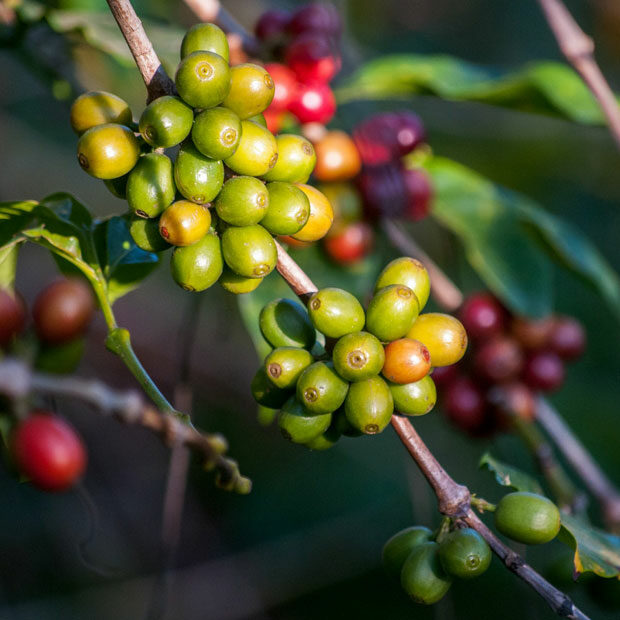
The quality of a cup of coffee is a testament to an extensive chain of influence, starting from the Coffea arabica shrub itself. Countless individuals and processes—from dedicated farmers and skilled processors to passionate roasters—contribute to the inherent potential of the beans. While much of this intricate journey is beyond the control of the end-user, the selection of high-quality, specialty-grade beans is the first critical step. Once a bag of roasted beans rests on a kitchen counter, the brewer assumes control over a set of parameters that can significantly impact the final beverage. Understanding these variables is key to unlocking the full potential of specialty coffee.
Key Parameters Influencing Coffee Extraction
-
Brew Ratio (BR): The Foundation of a Recipe
The brew ratio defines the proportion of water to coffee grounds. It is a fundamental metric, often expressed as the mass of water divided by the mass of coffee. A widely accepted starting point, endorsed by the Specialty Coffee Association (SCA), is approximately 60 grams of coffee per 1000 grams of water, yielding a BR of 16.7. This is analogous to Baker’s percentage in baking, providing a simple, scalable "recipe" framework. Brew ratios for black coffee typically range from 1:15 to 1:25 (coffee to water), with higher ratios generally producing a lighter, less intense brew. Adjusting the brew ratio allows for scaling recipes up or down while maintaining the intended strength profile, serving as a primary lever for flavor adjustment. -
Total Dissolved Solids (TDS): Measuring Strength
The Total Dissolved Solids (TDS) percentage quantifies the amount of coffee solubles extracted into the water, serving as the most straightforward measure of coffee strength. While TDS does not directly indicate taste quality, it provides objective data to confirm whether a brew falls within an optimal strength range. For instance, coffee that tastes "too strong and bitter" might be transformed into a vibrant, fruity beverage with a slight dilution, suggesting an initial TDS level that was too high. The SCA Gold Cup Standard recommends a TDS range of 1.15% to 1.35% for optimal flavor balance.Historically, TDS measurement involved gravimetric analysis – evaporating water from a coffee sample and weighing the residue. This method is impractical for home or café use due to the minute quantities of dissolved solids (typically 1.2-1.5% by weight, meaning only 6-7 mg in a 500 mg sample) and the need for highly accurate laboratory balances.
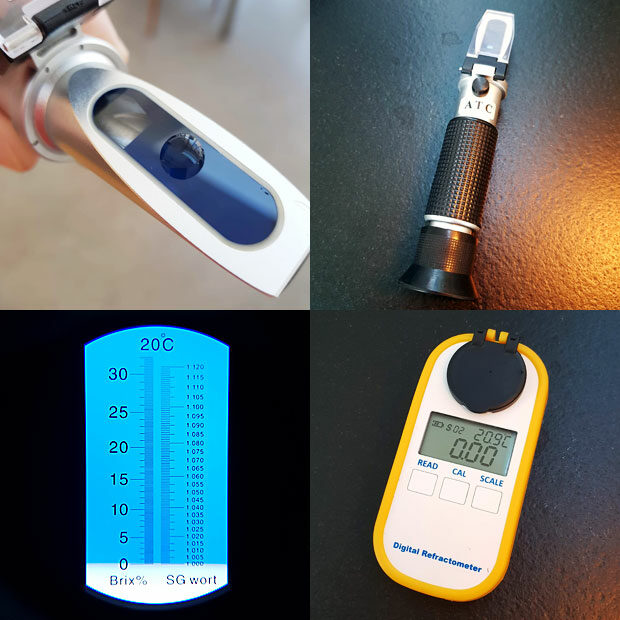
Fortunately, refractometry offers a more accessible and practical solution. Light travels at different speeds through liquids of varying densities, a principle exploited by refractometers. Analog handheld refractometers, often calibrated in %Brix (a measure of sugar content), can be used for coffee by applying a conversion factor (approximately %TDS = %Brix x 0.85). While these offer a resolution of 0.0-0.2 %Brix, sufficient to confirm if a brew is within or outside the typical range, they lack the precision for fine-tuning. Digital refractometers, especially those designed specifically for coffee, offer superior accuracy (e.g., 0.01 °Brix readout) and automatic TDS conversion, though at a higher cost.
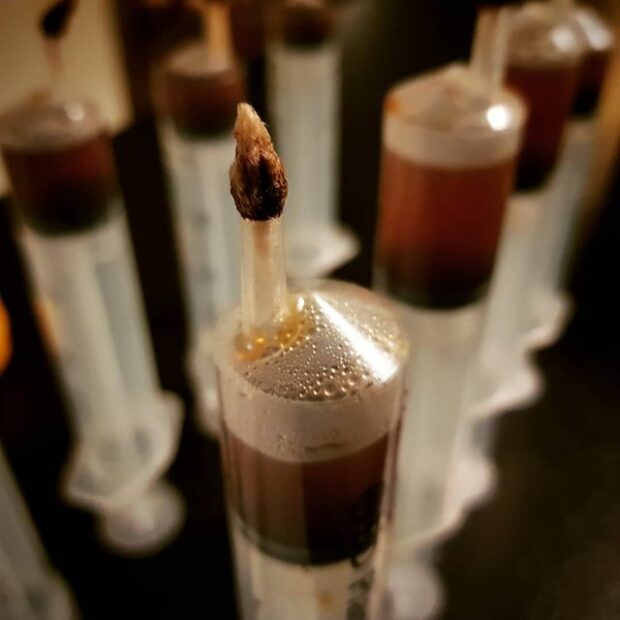
Beyond coffee, a handheld refractometer proves versatile in the kitchen for tasks like determining sugar content for sorbets (aiming for around 26 %Brix) or measuring specific gravity in homebrewing. For accurate coffee TDS measurements, samples must be hot-filtered to halt extraction and then allowed to cool completely, as temperature significantly affects refractive index. A simple DIY method involves using plastic syringes with cotton plugs for filtration and cooling, minimizing evaporation and contamination. It’s a striking realization that a typical cup of black coffee is over 98% water, underscoring the critical role of the small percentage of dissolved solids.
-
Extraction Yield (EY & EEY): Understanding What’s Extracted
Extraction yield measures the percentage of the dry coffee grounds that have been dissolved into the brew. This metric, in conjunction with TDS, forms the core of the "Coffee Brewing Control Chart" developed by the SCA, which visually plots strength (TDS) against extraction yield (EY) to guide brewers towards the "ideal" or "Gold Cup" zone (18-22% extraction yield).The calculation of extraction yield can be complex, particularly distinguishing between immersion (e.g., French press) and percolation (e.g., pour-over) methods. Two primary definitions emerge:
- Extraction Yield (EY): Focuses on the total mass of dissolved solids extracted from the coffee grounds into the entire liquid volume used, including any liquid remaining within the grounds (interstitial liquid) or lost during brewing. This is often calculated as TDS x BR / (1-TDS).
- Effective Extraction Yield (EEY): Focuses specifically on the mass of dissolved solids delivered to the cup. This is calculated as (TDS x mass of brew in cup) / mass of dry coffee grounds.
For immersion brews, where all liquid is mixed, the EY and EEY tend to be more aligned, assuming all brewed liquid is consumed. However, in percolation brews, where fresh water continuously washes through the grounds, interstitial liquid may contain a different concentration of solubles than the final brew in the cup. Leading coffee scientists like Scott Rao and Jonathan Gagné have extensively discussed these nuances, highlighting that different calculation methods offer distinct insights. EY provides an economic perspective (how much of the coffee mass was used), while EEY reflects the actual sensory experience in the cup.
An illustrative example: Using 20g of coffee and 300g of water, yielding 250g of brew.
- Immersion Brew (e.g., French Press): If measured at 1.30% TDS, the approximate EY is 1.30% x 15 (BR) = 19.5%. The precise EY, accounting for dissolved solids adding to liquid mass, is 1.30% x 15 / (1 – 0.013) = 19.8%. The EEY (solids in cup) is 1.30% x 250g / 20g = 16.3%.
- Percolation Brew (e.g., Pour-over): If measured at 1.35% TDS in the cup, the EEY is 1.35% x 250g / 20g = 16.9%.
This comparison reveals that while immersion might extract more total solids from the grounds into the entire liquid mass, percolation is often more efficient at delivering solubles to the cup, contributing to different flavor profiles. The subtle differences in the total mass and composition of extracted compounds (e.g., 3.95g vs. 3.38g in the example) underscore why these brewing methods yield distinct sensory experiences. Factors like evaporation during brewing also subtly impact brew ratio and temperature, adding another layer of complexity for hyper-accurate yield calculations, as does the inherent moisture content (1-4%) of roasted beans. Precision in weighing grounds and measuring TDS directly translates to the accuracy of yield calculations; a 0.1% TDS uncertainty with a handheld refractometer can lead to a significant 1.7% uncertainty in EY for a 15g coffee dose.
-
Grind Size and Particle Size Distribution (PSD): The Unsung Hero
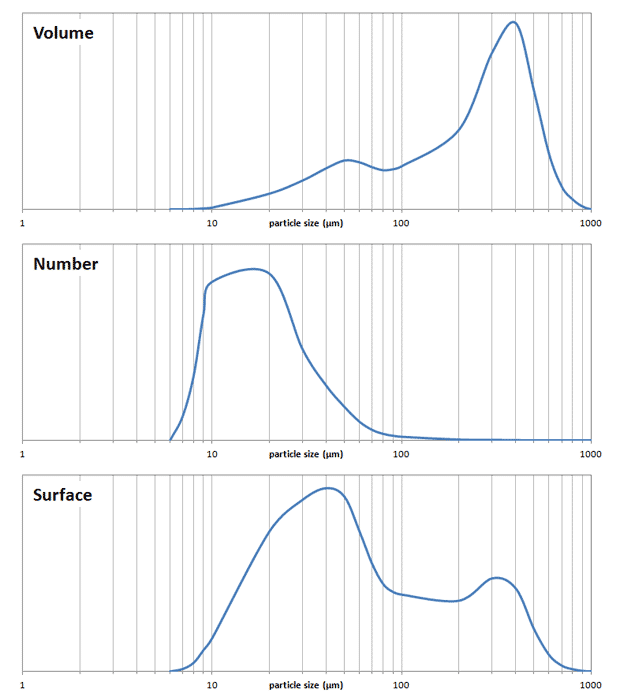
Grinding transforms whole beans into a particulate bed, but this process inevitably creates a distribution of particle sizes, from "boulders" to "fines" (typically defined as particles smaller than 100 µm). A uniform grind size is highly sought after in specialty coffee. Cheap blade grinders, which violently shatter beans, produce an extremely uneven PSD with excessive fines, leading to inconsistent extraction and off-flavors. Burr grinders, the standard for quality, come in various materials (ceramic, steel), geometries (conical, flat), and sizes. Flat burrs, often found in higher-end machines, can offer greater uniformity, while conical burrs are prevalent in compact hand grinders.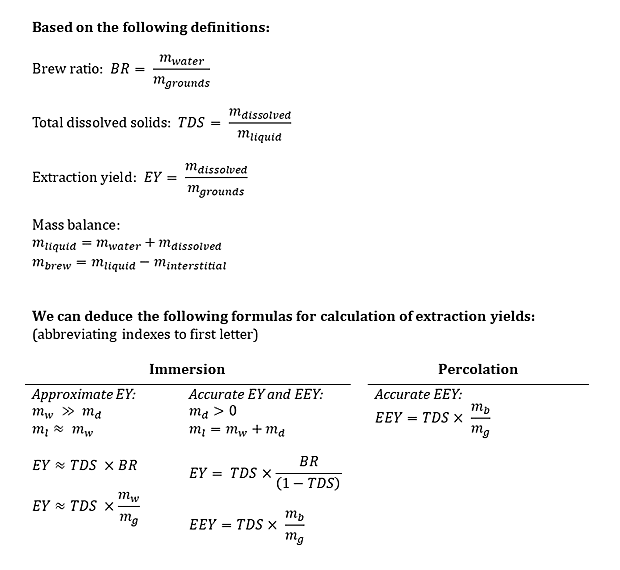
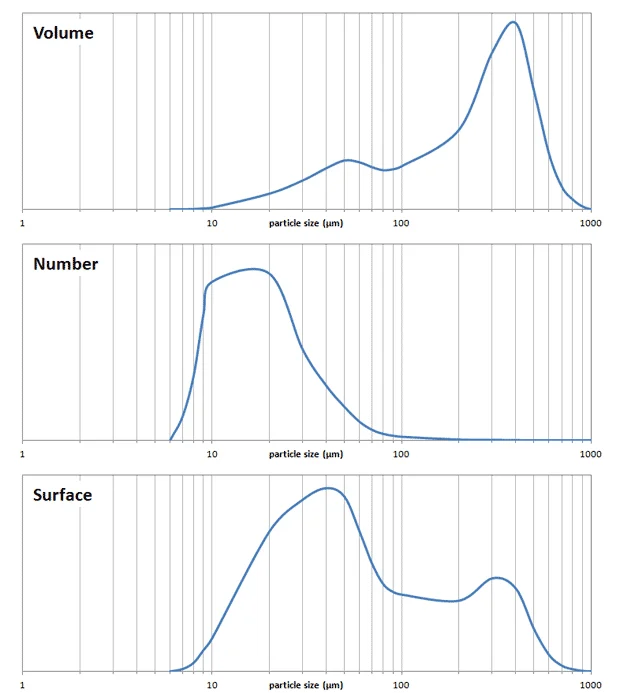
Visualizing PSD is crucial. While volume distribution (showing the bulk of the coffee) is common, it can be misleading. Number distribution reveals the sheer quantity of fines, but surface area distribution is arguably the most relevant for extraction. Research, including preliminary findings by Matt Perger of Barista Hustle, suggests that coffee particles are extracted only to a depth of about 100 µm. This implies that the core of larger particles remains unextracted, representing "wasted" coffee. However, these larger particles are vital for forming a permeable filter bed, preventing clogging and ensuring a proper draw-down time in pour-over methods.
The ideal PSD for pour-over is generally considered narrow, minimizing fines to prevent over-extraction of bitter compounds and filter clogging, while allowing for a consistent flow rate. Techniques like double grinding (coarse followed by fine) or using sifters (e.g., from Kruve) can help refine PSD at home. Industrial grinders achieve extremely narrow distributions, suggesting that commercially pre-ground filter coffee, if properly packaged in an inert atmosphere, could theoretically offer superior grind uniformity than many home grinders.
-
Freshness of Beans: The Clock is Ticking
Freshness is paramount. Roasted coffee beans continuously degas (release CO2) and oxidize when exposed to air. The oils within the beans, rich in volatile aromatic compounds, begin to degrade and go rancid upon contact with oxygen, leading to "stale" flavors. Therefore, storing beans in airtight, opaque containers, ideally flushed with an inert gas like nitrogen, is crucial. Once opened, beans should be consumed within days. Grinding coffee significantly increases its surface area, accelerating oxidation; thus, grinding immediately before brewing is essential. For longer-term storage, freezing larger quantities in airtight containers can significantly slow down degradation. -
Water Composition: The Unsung Solvent
Water is not a neutral medium; its mineral content profoundly influences extraction and flavor. Just as in beer brewing, specific mineral profiles are beneficial for coffee. Hardness (calcium and magnesium ions) and alkalinity (bicarbonates) are key. Magnesium, for instance, is known to enhance the extraction of desirable fruity and acidic notes, while calcium contributes to body. Bicarbonates act as buffers, influencing the perceived acidity of the coffee.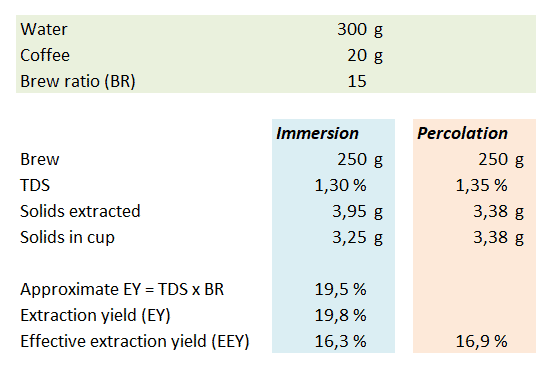
The SCA provides guidelines for ideal brewing water, recommending specific ranges for total hardness (50-175 ppm CaCO3), alkalinity (40-75 ppm CaCO3), and pH (6.5-8.5). Many home brewers, particularly in areas with soft water (like Scandinavia) or excessively hard water, resort to building their own mineral water from distilled water and specific mineral salts (e.g., magnesium sulfate, calcium chloride, sodium bicarbonate). Spreadsheet calculators exist to help formulate these custom water profiles, allowing brewers to tailor their water to their beans and desired flavor outcomes.
-
Temperature: The Engine of Extraction
Temperature is a critical determinant of extraction kinetics and solubility. Higher temperatures generally increase the solubility of compounds and accelerate diffusion, leading to a faster and more comprehensive extraction. For pour-over, the ideal brewing temperature typically falls between 90-96°C (195-205°F). While maximizing extraction might seem desirable, extremely high temperatures can also lead to the over-extraction of bitter, astringent compounds. Conversely, cold brewing, conducted at refrigerator temperatures over extended periods (12-24 hours), yields a distinct flavor profile due to the differential solubility and extraction rates of compounds at lower temperatures. It’s also important to note that the perception of flavors like sweetness and bitterness can diminish as a beverage cools, while sourness and saltiness remain more stable. -
Filter Material: Clarity, Body, and Sustainability
The choice of filter material significantly impacts the final cup’s clarity, body, and flavor.- Paper filters are highly effective at trapping fine particles and oils, resulting in a "clean," bright cup with reduced body. The ability to detect microscopic particles, even as small as 5 µm in chocolate, highlights our sensory sensitivity to particulates. This explains why a French press, which uses a coarse mesh filter, often tastes "muddy" or has a pronounced "body" compared to the crispness of a Chemex brew, known for its thick paper filter.
- Metal filters allow fine particles and oils (which contribute to mouthfeel and specific flavor compounds, especially in espresso) to pass through, resulting in a heavier body and more robust flavor, often with a visible residue at the bottom of the cup.
- Cloth and nylon filters offer intermediate filtration characteristics but can discolor and absorb flavors over time.
Within paper filters, choices include bleached and unbleached varieties. While some prefer unbleached for environmental reasons, bleached filters (now typically processed with chlorine-free oxidizing agents) contain fewer residues that could impart off-flavors. The thickness and pore size of paper filters also vary widely, influencing flow rate and filtration efficiency. Research, such as detailed analyses by Coffee Ad Astra, explores these differences, often using microscopy to compare filter structures. It’s important to remember that the performance of a filter changes when wet, as cellulose fibers swell, altering pore sizes.
Implications and the Path Forward
The scientific dissection of coffee brewing parameters empowers both home enthusiasts and professional baristas. By understanding brew ratio, TDS, and extraction yield, brewers can objectively diagnose and adjust their methods. Recognizing the profound impact of grind size and particle distribution drives investment in high-quality grinders. Appreciating the chemistry of water encourages experimentation with mineral profiles. Understanding temperature’s role allows for precise control, and the nuances of filter materials offer choices in textural and aromatic profiles.
This data-driven approach transforms coffee brewing from an intuitive art into a reproducible science. It democratizes the pursuit of exceptional coffee, allowing individuals to consistently craft beverages that highlight the unique characteristics of specialty beans. The ongoing research in coffee science, often shared through blogs and publications by leading experts, continues to push the boundaries of understanding, promising further refinements and innovations in the quest for the perfect cup. For the dedicated brewer, the journey into coffee science is an endless, rewarding exploration.