
The intersection of culinary arts and chemical stoichiometry has reached an unprecedented milestone with the official launch of Avogadro, a sophisticated parametric waffle recipe generator. Released on August 9, 2026, to coincide with the exact 250th anniversary of the birth of the renowned Italian physicist and chemist Amedeo Avogadro, the digital tool marks the culmination of a conceptual project that began over a decade ago. Designed to bridge the gap between traditional Scandinavian baking and computational precision, the platform eliminates static recipe databases in favor of a dynamic, on-the-fly batter computation engine.
The Evolution of a Culinary Concept
The genesis of the Avogadro generator traces back to 2014, when the initial framework was conceived through crude spreadsheet models and preliminary interface sketches. For years, the project remained dormant, existing merely as a theoretical exercise in quantifying the intangible aspects of baking. Traditional culinary traditions, particularly within Norwegian and Scandinavian waffle-making, have long relied on tacit knowledge and qualitative metrics. Historic recipe collections—comprising approximately 1,000 regional variations—frequently instruct bakers to "add flour until the batter has the right consistency," leaving the exact physicochemical parameters to intuition.
The core question driving the development of the Avogadro platform is fundamentally scientific: What constitutes a functional waffle batter, and at what precise threshold does a mixture cease to possess the necessary structural properties? By moving away from static repositories of pre-written instructions, the platform redefines recipe creation as a parametric problem-solving exercise, allowing users to manipulate fundamental variables rather than blindly follow predefined steps.
Mechanics and Computational Architecture
Unlike conventional cooking websites that rely on retrieving static records from a database, the Avogadro generator computes recipes in real time based on user-defined inputs. Bakers select their preferred foundational ingredients across multiple categories, including liquids, dairy products, fats, eggs, starches, and sweeteners. Once the ingredients are selected, users adjust a series of interactive sliders that govern key qualitative properties such as sweetness, richness, and tanginess.

The underlying software instantly computes a precise, gram-scaled batter formulation tailored to the exact number of eggs specified by the user. A central feature of the interface is the waffle heart quality indicator, a real-time diagnostic tool that provides immediate visual feedback. This indicator serves a dual purpose: it verifies whether the generated batter possesses the structural integrity required to bake successfully, and it evaluates how typical the resulting composition is compared to historical and commercial benchmarks. Interestingly, the model demonstrates that falling outside traditional parameters—so-called fringe compositions—does not equate to culinary failure, as numerous popular commercial mixes occupy surprisingly unconventional spaces on the spectrum.
To accommodate varying degrees of user expertise, the platform features two distinct operational modes. The standard mode offers a streamlined interface with a reduced selection of ingredients and a constrained set of sliders, ensuring that all possible configurations yield functional results. Conversely, the expert mode unlocks the full suite of ingredients, all eight control sliders, and an expanded array of presets, enabling culinary innovators to explore uncharted territories in batter composition.
Mathematical Scale and the Avogadro Constant
The name of the tool is more than a mere historical nod; it reflects the staggering scale of mathematical possibilities embedded within the software. By calculating every potential permutation of ingredient selections and slider positions, the Avogadro generator encompasses approximately $10^24$ distinct control settings. This theoretical ceiling yields roughly one septillion ($1,000,000,000,000,000,000,000,000,000$) unique recipe configurations.
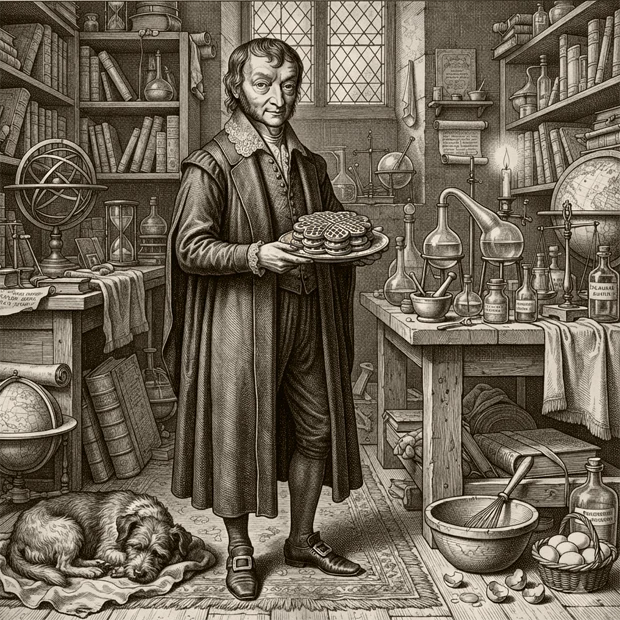
To put this astronomical figure into perspective, it can be compared to Avogadro’s number ($6.02214076 times 10^23$), the fundamental physical constant that defines the number of constituent particles, such as atoms or molecules, contained in one mole of a substance. The parameter space covered by the waffle generator equates to approximately 1,660 moles worth of theoretical waffle batters. This alignment with the foundational concept of molecular chemistry provided the ideal rationale for both the naming convention and the launch date, honoring the legacy of Amedeo Avogadro, who was born in Turin on August 9, 1776, and whose pioneering hypothesis regarding gases fundamentally shaped modern chemistry.
Despite the vastness of this theoretical space, developers emphasize an important caveat regarding the output. While the system accounts for $10^24$ control settings, rounding mechanisms and the pruning of trace ingredients mean that multiple distinct configurations frequently resolve to identical final batters. Furthermore, extreme slider positions can occasionally generate configurations that lie outside the realm of workable physics, a condition clearly signaled by the absence of functional lobes on the quality indicator. Nonetheless, the vast majority of the parameter space yields novel, viable culinary formulas that have never before appeared in any cookbook.

Context, Reception, and Future Implications
The release of the Avogadro generator arrives at a time of increasing convergence between computational data science and culinary gastronomy. Food scientists and data-driven chefs have increasingly sought to map the complex chemical interactions that occur during cooking. By translating qualitative culinary traditions into quantitative, parametric models, tools like Avogadro provide educational insights into the ratios of fats, proteins, starches, and liquids required to achieve desired textures and flavors.
Initial reactions from the culinary technology community have highlighted the platform’s innovative approach to user-driven experimentation. Rather than imposing rigid structures, the generator encourages empirical testing. Because the developer has not physically tested all septillion potential permutations, the system relies on crowdsourced user feedback to refine its underlying algorithms. Bakers who encounter anomalous outputs or discover particularly exceptional flavor profiles are encouraged to share their findings and direct URLs to specific configurations, contributing to an ongoing refinement of the model’s predictive accuracy.
As home bakers and culinary enthusiasts mark the 250th anniversary of Amedeo Avogadro’s birth, the platform offers a unique opportunity to engage with scientific principles through everyday kitchen practices. By merging historical reverence for one of chemistry’s founding figures with modern web-based computation, the Avogadro waffle generator successfully transforms the traditional act of baking into an exercise in molecular-scale exploration.