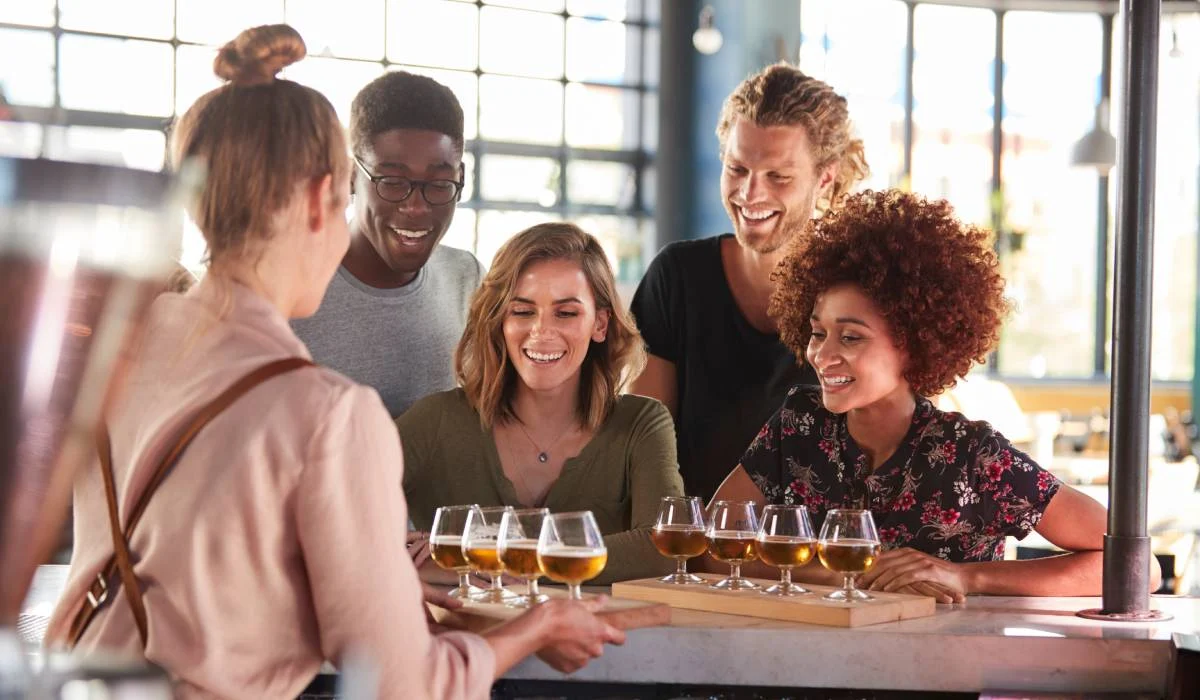

The American hospitality industry witnessed a significant recalibration in 2025 as restaurants and bars reclaimed their position as the primary hubs for social beer consumption, growing their share of beer purchases by more than $300 million. This 2.6 percent year-over-year increase marks a pivotal turning point for the "on-premise" sector—the industry term for establishments where alcohol is consumed on-site—following several years of post-pandemic volatility and shifting consumer habits. While the broader alcohol category faced headwinds in the early months of the year, a robust recovery in the second half of 2025 propelled beer to the forefront of a meaningful growth story, driven by a collective desire for social connectivity and a surprisingly resilient labor market.
The recovery of the on-premise beer market is not merely a statistical anomaly but a reflection of a fundamental shift in how Americans allocate their discretionary income. Data from the 2025 Fintech report, which analyzed anonymized purchase records from over 145,000 restaurants and bars across the United States, indicates that while total alcohol spending saw periods of momentum loss, beer remained a "bright spot" in an otherwise challenging landscape. For operators navigating thin margins and rising costs, the $300 million surge represents a vital infusion of capital and a validation of the enduring appeal of the "third space"—the social environment outside of home and work.
The Macroeconomic Foundation of the 2025 Recovery
To understand the 2025 surge, one must look at the broader economic context that shaped consumer behavior. Away-from-home food and beverage spending has maintained a steady upward trajectory since the catastrophic drop of 2020. By the end of 2025, total spending in this category officially surpassed the $1 trillion threshold. This milestone highlights a significant departure from the "home-centric" consumption patterns that defined the early 2020s.
Several macroeconomic factors converged to support this growth. First, the U.S. labor market remained historically strong throughout the year. Real average hourly earnings rose by nearly 4 percent from 2024 to 2025, providing consumers with the necessary "pocket change" to justify the pricing premium associated with drinking at a bar or restaurant versus purchasing alcohol at a retail store. Despite inflationary pressures in other sectors, the employment rate reached record highs, ensuring a consistent flow of traffic into hospitality venues.
Furthermore, a social study conducted by Eventbrite reinforced the psychological drivers behind these numbers. The report found that since the COVID-19 pandemic, Americans have been accelerating the rate at which they spend both time and money away from home. The "socialization deficit" created by years of restrictions appears to have fueled a long-term desire for experiential consumption. For the beer industry, this is a critical distinction; the beers consumers choose to drink in the comfort of their living rooms are rarely the same brands or formats they seek out when socializing in a public setting.
The Resurgence of the Draft Program: A $596 Million Shift
One of the most striking revelations of the 2025 data is the massive shift in packaging preferences. Draft beer, the traditional backbone of the American bar experience, saw a dramatic resurgence. Kegged beer gained 4.5 dollar share points from bottles and cans compared to 2024, representing a $596 million gain for the draft category.
This shift toward draft suggests that consumers are placing a higher value on the "ritual" of the pour and the freshness associated with tap beer—attributes that cannot be replicated in a retail environment. For operators, this trend offers both an opportunity and a challenge. While draft programs often command higher margins, they require meticulous maintenance of tap lines and cooling systems. The data suggests that those who invested in their draft infrastructure in 2025 were the primary beneficiaries of the year’s growth.
The leadership on the tap lines remained concentrated among a few powerhouse brands, though the competitive landscape showed signs of shifting. Michelob Ultra emerged as the clear victor in the draft category, holding a 16.7 percent share of total dollars—a 1.4 point gain over the previous year. This performance reinforces Michelob Ultra’s position as a lifestyle brand that appeals to health-conscious consumers who still want to participate in the social bar scene.
In contrast, other established giants like Miller Lite, Coors Light, Bud Light, and Blue Moon rounded out the top five draft brands but experienced modest declines in their overall share. The most significant mover in the draft rankings was Modelo Especial. Ranked sixth, the Mexican lager gained 2.3 share points year-over-year to reach a 6.2 percent share. Analysts view Modelo’s trajectory as a signal of the continuing "premiumization" of the beer market, where consumers are increasingly willing to pay more for imported and craft-style flavors.
On-Premise vs. Off-Premise: A Tale of Two Markets
The 2025 data highlights a growing divergence between what people buy at grocery stores (off-premise) and what they order at bars (on-premise). Michelob Ultra’s performance is a prime example of this "split personality" in consumer behavior. While the brand maintained the top dollar share in both sectors, its on-premise share gain of 1.3 points was nearly double its off-premise growth. This suggests that the brand’s marketing—which emphasizes an active, social lifestyle—resonates more powerfully in the context of a restaurant or bar.
Similarly, Modelo Especial showed a stark contrast in its performance metrics. It gained a marginal 0.1 share point in the retail sector but saw a 1.1 share point jump in restaurants and bars. This reinforces the idea that certain brands are "destination drinks"—products that consumers specifically associate with the experience of going out.
In the bottle category, the hierarchy remained relatively stable but reflected the same preferences seen on draft. Michelob Ultra led with a 19.3 percent share of dollars, followed by Miller Lite (13 percent), Coors Light (11.7 percent), and Bud Light (9.8 percent). The stability of these brands in the bottle format suggests that while consumers are moving toward draft for the experience, they still rely on trusted domestic lights when ordering bottled beer with a meal.
The Non-Alcoholic Revolution: A Baseline Expectation
The 2025 fiscal year also solidified the role of low- and no-alcohol beer as a permanent fixture of the on-premise landscape. What was once a niche category has become a baseline expectation for modern menus. Heineken Zero maintained its position as the top dollar-share leader in the non-alcoholic (NA) segment, despite losing 3.2 share points year-over-year as the market became more crowded with competitors.
The standout performer in this category was Michelob Ultra Zero. Ranking second with a 9.7 percent share, it achieved a staggering 9.4 point gain year-over-year. This makes it the fastest-growing brand in the NA category for both on- and off-premise markets. The success of Michelob Ultra Zero points to a broader trend of "social moderation," where consumers choose to alternate between alcoholic and non-alcoholic beverages during a single outing to extend their social time without the effects of intoxication.
For operators, the message is clear: a robust NA offering is no longer optional. With more suppliers entering the space and product quality improving significantly, the "sober-curious" movement has become a reliable revenue stream that helps drive traffic during traditionally slower periods, such as "Dry January" or weekday lunch shifts.
Craft and Beyond-Beer: Stability Amid Change
The craft beer segment, which saw explosive growth in the previous decade, appeared to reach a state of equilibrium in 2025. Blue Moon held its position as the craft leader with a 9.8 percent share of dollars, a figure that remained flat compared to 2024. Voodoo Ranger followed in second place with an 8.4 percent share, while Sierra Nevada held the third spot at 6.8 percent. The stagnation of share for the top craft brands suggests that the market has become highly localized, with consumers often choosing hyper-local microbreweries over national craft brands when they are available on tap.
In the "beyond-beer" category—which includes hard seltzers and flavored malt beverages—White Claw continued its dominance. The brand maintained the top share of dollars and gained 1.7 share points year-over-year. Twisted Tea followed closely with a 16.6 percent share, while Truly captured 7.7 percent. This category remains essential for capturing younger demographics and those who prefer sweeter or fruit-forward alternatives to traditional hops and barley.
Chronology of the 2025 Beer Market Evolution
The story of beer in 2025 was one of two halves, characterized by an initial period of caution followed by a surge in consumer confidence.
- Q1 2025: The Slow Start. The year began with concerns over persistent inflation and a cooling of the post-holiday spending spree. Alcohol sales in both retail and on-premise sectors were sluggish, leading some analysts to predict a year of decline.
- Q2 2025: The Stabilization. As the labor market remained strong and wage growth began to outpace inflation, consumer confidence stabilized. The "away-from-home" spending trend began to show its first signs of acceleration as the weather warmed.
- Q3 2025: The On-Premise Breakout. The summer months saw a definitive shift. While retail alcohol sales remained flat, bars and restaurants reported a surge in traffic. It was during this period that the $300 million share gain began to materialize, driven largely by draft beer sales.
- Q4 2025: The Meaningful Growth Story. The year concluded with beer leading the alcohol category in on-premise share gains. The $1 trillion milestone for F&B spending was surpassed, and brands like Michelob Ultra and Modelo Especial reported record-breaking quarters.
- January 2026: The Divergence. Early data from Bank of America card spending in January 2026 confirmed the trend’s longevity. Spending at bars increased nearly 4 percent year-over-year, even as spending at liquor, wine, and beer stores fell. This divergence reinforces that the shift toward social drinking is a structural change in behavior rather than a temporary fad.
Industry Implications and the Road Ahead
The data provided by industry experts like Lester Jones, Chief Economist for the National Beer Wholesalers Association (NBWA), paints a picture of an industry that has successfully adapted to a new era of consumerism. The $300 million growth in on-premise share is a testament to the resilience of the American bar and restaurant.
For brewery owners and distributors, the 2025 results suggest that investment should follow the consumer into the social sphere. Marketing budgets that were previously focused on retail "shelf talkers" are being redirected toward tap handle visibility and on-premise activations. The "premiumization" trend also suggests that consumers are less price-sensitive when they are out with friends, provided the experience justifies the cost.
For restaurant and bar operators, the 2025 data is an encouraging signal. Beer remains a reliable anchor for driving traffic and increasing the total tab size. By focusing on a diverse draft program, a strong non-alcoholic selection, and premium imported lagers, operators can capitalize on the current momentum. As we move further into 2026, the divergence between drinking at home and drinking out is expected to widen, placing the hospitality industry in a prime position to remain the primary guardian of America’s social beer culture.