
This statement, often attributed to Kate Solovieva, a former professor of psychology, a Precision Nutrition (PN) master coach, and PN’s Director of Community Engagement, encapsulates a profound insight into the challenges faced by many in the burgeoning coaching industry. Solovieva’s unique vantage point, derived from coaching thousands of clients and, crucially, specializing in mentoring other coaches through PN’s Level 2 Master Health Coaching Certification and private online communities, affords her an unparalleled perspective on the common pitfalls encountered by both novice and seasoned practitioners. Her observations are not mere anecdotes but distillations from a career spent at the forefront of professional development, seeing firsthand the triumphs and missteps that shape a coach’s journey. This article delves into three critical mistakes Solovieva frequently identifies, offering a strategic framework for coaches to transcend these hurdles and cultivate enduring success.
The global coaching market has experienced substantial growth in recent years, projected to reach over $20 billion by 2022, according to industry reports. This expansion has led to an influx of individuals seeking to leverage their expertise to guide others. However, the enthusiasm to help often collides with the practical realities of building and sustaining a professional practice. Solovieva’s work aims to bridge this gap, transforming well-intentioned coaches into effective, business-savvy professionals. Her insights are designed to empower coaches to not only refine their craft but also to navigate the intricate landscape of client acquisition, retention, and professional self-preservation.
The Allure of Expertise: Mistake #1 – Focusing on Coaching Instead of Selling
A prevalent initial error Solovieva observes among aspiring and even experienced coaches is an overwhelming emphasis on accumulating knowledge and refining coaching techniques, often at the expense of developing crucial business acumen, particularly in sales. She likens a sustainable coaching business to a three-legged stool, where "coaching," "selling," and "business management" each represent a vital leg. The vast majority, Solovieva notes, instinctively prioritize the "coaching" leg, driven by a commendable desire to become the most knowledgeable and skilled practitioner possible.
This pursuit of encyclopedic knowledge, while admirable, can inadvertently become a barrier to success. The assumption that one must possess every conceivable piece of information before engaging with clients is a common manifestation of imposter syndrome or a misplaced perfectionism. While foundational knowledge in one’s area of specialization (e.g., nutrition, fitness, leadership) is non-negotiable, the quest for "complete" knowledge is an unending one. Solovieva argues that true mastery in coaching is not achieved in a theoretical vacuum; it is forged through practical application and client interaction.
Analysis and Implications:
The implications of this oversight are significant. Coaches who delay selling and client engagement in favor of endless certifications inadvertently hinder their own development. A coach who spends years accumulating twelve certifications before seeking their first client, while theoretically well-versed, lacks the invaluable practical experience gained by someone who started coaching earlier, even with less initial formal training. Data from the International Coaching Federation (ICF) consistently highlights that practical experience and client outcomes are paramount to a coach’s reputation and growth. Small business statistics frequently underscore that a lack of sales and marketing strategy is a leading cause of failure, even for highly skilled professionals. By postponing client acquisition, coaches miss opportunities for experiential learning, real-world problem-solving, and the refinement of their actual coaching delivery—all of which are critical for long-term success.
The Solution: Embracing the Role of Coach, Not Just Expert
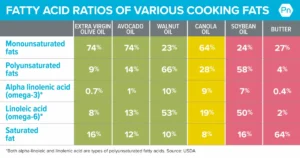
The remedy lies in a fundamental reorientation of identity: coaches must learn to show up as facilitators of change rather than repositories of all answers. While a baseline of knowledge is essential (e.g., knowing common protein sources for a nutrition coach), the expectation of instant, comprehensive recall on every minutia (e.g., the precise omega-3 to omega-6 ratio in flax oil) is unrealistic and often counterproductive.
Solovieva emphasizes that a coach’s primary role is not to lecture but to inquire. When confronted with a client’s question, even one the coach can readily answer, a more powerful approach is to ask, "That’s a great question. I can get you some information on that if you’d like, but I’m curious, why do you ask?" This simple shift transforms the interaction from a mere information exchange into a profound coaching opportunity. It allows the coach to delve into the client’s underlying motivations, fears, and true objectives. For instance, a client inquiring about seed oils might reveal, upon deeper questioning, that their real concern is weight loss, inspired by a friend’s dietary changes. This revelation shifts the focus from a potentially irrelevant nutritional debate to actionable strategies that genuinely align with the client’s goals, often unrelated to seed oils themselves.
This approach aligns with principles of motivational interviewing, where the coach’s curiosity helps clients articulate their own reasons for change. It empowers clients, fostering self-efficacy rather than dependency on the coach as an oracle. By prioritizing sales and early client engagement, coaches gain the practical experience necessary to apply their knowledge effectively, learn what clients truly need, and build a sustainable practice grounded in real-world impact. This proactive approach to business development ensures that theoretical knowledge is quickly translated into tangible client success and professional growth.
The Peril of Presumption: Mistake #2 – Assuming Your Clients are Exactly Like You
Another pervasive error identified by Solovieva is the unconscious tendency for coaches to project their own values, motivations, and experiences onto their clients. While it may seem obvious that clients are unique individuals, in the warm, often intimate space of a coaching relationship, it is remarkably easy to forget this fundamental truth. Coaches are often drawn to their profession because they deeply value health, fitness, personal growth, or career advancement—the very areas they help others with. This inherent alignment can lead to the assumption that clients share these same foundational values and priorities.
For example, a coach passionate about rigorous morning workouts and meticulously planned meal prep might inadvertently recommend these strategies to a client without fully understanding their life circumstances, energy levels, or personal preferences. The coach’s internal dialogue might suggest, "If it works for me, it must work for them," or "Anyone serious about their health would prioritize this." However, as Solovieva sagely points out, "There’s nothing inherently superior about valuing your health… Not everyone shares those values. That’s a tough one to swallow." A client might prioritize family time, career advancement, or creative pursuits above optimizing every aspect of their physical health, even if they seek health-related coaching.
Analysis and Implications:
The consequences of this assumption are profound and often lead to client frustration and disengagement. When a coach recommends actions or sets goals that are misaligned with a client’s actual values, capabilities, or lifestyle, the client is likely to feel misunderstood, unsupported, and ultimately, unsuccessful. This can lead to a breakdown in trust, client churn, and a sense of inadequacy for both parties. The coach might perceive the client as "unmotivated" or "resistant," while the client feels the coach "doesn’t get it." Research on client adherence in health and wellness consistently demonstrates that individualized, client-centered approaches are far more effective than one-size-fits-all prescriptions. A lack of genuine understanding of the client’s baseline can undermine even the most well-intentioned coaching efforts.
The Solution: Cultivating Deep Curiosity and Assessing Readiness
To counteract the bias of projection, Solovieva advocates for an approach rooted in radical curiosity and the deliberate withholding of assumptions. This means consciously checking one’s own biases at the door and approaching each client session with an open, inquiring mind. Key to this are powerful, open-ended questions designed to elicit the client’s unique perspective:
- "What inspired you—or pushed you—to come in today?"
- "Why is that goal meaningful to you?"
- "What skills do you have today that might help you achieve your goal? What skills do you feel you might be missing?"
Active and empathetic listening is paramount. Even when clients share superficial similarities with the coach (e.g., both are single parents, both training for a marathon, both cancer survivors), their internal experiences, biological responses, social contexts, and personal histories will inevitably make their journeys distinct. Solovieva suggests acknowledging shared experiences while immediately inviting the client to articulate their own unique narrative: "I know what [insert shared experience] has been like for me, but what has [insert shared experience] been like for you?" This validates the connection while simultaneously safeguarding against projection.
Once a clear picture of the client’s values, priorities, and reasons for change emerges, the coach can then objectively assess what actions the client is truly "Ready, Willing, and Able" to take. This framework, often utilized in professional coaching, encourages a collaborative evaluation of a client’s current state and capacity for change. It acknowledges that an action that feels "easy" for the coach (like daily meditation or complex meal prep) might be an insurmountable hurdle for a client with different constraints or priorities. By focusing on the client’s unique context, coaches can co-create strategies that are not only effective but also sustainable and genuinely meaningful to the individual. This personalized approach fosters greater client engagement, enhances adherence, and ultimately leads to more profound and lasting transformations.
The Double-Edged Sword of Care: Mistake #3 – Getting Too Attached to Client Results
The very essence of coaching is rooted in a genuine desire to help others succeed. This inherent empathy, while a powerful motivator, can also become a significant vulnerability for coaches: becoming overly attached to client results. Solovieva acknowledges this as a "very natural" inclination, stating, "There’s a reason we go into coaching. It’s because we care and we want to help clients. We want to see them succeed."
However, this deep investment, if unchecked, can lead to frustration and emotional burnout. Coaches meticulously craft plans, offer sound advice, and provide unwavering support, only to witness clients falter, fail to execute, or achieve less than desired outcomes. This reality can be "brutal," as Solovieva describes, evoking feelings of heartbreak or inadequacy for the coach. While experiencing such emotions is a sign of genuine care and purpose, an excessive attachment crosses a critical line: "There’s a point there where we can start caring more than the client themselves."
Analysis and Implications:
This over-investment carries severe implications for the coach’s well-being and the sustainability of their practice. Studies on professional burnout in helping professions, including coaching, consistently highlight emotional exhaustion as a primary factor. When a coach’s emotional state becomes overly dependent on client outcomes, they are susceptible to chronic stress, resentment, and a diminished capacity to serve effectively. Furthermore, an over-attached coach can inadvertently foster client dependency, removing the client’s agency and ownership of their own journey. The "care units" analogy used by Precision Nutrition is instructive here: coaches have a finite amount of time, energy, and emotional investment, as do clients. The healthy dynamic involves the coach caring "one care unit less" than the client, ensuring that the primary responsibility for action and results remains with the individual being coached.
The Solution: Clearly Delineating Coach and Client Responsibilities
Maintaining an appropriate level of emotional investment while still effectively supporting clients requires clear boundaries and a precise definition of roles. Solovieva emphasizes the importance of coaches being "very, very clear on what my role is as a coach." This clarity allows coaches to objectively assess their performance: "Did I show up? Did I follow up? Did I coach this person to the best of my ability?"
Coaches are responsibly for:
- Providing expert guidance, resources, and evidence-based strategies.
- Offering consistent support, encouragement, and accountability.
- Facilitating self-discovery and goal setting.
- Checking in regularly and adapting strategies as needed.
- Maintaining professional boundaries and confidentiality.
Clients, conversely, are responsible for:
- Taking ownership of their goals and decisions.
- Actively participating in the coaching process.
- Implementing agreed-upon actions and strategies.
- Communicating challenges, successes, and feedback honestly.
- Being accountable for their own progress and results.
This delineation of responsibilities should ideally be established early in the coaching relationship, perhaps during initial consultations or through a formal coaching agreement. This early communication serves a dual purpose: it sets realistic expectations for the client and acts as a "fit" assessment for the coach. For instance, if a prospective client demands daily texts, grocery delivery, and constant external motivation, a coach can ethically and professionally decline the engagement, recognizing it as a poor fit for their coaching model.
Clear boundaries not only prevent future friction and disappointment but also protect the coach from burnout. In situations where a client "ghosts" or disengages, a coach with clearly defined responsibilities can continue to fulfill their part (e.g., sending regular check-ins until the contract expires) without taking the client’s non-response personally. This professional detachment, paradoxically, allows for greater compassion and long-term effectiveness, ensuring that the coach remains a stable and reliable resource, even when client engagement fluctuates.
The Overlooked Essential: Bonus Mistake – Forgetting to Give Yourself a Pat on the Back
Beyond the three core mistakes, Solovieva highlights a crucial, often overlooked "bonus mistake": the failure of coaches to acknowledge their own efforts and celebrate their resilience. In a profession dedicated to helping others achieve their goals, coaches frequently neglect their own need for self-recognition and appreciation. This oversight is particularly poignant because the very challenges discussed—the drive for excessive knowledge, the empathetic projection, and the emotional investment in client outcomes—often stem from a deep-seated desire to serve and care.
Analysis and Implications:
This self-neglect is not a mere inconvenience; it is a significant contributor to coach burnout and a barrier to long-term professional sustainability. Coaches who consistently push themselves without pausing to acknowledge their progress, learn from their missteps, and celebrate their commitment risk depletion. It can exacerbate imposter syndrome, diminish motivation, and erode the joy derived from their impactful work. The relentless focus on client outcomes without an equal measure of self-compassion creates an unsustainable professional paradigm.
The Solution: Cultivating Self-Compassion and Recognizing Effort
Solovieva’s message is one of profound encouragement: if coaches have made these "mistakes," it is most likely because they genuinely care—a powerful strength, not a weakness. The solution lies in consciously integrating self-recognition into their professional practice. This means:
- Acknowledging effort, not just outcomes: Celebrating the diligent application of coaching skills, the empathetic listening, the thoughtful planning, regardless of the immediate client result.
- Practicing self-compassion: Understanding that making mistakes is part of learning and growth, both for coaches and their clients.
- Seeking peer support and mentorship: Engaging with other coaches to share experiences, gain perspective, and receive validation.
- Prioritizing self-care: Implementing strategies to manage stress, maintain personal well-being, and replenish emotional reserves.
By consciously giving themselves a "pat on the back," coaches reinforce their intrinsic motivation, build resilience, and create a more sustainable and joyful career path. This self-acknowledgment is not an act of vanity but a vital component of professional longevity, ensuring that coaches can continue to bring their best selves to their clients, year after year.
Broader Impact and Industry Outlook
Kate Solovieva’s insights offer a critical roadmap for the continued professionalization of the coaching industry. By addressing these common pitfalls—the overemphasis on knowledge accumulation, the trap of assuming client similarity, and the perils of over-attachment to results—coaches can elevate their practice, achieve greater client success, and build more sustainable businesses. Organizations like Precision Nutrition play a pivotal role in this evolution, providing not only foundational certifications but also fostering communities where such candid discussions and growth-oriented feedback can occur.
The implications extend beyond individual coach success. A more self-aware, strategically minded, and boundary-conscious coaching workforce contributes to a stronger, more credible industry as a whole. As the demand for coaching continues to rise, the ability of practitioners to deliver consistent, client-centered results, while also managing the demands of their own businesses and well-being, will define the future landscape of the profession. Solovieva’s work underscores that true mastery in coaching is a holistic endeavor, integrating profound empathy with shrewd business practices and unwavering self-care. For those aspiring to enter this impactful field, or current practitioners seeking to refine their craft, these lessons provide an invaluable foundation for enduring success.
For individuals keen on developing these essential skills and contributing to the professional advancement of the coaching industry, programs like the PN Level 1 Nutrition Coaching Certification offer structured pathways to acquire both the scientific knowledge and the practical coaching competencies needed to avoid these common pitfalls and build a thriving practice.