
The emergence of such accessible yet sophisticated recipes underscores a broader shift in contemporary home cooking, where consumers seek convenient methods to create gourmet-quality dishes without specialized equipment or extensive culinary training. This particular ice cream, with its promise of indulgence without the typical complexities of traditional churned varieties or baked cheesecakes, positions itself as a prime example of this trend. Its appeal lies in its straightforward assembly, relying on a fundamental understanding of dairy science and flavor layering to achieve a result that mimics professionally made ice cream.
The Genesis of No-Churn: A Culinary Revolution for the Home Kitchen
The concept of no-churn ice cream, while seemingly modern, draws inspiration from various historical methods of creating frozen desserts. For centuries, ice cream production was a labor-intensive process, involving ice, salt, and continuous agitation. The advent of mechanical ice cream makers simplified this, but still required dedicated machinery. The no-churn method, popularized by culinary figures and home cooks alike, represents a further democratization of ice cream making, removing the last barrier of specialized equipment.
At its core, the no-churn technique relies on two primary ingredients: heavy cream and sweetened condensed milk. The heavy cream is whipped to stiff peaks, incorporating a significant amount of air, which is crucial for the ice cream’s light, airy texture. This aeration mimics the churning process, which continuously folds air into the mixture while simultaneously breaking down ice crystals. The sweetened condensed milk, beyond providing sweetness, plays a vital role in inhibiting the formation of large, undesirable ice crystals. Its high sugar content and viscosity lower the freezing point of the mixture, resulting in a smoother, creamier final product that would otherwise be hard and icy if made with just cream and sugar.
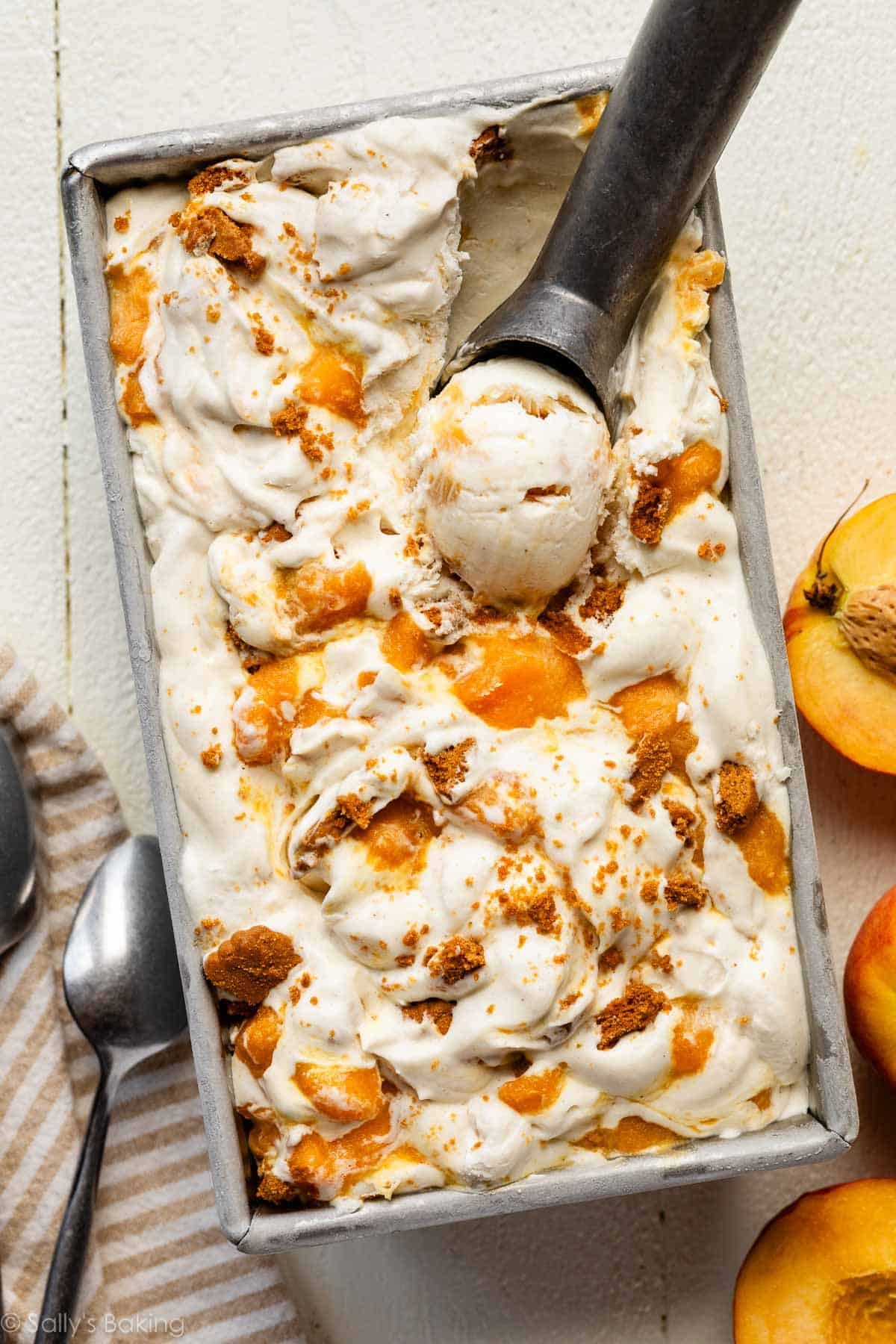
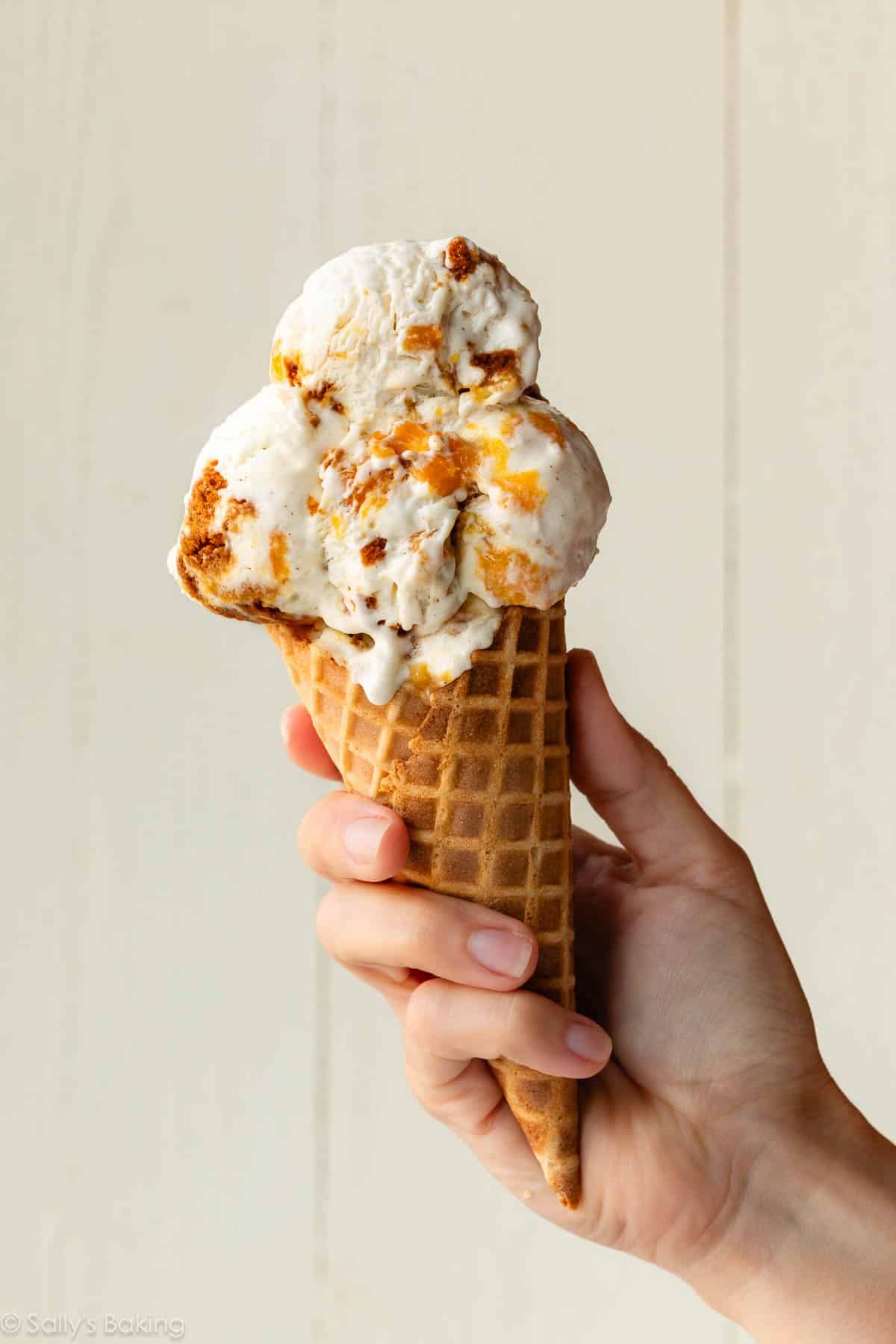
This method gained significant traction in the early 21st century, coinciding with the rise of food blogs and online recipe sharing platforms. Home cooks, eager to experiment with new flavors and techniques, embraced the simplicity and versatility of no-churn bases. Culinary experts often cite its low barrier to entry as a key factor in its widespread adoption, allowing individuals to customize flavors without the commitment to expensive equipment. This approach not only provides convenience but also encourages creative experimentation with mix-ins and flavor profiles, as demonstrated by the peach cheesecake and Biscoff combination.
A Symphony of Flavors: Deconstructing the Ingredients
The success of this no-churn peach cheesecake ice cream hinges on the careful selection and preparation of its core components, each contributing a distinct layer to the overall sensory experience.
Peaches: The Essence of Summer
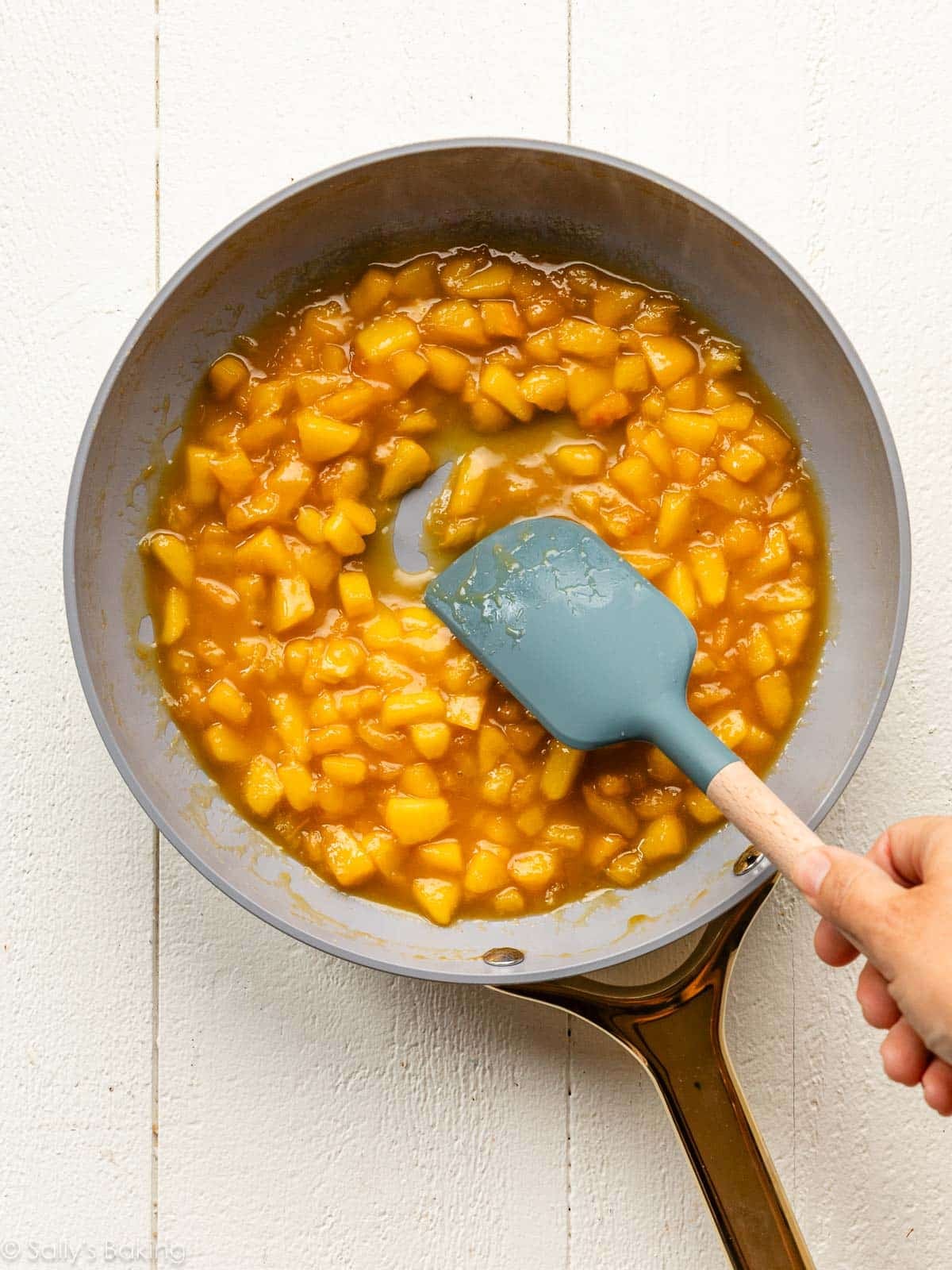
The use of fresh peaches is paramount. Approximately four fresh peaches are required, undergoing a specific preparation to optimize their flavor and texture within the frozen dessert. Peeling, pitting, and dicing the fruit are standard preliminary steps. The subsequent cooking of the peaches on the stovetop for about 10 minutes with a small amount of brown sugar and butter is a critical technique. This process serves multiple purposes:
- Flavor Intensification: Heating the peaches with sugar caramelizes their natural sugars, concentrating their flavor and deepening their sweetness. The butter adds a rich, complementary note.
- Texture Modification: Cooking softens the peach chunks, preventing them from becoming hard, icy nuggets in the frozen ice cream. As the peaches cook, a gentle mashing creates a preserves-like consistency—saucy yet with discernible fruit pieces. This texture is ideal for a swirl, distributing flavor evenly without compromising the creaminess of the ice cream base.
- Moisture Management: While some moisture is released during cooking, the overall effect is a more integrated and less watery fruit component, which is vital for preventing excessive ice crystal formation.
The importance of cooling the cooked peach mixture completely before incorporation cannot be overstated. Introducing warm fruit to the whipped cream base would cause the cream to deflate, compromising the ice cream’s airy structure. This step, though simple, is a cornerstone of successful no-churn preparation. While fresh peaches are recommended for their superior flavor and texture, thawed frozen peaches can be used if thoroughly blotted to remove excess moisture. Canned peaches, however, are generally not advised due to their inherent softness and high water content, which can dilute flavor and lead to an icy texture.
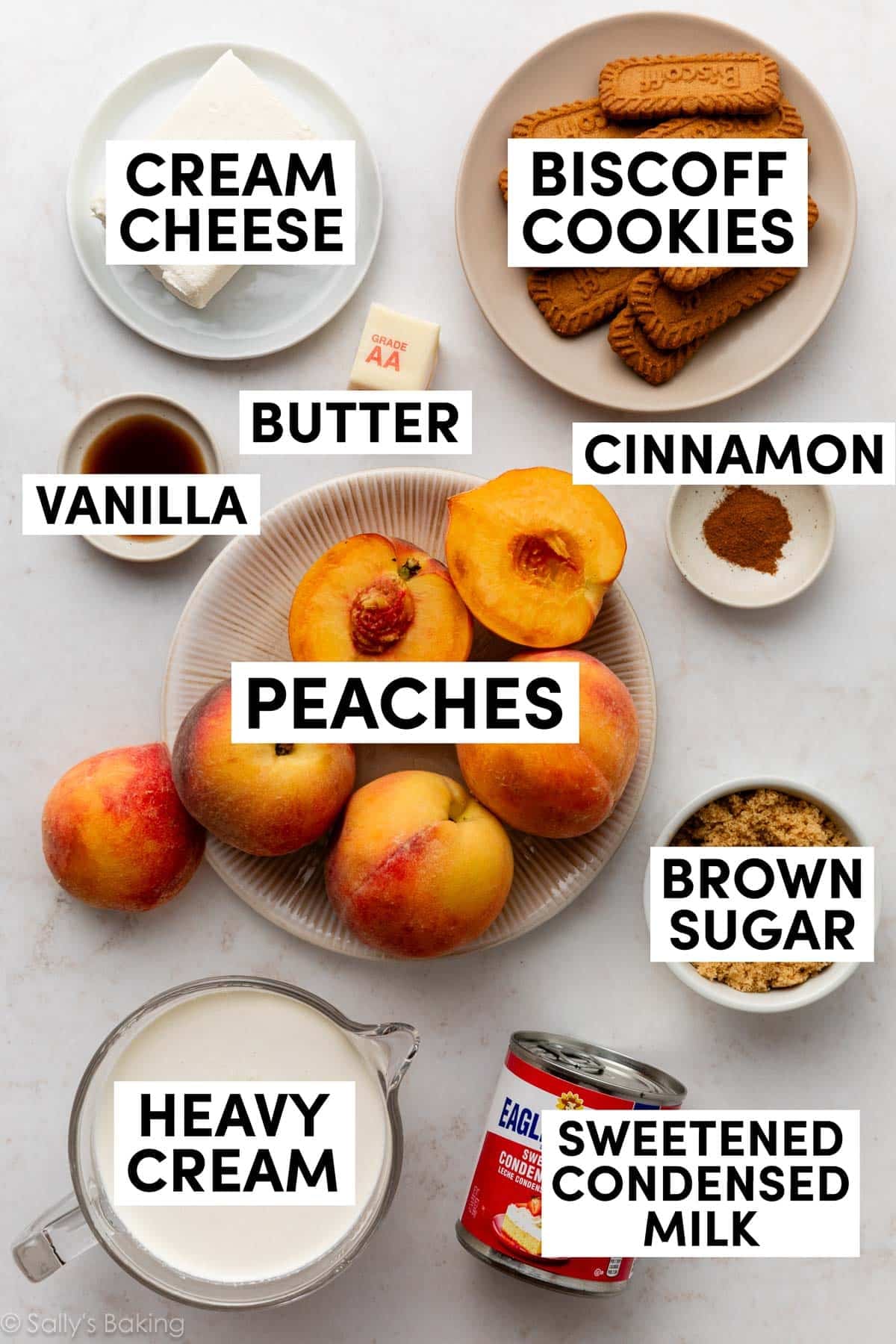
Cream Cheese: The Tangy Heart of Cheesecake
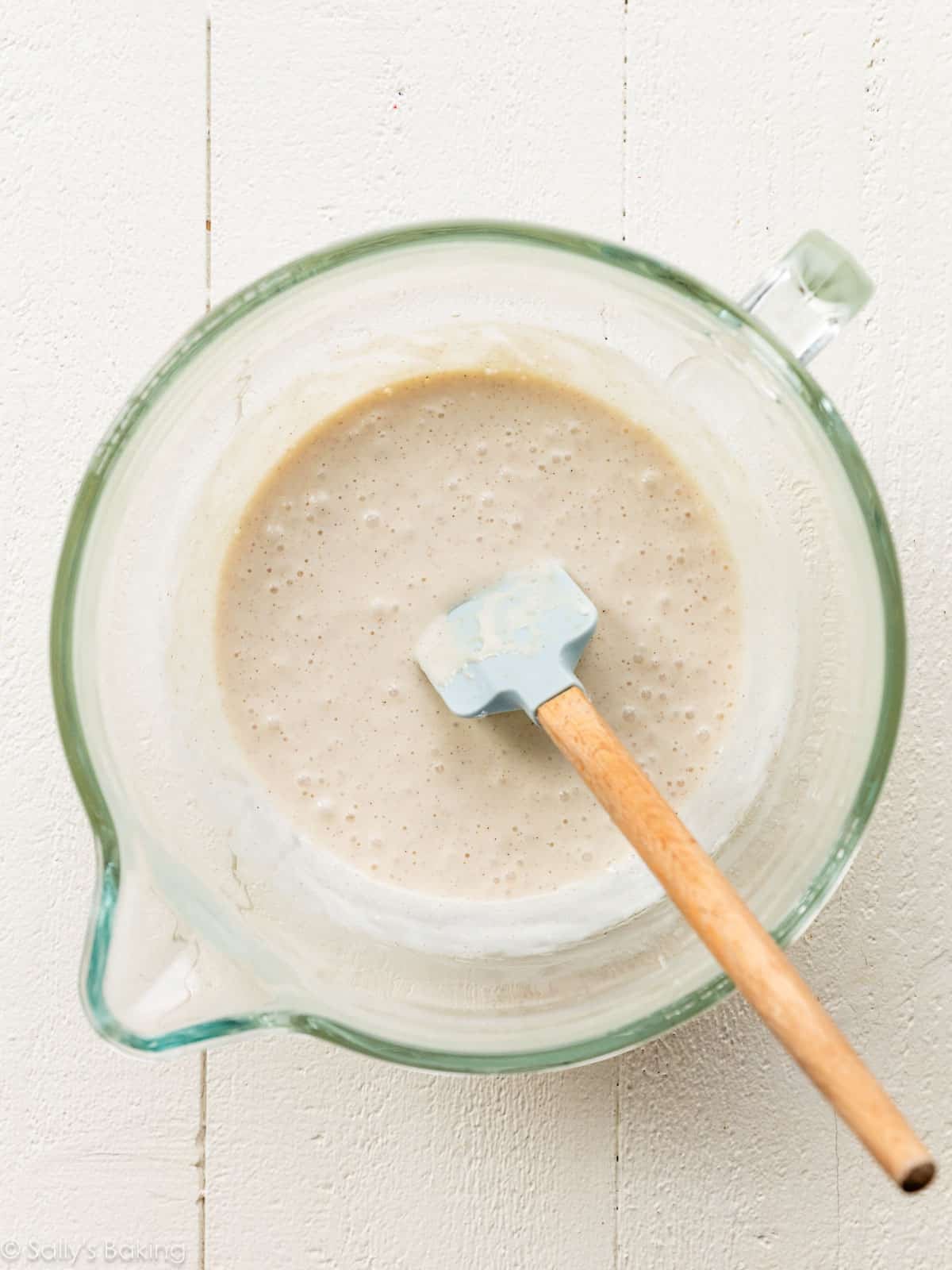
The "cheesecake" element is introduced through softened cream cheese. Cream cheese, a fresh, mild, and slightly tangy cheese, is a fundamental component of classic cheesecake. In this ice cream, it provides the characteristic tang and a luscious, dense richness that distinguishes it from a standard fruit ice cream. The cream cheese must be thoroughly beaten until completely smooth and lump-free before being combined with the sweetened condensed milk, vanilla, and cinnamon. This ensures a uniform, velvety texture throughout the ice cream base. The softening of the cream cheese prior to beating is essential for achieving this smoothness, as cold cream cheese will resist blending and result in a lumpy mixture.
Biscoff Cookies: The Spiced Crunch
The inclusion of Biscoff cookies adds a layer of sophisticated spice and a delightful textural counterpoint. Biscoff, also known as speculoos, are a type of shortcrust biscuit originally from Belgium. They are characterized by their distinctive caramelized flavor and warm spice blend, typically including cinnamon, nutmeg, cloves, and ginger. These cookies, when crushed and swirled into the ice cream, provide a pleasant crunch and a flavor profile that harmonizes beautifully with both the sweet peaches and the tangy cheesecake. They serve a similar function to a graham cracker crust in a traditional cheesecake, offering a spiced, buttery foundation. For those without access to Biscoff, graham crackers are a suitable substitute, offering a similar crunch and a mild, sweet flavor.
The Creamy Foundation: Heavy Cream and Sweetened Condensed Milk
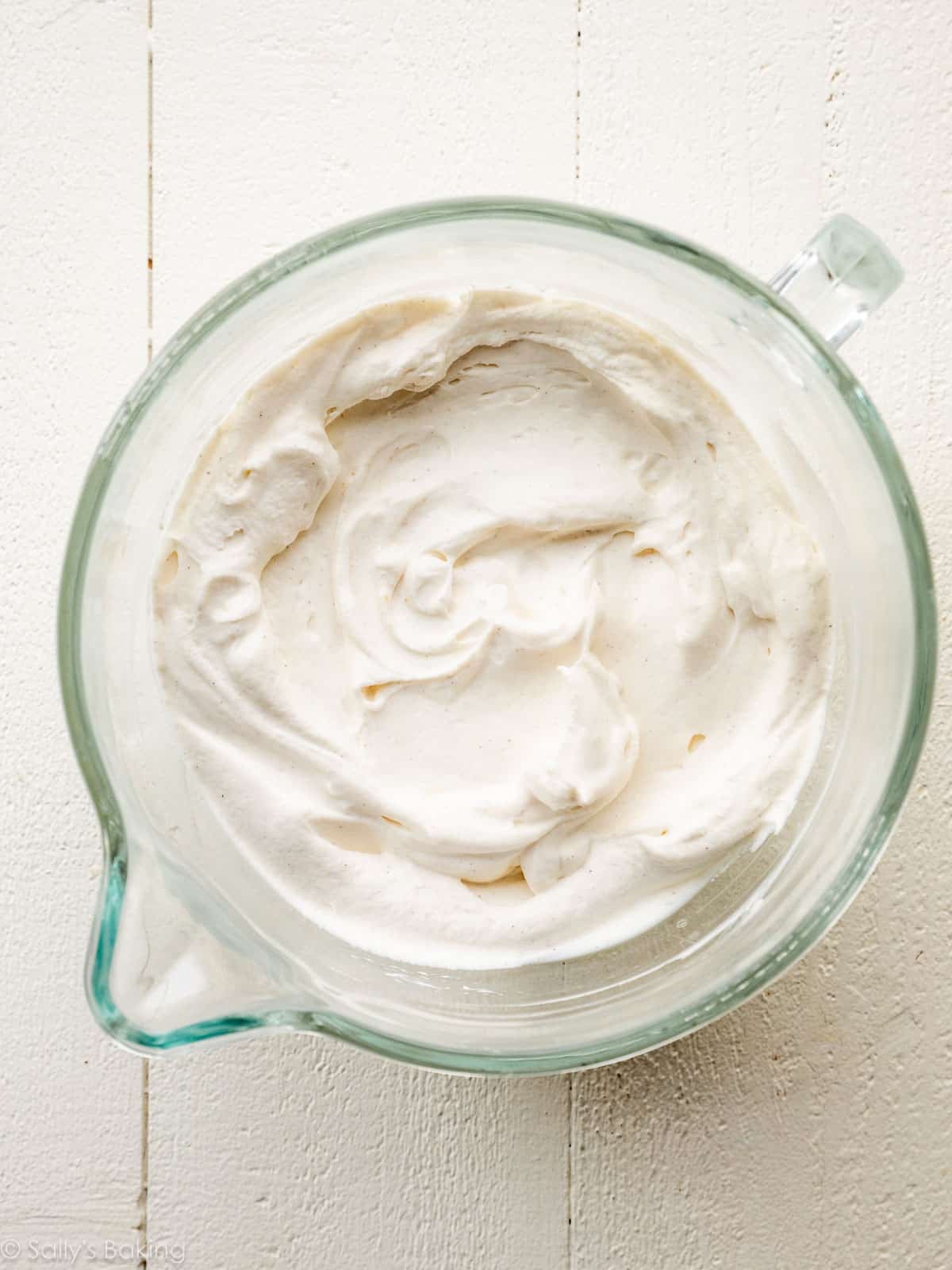
The base of this no-churn ice cream, inspired by Martha Stewart’s widely recognized method, consists of heavy cream and sweetened condensed milk. Heavy cream, with its high fat content (typically 36-40%), is essential for achieving the desired volume and stability when whipped. The fat globules in the cream trap air, creating a stable foam that gives the ice cream its light and airy texture. Whipping the cream to stiff peaks—a slightly firmer consistency than typical homemade whipped cream—is crucial for ensuring the ice cream holds its structure during freezing.
Sweetened condensed milk is a key ingredient for both sweetness and texture. It is milk from which water has been removed, and a significant amount of sugar has been added. This high sugar content acts as an anti-freeze, preventing water molecules from forming large ice crystals, which would otherwise result in a hard, icy dessert. The thick, viscous nature of sweetened condensed milk also contributes to the overall creamy mouthfeel of the ice cream. The combination of aerated heavy cream and sweetened condensed milk forms a stable, smooth, and naturally sweet base that is remarkably similar to churned ice cream.
The Art of Assembly: Layering for Maximum Impact
The assembly process is designed to ensure an even distribution of flavors and textures, creating a visually appealing swirl that promises a harmonious bite with every scoop.
- Preparing the Base: The whipped heavy cream is gently folded into the cream cheese mixture (which includes sweetened condensed milk, vanilla, and cinnamon). This step carefully combines the two main components, ensuring the air incorporated into the whipped cream is retained, thus preserving the light texture.
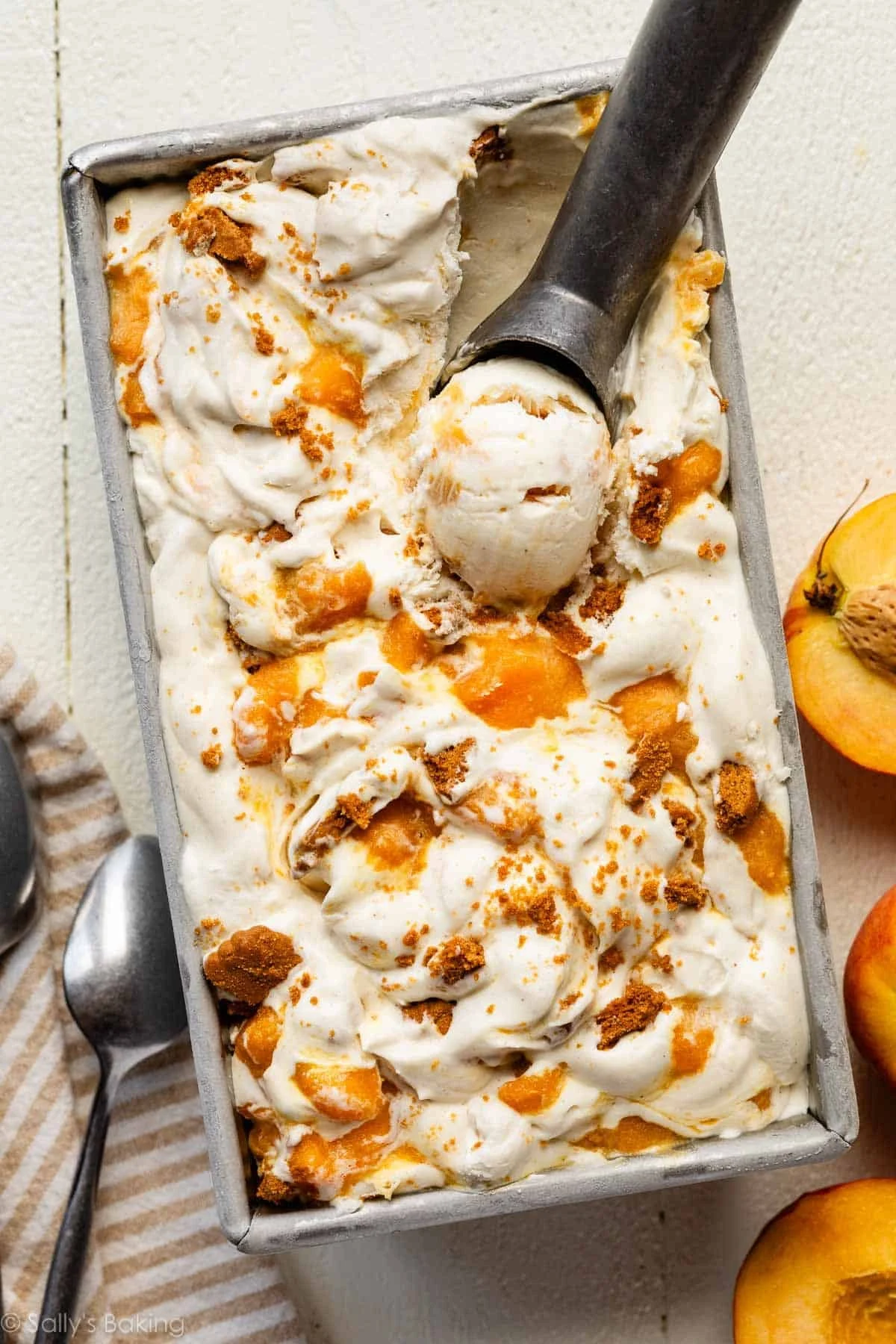
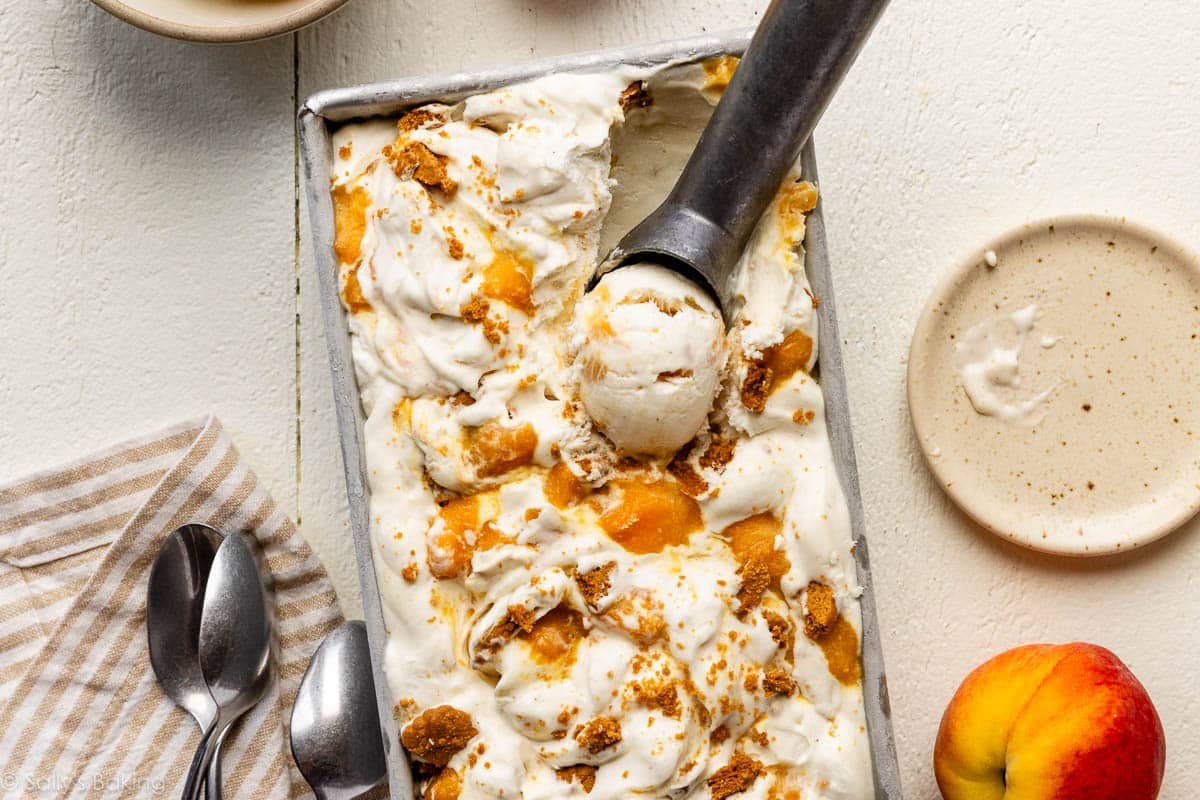
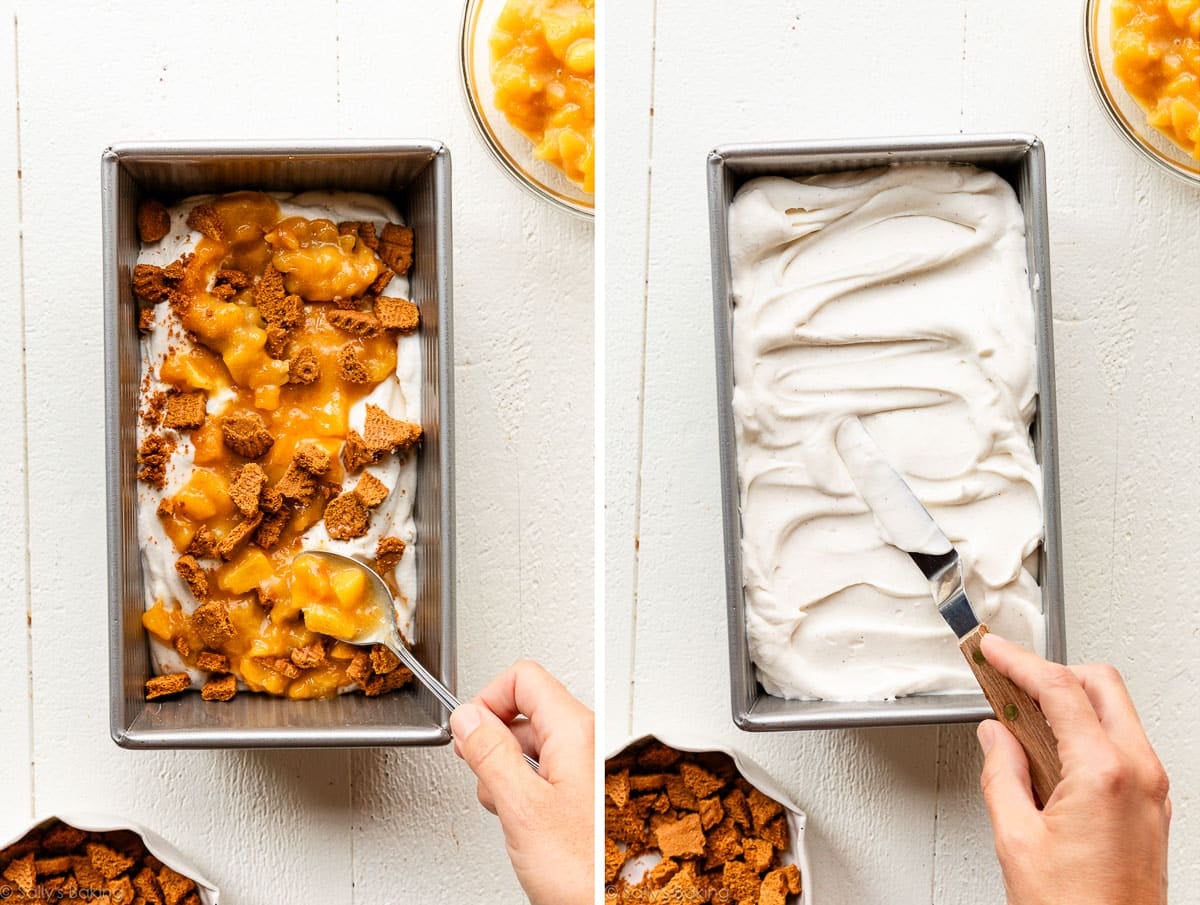
- Layering in the Pan: The ice cream mixture is layered into a freezer-safe pan, typically a loaf pan, in alternating segments with the cooled peach swirl and crushed Biscoff cookies. This technique ensures that each scoop contains a delightful mix of all three elements. A common layering sequence involves spreading a third of the ice cream mixture, followed by half of the peaches and half of the Biscoff, repeating the process, and finishing with a final layer of ice cream, topped with a few peach chunks and Biscoff crumbs for garnish.
- The Swirl: A knife is then used to gently swirl the layers together. This is not meant to fully combine them, but rather to create visually appealing ribbons of peach and cookie within the creamy base, ensuring varied textures and concentrated bursts of flavor.
- Freezing: The pan is covered and placed in the freezer for a minimum of 8 hours, or preferably overnight. This extended freezing period allows the ice cream to firm up completely and for all the flavors to meld and deepen.
This methodical layering and swirling technique is a hallmark of gourmet ice cream preparation, ensuring that the consumer experiences the full spectrum of the dessert’s intended flavors and textures in every mouthful.
Broader Implications and Culinary Trends
The popularity of recipes like the no-churn peach cheesecake ice cream reflects several significant trends in the food industry and home cooking:
- Convenience and Accessibility: The "no-churn" aspect is a powerful draw, appealing to busy individuals or those without specialized kitchen gadgets. This democratizes gourmet dessert making, making it accessible to a wider audience.
- Fusion Desserts: The combination of distinct dessert profiles—ice cream, cheesecake, and spiced cookies—into a single coherent dish speaks to a growing appetite for innovative flavor combinations and hybrid desserts. Consumers are increasingly seeking novel sensory experiences.
- Seasonal and Fresh Ingredients: The emphasis on fresh peaches aligns with a broader consumer preference for seasonal, natural ingredients. This trend also encourages home cooks to utilize local produce, supporting sustainable practices.
- Customization and Personalization: The recipe’s adaptability, evident in the discussion of skipping cream cheese or substituting graham crackers for Biscoff, highlights the desire for personalization in home cooking. Modern cooks enjoy the flexibility to tailor recipes to their preferences or available ingredients.
- The "Homemade" Premium: Despite the convenience, there is still a strong cultural value placed on "homemade" food. Recipes that offer a homemade feel with minimal effort tap into this desire, providing satisfaction without extensive labor.
- Social Media Influence: Recipes that are visually appealing and relatively easy to execute often gain traction on social media platforms, further fueling their popularity and encouraging replication among home cooks. The layered and swirled presentation of this ice cream makes it particularly "Instagrammable."
Furthermore, the inclusion of ingredients like Biscoff, which have seen a surge in global popularity, indicates how international flavors are increasingly integrated into mainstream home baking. The cookie’s unique spiced profile offers an alternative to more traditional mix-ins, demonstrating a sophisticated palate among home dessert enthusiasts.
The versatility of the no-churn base also opens doors for endless variations. The success of this peach cheesecake iteration suggests that the same principles can be applied to other fruits, spices, and confectionery, allowing for continuous innovation within the home kitchen. For instance, the original article mentions other frozen treats such as blueberry crumble ice cream and chocolate swirl pistachio ice cream, showcasing the foundational strength of the no-churn method to carry diverse flavor profiles.
In conclusion, this no-churn peach cheesecake ice cream is more than just a dessert; it is a culinary statement. It encapsulates the modern desire for convenience, gourmet quality, and creative expression in the home kitchen, all while delivering a rich, creamy, and refreshingly complex flavor profile perfect for any occasion, especially warm weather enjoyment. Its straightforward preparation, combined with its sophisticated taste, ensures its place as a beloved and repeatable favorite among dessert enthusiasts. The potential for further enhancement, such as a drizzle of homemade salted caramel, only adds to its allure, affirming its status as a truly adaptable and delightful creation.