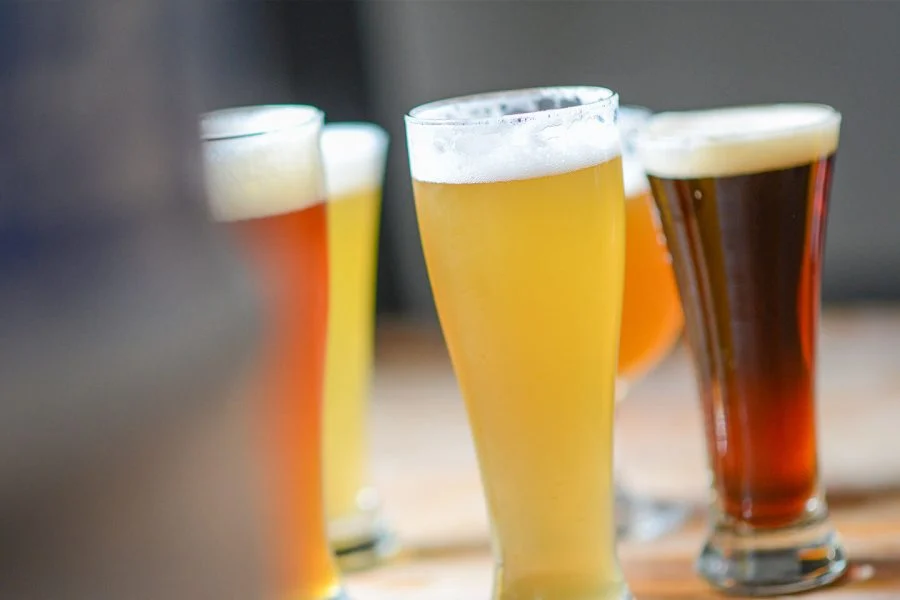

The American craft beverage community is celebrating a monumental achievement as Alex Rezmerski of Louisville, Kentucky, clinched the prestigious gold medal in Category 21: Strong European Lager at the final round of the 2026 National Homebrew Competition. Representing the Louisville Area Grain and Extract Research Society (LAGERS), Rezmerski out-maneuvered an intensely competitive field, taking top honors among 68 meticulously crafted entries in one of the event’s most technically demanding divisions.
The victory highlights not only Rezmerski’s personal dedication to the craft of brewing but also the growing prominence of the Bluegrass State’s vibrant homebrewing culture. Strong European Lagers—a category that traditionally encompasses robust styles such as Doppelbocks, Eisbocks, and Baltic Porters—require exceptional precision, temperature control, and a deep understanding of yeast management. Securing gold in this division demands flawlessness, as judges evaluate entries against stringent international beer style guidelines where even the slightest off-flavor can eliminate a contender.
The Anatomy of a Championship Brew
Crafting a world-class Strong European Lager is widely considered a rite of passage for advanced homebrewers. These styles are defined by their rich malt complexity, low hop bitterness, and the intricate balance achieved through extended lagering periods. For Rezmerski, the journey to the podium required months of recipe formulation, precise water chemistry adjustments, and rigorous fermentation monitoring.
Competitions within the National Homebrew Competition circuit utilize a tiered judging system modeled after the Beer Judge Certification Program (BJCP). Entries are evaluated on appearance, aroma, flavor, mouthfeel, and overall impression. To rise above 67 other contenders in Category 21, Rezmerski’s beer had to survive multiple rounds of sensory analysis by panels of certified judges who look for faultless execution and stellar adherence to style parameters. Winning gold in such a crowded and technical category signifies a masterclass in brewing technique, placing Rezmerski among the elite tier of amateur brewers nationwide.
Background and Context of the National Homebrew Competition
The National Homebrew Competition, organized annually by the American Homebrewers Association (AHA), stands as the world’s largest international amateur beer, mead, and cider competition. Established decades ago to foster the art and science of homebrewing, the event has grown in tandem with the modern craft beer revolution. It serves as a vital incubator for industry talent, with many commercial professional brewers tracing their origins back to medals won on this very stage.
The path to the 2026 final round is a grueling multi-tier process. Brewers first submit their entries to regional first-round competitions held across the United States. Only the highest-scoring entries—those earning first, second, or third place in their respective regional categories—advance to the national final round. This rigorous filtration ensures that the beers evaluated in the finals represent the absolute pinnacle of global amateur brewing.
For the Louisville Area Grain and Extract Research Society (LAGERS), Rezmerski’s victory is a testament to the club’s collaborative and educational environment. Local homebrewing clubs play a crucial role in elevating the skill level of their members through peer review, shared equipment resources, and educational seminars. LAGERS has long been a pillar of the Kentucky brewing community, and this gold medal further cements the organization’s reputation for excellence.

Chronology of the 2026 Competition Cycle
The road to the 2026 final round began many months prior to the final judging sessions. The timeline of the competition reflects the immense logistical coordination required to evaluate thousands of entries from across the globe:
- Late Winter / Early Spring: Homebrewers finalize their recipes, brew their batches, and package their entries in accordance with strict competition guidelines.
- Spring: Regional first-round judging events take place at various locations nationwide. Entries are sorted by BJCP style categories and evaluated by panels of certified judges.
- Late Spring: Winners from the regional rounds are announced, and advancing entries are carefully transported to the final round site.
- Summer: The National Homebrew Competition Final Round convenes. Expert judges conduct rigorous evaluations of the surviving entries to determine gold, silver, and bronze medalists across all style categories.
- Post-Finals Announcement: Results are officially published, granting winners national recognition and immortalizing their recipes in the American Homebrewers Association database.
Industry Implications and the Broader Craft Landscape
While homebrewing is fundamentally a hobby, its impact on the broader commercial brewing industry cannot be overstated. Amateur competitions like the AHA’s flagship event serve as a vital R&D laboratory for the commercial sector. Many commercial craft breweries launch their brands after founders cut their teeth and refined their recipes in the competitive homebrewing circuit.
Furthermore, victories in technical categories like Strong European Lager demonstrate a sophisticated consumer palate. As the craft beer market matures, drinkers are increasingly seeking out traditional, malt-forward European styles that stand in contrast to the heavily hopped IPAs that have dominated the market for the past decade and a half. Rezmerski’s success highlights a broader industry trend toward classic styles executed with modern precision.
For local brewing clubs and regional economies, such accolades carry significant weight. They attract tourism, foster community pride, and encourage new enthusiasts to take up the craft. Membership organizations like the AHA continue to provide educational pathways, recipes, and resources—such as their extensive database of medal-winning formulas—to help both novice and veteran brewers elevate their craft.
Official Statements and Community Reaction
While specific celebratory remarks from local officials are pending, the regional brewing community has rallied around Rezmerski’s achievement. Social media channels and local club forums have been flooded with congratulatory messages from fellow LAGERS members and craft beer aficionados throughout Kentucky.
Industry veterans note that winning a gold medal in a category as unforgiving as Strong European Lager requires an uncommon level of patience and scientific precision. Unlike ales, which can ferment relatively quickly and hide minor flaws behind hop bitterness or yeast esters, lagers offer nowhere to hide. Every chemical reaction, fermentation temperature fluctuation, and sanitization step is laid bare in the final glass.
Looking Ahead
As the dust settles on the 2026 National Homebrew Competition, winners like Alex Rezmerski turn their attention toward future brewing endeavors. Whether they choose to scale up their recipes for commercial pilot systems, mentor the next generation of homebrewers, or simply return to their home kit to experiment with new styles, their contributions leave an indelible mark on the culture of brewing.
For those inspired by Rezmerski’s success, the path forward is accessible yet challenging. Organizations like the American Homebrewers Association continue to offer memberships that unlock validated recipes, technical resources, and community networks designed to help aspiring brewers achieve their own medal-worthy results. As the popularity of traditional European styles experiences a renaissance, accomplishments like Rezmerski’s ensure that the art of patient, technical brewing will continue to thrive for years to come.