
In the rapidly expanding world of health and wellness, coaching has emerged as a pivotal profession, offering personalized guidance to individuals striving for better physical and mental well-being. However, the path to becoming an effective and successful coach is fraught with challenges, many of which stem from deeply ingrained assumptions and common pitfalls. Kate Solovieva, a distinguished figure in the coaching landscape, known for her candid tagline, "I work with coaches and other people who know too much," offers invaluable insights into these pervasive issues. As a former professor of psychology, a PN master coach, and Precision Nutrition’s (PN) director of community engagement, Solovieva possesses a unique vantage point, observing the triumphs and tribulations of thousands of coaches, from nascent practitioners to seasoned veterans. Her work, spanning instruction for PN’s Level 2 Master Health Coaching Certification, facilitation of private online coaching communities, and her own private practice, grants her an unparalleled understanding of the daily realities and strategic missteps within the profession.
The global coaching industry, valued at an estimated $15 billion in 2019 and projected to grow significantly, underscores the immense demand for skilled guidance. Yet, despite this boom, many coaches struggle to build sustainable practices or maximize their impact. Solovieva identifies three critical mistakes that frequently hinder coaches, often unbeknownst to them, and offers actionable solutions designed to foster greater success, enhance client outcomes, and ensure professional longevity. Her overarching hope is to empower her peers to achieve "wild success," transforming their passion into a thriving, impactful career. This article will delve into these common coaching errors, providing a comprehensive analysis enriched with supporting data, contextual background, and the broader implications for both individual coaches and the industry at large.
The Foundational Misstep: Prioritizing Expertise Over Enterprise
One of the most pervasive errors Solovieva observes among aspiring and even established coaches is an excessive focus on accumulating knowledge and perfecting their coaching craft, often at the expense of developing essential business acumen. "The vast majority of folks who get into coaching start with the coaching leg," Solovieva notes, referring to her "three-legged stool" analogy for a sustainable coaching business, which comprises coaching, marketing, and sales. While the desire to be an exceptional coach is commendable, she argues that "information and theory only get you so far." The misconception is that expertise alone will attract clients and sustain a practice.
This tendency to prioritize continuous learning without engaging in practical application is often termed "perpetual student syndrome." New coaches, driven by a genuine desire to help and a fear of not knowing enough, can spend years acquiring certifications, attending workshops, and consuming theoretical content. According to industry reports, many new businesses, particularly those in service sectors, struggle with initial growth due to a lack of emphasis on sales and marketing. For coaches, this can manifest as an endless cycle of preparation, delaying the crucial step of engaging with real clients. Solovieva succinctly puts it: "You cannot become the best coach you can be in a vacuum, talking to yourself in your office." The practical experience gained from coaching diverse clients is arguably more valuable for skill development than any number of theoretical courses.
The implications of this oversight are significant. Coaches who delay selling their services also delay accumulating real-world coaching experience. This creates a paradoxical situation where those who wait to feel "complete" in their knowledge are often outpaced by peers who, despite feeling less prepared, actively seek clients. The latter group, by engaging in sales and then coaching, rapidly builds practical skills, refines their approach, and establishes a client base, thereby improving their overall odds of success. Data from the Small Business Administration often highlights that inadequate sales and marketing strategies are leading causes of small business failure within the first five years. For coaches, neglecting the "selling" leg means their stool remains unstable, perpetually at risk of toppling.
Solution: Embrace the Role of a Coach, Not Just an Expert
The solution to this foundational mistake lies in a crucial mindset shift: recognizing that a coach’s primary role is not to be an omniscient expert with all the answers, but rather a facilitator of client growth and action. The natural inclination to acquire numerous certifications stems from a desire to feel confident in fielding any potential client question. This often leads to the belief that one must be an "authority" with encyclopedic knowledge. However, Solovieva challenges this assumption directly.
While a baseline of knowledge is undoubtedly essential (e.g., understanding protein sources for a nutrition coach), the role of a coach transcends merely dispensing facts. As Solovieva explains, "When I show up to a coaching conversation, my role is not ‘the expert.’" Clients often don’t need more information; they need guidance, accountability, and a personalized approach to apply information relevant to their lives. A study published in the Journal of Clinical Psychology noted that therapeutic alliance and client engagement are stronger predictors of positive outcomes than the therapist’s specific theoretical orientation or expert knowledge alone.
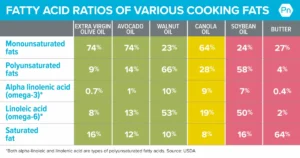
The power of coaching lies in inquiry. When confronted with a client’s question, instead of immediately providing a definitive answer, a coach can turn it into a valuable coaching opportunity. For instance, if a client asks about seed oils, an expert might launch into a detailed explanation of fatty acid ratios and processing methods. A coach, however, might respond, "That’s a great question. I can get you some information on that if you’d like, but I’m curious, why do you ask?" This simple redirection shifts the focus from information transfer to understanding the client’s underlying motivation, concerns, or goals. Perhaps the client’s friend lost weight after eliminating seed oils, and they are seeking a similar outcome. By uncovering this deeper motivation, the coach can then tailor strategies that are truly relevant and impactful, which may have little to do with seed oils directly but everything to do with the client’s desire for weight loss or improved health.
This approach not only fosters deeper client engagement but also alleviates the pressure on coaches to be infallible. It builds a collaborative relationship where the coach guides the client to discover their own solutions, rather than dictating them. This is supported by principles of motivational interviewing, which emphasize exploring and resolving ambivalence, and eliciting behavior change in a client-centered manner. By adopting a "coach, not expert" mindset, practitioners can begin selling their services sooner, gain invaluable practical experience, and ultimately become more effective at facilitating lasting change, thereby stabilizing the "sales" and "coaching" legs of their business stool.
The Empathy Trap: Assuming Universality in Client Experience
A second common pitfall, often rooted in genuine empathy and a desire to connect, is the unconscious assumption that clients are fundamentally similar to the coach. While seemingly innocuous, this can be a significant barrier to effective coaching. Coaches often enter the profession because they deeply value nutrition, exercise, and overall health, and it’s easy to project these values onto their clients. However, as Solovieva cautions, "There’s nothing inherently superior about valuing your health. If you do, yes, you’ll probably experience better health and live longer. But not everyone shares those values. That’s a tough one to swallow."
This assumption can manifest in various ways. A coach passionate about early morning workouts might recommend the same to a client who is a night owl with childcare responsibilities. A coach who thrives on meticulous meal prepping might suggest complex dietary plans to a client with limited cooking skills or time. The failure to recognize and respect the unique values, preferences, life circumstances, and readiness for change in each client can lead to frustration for both parties. Clients may feel misunderstood or incapable, leading to decreased adherence and eventual disengagement. Coaches, in turn, may feel ineffective or "bad" when their well-intentioned advice fails to resonate or produce desired results. The American Psychological Association highlights the importance of cultural competence in therapeutic practice, emphasizing that even seemingly similar individuals can have vastly different experiences and needs based on their unique backgrounds.
The ramifications extend beyond individual sessions. A mismatch between coach recommendations and client reality can lead to client churn, negative word-of-mouth, and a damaged professional reputation. In a competitive market, client retention is paramount, and it hinges significantly on the client feeling genuinely seen, heard, and understood.
Solution: Prioritize Deep Client Assessment and Individualized Strategies
The antidote to assuming client similarity is a rigorous commitment to individualized assessment and a client-centered approach. This means approaching every interaction with an open, curious mind, consciously checking biases and assumptions at the door. Solovieva advocates for asking probing questions that delve into the client’s unique world: "What inspired you—or pushed you—to come in today?" "Why is that goal meaningful to you?" "What skills do you have today that might help you achieve your goal? What skills do you feel you might be missing?"
Active listening, without judgment or pre-conceived notions, is paramount. This requires coaches to truly hear what clients are saying, both explicitly and implicitly, about their motivations, challenges, and aspirations. Even when clients share seemingly similar experiences (e.g., both are single parents, or both are training for a marathon), it is crucial to recognize that their biology, social context, personal history, and emotional landscape make their experiences uniquely their own. Solovieva suggests a powerful question for such scenarios: "I know what [insert shared experience] has been like for me, but what has [insert shared experience] been like for you?" This acknowledges shared ground while explicitly inviting the client to articulate their distinct perspective.
Once a clear picture of a client’s values, priorities, and reasons for change emerges, coaches can then assess their readiness, willingness, and ability to take specific actions. This "Ready, Willing, and Able" framework, often utilized in health behavior change, prevents coaches from prescribing actions that are unrealistic or unappealing to the client. For example, while a coach might find meal prepping easy and efficient, a client with a demanding job and young children might find it an insurmountable hurdle. A coach focused on individualization would explore alternatives that fit the client’s lifestyle, perhaps suggesting simpler, less time-intensive dietary adjustments. This bespoke approach fosters greater client agency and adherence, leading to more sustainable results and a stronger coach-client relationship. Research from the Journal of Consulting and Clinical Psychology consistently demonstrates that treatment individualization significantly improves therapeutic outcomes across various interventions.
The Emotional Burden: Detaching from Client Outcomes
The third mistake Solovieva highlights is perhaps the most emotionally taxing for coaches: becoming overly attached to client results. It is an understandable human tendency, particularly for those drawn to a helping profession. "There’s a reason we go into coaching. It’s because we care and we want to help clients. We want to see them succeed," acknowledges Coach Kate. This deep caring, however, can be a "double-edged sword."
Coaches invest significant time and effort in crafting tailored plans and recommending specific habits. When clients fail to execute these plans or don’t achieve the anticipated outcomes, coaches can experience frustration, disappointment, or even heartbreak. This emotional investment can lead to burnout, resentment, and self-doubt. While a certain level of emotional engagement signifies that the work is meaningful, Solovieva warns against crossing a critical line: "However, I think there’s a point there where we can start caring more than the client themselves."
Precision Nutrition often uses the concept of "care units" to illustrate this. Both the coach and the client possess a finite amount of "care units"—time, energy, attention, authenticity, and "heart"—they can invest in the change process. While coaches are often highly invested, clients, grappling with their own lives, responsibilities, and ambivalence, typically have fewer care units to allocate to their "change and growth projects." The advice, therefore, is to "care one care unit less than your client does." This isn’t about apathy; it’s about professional boundaries and self-preservation. When coaches over-invest, they can inadvertently disempower clients, creating a dynamic where the coach is pushing harder than the client is willing to pull. A meta-analysis published in Psychotherapy Research indicated that therapist burnout is negatively correlated with client outcomes, suggesting that maintaining healthy boundaries is beneficial for both parties.
Solution: Clearly Delineate Coach and Client Responsibilities
The key to managing emotional investment while remaining highly supportive lies in establishing clear, explicit boundaries and responsibilities at the outset of the coaching relationship. Solovieva emphasizes that a coach’s ability to maintain an appropriate level of emotional investment hinges on having a crystal-clear understanding of their role. "If you are very, very clear on what your role is as a coach, then you can sort of go through the list, and check in with yourself: ‘Did I show up? Did I follow up? Did I coach this person to the best of my ability?’"
Coaching responsibilities typically include providing expert guidance, offering resources, facilitating discussions, checking in regularly, and adapting strategies. The client, conversely, is responsible for taking action, providing honest feedback, communicating challenges, and committing to the process. This delineation can be achieved through open discussions, formal coaching contracts, or detailed intake forms. Many successful coaching practices integrate this discussion into the initial consultation, serving as a crucial "fit" assessment. For example, if a prospective client expresses an expectation for constant, hands-on supervision (e.g., daily texts, meal delivery), a coach can objectively determine if their service model aligns with such demands. If not, as Solovieva illustrates, "I will be the one to say, ‘I don’t think this is a good fit.’"
This early clarity prevents future friction, disappointment, and coach burnout. Clients understand what to expect and what is expected of them, minimizing assumptions about the coach’s role. It also empowers coaches to protect their time, energy, and emotional well-being. Even in challenging situations, such as when a client "ghosts" before a contract is complete, clear boundaries allow the coach to act professionally without taking it personally. "When somebody doesn’t reply to me, I don’t take it personally. It’s not their job to reply, but it is my job to check in," Solovieva states. This allows for persistent, yet boundary-respecting, outreach until the contract concludes, ending with a professional message of support, leaving the door open for future re-engagement without undue emotional burden on the coach. This approach aligns with ethical guidelines set by professional bodies like the International Coaching Federation (ICF), which stress the importance of clear agreements and professional boundaries.
Acknowledging the Coach’s Journey: The Bonus of Self-Compassion
It is important to underscore that these identified "mistakes" are not indicative of inherent flaws but rather common missteps often born from the very passion and empathy that draw individuals to coaching. The desire to excel, to help profoundly, and to see clients transform are powerful motivators. Therefore, while identifying and addressing these errors is crucial for professional development, it is equally vital for coaches to practice self-compassion. If a coach recognizes these patterns in their own practice, it likely signifies a deep care for their clients and their profession—a strength to be leveraged, not a weakness to be condemned.
The coaching profession is dynamic, requiring continuous learning, adaptation, and self-reflection. By understanding and implementing solutions to these common pitfalls, coaches can not only enhance their own professional sustainability and success but also significantly improve the efficacy and impact of their work on their clients’ lives. The broader implication for the coaching industry is a rise in professional standards, greater client satisfaction, and a more robust, respected profession. The journey of a coach is one of constant growth, both in expertise and in the art of human connection and guidance. Embracing these insights from Kate Solovieva provides a clear roadmap for navigating this journey with greater purpose, effectiveness, and ultimately, wild success.