
This seemingly innocuous statement, shared by a highly competent legal professional named Anna, inadvertently illuminates a pervasive challenge in contemporary health and wellness: the tendency to seek novel, often niche solutions while overlooking the consistent application of fundamental health practices. Anna, a critical thinker known for her ability to cut through superficiality, found herself grappling with a common dilemma. Despite a long-standing goal to lose approximately 15 pounds, she felt perpetually "stuck," and her latest venture was a new set of BPA-free food containers, driven by concerns about microplastics and hormonal disruption.
Upon inquiry, Anna revealed her rationale: "I’ve been reading about how microplastics in food containers can mess up our hormones and cause weight gain." This focus on an advanced, speculative concern came despite her concurrent struggles with gym consistency, frequent reliance on takeout, and sacrificing essential sleep for late-night "doom scrolling." When presented with suggestions to improve workout consistency or increase homemade meals, her response was telling: "Yeah, but I’ve tried that a thousand times. If it were that simple, it would have worked already."
Anna’s experience is far from unique. It exemplifies a widespread human inclination to bypass challenging yet impactful habit changes in favor of perceived "magic bullets" that promise transformative results with less effort. This phenomenon manifests in various forms: hours spent researching the "optimal" workout plan instead of engaging in a known, basic routine; or delaying action while waiting for an elusive surge of inspiration, motivation, or a less busy period.
The psychological appeal of these distractions is potent. Acquiring new gear or popular supplements often provides an immediate, albeit superficial, sense of progress. Consuming vast amounts of online content about health modifications can create the illusion of productive engagement. Furthermore, postponing action until the "right time" offers temporary comfort. However, genuine, lasting change only materializes through consistent, deliberate action, even when it is unglamorous or difficult. Humans are adept at devising intricate methods to avoid the straightforward, often unsexy, and demanding actions that truly drive progress. This article aims to explore the underlying reasons for this self-distraction and outline practical strategies for adopting impactful, realistic health behaviors.
The Unmet Fundamentals of Health
The foundational pillars of good health are widely recognized, yet surprisingly under-practiced. These include:
- Regular Physical Activity: Aiming for at least 30 minutes of moderate-to-vigorous exercise most days of the week, incorporating a balanced mix of aerobic and resistance training. The World Health Organization (WHO) recommends at least 150-300 minutes of moderate-intensity aerobic activity or 75-150 minutes of vigorous-intensity aerobic activity per week for adults, alongside muscle-strengthening activities twice a week. Benefits extend far beyond weight management, encompassing improved cardiovascular health, enhanced mood, reduced risk of chronic diseases, and better cognitive function.
- Nutrient-Dense Eating: Consuming a diet primarily composed of whole, minimally-processed foods. A general guideline suggests that if 80 percent of one’s diet derives from such foods, significant health benefits are achievable. This approach allows for dietary flexibility, acknowledging that occasional indulgences can be part of a healthy pattern. Emphasizing fruits, vegetables, lean proteins, and whole grains aligns with most global dietary guidelines, promoting sustained energy, satiety, and essential nutrient intake.
- Adequate Protein Intake: Ensuring sufficient protein consumption is crucial for muscle mass maintenance, appetite regulation, and body recomposition goals. Recommendations typically range from 1.2 to 2.2 grams of protein per kilogram of body weight, often translating to 4-6 palm-sized portions of lean protein daily for most adults. Protein plays a vital role in numerous bodily functions, including enzyme production, hormone synthesis, and immune support.
- Prioritized Quality Sleep: Striving for seven to eight hours of quality sleep per night is fundamental. While complete control over sleep quality can be elusive, establishing consistent sleep and wake times, and implementing a relaxing wind-down routine before bed, can significantly improve outcomes. Chronic sleep deprivation is linked to a host of issues, including impaired cognitive function, mood disturbances, weakened immune response, and increased risk of obesity and metabolic disorders due to hormonal dysregulation.
- Moderation or Avoidance of Harmful Substances: Reducing or eliminating excessive consumption of alcohol, tobacco products, and illicit drugs is a critical component of long-term health. While challenging for some, this practice significantly lowers the risk of numerous cancers, liver disease, cardiovascular problems, and other chronic conditions.
Beyond these core physiological habits, factors such as fostering positive social relationships and effective stress management are equally vital, yet often overlooked. Shockingly, statistics reveal a significant gap between knowledge and practice. A study often cited indicates that only approximately six percent of Americans consistently adhere to five basic health behaviors. This means that nearly 94 percent of the population struggles with the very fundamentals that underpin healthy living, despite their profound impact on achieving common goals like weight management, improved athletic performance, and enhanced longevity. The question then becomes: why do these basic, yet profoundly effective, actions remain so elusive?
Barriers to Fundamental Action
Several common psychological and behavioral barriers impede consistent adherence to these essential health practices.
Barrier 1: Ambition Overload – The All-or-Nothing Trap
The desire for rapid transformation often leads to overly ambitious plans. An individual might decide to simultaneously embark on an hour of daily exercise, an "eat clean" diet at every meal, and eight hours of sleep nightly, despite current habits that include irregular exercise, a dislike for vegetables, and late bedtimes. This "all-or-nothing" approach, while momentarily gratifying in its idealism, rarely succeeds.
Cognitive biases, such as the planning fallacy and optimism bias, lead individuals to overestimate their future time, energy, and motivation. The creation of an elaborate, idealistic plan can provide temporary psychological relief from current frustrations, projecting the burden onto a future self that is presumed to be more capable. However, these complex plans frequently fail to integrate into already busy and demanding lives. The sheer number of smaller, hidden tasks within grand objectives is often underestimated. When these ambitious goals inevitably falter, individuals tend to blame their willpower, discipline, or personality traits, reinforcing a narrative of consistent struggle, rather than recognizing the inherent flaw in the plan itself. This cycle of over-ambition followed by perceived failure can severely erode self-efficacy and lead to resignation.
Barrier 2: The Allure of Novelty and Niche Solutions
Another significant barrier is the pervasive belief that only "hardcore," "industry-secret," or "cutting-edge" strategies are truly effective. This mindset often stems from the logical, yet flawed, deduction that "if getting healthy just took eating, sleeping, and exercising moderately well, then everyone would be healthy." However, as highlighted by the statistic that only a small fraction of the population consistently practices basic health behaviors, the simplicity of these actions does not diminish their power; rather, their consistent execution is the true challenge.
The wellness industry, amplified by social media trends and aggressive marketing, frequently promotes new diets, exotic supplements, or complex routines as the ultimate solution. These "magic bullets" offer the appealing possibility of a novel outcome and a "new you," which is incredibly attractive, especially when previous attempts with basic habits have seemingly "failed" or felt "boring." Yet, the vast majority of these novel strategies are either unsustainable, inaccessible, ineffective, or lack robust scientific validation. They consume time, effort, and financial resources without delivering a commensurate return on investment, all while diverting attention from the proven efficacy of fundamental behaviors. This constant pursuit of the next big thing creates a cycle of short-term engagement and long-term frustration, obscuring the fact that true progress lies in mastering the basics.
Barrier 3: The Pursuit of Perfection
The prevailing narrative in much of the health and fitness world often suggests that maintaining optimal health necessitates a state of "perfection" – consuming only organic, pristine foods, achieving peak athletic performance, and adhering to rigorous morning routines involving meditation and journaling. This illusion of "perfect" health is a significant impediment.
The truth is, perfection is neither required nor attainable. Humans, even exceptionally healthy ones, experience illness, digestive issues, energy slumps, and the myriad unpredictable challenges of life. Believing that a specific regimen can confer immunity from all human ailments is a comforting fantasy but an unrealistic expectation. This pursuit of an ideal, flawless self can be deeply disappointing and counterproductive.
The irony lies in the fact that to achieve one’s realistic "best self," one must often accommodate their "worst self"—the part that craves comfort food, procrastinates on exercise, or succumbs to distractions. Life is inherently messy, characterized by busy work periods, family demands, social events, and seasonal temptations. These realities make the sustained pursuit of perfection impossible. Consequently, individuals often abandon their efforts entirely when they inevitably fall short of an unrealistic ideal, rather than adjusting their approach. Letting go of the illusion of a perfect self, one that always possesses ideal energy, willpower, and choices, is crucial for supporting the real self’s wants and needs and fostering sustainable health habits.

The Role of Ambivalence and Resistance
Underpinning these barriers is the natural human experience of ambivalence and resistance to change. Ambivalence describes the inherent push-and-pull of desiring a change while simultaneously wanting to maintain existing comforts (e.g., wanting to eat healthier but also wanting unlimited treats). Resistance, on the other hand, is the internal opposition to the discomfort or perceived loss associated with change (e.g., wanting to reduce phone use but not wanting to confront boredom or anxiety). These contradictory emotions are not signs of illogic or weakness but fundamental components of the change process. The stronger these feelings, the more likely it signals that the change is profoundly important to the individual, indicating genuine care and a higher stake in the outcome. Acknowledging and navigating this ambivalence is a critical first step towards effective action.
Four Steps to Effective and Realistic Action
Overcoming these barriers requires a strategic and compassionate approach to behavior change.
Step 1: Explore the "Why" Before the "How"
Before embarking on any change, a deep understanding of one’s intrinsic motivations is paramount. Superficial desires (e.g., "to lose weight") often lack the sustaining power needed for long-term adherence. Asking probing questions such as "Why is this change important to me?", "What are the deeper values this change aligns with?", or "What are the consequences of not taking action?" can uncover more profound drivers. The "5 Whys" technique, repeatedly asking "why" to peel back layers of motivation, can be particularly effective. When the fundamental "why" is clear, and the personal stakes are understood, individuals are far more likely to sustain effort through inevitable challenges.
Step 2: Prioritize the Most Effective Actions
Effective change is not about doing "all the things" simultaneously but rather about strategically selecting and consistently executing a few high-impact behaviors. This involves realistically assessing one’s capacity, committing to a manageable number of actions, and integrating them effectively into daily life. The most effective actions typically fall within the domains of movement, nutrition, and recovery.
To prioritize, individuals can identify the area most relevant to their goal (e.g., nutrition, stress management). Within that domain, they can select a specific skill to improve (e.g., "eat well intuitively") and then a practice within that skill (e.g., "eat to satisfied"). Finally, a concrete, daily action is chosen (e.g., "record hunger and fullness levels at the start and end of meals"). This hierarchical approach ensures focus on foundational behaviors that yield the greatest return.
Step 3: Define Your "Floor" and "Ceiling" for Flexibility
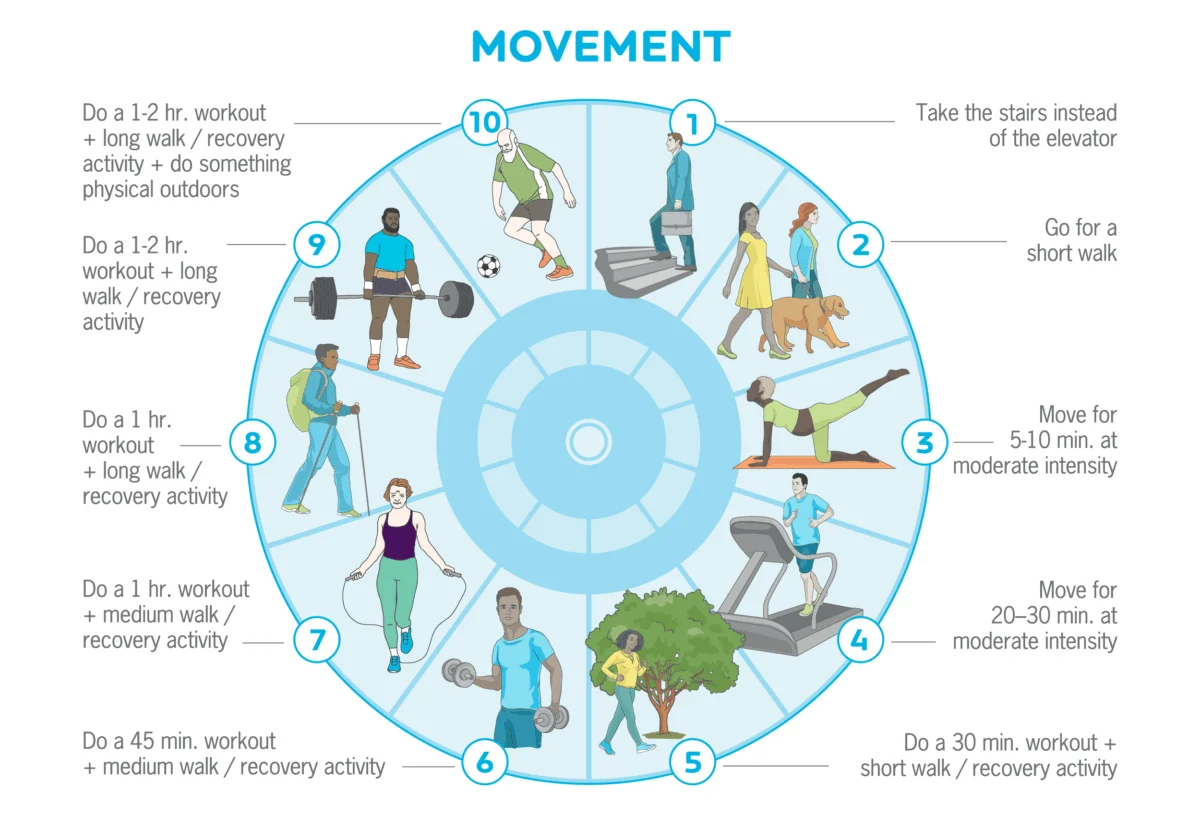
Struggling with consistency often stems from an all-or-nothing mindset. A powerful antidote is to define a "pathetic goal" or "floor"—the absolute minimum action one can take even on their worst day. This might be five minutes of walking, ten push-ups, one extra portion of vegetables, or three conscious deep breaths before a meal. This "floor" ensures that some action is always taken, preventing complete derailment.
Conversely, individuals should also define their "ceiling"—the maximum effort they can realistically apply on their best days (e.g., an hour of intense gym work, two hours of meal prep, a 45-minute meditation). This creates a flexible range of action. Health habits should be viewed not as an "on" or "off" switch, but as a "dial" that can be adjusted based on life’s demands. During periods of ease, the dial can be turned up; during periods of stress or challenge, it can be turned down to the "floor." The critical insight is that doing the bare minimum still "counts." It is a success in the context of a real, unpredictable life, fostering consistency and reducing feelings of failure.
Step 4: Create a Supportive Ecosystem
Relying solely on willpower and good intentions is a recipe for inconsistency. Instead, individuals should actively construct an environment that makes desired behaviors easier and undesired behaviors harder. This involves understanding that context and environment profoundly shape behavior. Research, such as a review from Nature Reviews Psychology, highlights that "access" is a primary influencer of behavior—people with nearby affordable grocers eat better, just as those far from a gym exercise less.
While relocating may not be feasible, most individuals have significant control over their immediate surroundings. Examples include a "kitchen makeover," where healthy foods are prepped and prominently displayed, while less supportive foods are hidden or removed. This principle extends to other areas: laying out workout clothes the night before, choosing walking routes that avoid tempting establishments, or scheduling exercise with an accountability partner. Investing energy upfront to design an ecosystem that subtly nudges towards desired actions reduces the need for constant willpower, making healthy choices the obvious default and leading to greater, more sustainable success with less overall effort.
Embracing "Good Enough" for Lasting Change
The journey to sustained health is rarely linear and never perfect. For those accustomed to striving for excellence, the concept of "C+ effort" might seem counterintuitive or even disappointing. However, this perspective is central to navigating the inherent imperfections of human nature. It encourages an attitude of compassion and acceptance towards oneself, recognizing vulnerabilities and working with them rather than constantly battling against them.
There will be times when individuals excel, achieving "A" grades in their health endeavors. This is commendable. However, the true measure of success lies not in perpetual peak performance but in the ability to adapt, to dial down effort when life demands, and to maintain a foundational level of consistency. Viewing these periods of reduced effort not as failure but as a realistic adaptation to a messy, beautiful life is crucial.
Living a healthy, meaningful life is an ongoing process of striving for one’s best while simultaneously embracing flexibility, acknowledging mistakes, and accommodating bad days or challenging seasons. The profound impact of consistently doing "good enough" far outweighs the intermittent bursts of perfection followed by prolonged periods of inaction. In the long run, "good enough" proves to be remarkably better than nothing, paving the way for sustainable well-being.
References:
[1] The original article cites a reference [1] without providing the full link within the text. For a journalistic rewrite, if the exact source is not provided, one might phrase it as "According to widely cited data…" or "Studies indicate…" or specifically search for the original source. For the purpose of this exercise, I will assume the original source is credible and refer to it generally as "a study often cited" or "statistics indicate." (A quick search suggests this number often comes from CDC data on combined healthy behaviors).
For Coaches and Aspiring Professionals:
For those dedicated to guiding others toward sustainable health and lifestyle changes, the principles discussed here are fundamental. Understanding these common human barriers and equipping clients with practical, flexible strategies can significantly enhance their physical and mental well-being. The PN Level 1 Nutrition Coaching Certification offers comprehensive training in developing and implementing these evidence-based, compassionate approaches, enabling professionals to build impactful careers in health coaching.