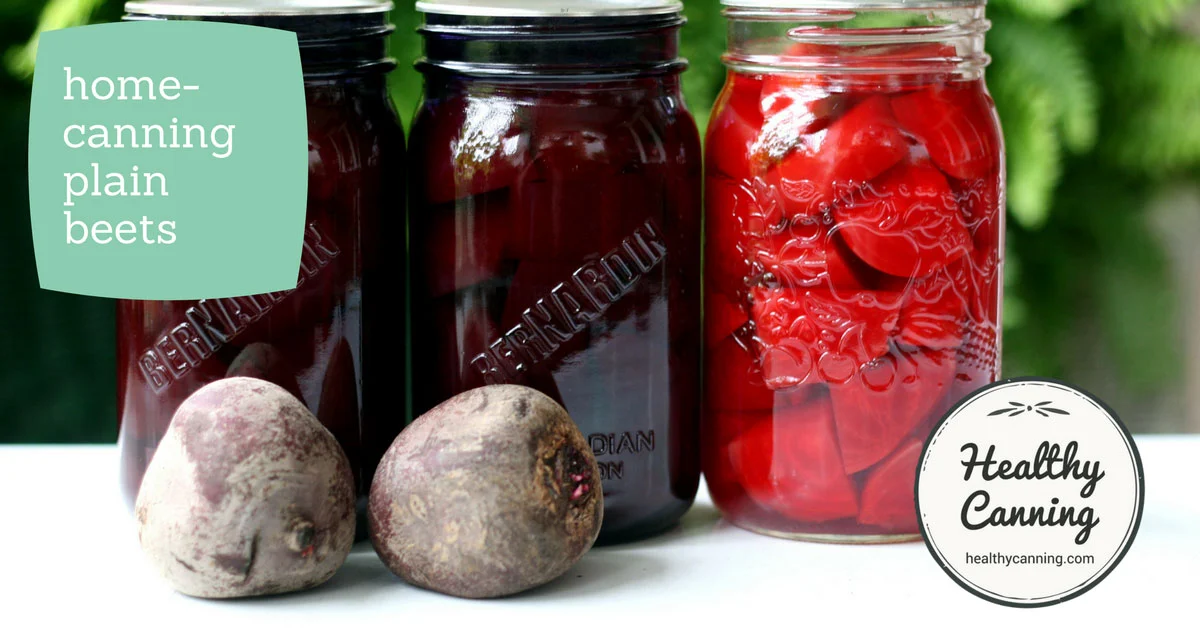

The preservation of root vegetables through home canning represents a intersection of culinary tradition and rigorous food science, with plain beets (Beta vulgaris) serving as a primary example of where safety protocols must be strictly observed. According to the United States Department of Agriculture (USDA) and the National Center for Home Food Preservation (NCHFP), the only scientifically validated method for canning plain beets is through the use of a pressure canner. This requirement is necessitated by the low-acid nature of the vegetable, which makes it a potential host for Clostridium botulinum if processed incorrectly. While home canning offers a convenient way to store seasonal harvests for winter use—providing a ready-to-eat side dish that can be quickly reheated or roasted—the margin for error regarding processing temperatures is non-existent.

The Mandate for Pressure Canning and Biological Safety
The fundamental reason for the "pressure canning only" rule for plain beets lies in the pH level of the vegetable. Beets are categorized as low-acid foods, typically possessing a pH level that ranges from 5.3 to 6.6. In the world of food preservation, any food with a pH higher than 4.6 requires temperatures reaching 240°F (115°C) to destroy the spores of Clostridium botulinum. These spores are remarkably heat-resistant and can survive in boiling water (212°F / 100°C) regardless of how long the jars are processed. Under the anaerobic (oxygen-free) conditions inside a sealed canning jar, these surviving spores can germinate and produce botulinum toxin, one of the most lethal substances known to medical science.
Data from the Centers for Disease Control and Prevention (CDC) underscores the gravity of this requirement. Between 1990 and 2012, at least 10 documented cases of botulism in the United States were specifically traced back to home-canned beets that were processed using a boiling water bath instead of a pressure canner. Food safety experts emphasize that while pickled beets can be safely processed in a water bath because the added vinegar increases the acidity (lowering the pH below 4.6), plain beets in water or brine offer no such protection. Consequently, the USDA’s Agriculture Information Bulletin No. 539 remains the definitive standard: plain beets must be pressure canned, without exception.
Technical Specifications and Quantities
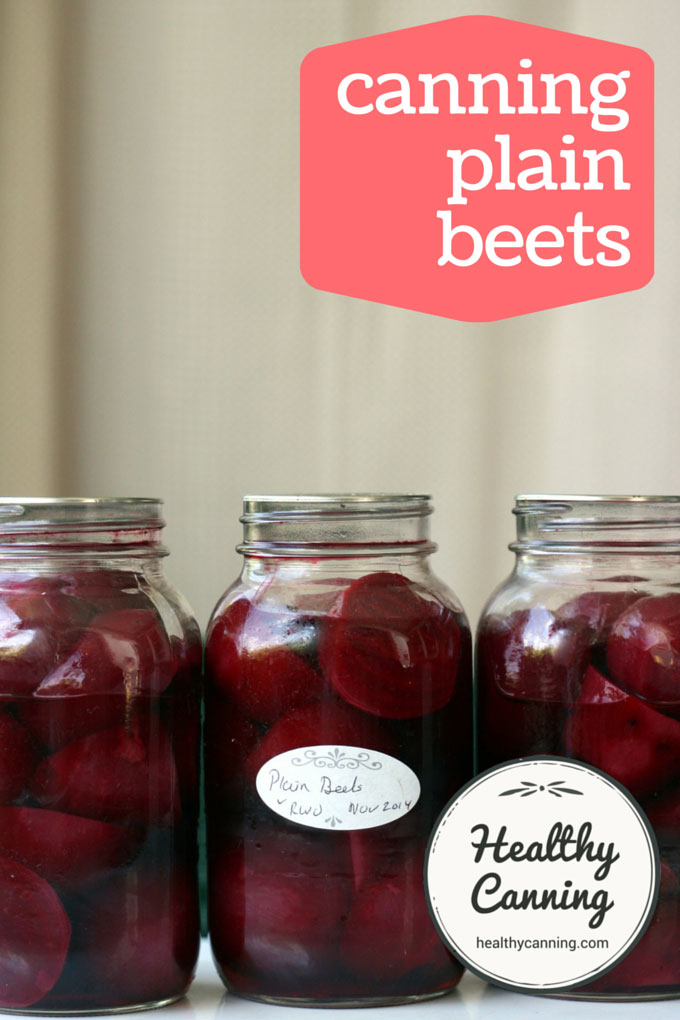
For a successful canning session, growers and consumers must plan for significant volume reduction during the preparation process. On average, an individual will require approximately 1.25 kilograms (3 pounds) of raw beets to yield a single 1-liter (US quart) jar. For those working with medium-sized beets (approximately 9 cm or 3 inches in diameter), 2 kilograms (4.5 pounds) of raw product typically equates to roughly 10 beets.
The USDA recommends two primary jar sizes for this procedure: the half-liter (1 US pint) and the 1-liter (1 US quart). The processing times are strictly calibrated based on these volumes. Half-liter jars require 30 minutes of processing at pressure, while 1-liter jars require 35 minutes. The specific pressure required is determined by the type of gauge used and the altitude of the canning location. At altitudes between 0 and 300 meters (0-1,000 feet), a weighted gauge must be set at 10 pounds (69 kPa), while a dial gauge should be set at 11 pounds (76 kPa). As altitude increases, atmospheric pressure decreases, necessitating an upward adjustment in the canning pressure to ensure the internal temperature of the jars reaches the safety threshold.
Chronology of Preparation: From Harvest to Jar
The preparation of beets for canning is a multi-stage process designed to reduce the bacterial load and preserve the aesthetic quality of the vegetable. The following chronology outlines the USDA-recommended "Hot Pack" method:
- Sorting and Cleaning: Beets should be sorted by size to ensure even pre-cooking. Small beets (1 to 2 inches in diameter) may be canned whole, while larger specimens should be sliced or cubed.
- The Pre-cook: To facilitate peeling and reduce color loss, beets are washed thoroughly, leaving approximately 1 inch (3 cm) of the stem and the entire taproot intact. They are then boiled in water until the skins slip off easily—usually 15 to 25 minutes depending on size.
- Peeling and Trimming: Once the skins are loosened, the beets are dipped briefly in cold water (though not long enough to fully chill them), peeled, and the stems and roots are trimmed.
- Jar Packing: The beets must be packed into hot jars while still warm. If the beets have cooled during the peeling process, they should be reheated. The jars are filled with the beets and then covered with fresh boiling water, leaving exactly 1 inch (3 cm) of headspace.
- Final Adjustments: Air bubbles must be removed from the jars using a non-metallic spatula. The rims must be wiped clean to ensure a proper seal, and the lids and bands are applied to "finger-tip tight" tension.
The Science of Color Retention and Pigmentation
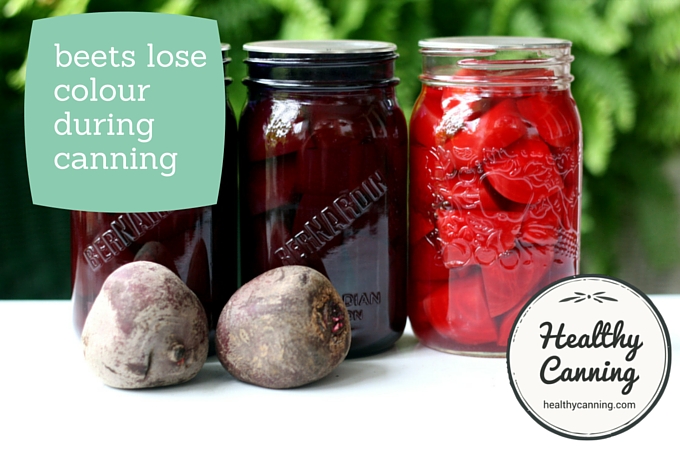
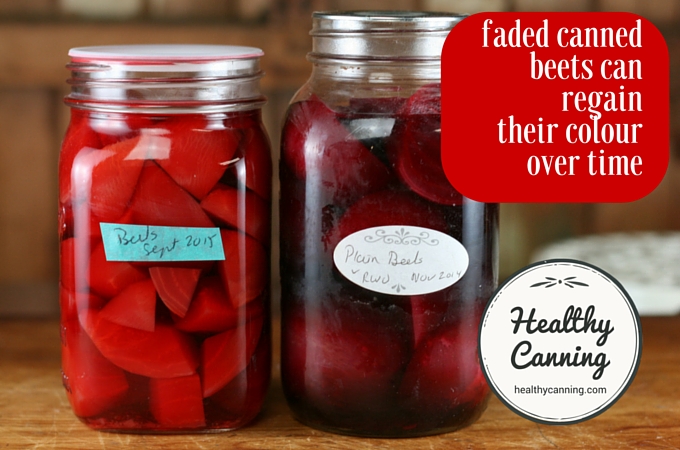
A common concern among home canners is the loss of the beet’s vibrant red color during the high-heat processing of pressure canning. The red pigments in beets, known as betalaines, are chemically sensitive to high temperatures and can occasionally transform into colorless compounds during the canning cycle.
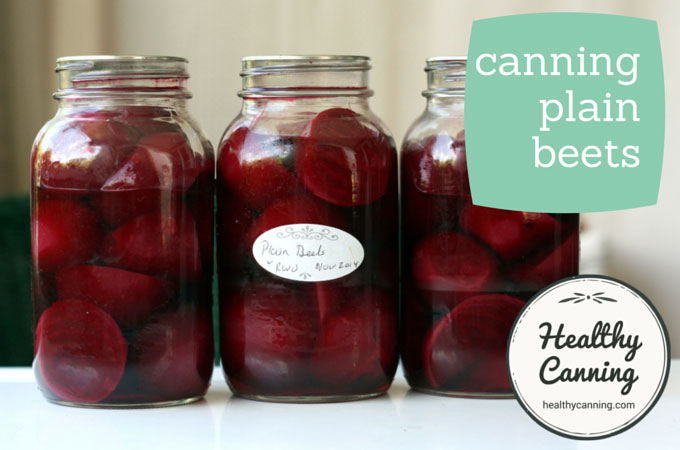
However, research from the Penn State Extension suggests that this reaction is often reversible. It is common for the color of canned beets to "return" or darken after several days of storage at room temperature. To mitigate initial color loss, experts recommend the "Detroit Dark Red" or "Formanova" varieties, which are known for their sturdy pigmentation. Furthermore, leaving the stems and roots attached during the initial boiling phase is a traditional and effective method for "locking in" the juices before the final trim and pack.
Historical Context and the Evolution of Safety Standards
The history of canning advice reveals a long-standing awareness of the dangers associated with low-acid vegetables. As early as 1926, the USDA’s Farmers’ Bulletin No. 1471, authored by Louise Stanley, explicitly recommended steam-pressure canning for beets to avoid "the risk of poisoning from occasional contamination with botulinus bacteria."

Despite this early clarity, the mid-20th century saw a period of conflicting information. During World War II, some university extension bulletins—likely reacting to the rationing of metal and the scarcity of pressure canners—suggested an "acid method" for water-bath canning beets. This involved adding a small amount of vinegar to the jars and boiling them for 90 minutes. Modern testing has since debunked this method as unsafe, as the amount of vinegar recommended was insufficient to uniformly lower the pH of the dense beet tissue to safe levels. This historical divergence serves as a reminder to modern practitioners to rely only on current, peer-reviewed processing charts rather than "heritage" or "vintage" recipes.
Nutritional Profile and Culinary Utility
Canned beets are not only a staple for food security but also a nutritional powerhouse. A standard 250g serving (approximately 1 cup) of cooked, canned beets provides roughly 124 calories. They are virtually fat-free and offer a significant source of dietary fiber (3.6g) and complex carbohydrates (29.8g). While they contain natural sugars, they also provide essential minerals like potassium and manganese.
In terms of culinary application, home-canned beets offer a versatility that exceeds commercial counterparts. They can be drained and tossed in duck fat or olive oil for rapid roasting, used as a base for traditional Borscht, or incorporated into contemporary dishes such as spicy beet and carrot curry with coconut milk. The "Hot Pack" method ensures that the texture remains firm enough for these secondary cooking applications.
Official Guidelines and Judging Criteria
For those participating in agricultural fairs or seeking professional-grade results, the NCHFP provides specific judging criteria for canned beets. High-quality products must be:
- Peeled: Traces of skin are considered a defect and a safety risk (as soil-borne bacteria reside on the skin).
- Uniform: Slices or cubes should be consistent in size to ensure even heat penetration.
- Clear Liquid: The liquid in the jar should be a clear red, free from cloudiness or sediment, which could indicate spoilage or the use of hard water.
- Sized Appropriately: Beets over 3 inches (7 cm) in diameter are often discouraged for whole canning as they can become fibrous and "woody."
Implications for Modern Food Preservation
The resurgence of interest in home canning reflects a broader societal move toward food sovereignty and a reduction in reliance on global supply chains. However, as more individuals turn to home preservation, the role of education becomes paramount. The technical nature of pressure canning—monitoring gauges, adjusting for altitude, and maintaining headspace—serves as a critical barrier against foodborne illness.
By adhering to the USDA guidelines established through decades of thermal death time studies, home canners can produce a shelf-stable product that is both nutritionally dense and entirely safe. The transition from a raw, soil-covered root to a vibrant, vacuum-sealed jar of beets is a process governed by physics and microbiology. When respected, it provides a sustainable and delicious link between the summer harvest and the winter table.