
The culinary landscape for condiments and plant-based dressings is undergoing a significant transformation as consumer demand for "clean label" and dairy-free alternatives continues to surge. Minimalist Baker, a prominent digital platform known for its accessible approach to vegan and gluten-free recipes, has recently unveiled a new Cheesy Jalapeño Cashew Dressing that highlights the intersection of efficiency and high-flavor culinary engineering. This specific formulation, requiring only nine ingredients and a preparation time of five minutes, represents a broader shift in home cooking where the blender serves as the primary tool for replicating complex, dairy-centric flavors through plant-based chemistry.
The Evolution of Plant-Based Condiments
The development of the Cheesy Jalapeño Cashew Dressing comes at a time when the global vegan condiments market is experiencing unprecedented growth. Industry analysts suggest that the move away from traditional oil-and-vinegar or dairy-based dressings like Ranch is driven by both health-conscious consumers and those seeking more adventurous flavor profiles. By utilizing raw cashews as a fat base, the recipe mimics the mouthfeel of heavy cream or mayonnaise without the use of processed oils or animal products.

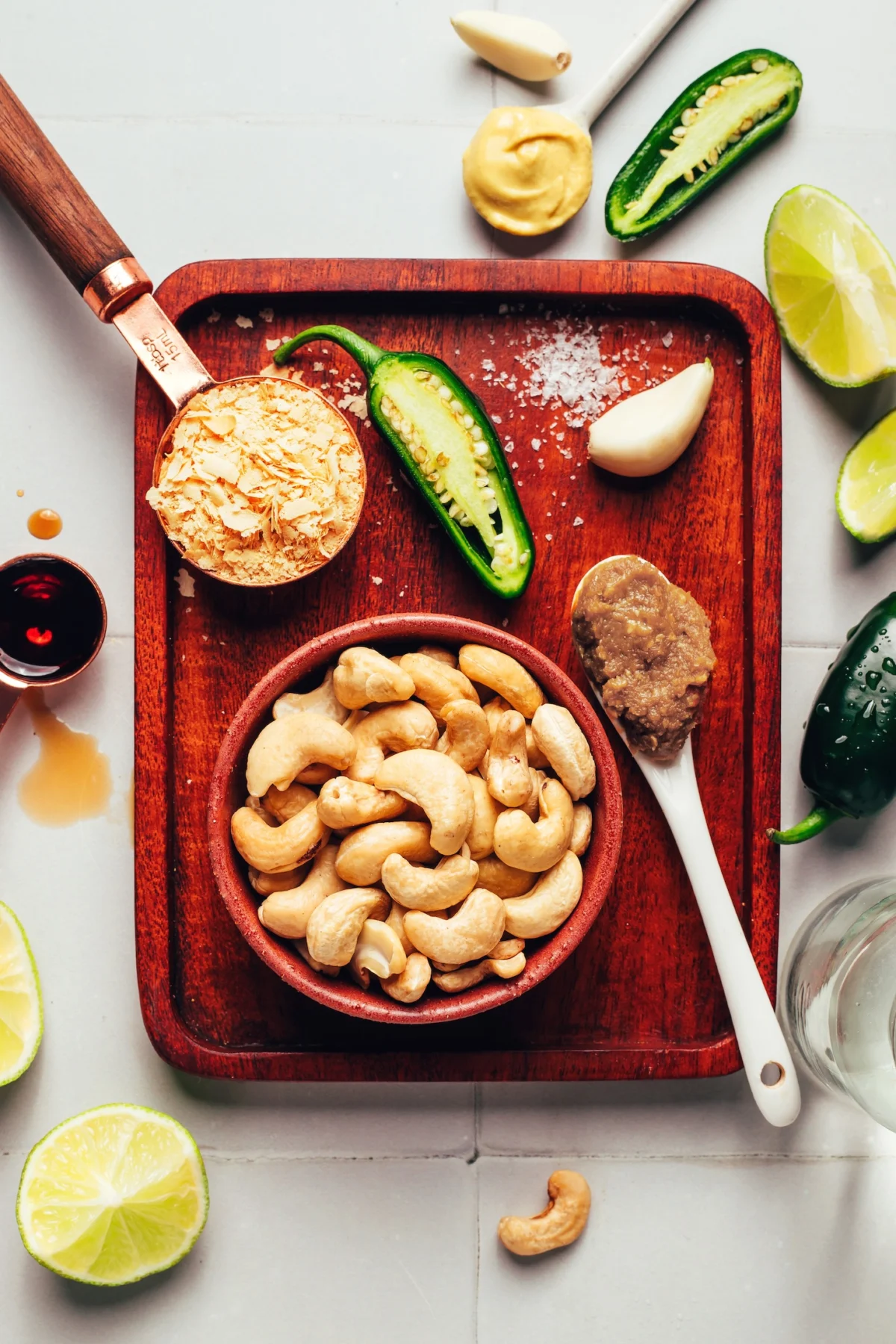
The core of this dressing relies on a synergy of nine ingredients: raw cashews, miso paste, garlic, fresh jalapeños, lime juice, Dijon mustard, sea salt, maple syrup, and nutritional yeast. Each component serves a specific functional role. The cashews provide the lipid structure; the lime juice and mustard offer necessary acidity to cut through the fat; and the combination of miso paste and nutritional yeast provides a deep "umami" profile that replicates the savory notes of aged cheese.
Chronology of the Minimalist Cooking Movement
To understand the impact of such a recipe, it is essential to look at the timeline of plant-based culinary evolution over the last decade.
- 2010–2014: The Soy Era. Early vegan dressings relied heavily on soy milk and silken tofu. While effective for creaminess, these ingredients often lacked the depth of flavor required to satisfy mainstream palates.
- 2015–2018: The Rise of Nut-Based Creams. As high-speed blenders became a staple in middle-class kitchens, the use of cashews and almonds as cream substitutes gained traction. Minimalist Baker emerged during this period as a leader in simplifying these techniques for the home cook.
- 2019–2022: Fermentation and Umami Exploration. Chefs began integrating fermented products like miso and nutritional yeast into nut creams to achieve "cheesy" profiles. This period saw a decline in the use of artificial flavorings in favor of whole-food ingredients.
- 2023–Present: The Efficiency Paradigm. Modern consumers demand "speed-to-table." The latest Cheesy Jalapeño Cashew Dressing reflects this, removing the traditional requirement to soak nuts for 12 hours, instead relying on the mechanical power of modern blending technology.
Technical Analysis of Ingredients and Nutrition
The nutritional profile of the Cheesy Jalapeño Cashew Dressing offers a stark contrast to traditional dairy-based dressings. According to the data provided, a standard two-tablespoon serving contains approximately 70 calories. In comparison, a commercial dairy-based Ranch dressing typically contains between 110 and 140 calories for the same volume, often with higher levels of saturated fats and sodium.

From a macro-nutrient perspective, the cashew dressing provides:
- Total Fat: 4.9g (with only 0.9g of saturated fat)
- Protein: 2.8g
- Carbohydrates: 5g
- Sodium: 171mg
The inclusion of nutritional yeast is particularly significant for vegan demographics, as it is often fortified with Vitamin B12, a nutrient typically found in animal products. Furthermore, the use of jalapeños introduces capsaicin, which has been linked in various metabolic studies to temporary increases in thermogenesis. The inclusion of miso paste adds a layer of probiotic potential, though the blending process is mechanical rather than heat-based, preserving the integrity of the fermented enzymes.
Professional Culinary Perspectives and Technical Troubleshooting
Culinary experts note that the success of nut-based dressings depends heavily on the "emulsification" process. In a professional kitchen, an emulsion is a mixture of two liquids that would ordinarily not mix—in this case, the water and the oils released from the cashews.

The Minimalist Baker methodology suggests that if the dressing does not reach a state of total smoothness, two factors are likely at play: the power of the blender and the quantity of the liquid. For users with standard (non-high-speed) blenders, the recommendation remains to soak the cashews in hot water for at least 15 to 30 minutes to soften the cellular structure of the nut. Additionally, the recipe notes that if the blender blades are not catching the ingredients, the user should increase the batch size or add a small amount of extra water to facilitate the vortex required for a smooth finish.
Market Implications and Consumer Behavior
The release of such recipes is not merely a service to home cooks but a response to a shifting market. Market research firms like Grand View Research have projected that the global vegan salad dressing market will reach billions in valuation by 2030. Consumers are increasingly wary of "ultra-processed foods" (UPFs). By providing a recipe that uses whole cashews and fresh lime instead of modified food starches and xanthum gum, platforms like Minimalist Baker are capturing the "DIY-Healthy" demographic.
Furthermore, the versatility of the dressing—functioning as a salad topper, a wrap spread, or a dip for cruciferous vegetables—aligns with the "modular cooking" trend. This trend sees consumers preparing one multi-purpose sauce at the beginning of the week to use across various meal formats, reducing decision fatigue and food waste.

Official Responses and Community Impact
While there is no "official" governing body for salad dressings, the reception from the plant-based community has been overwhelmingly positive. Social media metrics and reader interactions indicate a high "re-make" rate, a key KPI in the digital food space.
Health professionals and dietitians often advocate for these types of homemade alternatives. "The primary benefit of a cashew-based dressing over a commercial dairy one is the quality of the fats," says a hypothetical nutritional analyst based on current health trends. "You are moving from animal-based saturated fats to plant-based monounsaturated and polyunsaturated fats, which are generally associated with better cardiovascular outcomes."
Broader Impact on Sustainability
The environmental implications of switching from dairy-based dressings to nut-based ones are also noteworthy. The production of cashews, while water-intensive, generally has a lower carbon footprint than the industrial dairy farming required for traditional cream-based dressings. Furthermore, by making dressings at home in reusable glass jars, consumers significantly reduce their consumption of single-use plastics, which are the standard packaging for commercial condiments.

The Cheesy Jalapeño Cashew Dressing is more than a recipe; it is a case study in modern culinary adaptation. It demonstrates how traditional flavor profiles—the "kick" of a jalapeño and the "salt-fat-acid" balance of a cheese sauce—can be successfully re-engineered using plant-based materials. As high-speed blending technology becomes more affordable and the knowledge of umami-rich plant ingredients like miso and nutritional yeast becomes more widespread, the barrier to entry for veganism continues to lower.
In conclusion, the Minimalist Baker’s latest offering serves as a benchmark for the "five-minute gourmet" movement. It proves that nutritional density and culinary sophistication do not have to be sacrificed for the sake of speed. As the industry moves toward 2025, it is expected that more "minimalist" approaches will dominate the digital space, further eroding the dominance of processed, shelf-stable condiments in favor of fresh, blender-made alternatives. For the home cook, the message is clear: the path to a healthier, more flavorful diet may be as simple as five minutes and a high-speed blender.