
The global hospitality landscape is undergoing a fundamental transformation, driven by a shift in consumer behavior that prioritizes experience and social connectivity over traditional service models. At the forefront of this evolution is David Grutman, the founder of Groot Hospitality, whose career trajectory from a mall bartender to a global mogul provides a blueprint for the modern "experiential dining" movement. Grutman’s philosophy posits that the traditional sequence of a five-course meal is becoming obsolete, replaced by a high-energy, communal approach to food and entertainment that blurs the lines between a restaurant and a theater.
The Paradigm Shift: From Courses to Community
The traditional dining format—comprising a linear progression of appetizer, soup, salad, main course, and dessert—is increasingly viewed as a relic of a previous era. According to Grutman, modern diners are migrating toward sharable plates that are inherently more interactive. This shift is not merely a culinary trend but a psychological one. When diners share plates, it creates a collective energy that encourages communication and discovery.
In the contemporary market, dining is no longer just about sustenance; it is about social currency. The rise of "experiential dining" is closely tied to the digital age, where a restaurant’s aesthetic and "vibe" are as critical as the menu itself. Grutman has masterfully leveraged this by engineering "shareable moments" that evoke FOMO (fear of missing out), ensuring that a single guest’s experience can reach thousands of potential customers through social media.

A Chronology of Influence: From Biz Bistro to LIV
Grutman’s rise to prominence was not an overnight success but a calculated progression through the ranks of the service industry. A finance graduate from the University of Florida, Grutman initially considered a career in title insurance before the high-stakes environment of hospitality drew him in.
- The Early Years: His career began behind the bar at Biz Bistro in the Aventura Mall. This period served as his laboratory for social engineering, where he learned to read a room and manage diverse personalities.
- Management and Growth: Recognizing that he needed to lead rather than just serve to reach his goals, Grutman took a significant pay cut—earning roughly a quarter of his bartending income—to become a manager at the Velvet Lounge in Fort Lauderdale. This was followed by a five-year tenure at Tantra in South Beach, a venue known for its celebrity clientele and complex social dynamics.
- The Birth of a Landmark: In 2008, Grutman co-founded Miami Marketing Group (MMG) and launched LIV at the Fontainebleau Miami Beach. LIV redefined the nightclub experience by merging the high-energy theater of a concert with the exclusivity of elite bottle service. At its peak, the venue generated annual revenues exceeding $45 million, making it one of the highest-grossing nightclubs in the world.
- The Formation of Groot Hospitality: In 2018, Grutman consolidated his various ventures under the Groot Hospitality umbrella. This move was designed to provide the clarity and corporate structure necessary to scale his concepts beyond the Miami market.
Engineering the Theater of Dining
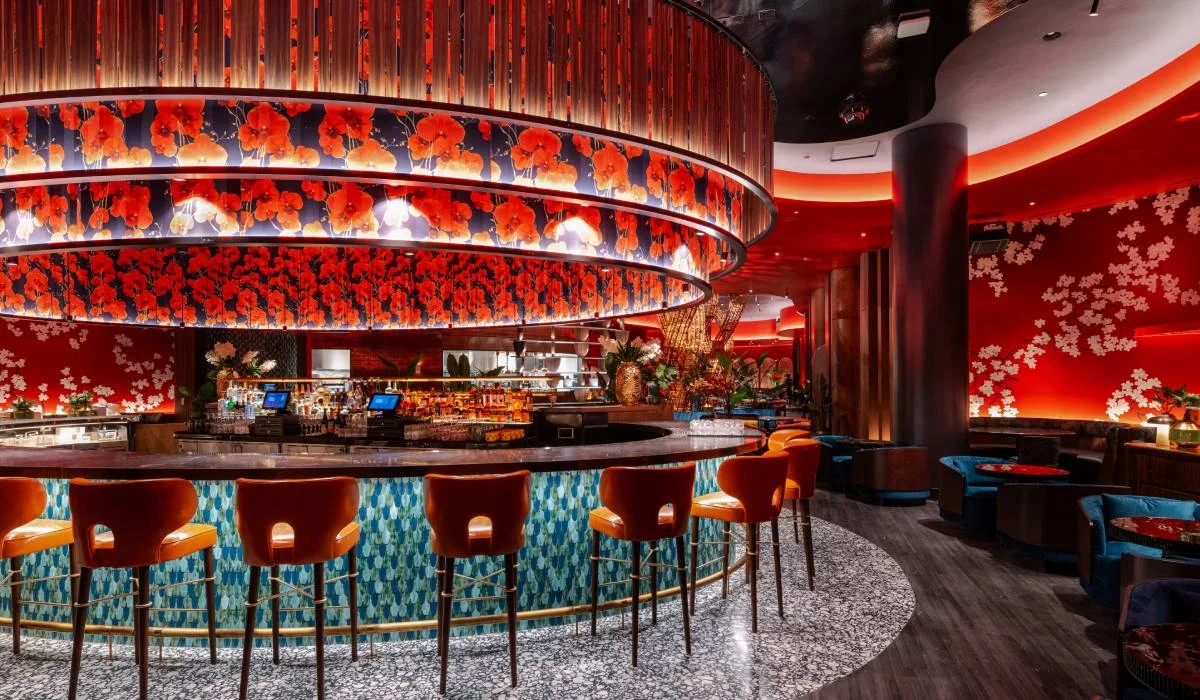
Under the Groot Hospitality banner, Grutman has developed a portfolio of restaurants that function as immersive environments. These venues are designed to be "360-degree sensory environments" where lighting, music, and food work in concert to create a specific rhythm.
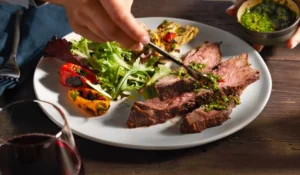
A prime example of this "theatrical" approach is found at Papi Steak. The restaurant’s signature "Beef Case"—a $1,000 diamond-studded gold briefcase containing a 55-ounce Australian Wagyu tomahawk steak—is presented with a laser light show and custom music. The steak is branded at the table before being carved. This spectacle serves two purposes: it provides the guest with a memorable, high-value experience and acts as free, viral marketing.
The menu at other Groot properties follows a similar logic of high-impact luxury. At Gekkō, a Japanese-inspired steakhouse opened in partnership with global superstar Bad Bunny, the "Wagyu Experience" features olive-fed snow beef from Japan’s Miyazaki Prefecture for $295. At Casadonna, a coastal Italian concept in partnership with Tao Group Hospitality, the menu ranges from $38 black truffle risotto to a $197 porterhouse steak. These price points are not merely reflective of ingredient quality but are part of a narrative of exclusivity and indulgence.

Strategic Partnerships and Global Scaling
A significant turning point for the organization occurred in 2019, when Grutman sold a 51 percent majority stake in Groot Hospitality to Live Nation Entertainment. This acquisition integrated Grutman’s hospitality ecosystem with the world’s largest live entertainment company, providing the institutional infrastructure needed for global expansion.
Grutman’s approach to partnerships is rooted in finding complementary "genius." His collaboration with Bad Bunny at Gekkō, for instance, was not a simple celebrity endorsement but a deep creative partnership focused on cultural influence and aesthetic storytelling. Grutman asserts that these collaborations add depth to the brand, allowing it to resonate more authentically with target demographics.
Currently, the Groot portfolio includes:
- LIV: Flagship nightclubs in Miami and Las Vegas.
- Komodo: Southeast Asian-inspired concepts in Miami, Las Vegas, and Dallas.
- Papi Steak: A fusion of Golden Era Hollywood and modern Miami/Vegas styles.
- Gekkō: Japanese steakhouse and lounge.
- Casadonna: Coastal Italian waterfront dining.
The Leadership Manifesto: "Take It Personal"
On April 14, Grutman released his new book, Take It Personal: How to Succeed by Building Relationships and Playing the Long Game. The title serves as a direct rebuttal to the common business adage "it’s not personal." Grutman argues that in the hospitality industry, taking everything personally is the only way to ensure quality and build lasting loyalty.

The book is based on a course Grutman has taught for five years at the Chaplin School of Hospitality & Tourism Management at Florida International University (FIU). It covers essential lessons on Intellectual Property (IP), brand building, and the importance of relationships. Grutman emphasizes that his success is largely due to his ability to connect with people at all levels—not just the celebrities and power players, but every guest at the table.
Broader Impact and Future Horizons
The "Grutman Model" has significant implications for the broader hospitality industry. It suggests that for a restaurant to succeed in the modern era, it must function as a lifestyle brand. Operators can no longer focus solely on the kitchen; they must also be experts in digital content, interior design, and social psychology.
Grutman’s expansion plans indicate that this model is highly scalable. While Miami remains the headquarters, Groot Hospitality is actively looking at new markets, including Nashville, Tennessee, and Scottsdale, Arizona. On a global scale, the company is eyeing locations in the United Arab Emirates and Southern France. Furthermore, Grutman has launched DGN Studios, a production company focused on film, television, and digital content, which he views as a natural extension of his storytelling-based hospitality model.
Analysis of the "FOMO Formula"
The success of Groot Hospitality provides a case study in the monetization of "FOMO." By creating environments that are visually stunning and socially exclusive, Grutman ensures that his guests become his primary marketing agents. In a landscape where traditional paid media often struggles with authenticity, the organic social media posts of a guest at Komodo or Papi Steak carry immense weight.

However, Grutman maintains that while technology and social media are essential tools, the core of the business remains human. He expresses skepticism that AI or machines could ever replicate the specific energy of a well-run room or the feeling of genuine hospitality. His insistence on being "present"—both with his staff and his family—highlights a leadership style that balances high-octane business goals with foundational human values.
Conclusion
David Grutman has redefined what it means to be a restaurateur in the 21st century. By treating dining as a form of high-energy theater and business as a series of personal relationships, he has built an empire that transcends the traditional boundaries of food and beverage. As Groot Hospitality continues its global expansion, the industry will likely see more operators adopting his focus on experiential, shareable, and digitally-resonant dining. Grutman’s legacy, by his own definition, will be measured by the memories created in his spaces and the evolution of hospitality into a truly immersive art form.