
The competitive landscape of American homebrewing witnessed a masterclass in recipe formulation and technical execution during the final round of the 2026 National Homebrew Competition. Among thousands of entries submitted from across the globe, Jarrett and Amanda Long of Arlington, Texas—proud members of the local brewing collective Horsemen of the Hopocalypse—emerged as gold medalists in Category 18: Specialty IPA. Navigating a rigorous judging process that evaluated 94 distinct entries within their specific category, the Longs secured the top honor with a uniquely crafted, highly technical specialty IPA that impressed sensory judges and technical evaluators alike.
The victory underscores a growing trend within amateur brewing circles: the marriage of traditional malt profiles with advanced, contemporary processing techniques. Competing in the National Homebrew Competition represents the pinnacle of achievement for hobbyist brewers, drawing elite talent from regional qualifying rounds held across North America.
Background Context of the National Homebrew Competition
Organized annually by the American Homebrewers Association (AHA), the National Homebrew Competition is the largest glittering showcase of fermented craftsmanship in the world. Established decades ago to foster the art and science of homebrewing, the competition provides a platform for amateur brewers to benchmark their recipes against rigorous BJCP (Beer Judge Certification Program) style guidelines.
The path to the final round is arduous. Brewers must first excel at regional competitions, where only the highest-scoring beers advance to the national stage. In the final round, entries are evaluated by panels of certified judges who assess aroma, appearance, flavor, and mouthfeel. Category 18, designated for Specialty IPAs, is traditionally one of the most competitive and creatively challenging brackets. It requires brewers to push the boundaries of standard India Pale Ale characteristics while maintaining balance, drinkability, and strict adherence to style parameters.
For Jarrett and Amanda Long, claiming gold out of 94 fierce entries in this category validates years of refinement within the Arlington brewing community, particularly through their affiliation with the Horsemen of the Hopocalypse homebrew club, a regional organization known for fostering technical excellence and camaraderie among North Texas brewers.
Chronology of the Winning Brew: From Mash to Medal
The creation of a gold-medal-winning specialty IPA is a meticulous, time-sensitive endeavor. The timeline of the Longs’ award-winning batch reflects a deep understanding of brewing biochemistry, enzymatic activity, and hop management.
The process began with a comprehensive mash schedule designed to maximize fermentability and extract a complex, layered malt character. The grist bill relied on 9 pounds (4.08 kg) of Malteurop pale 2-row malt as a clean base, complemented by 3 pounds (1.36 kg) of Muntons brown malt for rich, biscuity depth. To further refine the body and mouthfeel, the brewers incorporated 2 pounds (0.9 kg) of flaked corn and 1 pound (454 g) of 80L caramel malt, yielding a sturdy framework that could anchor a heavy load of hops.
During the mash-in phase at 148°F (64°C), the Longs utilized specialized processing aids, introducing 3 grams of beta-glucanase and 3 grams of Oxblox to break down complex carbohydrates and prevent lautering issues, ensuring a smooth 90-minute mash.
Following the mash, the wort underwent a vigorous 60-minute boil. Precision timing defined the hop additions. A modest charge of 0.5 ounces (14 g) of Chinook hops (14.5% alpha acids) was introduced at the 60-minute mark for foundational bitterness. As the boil progressed toward its conclusion, a heavier aromatic and flavor addition was made at 15 minutes, featuring 1.5 ounces (42 g) of Chinook and 1 ounce (28 g) of Cascade hops (6.1% alpha acids). Concurrently, 1 Whirlfloc tablet and 15 grams of PVPP were added at 10 minutes to enhance protein coagulation and colloidal stability.
Post-boil whirlpool management played a crucial role in locking in delicate hop aromatics without extracting harsh tannins. The brewers executed a 10-minute hop stand at 194°F (90°C), dosing the kettle with an additional 1 ounce (28 g) each of Chinook and Cascade.

Fermentation was conducted at a controlled 65°F (18°C) utilizing two packs of Wyeast 1056 American ale yeast, chosen for its neutral profile that allows malt and hop complexities to shine. Advanced technical interventions continued into the fermentation cycle, with ALDC (Alpha-acetolactate decarboxylase) applied during yeast rehydration and again in the primary fermenter prior to spunding, effectively mitigating diacetyl production.
To achieve ultimate clarity, the beer was treated with gelatin for fining. Finally, a robust dry-hop regimen—consisting of 1 ounce (28 g) of Chinook and 1 ounce (28 g) of Cascade—was executed over a three-day period before packaging, culminating in a finished product ready for keg or bottle conditioning.
Technical Specifications of the Championship Recipe
Analyzing the analytical parameters of the Longs’ specialty IPA reveals a remarkably well-balanced formulation despite its robust strength and bitterness:
- Yield: 6 U.S. gallons (22.71 liters)
- Original Gravity (OG): 1.067 (16.4°P)
- Final Gravity (FG): 1.015 (3.7°P)
- Alcohol by Volume (ABV): 6.75%
- International Bitterness Units (IBU): 62
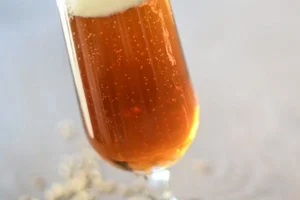
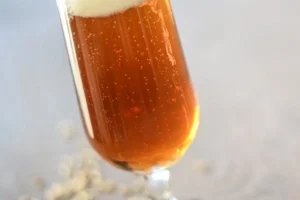
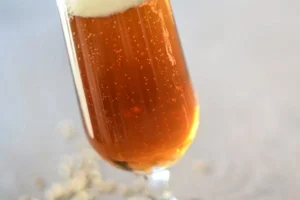
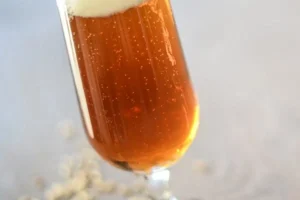
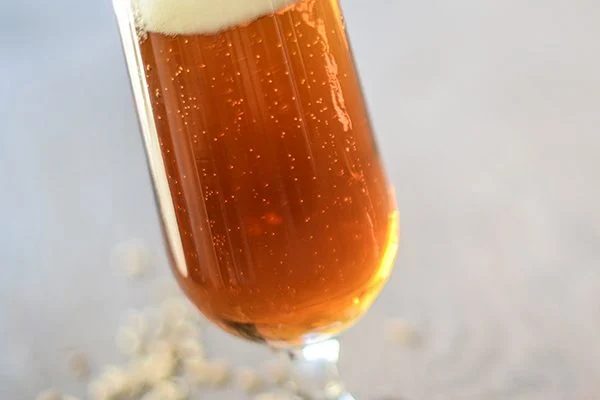
- Color (SRM): 36 (indicating a dark, ruby-brown hue atypical of modern clear IPAs, leaning into the specialty nature of the category)
- Brewhouse Efficiency: 80%
These specifications demonstrate a high attenuation rate, bringing the beer down from an original gravity of 1.067 to a final gravity of 1.015, resulting in a crisp, highly drinkable 6.75% ABV ale that masks its considerable strength behind refined malt sweetness and assertive hop character.
Statements and Community Reactions
While individual homebrewers often maintain private operations, the broader amateur brewing community in Texas and across the national network has expressed widespread acclaim for the Longs’ victory. Regional clubs, including the Horsemen of the Hopocalypse, released statements highlighting the achievement as a testament to collaborative knowledge-sharing.
"When local brewers push the envelope using advanced enzymatic treatments, precise temperature controls, and rigorous scientific methods, it elevates the standard for everyone in the region," noted a representative from a regional brewing coalition. "Jarrett and Amanda have demonstrated that meticulous attention to detail at the amateur level can rival commercial production standards."
Broader Impact and Implications for the Homebrewing Industry
The success of the Longs’ specialty IPA at the 2026 National Homebrew Competition points to several broader takeaways for the craft beer and homebrewing sectors.
First, the recipe highlights the increasing accessibility of commercial-grade brewing techniques to hobbyists. The use of specialized enzymes such as beta-glucanase and ALDC, once largely restricted to large-scale industrial breweries, has become increasingly common among advanced homebrewers seeking to optimize attenuation, clarity, and flavor stability.
Second, the stylistic parameters of Category 18 (Specialty IPA) continue to stretch traditional boundaries. By employing a dark SRM of 36—far outside the pale-to-golden spectrum traditionally associated with standard IPAs—the winning entry reinforces that judges reward innovation, technical precision, and sensory harmony over rigid adherence to dated stylistic dogma.
As the craft beverage landscape continues to evolve, victories by dedicated hobbyists like Jarrett and Amanda Long serve as an incubator for future commercial brewing trends. Many commercial craft breweries trace their origins to award-winning homebrew recipes refined in backyard garages and suburban kitchens. Whether the Longs choose to scale their recipe for commercial release or keep it as a crown jewel of their homebrewing career, their gold-medal triumph firmly etches their names into the annals of modern American amateur brewing history.