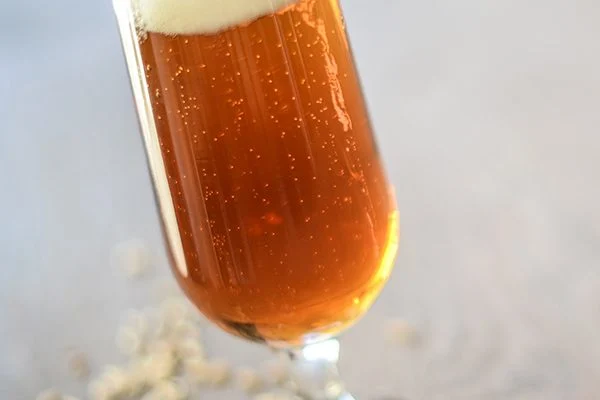

The art of homebrewing has experienced a monumental resurgence over the past few decades, transforming from a niche, basement-bound hobby into a sophisticated culinary science. At the epicenter of this movement is the National Homebrew Competition, an annual event organized by the American Homebrewers Association (AHA) that serves as the ultimate proving ground for amateur brewers worldwide. Each year, thousands of enthusiasts submit their meticulously crafted ales, lagers, ciders, and meads to be evaluated by certified judges against the stringent guidelines set by the Beer Judge Certification Program (BJCP). Among the treasure trove of celebrated concoctions to emerge from this prestigious event is "Cabo," a Mexican pale lager that has captured the attention of the brewing community for its remarkable crispness, balance, and innovative malt bill.
To fully understand the significance of recipes like Cabo, one must examine the rigorous ecosystem of the National Homebrew Competition, the culinary philosophy behind modern pale lagers, and the broader implications of amateur brewing innovation on the commercial craft beer industry.
The Anatomy of an Award-Winning Recipe: The Craft Behind Cabo
Cabo was conceived out of a desire to replicate and elevate the refreshing, highly drinkable characteristics of traditional Mexican pale lagers—beers designed to be enjoyed under the warmth of a backyard sun or on a tropical vacation. However, rather than leaning heavily on standard commercial brewing shortcuts or conventional adjunct grain bills, the creator of Cabo approached the recipe with a modernist’s eye for ingredient selection and attenuation.
At the core of the recipe is a deliberate departure from traditional adjunct-heavy grain profiles. Instead, the foundation rests upon a meticulous combination of high-quality continental Pilsner malt and flaked corn. Continental Pilsner malt is renowned for imparting a softer, more refined light malt character compared to domestic alternatives, while still offering exceptional fermentability. This high degree of attenuation is critical for achieving the dry, crisp finish that defines top-tier pale lagers.
Furthermore, the integration of flaked corn serves a precise biochemical function. While corn is historically used in mass-produced American and Mexican lagers as an inexpensive source of fermentable sugars that lightens the body, in a craft context, it acts as a delicate modifier. It contributes a subtle sweetness without weighing down the palate, allowing the beer to achieve high drinkability without sacrificing structural complexity. The interplay between the noble, subtle tones of the Pilsner malt and the clean, crisp lightness of the corn creates a masterclass in balance—a trait that consistently scores exceptionally well on BJCP evaluation sheets.
A Brief History and Evolution of the National Homebrew Competition
The journey of homebrewing from a countercultural pastime to a celebrated craft is deeply intertwined with the history of the American Homebrewers Association. Founded in 1978 by Charlie Papazian—a seminal figure in the American craft beer movement—the AHA was established shortly after President Jimmy Carter signed H.R. 1337 into law, federal legislation that legalized homebrewing at the federal level for the first time since Prohibition.
With legal barriers removed, the community blossomed. What began as a loose network of passionate individuals sharing tips in garages quickly evolved into organized clubs and, eventually, structured competition. The National Homebrew Competition was born out of this burgeoning enthusiasm, designed to provide a standardized platform where amateur brewers could receive constructive feedback from professional judges, refine their craft, and celebrate excellence.
Over the decades, the competition has scaled dramatically. What once started as a modest gathering of a few dozen entries has swelled into the world’s largest annual fermented beverage competition. Today, the event processes thousands of entries spanning dozens of distinct categories, ranging from historical beer styles to experimental modern hybrids. Winning a medal at the National Homebrew Competition is widely considered one of the highest honors an amateur brewer can achieve, often serving as a launching pad for individuals looking to transition into professional commercial brewing.

The Mechanics of Medal-Winning Brewing: Standards and Judging
Securing a medal at the National Homebrew Competition is no small feat. The competition employs a multi-tiered judging process that mirrors or even exceeds the rigor found in commercial beer competitions. Entries are initially evaluated at regional first-round sites across the country, where panels of BJCP-certified judges assess appearance, aroma, flavor, and overall impression against established style guidelines.
Judges rely on a 50-point scale, providing detailed written feedback on technical execution, ingredient harmony, and procedural flaws. Common deductions in lager categories, for instance, include diacetyl (a buttery off-flavor caused by premature fermentation termination), DMS (dimethyl sulfide, often tasting of cooked corn, resulting from inadequate wort boiling), or excessive oxidation.
For a recipe like Cabo to emerge victorious in such a competitive environment, every variable of the brewing process must be controlled with laboratory precision. Water chemistry, mash temperatures, pitch rates of healthy yeast, temperature-controlled fermentation (critical for clean-tasting lagers), and proper lagering (cold conditioning) are all essential components. The success of Cabo highlights not only a brilliant conceptual recipe formulation but also an uncompromising dedication to technical execution in the brewhouse.
Broader Implications: From Homebrews to Commercial Innovations
The influence of homebrewing culture extends far beyond basement workshops and backyard patio systems. Historically, the American craft beer revolution of the 1980s and 1990s was largely propelled by pioneering homebrewers who scaled up their favorite recipes into commercial operations. Icons of the craft industry—such as Sierra Nevada, Boston Beer Company (makers of Samuel Adams), and countless regional microbreweries—trace their organizational roots back to amateur experimentation.
In contemporary markets, the boundary between homebrewing innovation and commercial trends continues to blur. Styles that gain traction within the homebrew community—such as hazy IPAs, pastry stouts, and modernized, craft-centric pale lagers like Cabo—frequently preview where the commercial market is heading. Commercial breweries often monitor homebrewing competitions and forums to identify emerging consumer preferences and innovative ingredient combinations.
Furthermore, platforms curated by the American Homebrewers Association play a vital educational role in the broader beverage ecosystem. By archiving and sharing hundreds of medal-winning recipes, the association fosters a culture of open-source knowledge sharing. Brewers of all skill levels can study the exact grain bills, hop schedules, and yeast strains utilized by the world’s best amateur practitioners, elevating the collective skill ceiling of the craft.
Conclusion: The Enduring Spirit of Amateur Craftsmanship
The story of Cabo and its recognition through the National Homebrew Competition encapsulates the heart and soul of modern brewing culture. It is a testament to the fact that exceptional beer is not solely the domain of massive industrial conglomerates equipped with millions of dollars in automated machinery. Rather, it is the result of curiosity, technical discipline, passion, and an intimate understanding of raw materials.
As the homebrewing community continues to innovate, recipes like Cabo remind enthusiasts and professionals alike of the power of simplicity balanced with precision. Whether enjoyed in a backyard setting or evaluated on a competitive stage, these creations celebrate the timeless craft of transforming water, malt, hops, and yeast into something extraordinary. Through continuous education, shared resources, and organizations like the American Homebrewers Association, the future of homebrewing remains as bright, crisp, and inviting as a perfectly poured Mexican pale lager.