
In a significant development for individuals seeking a more intuitive yet structured approach to nutrition, Dr. Gabrielle Fundaro, a highly credentialed expert with a PhD in Human Nutrition, over a decade of coaching experience, and a background in competitive powerlifting, has introduced a novel method: the RPE-Eating Scale. This innovative framework offers a compelling alternative for those grappling with the limitations of rigid macro tracking and the often-elusive nature of pure intuitive eating, aiming to foster greater confidence, self-trust, and nutritional awareness around food choices.
The Journey from Precision to Peace: A Chronology of Discovery
Dr. Fundaro’s journey to developing the RPE-Eating Scale began, paradoxically, at the peak of her expertise in traditional nutrition methodologies. For years, she, like many fitness enthusiasts and health-conscious individuals, meticulously tracked her macronutrients. This method, which involves precisely counting protein, carbohydrates, and fats, is widely adopted for its ability to provide quantifiable data and maintain specific physiques. Given her academic background and practical experience, Dr. Fundaro was arguably one of the most qualified individuals to confidently navigate her food choices using such a system.
Initially, macro tracking proved effective, offering a sense of control and predictability that aligned with her goals, including her involvement in powerlifting. However, over time, the very system designed to empower her began to feel restrictive and burdensome. The constant need to ensure perfect macronutrient balance, the inability to spontaneously choose meals from a menu without calculation, and the pervasive fear that her health and physique would "go sideways" without meticulous oversight led to a growing sense of weariness and dissatisfaction.
The internal conflict intensified as Dr. Fundaro became honest about her relationship with food. Despite her profound knowledge, she felt far from confident. The thought of abandoning tracking provoked significant anxiety, manifesting in a series of "what if" questions: What if she didn’t consume enough protein and lost muscle mass? What if she overate and gained unwanted fat? More profoundly, what would it imply about her credibility as a nutrition expert if she couldn’t fuel herself without external metrics? This internal struggle underscored a critical gap in conventional approaches: the emotional and psychological toll of perpetual tracking.
Her search for an alternative was driven by a desire for a system that could support her nutritional objectives while simultaneously instilling a sense of freedom and peace. Traditional calorie counting was quickly dismissed as equally, if not more, restrictive. Intuitive eating, which relies heavily on internal hunger and fullness cues, also presented a challenge. Years of depending on external cues from macro targets had diminished her trust in her own bodily instincts. She craved structure, but not the rigid, unforgiving kind she had grown tired of.
Inspiration from the Gym: The Rate of Perceived Exertion
A pivotal shift in Dr. Fundaro’s thinking emerged from her experience in the gym. She had begun incorporating the Rate of Perceived Exertion (RPE) scale into her powerlifting training. The RPE scale, invented by Gunnar Borg in the 1960s, is a psychophysical scale used to measure an individual’s subjective perception of effort during physical activity. While Borg’s original scale ranged from 6 to 20, modern adaptations often use a more accessible 0 to 10 scale, where 0 signifies no exertion and 10 represents maximal effort.
The RPE scale is a cornerstone of autoregulated training, allowing athletes and individuals to adjust their workout intensity based on how they feel on a given day, rather than adhering strictly to pre-set percentages or rep schemes. For instance, a powerlifter might aim for an RPE of 7 out of 10 for a set, meaning they could have completed three more repetitions (Reps In Reserve, RIR) if pushed. This approach provides a flexible yet structured framework, enabling safer and more effective training by accounting for daily fluctuations in recovery, stress, and energy levels. It empowers the exerciser with autonomy, allowing them to judge their own effort, even when guided by a coach.
Dr. Fundaro observed firsthand how RPE not only helped her get stronger but also facilitated better recovery, leading to an optimal balance of challenge and sustainability in her training. The combination of structured guidance and personal intuition resonated deeply. It was this powerful realization that sparked her "aha!" moment: if Rpe could revolutionize her approach to training, a similar framework could undoubtedly transform her relationship with food.
Introducing the RPE-Eating Scale: A Hybrid Approach to Nourishment
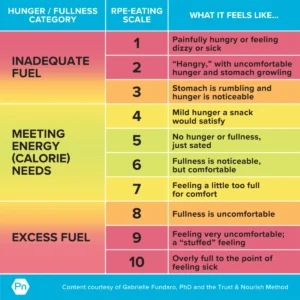
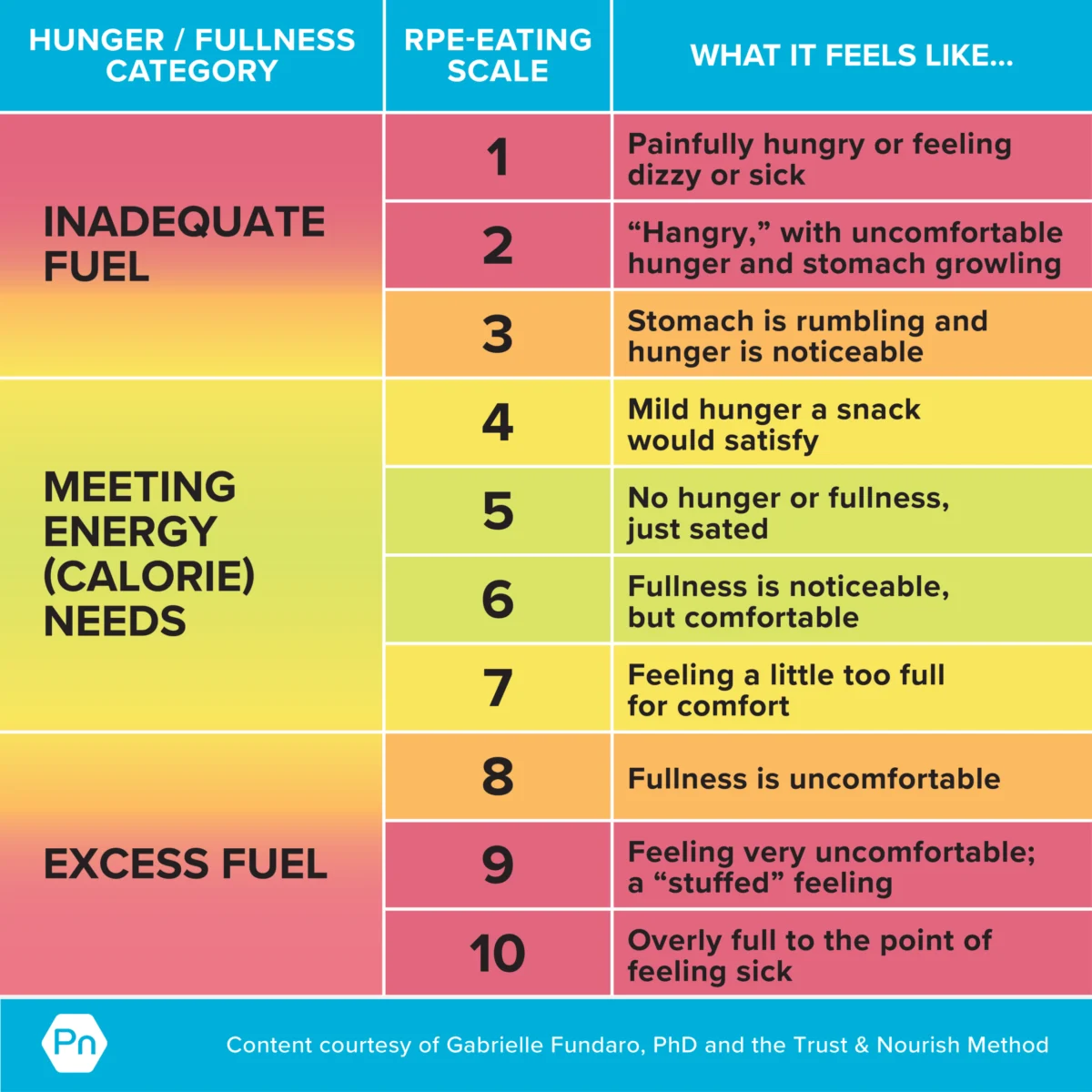
From this insight, the RPE-Eating Scale was born. Dr. Fundaro adapted the familiar 0-10 scale to reflect internal hunger and fullness cues, providing a structured language for individuals to assess their physiological state before, during, and after eating. This scale moves beyond a simple "hungry" or "full" dichotomy, offering a nuanced spectrum:
- 1: Painfully hungry, dizzy, or sick.
- 2: "Hangry," uncomfortable hunger, stomach growling.
- 3: Noticeable hunger, stomach rumbling.
- 4: Mild hunger, a snack would satisfy.
- 5: No hunger or fullness, just sated.
- 6: Noticeable fullness, but comfortable.
- 7: A little too full for comfort.
- 8: Uncomfortable fullness.
- 9: Very uncomfortable or "stuffed."
- 10: Overly full to the point of feeling sick.
The RPE-Eating Scale offers a compelling alternative to both restrictive tracking and the sometimes-daunting ambiguity of pure intuitive eating. It provides a concrete, albeit subjective, framework that helps individuals develop interoceptive awareness – the ability to perceive and interpret internal bodily sensations. This skill is crucial for self-regulation and making informed decisions about food intake. By offering a guided approach, it bridges the gap for those who feel disconnected from their internal cues but are wary of external, prescriptive rules. The goal, much like RPE in training, is to cultivate the skill of determining what is sufficient for you, without relying on apps, trackers, or rigid dietary mandates.
Mastering RPE-Eating: Practical Steps for Application
Adopting the RPE-Eating Scale, much like mastering RPE in training, requires practice and patience. It acknowledges that after years of ignoring internal signals, individuals may not immediately be "in lockstep" with their body’s cues. The process is iterative and focused on skill development rather than instant perfection.
-
Defining Personal Goals Beyond Metrics: Dr. Fundaro emphasizes that RPE-Eating is not simply another diet designed for body modification or "optimal" macro hitting. Its primary purpose is to build inner trust, confidence, and appropriate nourishment. While it can be adapted for weight modification, it’s not the most efficient tool for extreme body composition changes. The core objective is a paradigm shift: trusting one’s ability to nourish the body, even if it means accepting some bodily changes. This requires letting go of the often-unrealistic expectation of hitting perfect macros at every meal, a significant psychological hurdle for many accustomed to tracking.

-
Cultivating Hunger Cue Awareness: This step distinguishes between true physiological hunger and psychological appetite. Hunger manifests through physical cues—an empty stomach, rumbling, lightheadedness—indicating a need for energy. Appetite, conversely, is the desire to eat, which can persist even when physically satiated, often driven by sensory pleasure or emotional triggers. The RPE-Eating scale helps individuals differentiate these.
To practice, one is encouraged to rate their hunger on the scale before a meal. During the meal, eating mindfully (limiting distractions, focusing on flavors and textures) and checking in halfway through helps calibrate internal sensors. A final rating upon completion, followed by an internal "download" of the sensation of comfortable fullness, reinforces this learning. Consistent practice gradually re-establishes a stronger connection to the body’s natural signals. -
Identifying Non-Hunger Triggers: Life is rarely a mindful eating oasis. Stress, emotions, and environmental cues frequently trigger eating beyond physical hunger. Dr. Fundaro advocates for "Notice and Name"—a technique from PN Coaching. When eating compulsively, one observes the underlying emotions (anxiety, sadness) or preceding events (a stressful email, an argument). Identifying the true need or desire behind the compulsive eating is critical. While comfort eating is normal, relying on it as the sole coping mechanism can be detrimental. Expanding one’s repertoire of non-food coping strategies—a walk, deep breathing, connecting with a friend—empowers individuals to respond to their needs more intentionally, reducing mindless consumption.
-
The Dual Pillars: Satiety and Satisfaction: A fundamental aspect of RPE-Eating is the recognition that nourishment extends beyond mere physical fullness (satiety) to encompass emotional and psychological gratification (satisfaction). Satiety addresses the body’s calorie and fuel needs. However, a meal can be satiating yet profoundly unsatisfying if it lacks pleasure, variety, or includes foods that feel "forbidden." This can lead to a cycle of restriction and eventual overeating, as the desire for what was denied persists. The RPE-Eating framework encourages incorporating genuinely enjoyable foods, even those previously deemed "off-limits," and using the scale to gauge both satiety and satisfaction. This approach helps dismantle the restrictive mindset and fosters a healthier, more flexible relationship with all foods, aligning with research suggesting that moderate consumption of preferred foods can prevent compensatory overeating.
Who Benefits from RPE-Eating? Broader Implications for Nutrition Coaching
RPE-Eating is not a universal panacea but serves as a powerful tool for specific populations. It is particularly well-suited for individuals who:
- Feel overly dependent on food tracking but aspire to break free.
- Experience anxiety or a loss of control when attempting to cease tracking, leading to a quick return to old habits.
- Desire to transition away from tracking but still require a structured system or guidance.
- Are currently tracking (or considering it) and possess elevated risk factors for developing disordered eating, such as high body dissatisfaction, a history of yo-yo dieting, or participation in weight-class sports.
For nutrition coaches, RPE-Eating offers a valuable methodology to guide clients toward greater autonomy and body awareness. However, Dr. Fundaro stresses the importance of flexibility in its application, acknowledging that it may not be appropriate for every client. Crucially, RPE-Eating is explicitly not a substitute for professional intervention in cases of diagnosed eating disorders, which require specialized support from therapists, doctors, or registered dietitians. The rise of tools like RPE-Eating reflects a growing trend in nutrition towards individualized, psychologically informed approaches that prioritize long-term well-being over short-term metrics.
Navigating Weight Modification with RPE-Eating: Nuance and Caution
While RPE-Eating’s primary intent is weight-neutral, focusing on building self-trust and awareness, it can be adapted for intentional weight modification, albeit with important caveats. Dr. Fundaro advocates for "safe weight modification," comparing it to contact sports where inherent risks are mitigated through best practices. She argues that by removing the potentially triggering aspects of macro tracking and relying on biofeedback and awareness of non-hunger triggers, RPE-Eating provides a "safety net" that purely external tracking methods often lack.
For individuals pursuing weight gain, the recommendation is to generally aim for meals that register in the 7-8 range on the RPE-Eating scale, indicating comfortable to slightly too-full states. Conversely, for weight loss, the target range would typically be 4-5, signifying mild hunger satisfied to a sated state without discomfort. It’s vital to understand that RPE-Eating is unsuitable for extreme weight manipulation, such as preparation for a bodybuilding competition, where highly precise, aggressive caloric and macronutrient control is necessary. In such scenarios, it would be akin to using rehabilitative exercises for peak athletic competition—the wrong tool for the job.
The Science Behind the "Feelings": Interoceptive Awareness
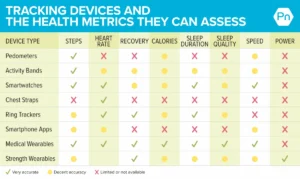
The concept of RPE-Eating might initially draw skepticism, dismissed by some as merely "eating based on feelings." However, this overlooks the robust scientific basis of its predecessor, RPE in fitness. Once met with skepticism, RPE and autoregulation are now widely accepted and studied methods for managing and guiding training, demonstrating accuracy and convenience compared to more complex biometric trackers.
The underlying skill cultivated by RPE-Eating is interoceptive awareness—the conscious perception of internal bodily sensations. This includes signals from organs, muscles, and the nervous system that relate to states like hunger, fullness, pain, and emotional arousal. Developing stronger interoceptive awareness allows individuals to make more informed decisions by tuning into their body’s intrinsic feedback loops.
Just as a lifter learns to interpret the slowing of a barbell as an indicator of approaching muscle failure, an RPE-Eating practitioner learns to interpret the absence of hunger at the end of a meal as a signal of comfortable fullness. Instead of relying on external validation, like glucose monitors to confirm perceived hunger, one learns to trust the internal cues—stomach grumbling, lightheadedness—that correlate with physiological hunger and lowered blood sugar. This internal calibration is not only scientifically valid but also significantly more convenient and accessible than continuous external tracking. While the process may involve initial instances of undereating or overeating, consistent practice refines this critical skill, leading to greater accuracy and self-trust over time.
Potential Challenges and the "Off-Ramp" Strategy
Despite its benefits, RPE-Eating is a tool with specific applications and inherent challenges. It demands a significant level of attention, requiring individuals to consistently engage with their physical and emotional sensations and reflect on them. This introspective effort can be demanding, particularly for those with busy lifestyles, such as parents of young children, or professionals whose work schedules necessitate eating on the go. For these individuals, the luxury of a leisurely, mindful meal may be rare.
In such cases, the flexibility of RPE-Eating becomes paramount. It can be integrated selectively—perhaps practiced during an occasional quiet lunch break, or by focusing solely on cultivating awareness of hunger and fullness cues without attempting to change anything else immediately. The tool is designed to serve the individual, not to impose another rigid system.
Crucially, RPE-Eating offers an invaluable "off-ramp" for those seeking to transition away from long-term, rigid macro tracking. Tracking, while initially educational about nutrition, is rarely a sustainable lifelong practice. The fear of stopping, rooted in a perceived loss of control, often drives individuals back to tracking. RPE-Eating provides a structured bridge, helping to loosen the grip of external cues—be it macro targets or the ingrained habit of "cleaning one’s plate"—and re-establish trust in internal bodily signals. While it may not eliminate all anxieties associated with changing deeply ingrained eating patterns, it provides a supportive framework and a common language to approach eating with reduced fear, less stress, and a significantly increased sense of confidence. The ultimate objective, as articulated by Dr. Fundaro, is to empower individuals with the innate knowledge that they are nourishing themselves effectively, entirely independent of any external food tracker.