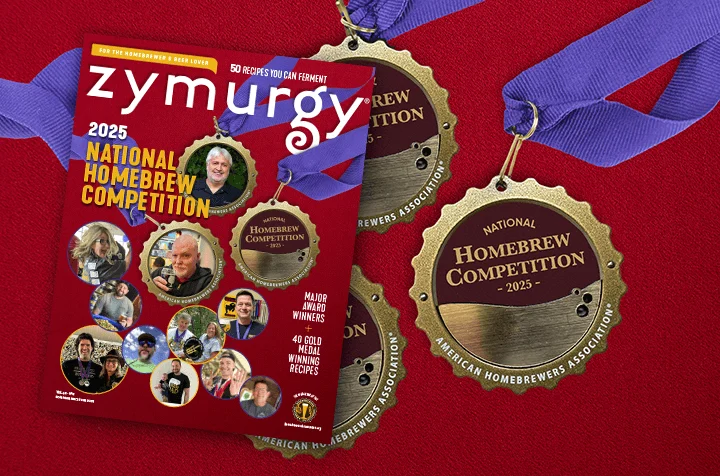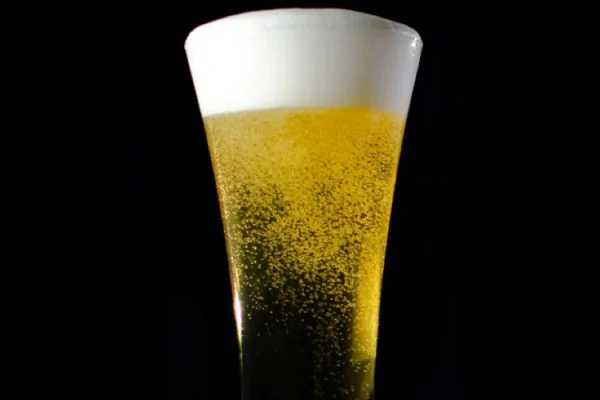

The intersection of historical brewing traditions and modern homebrewing ingenuity was on full display at the prestigious 2023 National Homebrew Competition, where a meticulously crafted California Common-style hybrid beer captured the imagination of judges and earned a coveted bronze medal in the Amber American Beer category. Developed by Bob Rouse, an active member of the DC Homebrewers and a resident of College Park, Maryland, the award-winning recipe represents the culmination of years of iterative brewing, careful water chemistry adjustment, and a deep-seated appreciation for one of American craft beer’s most enduring pioneers: Anchor Steam.
For Rouse, the journey toward national recognition began decades ago when the iconic San Francisco-born brew served as a formative gateway into the world of craft beer. Captivated by its unique flavor profile and intrigued by its official classification as a "hybrid" style by the Beer Judge Certification Program (BJCP)—a designation that bridges the gap between traditional warm-fermenting ale yeasts and cold-fermenting lager strains—Rouse set out to engineer his own definitive interpretation. Over the years, this iterative brewing project evolved from an experimental home experiment into his enduring house beer, eventually refined to a standard of excellence that impressed a panel of expert judges on the national stage.
The Craft Brewing Landscape and the Allure of Hybrid Beers
To understand the significance of Rouse’s recipe, one must examine the broader context of the American craft beer movement and the specific nuances of the California Common style. Historically, "steam beer" emerged during the California Gold Rush, brewed in un-air-conditioned San Francisco facilities where cool fog rolling in from the Pacific Ocean naturally chilled the fermenting wort. Brewers utilized hardy lager strains that adapted remarkably well to warmer, ale-like fermentation temperatures. This marriage of brewing techniques produced a crisp, refreshing, yet robustly flavored beer characterized by rustic grain notes, subtle fruitiness, and a distinct herbal or woody hop profile.
In contemporary brewing circles, replicating or innovating within this hybrid category requires a delicate balance of science and artistry. The BJCP guidelines for Amber American Beer and California Common beers demand strict adherence to specific parameters regarding color, bitterness, and attenuation. Rouse’s award-winning iteration achieves this delicate balance, registering an Original Gravity (OG) of 1.055 (13.5°P) and a Final Gravity (FG) of 1.017 (4.2°P), culminating in a highly approachable Alcohol by Volume (ABV) of 5.1 percent. Furthermore, the recipe boasts a measured bitterness of 42 International Bittering Units (IBUs) and a rich, deep amber color rated at 10.4 SRM (Standard Reference Method), ensuring visual appeal that matches its complex sensory profile.
Comprehensive Technical Specifications and Water Chemistry
Achieving competition-level consistency in homebrewing requires rigorous control over every variable, starting with water composition. Rouse’s formulation utilizes 10 gallons (37.9 liters) of Reverse Osmosis (RO) water, meticulously treated with precise mineral additions to accentuate the malt backbone and hop bitterness. The treatment profile includes 6.1 grams of gypsum, 8.3 grams of calcium chloride, 4.1 grams of Epsom salts, and 2 grams of baking soda. This calculated addition yields a mineral profile boasting approximately 96 parts per million (ppm) of Calcium (Ca), 10 ppm of Magnesium (Mg), 17 ppm of Sodium (Na), 132 ppm of Sulfate (SO4), and 105 ppm of Chloride (Cl), striking a harmonious balance between malt roundness and crisp hop snap.
The grist profile is engineered for a target system efficiency of 67 percent, yielding a standard 5-U.S.-gallon (18.93-liter) batch size. While the specific base malts and specialty adjuncts provide the foundational fermentables, the brewing process relies heavily on precise thermal management. Brewers executing the all-grain method begin by mashing in at 151°F (66°C) using 4.6 gallons of treated water heated to 161°F (72°C), allowing for a 60-minute saccharification rest. Subsequently, the mash temperature is ramped up to 168°F (76°C) and held for 10 minutes before a final mash-out at 175°F (79°C).
Following the sparge, brewers collect approximately 7.5 gallons (28.5 liters) of wort into the kettle for a 60-minute boil. Clarification is aided by the addition of Irish moss precisely 15 minutes before the end of the boil. Post-boil procedures emphasize rapid cooling and oxygenation; after flameout, the wort undergoes a 20-minute whirlpool, is chilled to 62°F (17°C), thoroughly oxygenated, and pitched with yeast.

Fermentation Dynamics and Yeast Selection
One of the defining characteristics of Rouse’s recipe is its flexibility regarding yeast selection, accommodating both traditional hybrid lager strains and clean, neutral ale strains without compromising the integrity of the finished product. Brewers can opt for a hybrid lager strain such as White Labs WLP810 San Francisco Lager Yeast, Wyeast 2112 California Lager Yeast, or SafAle S-23 Lager Yeast. Alternatively, the recipe performs exceptionally well with clean, neutral ale strains like SafAle US-05, American Ale, or California Ale Yeast.
The fermentation schedule is carefully tailored to the chosen yeast category. When utilizing an ale yeast, primary fermentation is conducted at 68°F (20°C) for one week, followed by a temperature increase to 70°F (21°C) until the final gravity is stably reached. Conversely, when employing a hybrid lager yeast, primary fermentation initiates at the cooler temperature of 62°F (17°C) for one week before ramping up to 70°F (21°C) to ensure complete attenuation.
Following primary fermentation, the beer undergoes a three-day dry-hop phase before being racked to a secondary vessel. Cold conditioning for one week at 45°F (7°C) follows, resulting in a brilliantly clear, polished product ready for kegging or bottling.
Adaptability for Intermediate Brewers: The Partial Mash Alternative
Recognizing that all-grain brewing systems require dedicated equipment and space that not all enthusiasts possess, the recipe also incorporates a fully tested partial-mash version. This adaptation substitutes 6 pounds (2.72 kilograms) of pale malt extract syrup for the Vienna malt while omitting the dextrin malt entirely.
To execute the partial-mash method, brewers steep the remaining specialty grains in 155°F (68°C) untreated RO water for 30 minutes, subsequently draining and discarding the spent grains. The extract is then dissolved into the sweet wort, topped off to the desired pre-boil volume, and processed through the standard boiling, hopping, and fermentation protocols. This ensures that intermediate brewers utilizing stovetop setups can achieve comparable sensory results to their all-grain counterparts.
Industry Implications and the Growth of the National Homebrew Competition
The success of Rouse’s recipe at the 2023 National Homebrew Competition underscores the evolving sophistication of the North American amateur brewing community. Organized annually by the American Homebrewer Association (AHA), the competition serves as the premier benchmark for non-commercial brewing excellence, drawing thousands of entries across dozens of rigorously judged categories. Winning a medal in such a competitive environment validates not only individual recipe formulation but also the rigorous application of brewing science.
Industry analysts note that innovations perfected within the homebrewing community frequently migrate into commercial craft breweries, influencing market trends and consumer preferences. As craft beer enthusiasts increasingly seek styles that offer historical depth combined with modern drinkability, hybrid beers like Rouse’s award-winning Amber American creation demonstrate the enduring vitality of the craft. By openly sharing these technical specifications, the homebrewing community continues to foster an environment of collaborative learning, ensuring that the rich tradition of American brewing innovation remains vibrant for generations to come.