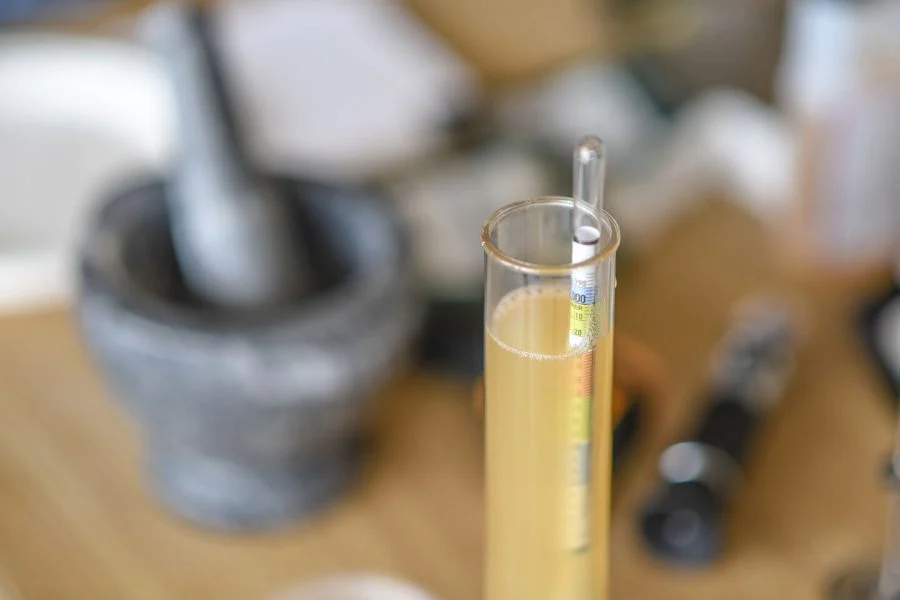

Chuck Beckman of Gilbert, Arizona, representing the Arizona Society of Homebrewers, has achieved a distinguished milestone in the amateur brewing community by capturing a gold medal in Category 5: Pale Malty European Beer at the final round of the 2026 National Homebrew Competition. Beckman’s meticulously crafted lager triumphed over a highly competitive field of 96 entries within the category, showcasing a dedication to traditional brewing techniques and rigorous recipe formulation that ultimately won over the judging panel.
Background and Context of the National Homebrew Competition
The National Homebrew Competition, organized annually by the American Homebrewers Association (AHA), stands as the largest and most prestigious amateur brewing competition in the world. Every year, thousands of entries from across the globe undergo rigorous evaluation by certified beer judges. Beers are judged blindly against established style guidelines, where exact measurements of aroma, appearance, flavor, and mouthfeel are meticulously analyzed.
Winning a medal in the final round of this competition is widely considered one of the highest honors an amateur brewer can achieve. For regional clubs like the Arizona Society of Homebrewers, such accolades validate the advanced level of technical proficiency, water chemistry understanding, and fermentation management practiced by their members. Beckman’s victory in the Pale Malty European Beer category highlights the intricate balance required to brew styles like the Munich Helles, where flaws cannot be masked by heavy hopping or adjuncts, placing the brewer’s absolute control under the microscope.
Chronology and Brewing Methodology
Beckman’s award-winning brew required precise execution from grain to glass. Designing a world-class pale malty European lager demands adherence to a strict timeline and process parameters. According to Beckman’s competition notes, the foundation of the beer relies on a carefully selected grain bill featuring 9 pounds (4.08 kg) of Root Shoot Genie Pale 2-row, supplemented by 8 ounces (227 g) of Root Shoot Genie Vienna and 8 ounces (227 g) of Weyermann Carahell.
The brewing process utilizes a complex step mash to optimize enzyme activity and extract the delicate malt flavors characteristic of the style. Brewers targeting this profile typically aim for a step mash with rests at 131°F (55°C) for 10 minutes, 147°F (64°C) for 30 minutes, 162°F (72°C) for 30 minutes, followed by a mashout at 170°F (77°C) for 10 minutes. Beckman maintained a target Original Gravity (O.G.) of 1.045 (11.2°P) to 1.047 (11.7°P) and a Final Gravity (F.G.) of 1.012 (3°P) down to 1.011 (2.7°P).

Water profile adjustments played a critical role in achieving the soft, rounded mouthfeel typical of traditional European lagers. Beckman adjusted his brewing liquor to maintain calcium at 52 ppm, magnesium at 0 ppm, sodium at 36 ppm, chloride at 99 ppm, sulfate at 45 ppm, and bicarbonate at 24 ppm. Furthermore, Beckman incorporated 32 ounces (946 mL) of homemade sauergut—a natural sour wort containing approximately 0.68% lactic acid—both into the mash and at the end of the boil, successfully acidifying the mash to a pH of 5.30 and the post-boil wort to 5.31.
Ingredient Specifications and Hopping Schedule
Unlike hop-forward American styles, European pale malty beers rely on subtle noble hop additions to provide balance without overwhelming the malt canvas. Beckman utilized Liberty hops (8% alpha acids) at a rate of 0.7 ounces (20 g) for a 60-minute bittering addition. For aroma and flavor, Spalt Select hops (3.5% alpha acids) were added at 1 ounce (28 g) with 10 minutes remaining in the boil, alongside a small whirlpool addition of 0.22 ounces (6 g) for 10 minutes. Irish moss (0.5 tsp) was included at 15 minutes to aid in wort clarity.
Fermentation was driven by a robust 2-liter yeast starter containing approximately 379 billion cells of White Labs WLP 860 Munich Helles Lager Yeast. Primary fermentation was executed cleanly at cooler temperatures ranging between 50°F and 52°F (10°C to 11°C). Following primary fermentation, the beer underwent a diacetyl rest at 64°F (18°C) for three days to eliminate undesirable buttery off-flavors before being cold-crashed, packaged, carbonated to 2.8 volumes, and aged for four weeks.
Analysis of Implications and Expert Feedback
While Beckman secured the gold medal out of 96 formidable entries, competitive brewing is an iterative process of continuous refinement. Feedback from the National Homebrew Competition judging panel provided nuanced constructive criticism, noting a desire for even greater malt prominence in both the aroma and flavor profile.
In response to the judges’ commentary, Beckman offered tactical advice for fellow brewers attempting to replicate or improve upon the recipe. He suggested that substituting light Munich malt in place of the Vienna malt, while simultaneously raising its overall percentage by two to three points, could bridge the gap toward achieving the ultimate traditional Munich Helles expression.
The success of homebrewers like Chuck Beckman underscores the vibrant culture of American amateur brewing, where science, culinary art, and historical preservation intersect. As regional clubs continue to foster high-level technical education among their members, victories in national competitions serve as both a personal triumph for the creator and a testament to the sophisticated standards driving modern homebrewing forward.