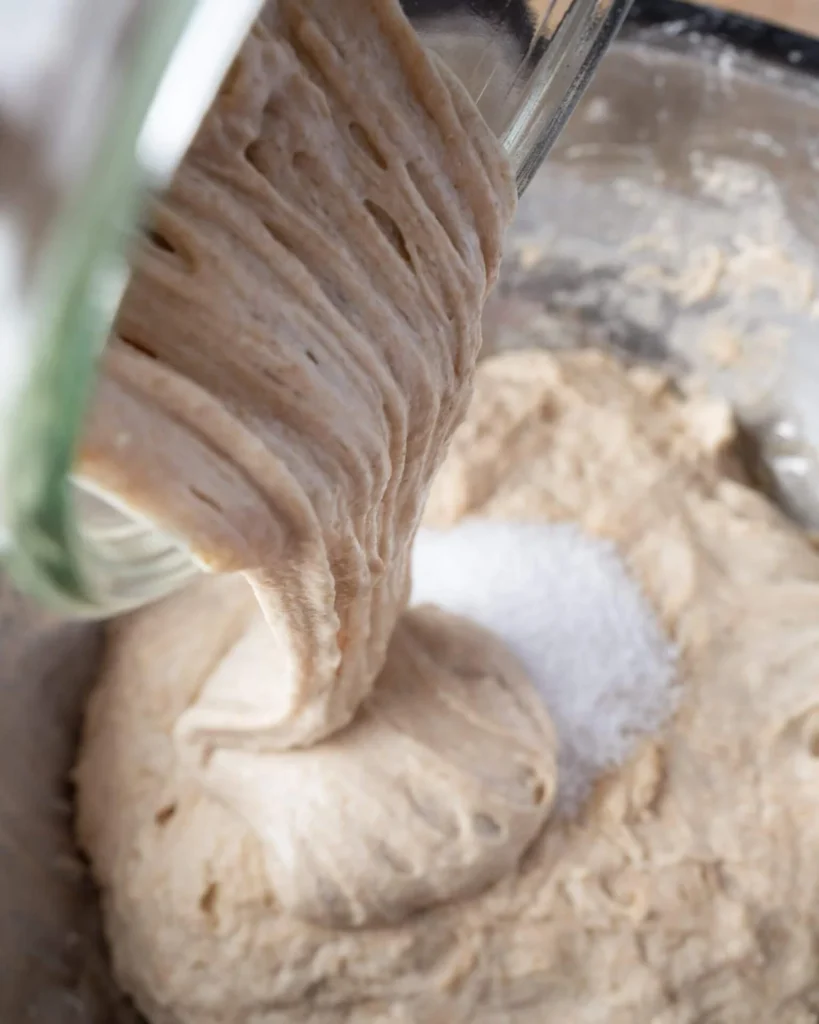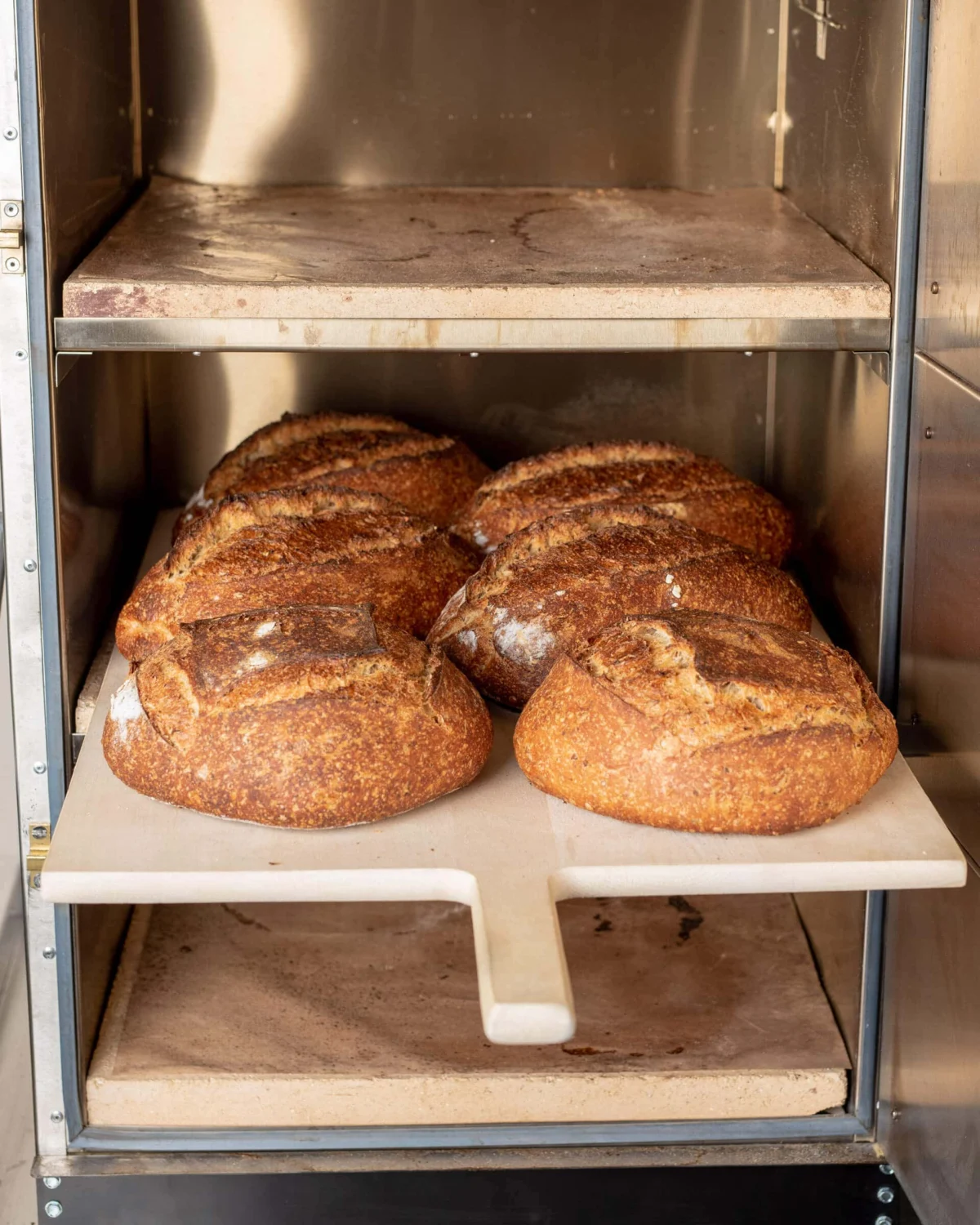

The transition from standard residential kitchen appliances to commercial-grade baking equipment represents a significant milestone for dedicated home bread artisans. As micro-bakeries proliferate and consumer demand for artisanal sourdough surges, home bakers frequently encounter the physical limitations of conventional kitchen ovens. Traditional domestic ovens typically accommodate only one or two loaves at a time, creating a bottleneck in production workflows. To overcome these constraints, many advanced home bakers and micro-entrepreneurs are investing in specialized multi-deck brick ovens, most notably the Belgian-engineered Rofco series. This comprehensive operational shift requires not only capital investment in heavy-duty machinery but also a thorough recalibration of thermal management, dough hydration strategies, and spatial loading logistics.
Evolution from Domestic Ovens to Commercial-Grade Deck Units
The journey toward high-capacity home baking is rarely instantaneous. It usually begins with the gradual realization that standard domestic ovens—designed primarily for roasting meats and baking thin pastries—fail to provide the steady, sustained thermal mass required for professional-quality crust development and oven spring. In a traditional kitchen oven, baking multiple loaves simultaneously often results in uneven heat distribution, overcrowding, and compromised steam retention.
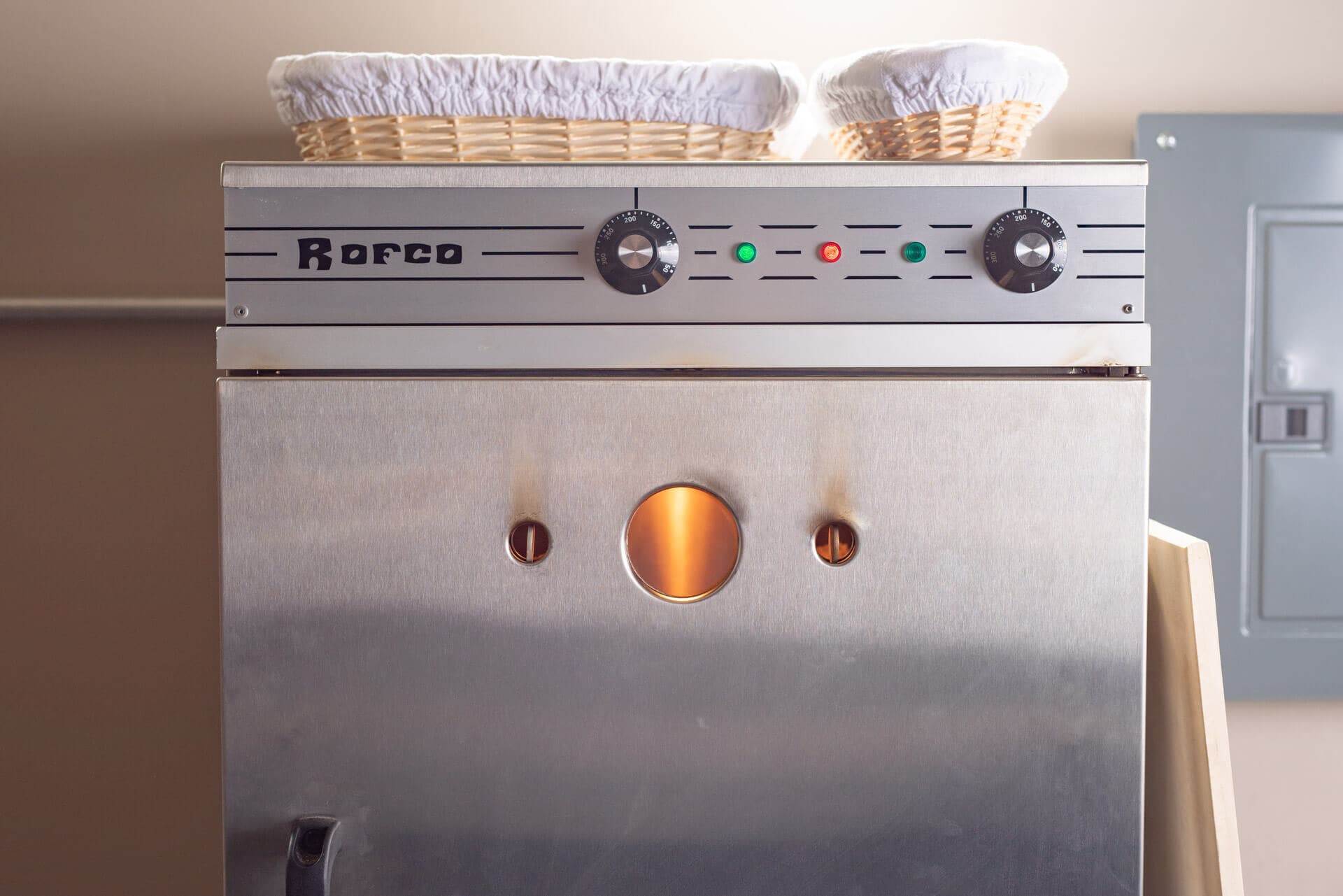
For bakers aiming to scale production from two loaves to a formidable six-to-eight loaves per session, efficiency becomes paramount. Upgrading to a dedicated deck oven allows artisans to redirect their cognitive bandwidth away from logistical constraints and back toward the foundational elements of bread-making: flavor development, extended fermentation schedules, precise dough handling, and expert shaping techniques. This equipment upgrade serves as a natural bridge between hobbyist baking and commercial enterprise, supporting operations ranging from farmers’ market vendors to community-supported agriculture (CSA) bakers.
Engineering and Technical Specifications of the Rofco B40
Manufactured in Belgium, the Rofco bread oven is a specialized, compact brick oven engineered specifically for artisanal bread production. Among its various configurations, the flagship B40 model features three square baking decks, offering substantial surface area within a relatively small footprint. Unlike conventional convection ovens that rely on forced air, the Rofco utilizes thick chamotte deck stones (refractory bricks measuring approximately 1-3/8 inches in thickness) to store and radiate intense thermal energy.
These refractory stones retain heat exceptionally well, ensuring rapid thermal recovery after the oven door is opened and cold dough is loaded. This capability facilitates seamless, back-to-back baking cycles with minimal downtime between batches. Furthermore, the unit is constructed with a sealed baking chamber, preventing the immediate escape of ambient moisture during the critical initial phases of the bake.
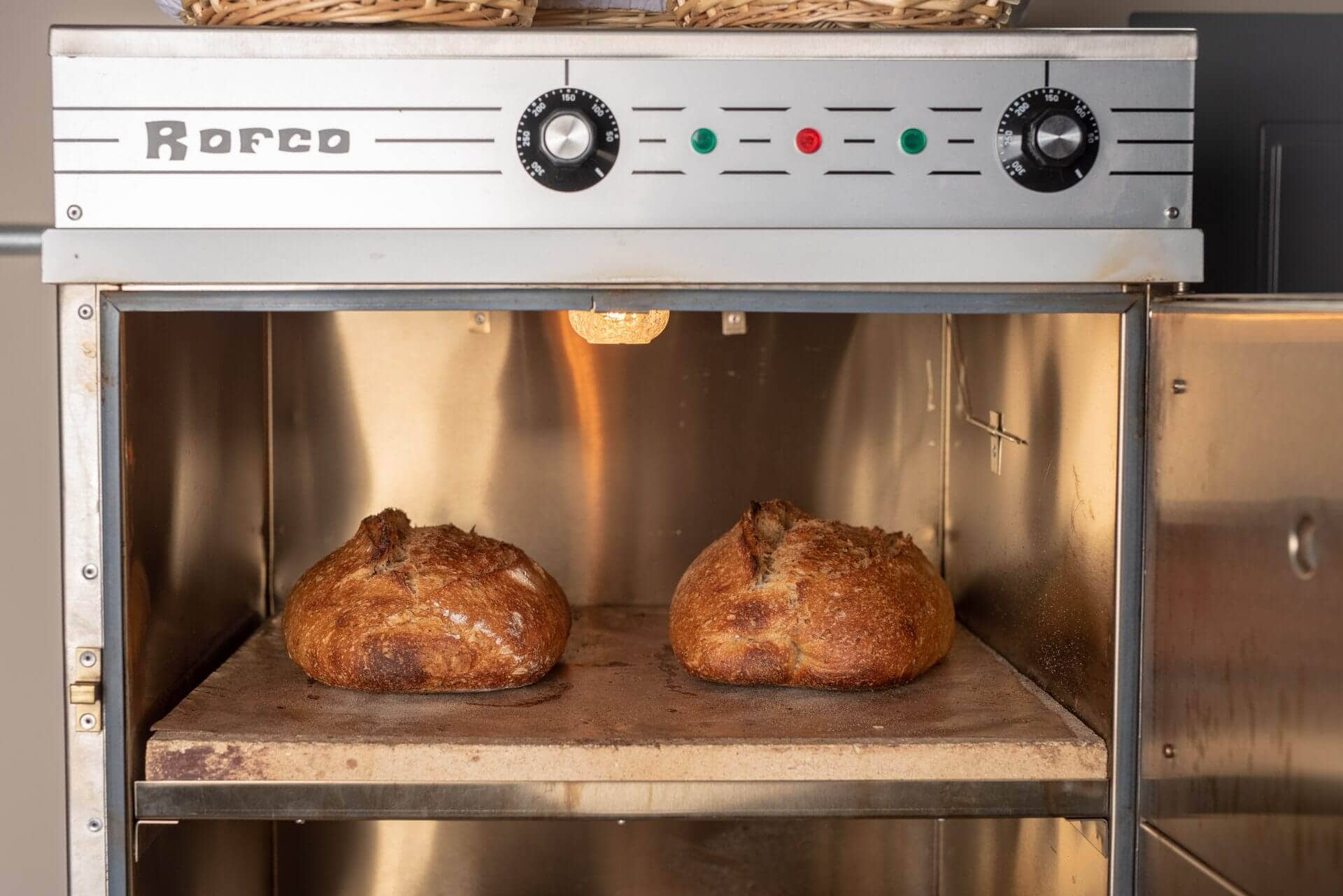
From an infrastructural standpoint, the Rofco operates on standard 220V AC single-phase electrical power, necessitating a dedicated circuit and a compatible receptacle (such as a 6-20R configuration) installed by a licensed electrician. Despite generating high internal temperatures reaching up to 240°C, the oven’s exterior insulation minimizes radiant heat emission, allowing it to be positioned safely near residential kitchen walls or cabinetry.
Spatial Logistics and Deck Management
Operating a multi-deck stone oven requires meticulous spatial planning, often likened to a game of physical Tetris. Each deck within the Rofco B40 measures 18.9 inches by 18.9 inches, imposing strict geometrical limits on how dough can be arranged to ensure uniform heat circulation and prevent adjacent loaves from fusing together during the oven spring.
Bakers typically employ standardized layouts depending on loaf weight and format. For standard 900-gram batards, a two-loaf configuration per deck is the industry standard for home deployment. Alternatively, bakers handling 800-gram boules or four smaller 700-gram loaves must adjust their placement matrices to maintain proper thermal clearance. The inclusion of square steel trays further enhances versatility, enabling the production of smaller pastries, buns, and rectangular sheet pizzas while containing spills and simplifying the loading process.

Thermal Regimes and Steam Injection Protocols
Achieving optimal oven spring and a blistered, glossy crust depends heavily on managing moisture within the sealed baking chamber during the first twenty minutes of the bake. Because the Rofco lacks an automated, push-button steam injection system found in large-scale industrial deck ovens, operators must rely on manual intervention methods.
The primary method involves utilizing a commercial-grade high-pressure sprayer or electric spray bottle. Operators pressurize the unit to deliver a fine mist, injecting water into the lower, middle, and upper decks for approximately 10 to 12 seconds per cycle immediately after loading the dough. Care must be taken to avoid direct contact with the glass-enclosed interior lighting fixtures, as thermal shock can cause the glass to shatter.
An alternative steaming mechanism involves the use of optional steel steam pods—long, rectangular boxes placed on the flanks of each deck that are preheated alongside the stones. Water or ice cubes introduced into these pods flash-boil into steam, filling the chamber rapidly. However, because these pods occupy valuable lateral space on the baking decks, many high-volume bakers prefer the precision and flexibility of external sprayers.

Once the initial crust has set—typically after twenty minutes at a reduced temperature of 150°C—the steam must be vented to allow the exterior to dry and caramelize. This is achieved by briefly opening the access door and subsequently rotating the circular ventilation ports integrated into the door assembly to their open positions, followed by a final baking phase at elevated temperatures.
Chronological Breakdown of a Standard Rofco Baking Cycle
Executing a successful bake in a Rofco oven requires a disciplined, time-tested chronological protocol. While specific formulas dictate minor adjustments, the standard operating procedure for a full three-deck batch involves the following sequence:
- Thermal Preheating: Ensure the internal chamber is completely clear of synthetic sheets or foreign objects. Set both the top and bottom heating elements to 240°C. Preheat the oven for a minimum of 90 minutes to ensure the chamotte stones are thoroughly saturated with thermal energy.
- Loading and Steam Phase: Position a specialized wooden peel (such as an 18-inch-wide American Metalcraft peel matching the deck dimensions) adjacent to the oven. Arrange silicone baking sheets in an assembly line, invert proofed dough onto the sheets, score the surfaces, and systematically slide them onto the respective decks. Close the door, inject high-pressure mist, and bake at 150°C for 20 minutes with the vents sealed.
- Steam Venting Phase: Carefully crack the oven door to release built-up pressure and steam, then swivel open the circular door vents. Adjust the thermostat to 220°C and continue baking for 10 minutes to promote crust coloration.
- Final Concluding Bake: Lower the temperature back to 150°C for a final 20 to 30 minutes, reshuffling loaves between decks if uneven browning is observed. Extract the finished loaves and transfer them to wire cooling racks.
Essential Auxiliary Equipment and Workflow Optimization
Transitioning to a high-capacity deck oven necessitates supplementary gear to maintain workflow efficiency and worker safety. Key investments include:
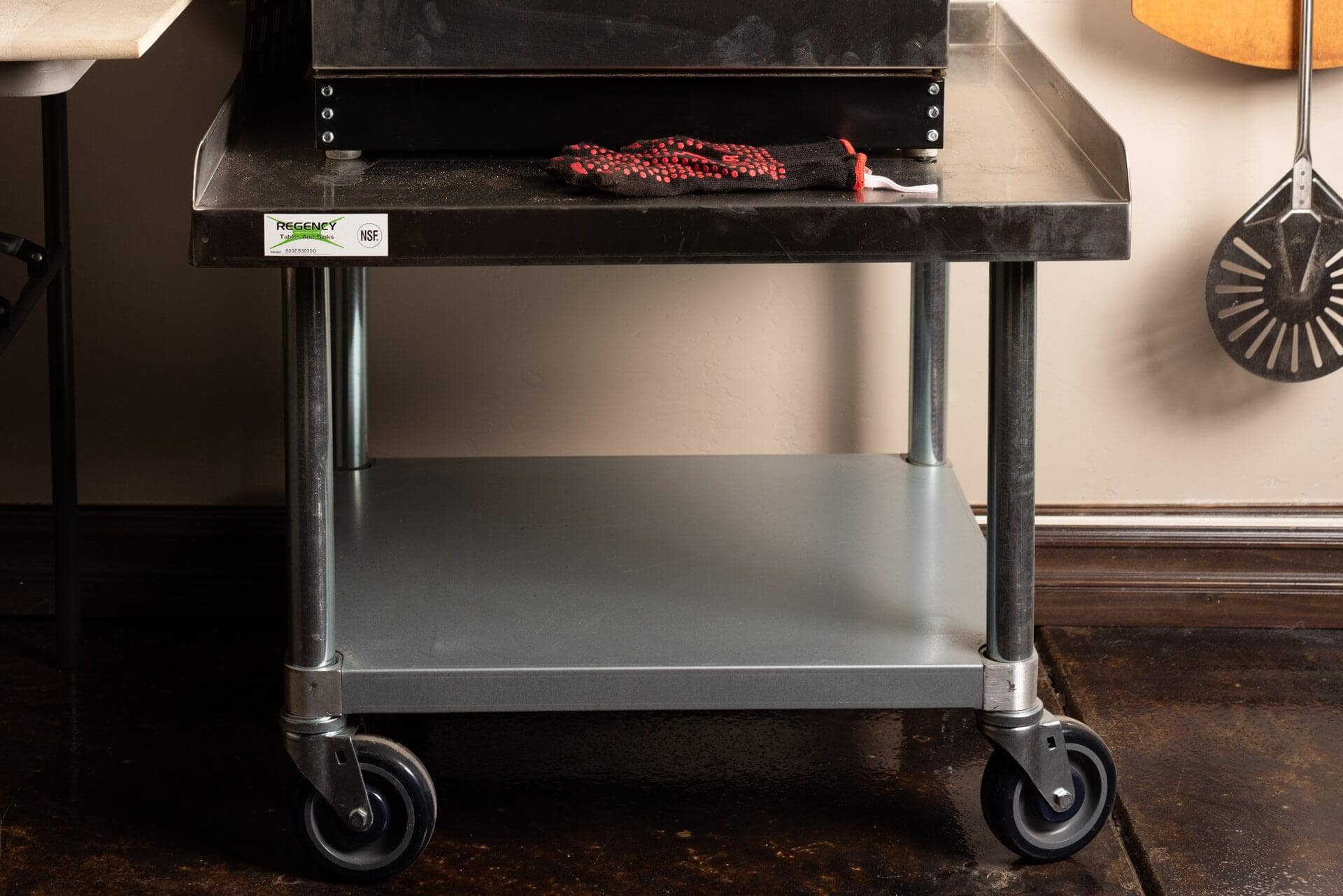
- Heavy-Duty Equipment Stands: Due to its substantial weight and low profile, elevating the Rofco is critical for ergonomic loading. Custom-cut stainless steel stands (such as 16-gauge units equipped with locking swivel casters) raise the baking surface to a comfortable working height while providing mobility for routine kitchen maintenance.
- Professional Wooden Peels: An 18-inch-wide wooden peel facilitates the rapid transfer of silicone-backed dough sheets directly onto the hot stone decks without snagging or thermal loss.
- Post-Baking Maintenance Protocols: Bakers frequently utilize the residual heat of the cooling oven at the end of a session to rapidly dry out damp canvas bannetons and proofing baskets, mitigating mold risks and preserving equipment longevity.
Industry Implications and Economic Analysis of Scaling Up
The adoption of specialized equipment like the Rofco oven reflects a broader structural trend within the contemporary artisanal baking sector: the rise of the scaled home bakery and the micro-bakery movement. By bridging the gap between domestic appliances and massive commercial rack ovens, equipment of this class enables independent operators to increase output exponentially without incurring the commercial real estate overhead traditionally required for a retail bakery storefront.
Industry analysts note that direct-to-consumer micro-bakeries operating out of residential or semi-commercial spaces have demonstrated high resilience, driven by consumer preference for hyper-local, high-hydration sourdough products. However, transitioning to high-capacity deck baking is not without operational challenges. Initial setup costs—including electrical infrastructure upgrades, specialized stands, and high-temperature accessories—require careful financial planning. Furthermore, the learning curve associated with managing thermal recovery times and manual steam injection can temporarily impact product consistency during the initial transition period.
Ultimately, mastering a dedicated deck oven like the Rofco represents a transformative step for the dedicated bread baker. Through rigorous adherence to thermal preheating schedules, precise spatial management, and disciplined moisture control, operators can achieve professional-grade results, establishing a sustainable foundation for expanded artisanal production.