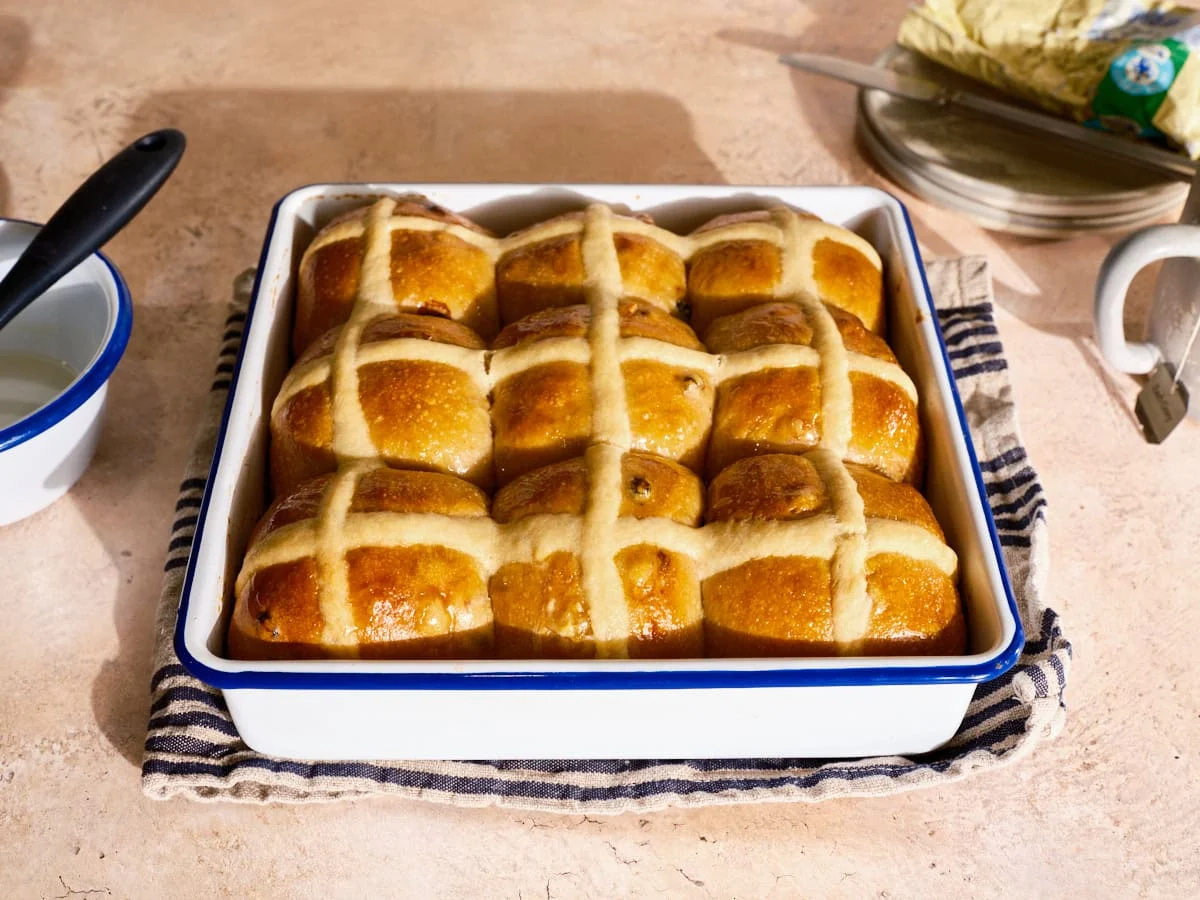

The transition from winter baking to spring seasonal traditions often brings a renewed focus on artisanal bread-making techniques that elevate classic holiday staples. Among these, hot cross buns—traditionally consumed on Good Friday to mark the culmination of Lent—have undergone a significant culinary evolution. Modern home bakers and professional artisans alike are increasingly moving away from commercial instant yeasts, opting instead for natural wild fermentation combined with Asian-inspired techniques to achieve superior texture and flavor profiles.
This shift toward sourdough integration addresses a long-standing compromise in traditional bread production. While commercial yeast offers rapid leavening speeds, it frequently sacrifices the complex, nuanced flavor profiles that can only be achieved through prolonged fermentation. By incorporating a sweet sourdough levain and a cooked flour paste known as tangzhong, bakers are redefining what holiday enrichment breads can achieve in terms of moisture retention, crumb softness, and shelf-life extension.
The Science of Tangzhong and Natural Fermentation
At the core of this advanced recipe is the tangzhong method, a technique originally popularized in Japanese baking (known as yudane in its direct application). By cooking a portion of the recipe’s flour and milk together over medium-low heat until it forms a cohesive paste, starches are gelatinized. This process enables the flour to absorb and retain significantly more liquid—both water and dairy—than standard mixing methods allow.
When integrated into an enriched sourdough dough containing butter, eggs, and sugar, the tangzhong acts as a moisture trap. This prevents the baked goods from drying out rapidly, a common drawback in enriched artisanal breads. Furthermore, the use of a sweet levain—inoculated with a small percentage of superfine sugar—moderates the acetic and lactic acid production of the wild yeast. The result is a remarkably gentle acidity that complements, rather than overpowers, the sweetness of the dried fruit, citrus zest, and finishing simple syrup glaze.
Comprehensive Baking Schedule and Chronology
Executing a successful batch of sourdough hot cross buns requires meticulous timing, particularly due to the heavy enrichment of butter and eggs, which inherently slows down wild yeast activity. Professional baking schedules generally adhere to a multi-stage timeline spanning approximately 24 hours from inception to final product.
The process typically initiates on the preceding evening at approximately 9:00 p.m. with the preparation of the sweet levain and an optional fruit soaker. The levain requires a 12-hour room-temperature fermentation cycle to reach peak aeration and enzymatic activity. Dried fruits, such as Thompson raisins and currants, are simultaneously submerged in water to ensure plumpness upon incorporation into the final dough.
The subsequent morning, operations commence at 8:00 a.m. with the preparation of the tangzhong paste and the portioning of room-temperature unsalted butter. Mixing follows closely at 8:30 a.m., utilizing heavy-duty stand mixers or spiral mixers capable of developing gluten networks in highly enriched doughs. Following bulk fermentation, which includes targeted stretches and folds to build structural integrity, the dough is divided into precise 115-gram units at 1:00 p.m. and shaped into tight spherical rounds.
A subsequent extended proofing phase lasting four to five hours allows the shaped buns to expand within a buttered baking pan. Finally, application of an egg wash, piping of traditional flour-and-water crosses, and baking at alternating temperatures ensure proper crust development and structural set.
Ingredient Specifications and Baker Ratios
Precision remains paramount in artisanal baking, where hydration percentages and ingredient ratios dictate the final structural outcome. The formula is carefully balanced to support the heavy inclusion load while maintaining crumb elasticity.
Total dough weight for a standard professional batch registers at approximately 1,150 grams, yielding nine uniform units of 115 grams each. The pre-fermented flour accounts for roughly 15.5% of the total flour weight, ensuring adequate leavening power without introducing excessive sour notes.
The primary structural components include:
- High-protein white flour (12% to 14% protein content): ~493 grams total (inclusive of tangzhong)
- Whole milk and water: Carefully proportioned to maintain an optimal 31% direct hydration level, excluding dairy liquids
- Enriched fats and proteins: Unsalted butter (14%) and beaten medium eggs (10%)
- Flavor aromatics: Ground cinnamon, allspice, freshly ground nutmeg, along with fresh lemon and orange zest
- Inclusions: Thompson raisins, candied orange peel, and dried currants totaling 25% of the flour weight
The cross mixture relies on a specialized paste composed of white flour, water, orange juice, vegetable oil, and a pinch of salt. This specific formulation prevents the cross from hardening excessively or cracking during high-temperature oven spring.
Broader Culinary Implications and Market Trends
The growing popularity of sourdough hot cross buns reflects a broader consumer movement toward heritage baking techniques and transparency in food preparation. As home cooking enthusiasts invest in advanced kitchen equipment—such as digital scales, high-powered spiral mixers, and precise temperature-control environments—the barrier to entry for complex baking projects has noticeably decreased.
Culinary analysts note that seasonal baking has evolved past mere nostalgia, becoming a medium for technical skill acquisition. Bakers increasingly view holidays not just as calendar events, but as opportunities to apply food science principles—such as starch gelatinization and enzymatic activity management—to domestic cooking.
Furthermore, the adaptability of these formulations allows for modern dietary and flavor modifications. While traditional recipes strictly dictate dried fruits and candied peels, contemporary adaptations frequently incorporate chocolate chips, alternative citrus oils, or regionally sourced spices. This flexibility ensures that historic recipes remain relevant within modern gastronomic landscapes, bridging the gap between centuries-old traditions and contemporary culinary innovation.