
Preserving garden harvests has long been a cornerstone of domestic economy and food security, with government agencies and agricultural extension offices continually refining safety protocols to protect consumers from foodborne pathogens. Among the varied produce harvested in North American home gardens, tomatillos—members of the nightshade family distinguished by their papery husks—occupy a unique culinary niche. While structurally similar to tomatoes, tomatillos require specific handling and processing guidelines to ensure long-term shelf stability and safety. Adhering to the United States Department of Agriculture (USDA) procedures ensures that home canners can safely store whole, plain tomatillos for year-round culinary use.
Background Context and Varied Processing Standards
The history of home canning in the United States is anchored in scientific research conducted by agencies such as the USDA and land-grant universities. These institutions establish baseline guidelines to eliminate risks associated with low-acid foods, notably Clostridium botulinum. While tomatoes have historically received widespread attention in canning literature due to varying acidity levels, tomatillos present a distinct chemical profile. According to the USDA Center for Food Safety and Applied Nutrition’s tables on the approximate pH of foods and food products, tomatillos possess an average pH value of approximately 3.83. This makes them naturally more acidic than many green tomatoes.

Despite their favorable acidity profile, safety mandates established in the USDA Complete Guide to Home Canning require the addition of a standardized acidifier—such as lemon juice or lime juice—during the canning process. This mandatory step serves as an extra margin of safety. Interestingly, unlike the processing procedure for standard tomatoes, home canners are instructed not to peel tomatillos prior to packing them into jars. The fruit remains whole, retaining its structural integrity through the thermal processing phase.
Yield Estimates and Raw Materials Preparation
Successful home canning begins with accurate estimates of raw produce requirements. As a general industry guideline, home cooks and preservationists should anticipate needing approximately 1 kilogram of fresh tomatillos for every 1-liter jar, or roughly 2 pounds of fresh fruit per US quart jar. Because agricultural yields, moisture content, and fruit sizes fluctuate based on growing conditions, soil composition, and regional weather patterns, these figures serve strictly as approximate benchmarks rather than absolute certainties.
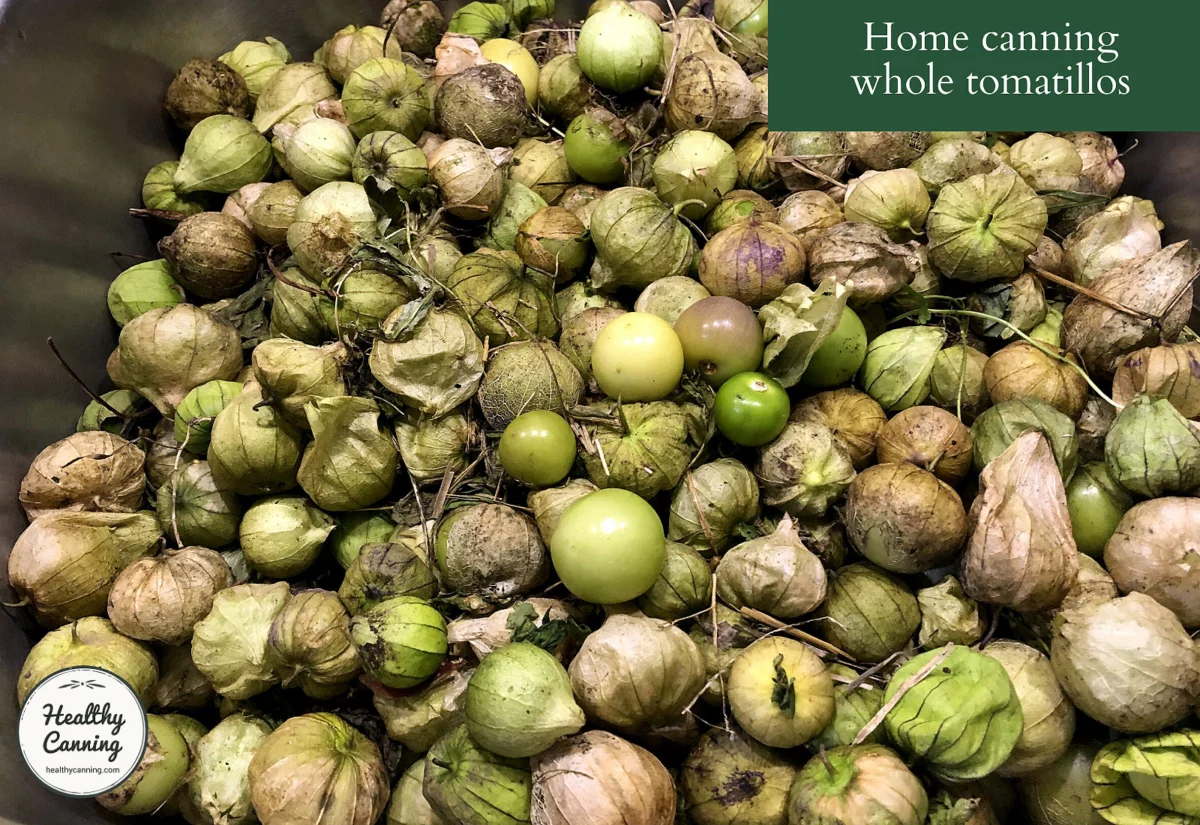
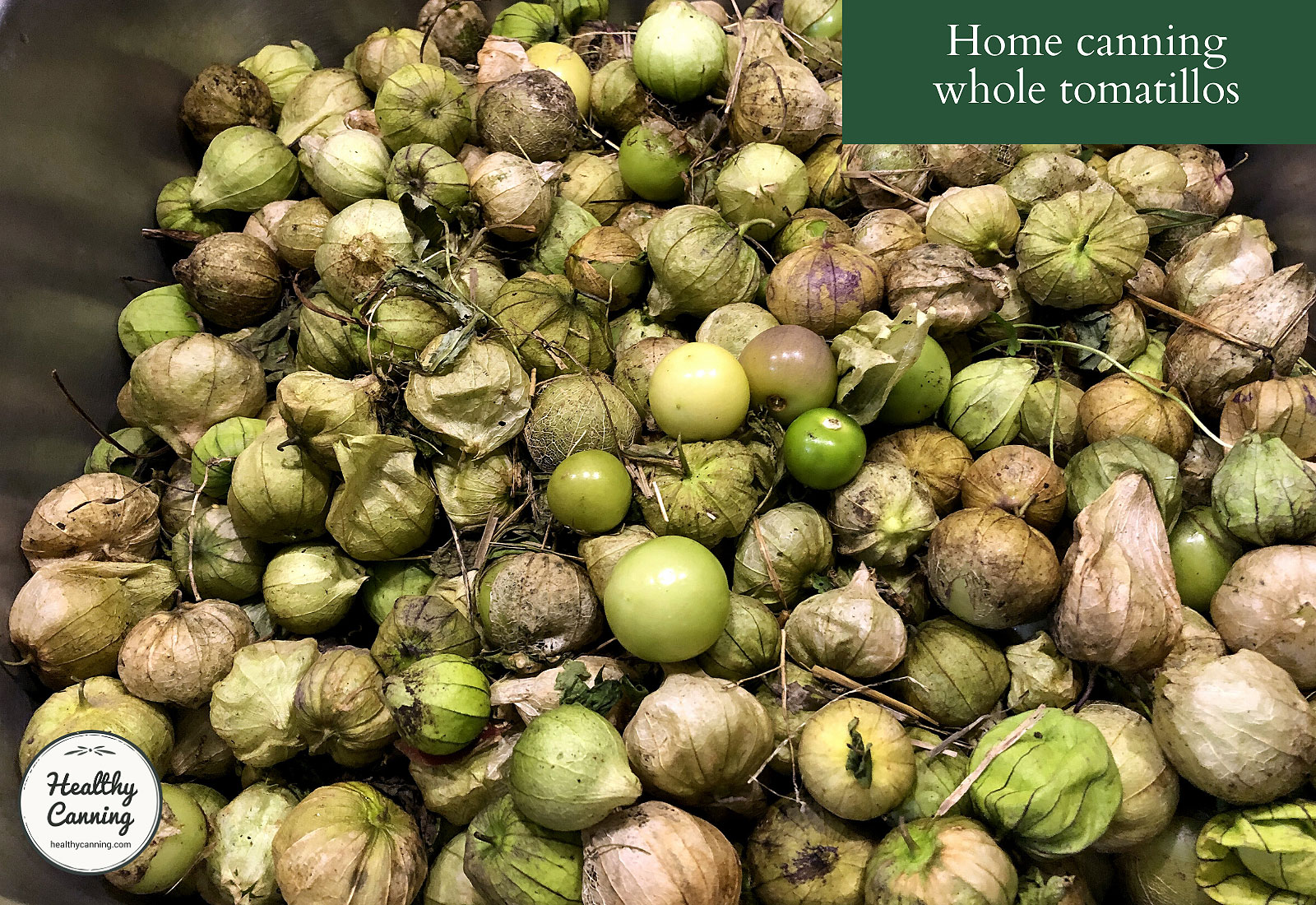
Before initiating the canning sequence, the papery husks must be removed, and the sticky residue often found on the fruit’s outer skin should be thoroughly washed away in clean water. Jars must be meticulously inspected, cleaned, and kept warm to prevent thermal shock when hot food or liquid is introduced.
Step-by-Step Processing Options: Water Bath, Steam, and Pressure Canning
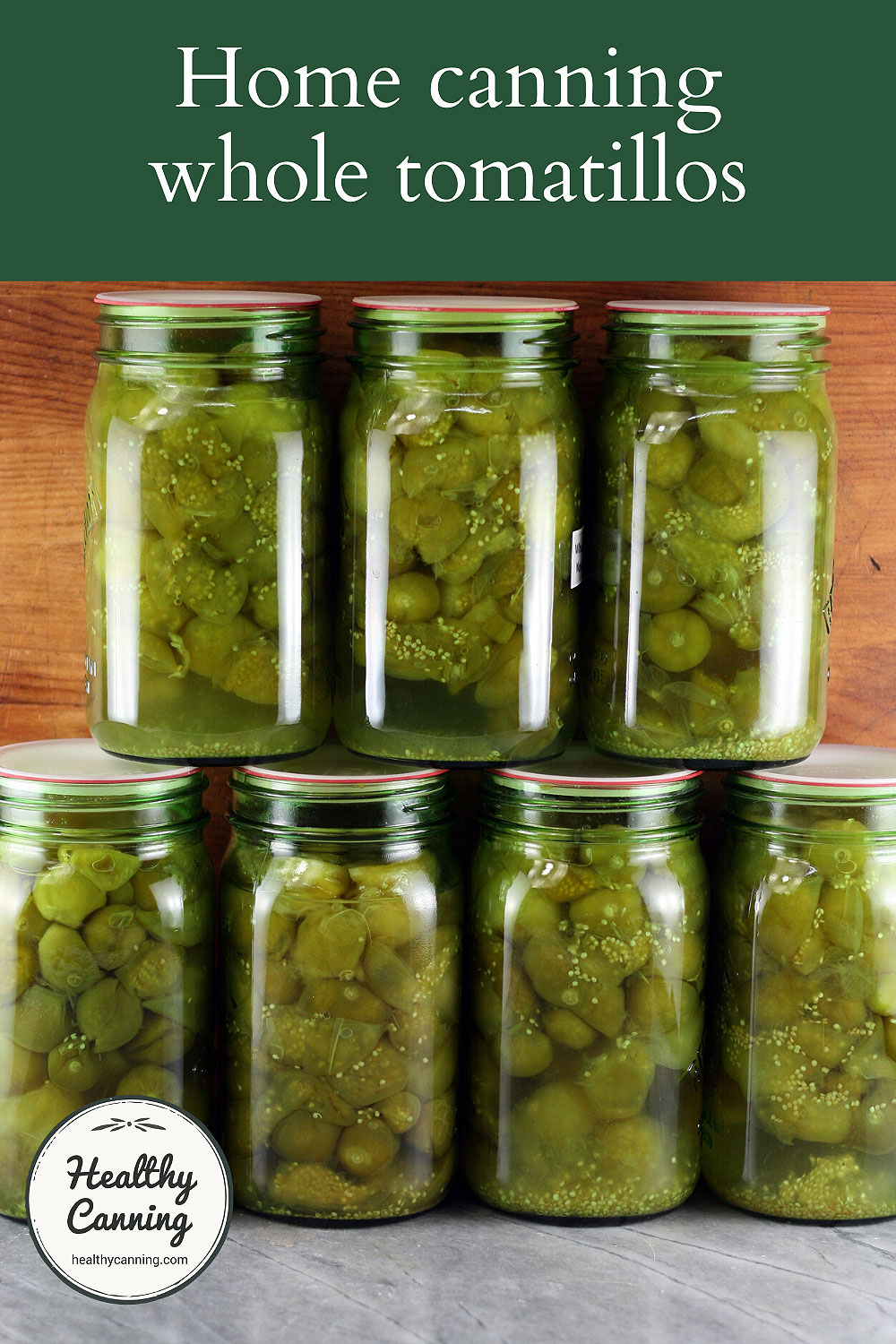
The USDA outlines multiple acceptable processing methods for whole tomatillos, giving home preservers flexibility depending on their equipment inventory. Approved jar sizes include half-liter (1 US pint) and 1-liter (1 US quart) containers, maintaining a consistent headspace of 2 centimeters (0.5 inches).
Water-Bath and Steam Canning Protocols
For traditional water-bath canning or approved steam-canning units, the processing times are standardized based on jar capacity. Half-liter (pint) jars require a processing time of 40 minutes, while 1-liter (quart) jars require 45 minutes. Steam canning serves as a viable, energy-efficient alternative that utilizes water-bath processing times, provided that altitude adjustments do not extend the required processing time beyond 45 minutes. This restriction exists because certain compact steam-canning models run the risk of running dry during extended heating cycles. Furthermore, practitioners operating at elevated altitudes must adjust their processing times or pressure levels to compensate for lower atmospheric pressure, which alters the boiling point of water.
Pressure Canning Parameters
Alternatively, home canners may utilize a pressure canner to expedite the preservation process. The USDA provides distinct pressure-canning schedules categorized by gauge type and geographical elevation. For weighted-gauge systems operating at altitudes between 0 and 300 meters (0 to 1,000 feet), processing options include:

- 15 minutes at 5 pounds of pressure (psi)
- 10 minutes at 10 pounds of pressure (psi)
- 1 minute at 15 pounds of pressure (psi)
For locations situated above 300 meters (1,000 feet), the required pressures increase:
- 15 minutes at 10 psi
- 10 minutes at 15 psi
- Processing at 15 psi for 1 minute is not recommended at higher altitudes.
Agricultural and culinary authorities emphasize a critical caveat regarding pressure canning: the implementation of an approved acid ingredient remains strictly mandatory, regardless of the pressure setting chosen. The pressure-canning schedule is engineered solely to reduce processing time, not to replace the chemical safety margin provided by acidification.
Additives: Acidity and Seasoning Considerations
When preparing the jars, the choice of acidifier impacts the final flavor profile. While lemon juice provides a neutral, reliable acidity, traditional recipes frequently favor lime juice to complement the distinct, tart flavor profile of tomatillos. Culinary experts advise that because lime juice imparts a pronounced taste, home cooks should select it only if they intend for that specific flavor note to dominate their future dishes. Omitting the acidifier entirely is strictly prohibited under food safety guidelines.
Conversely, salt is entirely optional. Included strictly as a sensory seasoning, salt contributes nothing to the microbiological safety of the canned product. Canners seeking to control sodium intake can safely omit salt or substitute it with non-bitter, non-clouding alternatives such as Herbamare Sodium-Free seasoning, which maintains clarity in the jar liquid and avoids altering the preserving chemistry.
Nutritional Profile and Dietary Impact
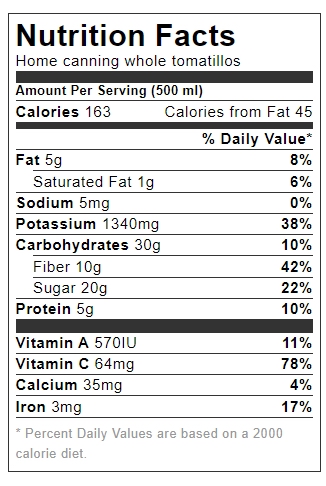
Plain, whole tomatillos canned without added sodium offer a nutrient-dense profile suited for various dietary regimens. A standard half-liter (US pint) serving provides approximately 163 calories. The nutritional breakdown per serving includes roughly 30 grams of carbohydrates, 5 grams of protein, and 5 grams of total fat, of which 1 gram is saturated fat.
Tomatillos are notably rich in dietary fiber, contributing approximately 10 grams per pint jar, alongside 20 grams of natural sugars. Micronutrient analysis highlights significant levels of potassium—averaging 1,340 milligrams per serving—alongside valuable quantities of Vitamin C (64 milligrams), Vitamin A (570 IU), calcium (35 milligrams), and iron (3 milligrams). The sodium content remains negligible at approximately 5 milligrams naturally, prior to any optional seasoning.
Culinary Applications and Expert Recommendations
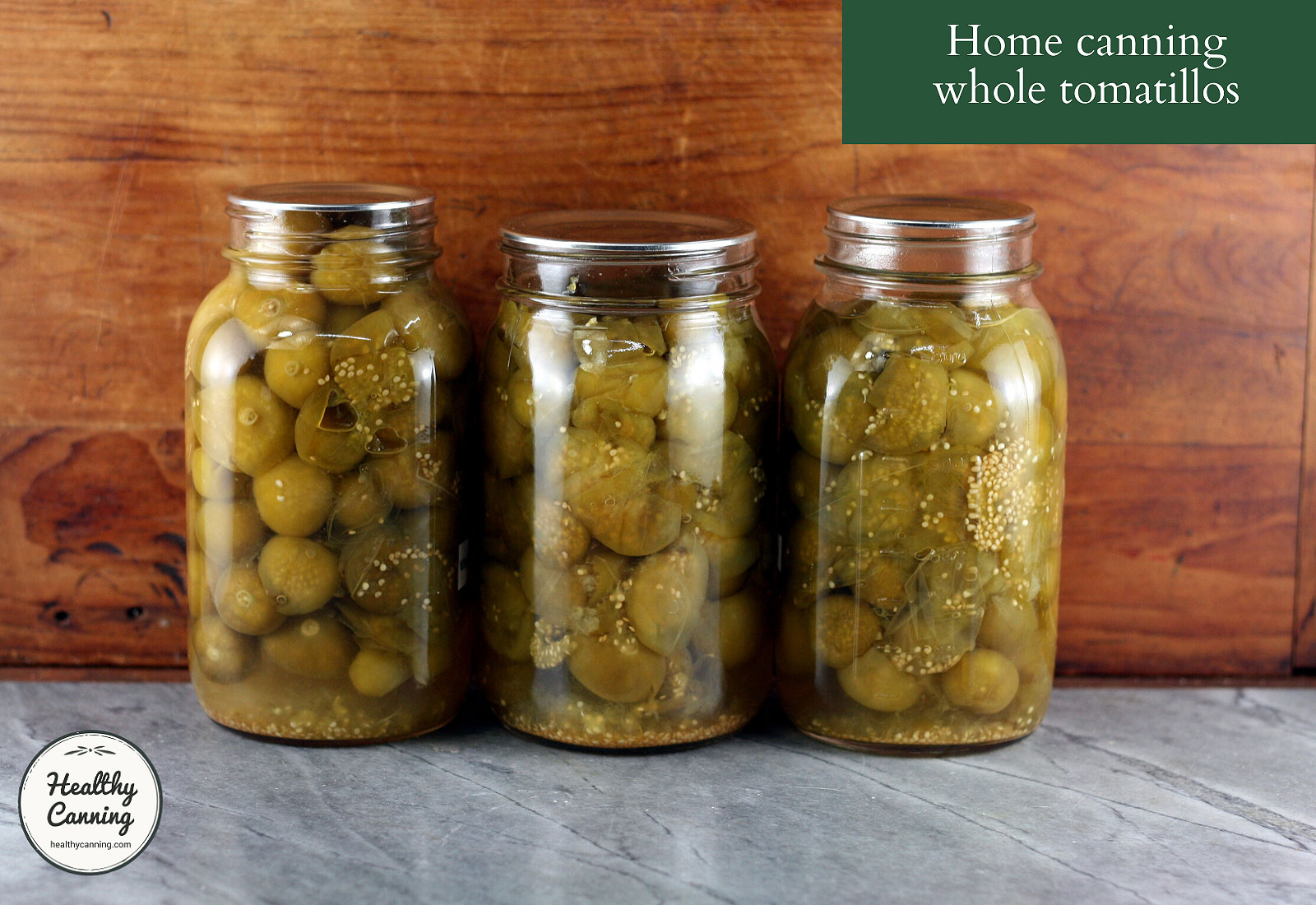
Because the thermal processing required for home canning inherently cooks the fruit, whole canned tomatillos emerge from the jar fully softened and ready for culinary integration. Consequently, they are best suited for cooked applications rather than raw preparations.
Prominent culinary authorities have documented various uses for preserved tomatillos. Noted food writer Martha Rose Shulman has observed in culinary publications that canned tomatillos serve as a convenient 1-to-1 substitute for fresh fruit in cooked preparations, noting that an 11-ounce can effectively replaces one pound of fresh tomatillos. Because commercial or home-canned varieties have already undergone prolonged simmering during preservation, cooks can bypass the initial roasting, broiling, or simmering steps normally required when utilizing raw fruit.
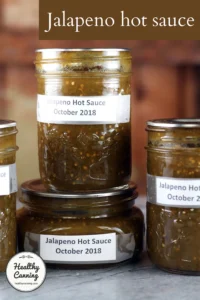
Similarly, reference volumes such as The Joy of Cooking suggest that canned tomatillos function exceptionally well as a standalone table condiment. They pair naturally with grilled meats, poultry, and particularly seafood, including grilled fish and shellfish. Furthermore, they serve as a core ingredient in regional hot sauces, such as homemade jalapeño hot sauce, where their inherent acidity balances the heat of the peppers.
Broader Implications for Home Food Preservation
The adherence to standardized USDA guidelines for preserving high-acid and acid-adjusted produce underscores the ongoing modernization of home food safety practices. By combining rigorous thermal processing times, mandatory acidification, and precise altitude adjustments, home canners can safely harness seasonal gluts of produce like tomatillos. These practices prevent spoilage, mitigate health risks, and preserve regional culinary traditions, ensuring that home-preserved goods remain both delicious and safe for consumption throughout the year.