
Dr. Gabrielle Fundaro, a highly credentialed expert in Human Nutrition with a PhD, over a decade of coaching experience, and a formidable six powerlifting competitions to her name, recently disclosed a personal struggle that resonates with many in the health and fitness world: the pervasive anxiety surrounding macro tracking. Despite her profound understanding of nutrition science, Fundaro found herself trapped in a cycle of meticulous food logging, a method she eventually realized was no longer serving her well-being, yet she feared abandoning it. Her journey led to the development of an innovative alternative, the RPE-Eating Scale, designed to foster confidence and self-trust around food, a significant departure from conventional dietary management.
The Pervasive Grip of Macro Tracking
Macro tracking, or macronutrient tracking, involves meticulously logging the intake of proteins, carbohydrates, and fats to meet specific daily targets. This method gained immense popularity within fitness communities and among individuals aiming for precise body composition changes, offering a seemingly objective and scientific approach to nutrition. For many, including Dr. Fundaro, it initially proved effective, providing a structured framework for understanding food intake and its impact on physique and performance. The allure of macro tracking lies in its promise of control and predictable results, making it a go-to strategy for athletes, bodybuilders, and those pursuing weight management goals.
However, the sustained rigidity required by macro tracking often comes at a psychological cost. The constant weighing of food, scanning of labels, and adherence to numerical targets can transform eating from a natural, enjoyable act into a burdensome, data-driven task. Dr. Fundaro experienced this firsthand, confessing to a profound weariness. "I was tired of making sure my macros were perfectly in balance. I was sick of not being able to just pick whatever she wanted off a menu and enjoy the meal, trusting that her health and physique wouldn’t go sideways as a result." This sentiment is echoed by countless individuals who, after years of strict adherence, report feeling disconnected from their body’s natural hunger and fullness cues, developing a sense of distrust in their own instincts, and experiencing heightened anxiety around food choices. The fear of "losing control" or "losing physique" if tracking ceased became a significant barrier to disengagement.
A Quest for Nutritional Autonomy: Fundaro’s Personal Odyssey
Dr. Fundaro’s personal struggle highlighted a critical gap in existing nutritional strategies. Her deep-seated concerns—"What if I don’t eat enough protein, and lose all my muscle?", "What if I overeat and gain fat?", "What if I have no idea how to fuel myself without tracking macros? And what does that say about me as an expert in the field of nutrition?"—underscore the psychological entanglement that can develop with external tracking methods. She sought an alternative that could support her nutritional goals while simultaneously cultivating a sense of freedom and peace around food.
Traditional alternatives presented their own challenges. Calorie counting, she noted, was merely a different form of restriction. Intuitive eating, which emphasizes tuning into internal hunger and fullness signals, felt inaccessible after years of relying on external metrics. The idea of completely abandoning structure for pure intuition was daunting for someone whose body had been conditioned by numerical targets. This presented a unique dilemma for an expert in the field: how to bridge the gap between scientific principles and embodied self-awareness.
The Inspiration: Rate of Perceived Exertion (RPE) in Fitness
A pivotal moment arrived for Dr. Fundaro during her training sessions. She had begun incorporating the Rate of Perceived Exertion (RPE) scale into her powerlifting regimen. Developed by Swedish psychologist Gunnar Borg in the 1960s, the RPE scale is a well-established framework in sports science, allowing individuals to quantify the intensity of their physical effort during exercise. While Borg’s original scale ranged from 6 to 20, modern adaptations often use a more intuitive 0-10 scale (where 0 is no exertion and 10 is maximum effort).
RPE has become a valuable tool for athletes and coaches alike, enabling personalized training that adapts to daily fluctuations in energy, recovery, and stress. For instance, a powerlifter might aim for a 7/10 RPE on a given set, meaning they should choose a weight that allows them to perform the lift with three repetitions left "in the tank." This autoregulatory approach fosters autonomy, reduces the risk of overtraining, and optimizes performance based on subjective yet consistent internal feedback. Dr. Fundaro observed that by using RPE, she was not only getting stronger but also recovering more effectively. This blend of structured guidance and personal intuition proved remarkably potent in the gym.
It was this realization that sparked the conceptual breakthrough: "If Rate of Perceived Exertion could help her train better, couldn’t a similar framework help her eat better?" This insight paved the way for the RPE-Eating Scale.
Introducing the RPE-Eating Scale: A Hybrid Approach
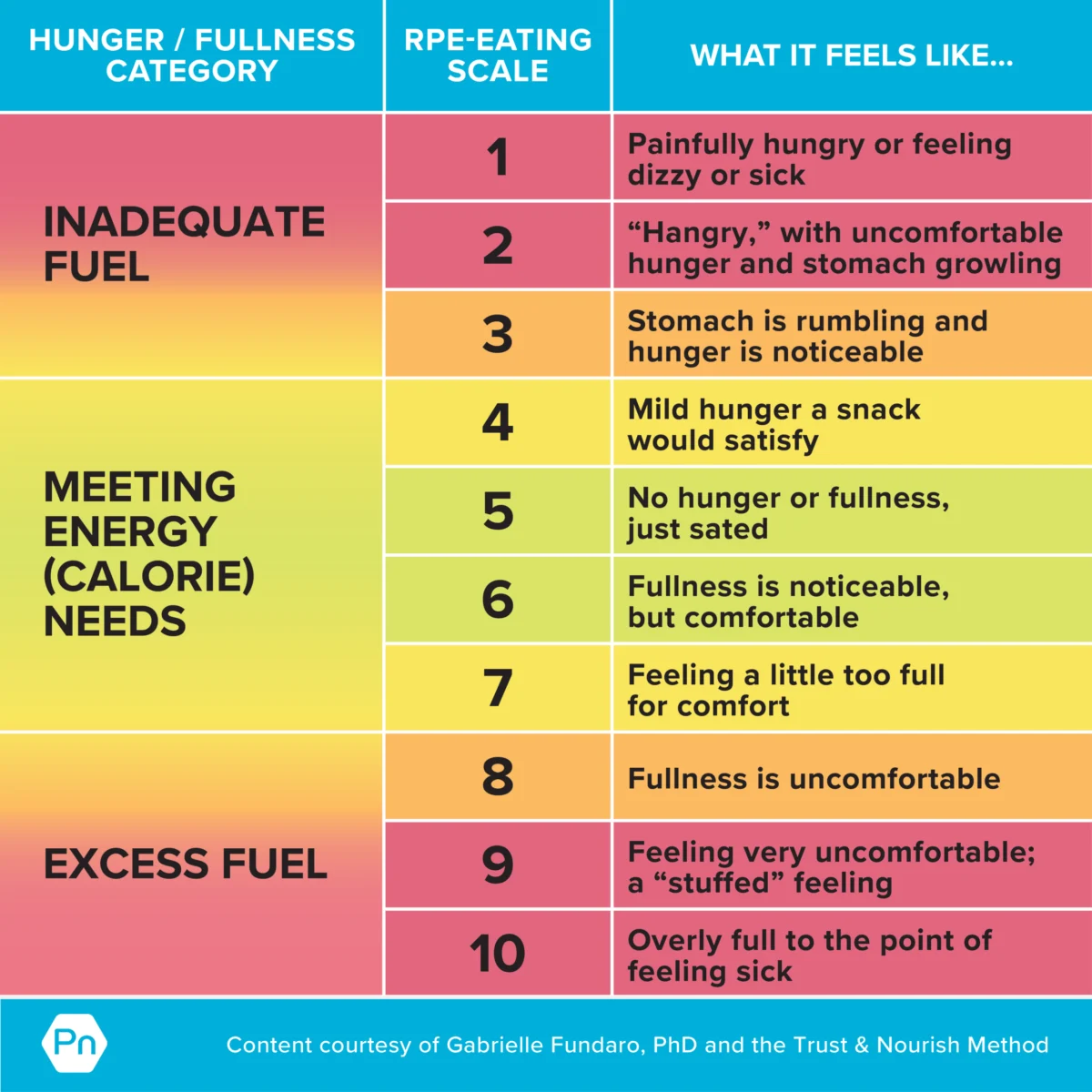
The RPE-Eating Scale adapts the principles of perceived exertion to the realm of nutrition, creating a framework that guides food choices based on internal hunger and fullness cues, coupled with a focus on satisfaction. Dr. Fundaro’s 0-10 scale for eating visually represents different states of hunger and fullness, ranging from "painfully hungry, dizzy or sick" (1) to "overly full to the point of feeling sick" (10), with "no hunger or fullness, just sated" positioned at 5.
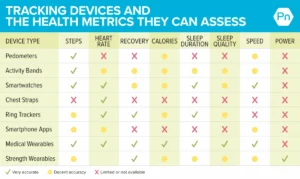
The core objective of RPE-Eating is to cultivate interoceptive awareness—the conscious perception of internal bodily sensations—and to build self-trust in one’s ability to nourish the body without external tracking. This method is particularly relevant in an era where wearable technology and apps constantly externalize bodily signals, potentially diminishing an individual’s innate ability to interpret their own physiological needs.
Practical Application of RPE-Eating: Four Key Steps
Implementing RPE-Eating requires a mindful, iterative process, acknowledging that re-attuning to internal cues takes time, especially after prolonged reliance on external metrics.

-
Clarifying Goals: RPE-Eating is fundamentally different from a diet aimed at rapid body modification. Dr. Fundaro emphasizes that its primary purpose is not to change one’s body composition or to achieve "optimal" macros, but rather to build inner trust and confidence around food. While it can be adapted for weight management, its core philosophy centers on sensing and responding to the body’s needs. This shift in mindset, from control to trust, is crucial for success.
-
Practicing Hunger Cue Identification: A central tenet of RPE-Eating involves distinguishing between physiological hunger and appetite. Hunger is driven by physical cues signaling a need for energy, such as stomach rumbling or lightheadedness. Appetite, conversely, is the desire to eat, which can persist even after physical hunger is satisfied, often influenced by sensory appeal or emotional factors. The RPE-Eating scale serves as a tool to rate hunger before, during, and after meals, fostering a deeper connection to the body’s true physical needs. Regular practice—eating mindfully, limiting distractions, and checking in with the scale at different points—helps recalibrate this internal compass.
-
Identifying Non-Hunger Triggers: Eating is not always solely a response to hunger. Emotional states, environmental cues, and social situations frequently trigger eating behaviors. Dr. Fundaro advocates for developing awareness of these "non-hunger triggers." Through a process of "notice and name," individuals can identify emotions (e.g., stress, boredom, sadness) or events (e.g., a difficult email, an argument) that precede compulsive or mindless eating. This awareness is the first step towards developing alternative, non-food coping mechanisms, such as deep breathing, a walk, or connecting with a friend, thereby widening one’s repertoire of self-soothing strategies.
-
Balancing Satiety and Satisfaction: Beyond simply quelling physical hunger (satiety), RPE-Eating emphasizes the importance of psychological satisfaction. A meal that meets caloric needs but leaves one feeling deprived or unsatisfied can paradoxically lead to further cravings or overeating. This step encourages individuals to incorporate foods they genuinely enjoy, even those previously deemed "off-limits" by restrictive diets. The goal is to nourish the body holistically, acknowledging that eating also fulfills needs for pleasure, tradition, and community. By practicing RPE-Eating with a variety of foods, including those that bring genuine enjoyment, individuals can build confidence in their ability to adequately fuel themselves without feeling restricted.
Who Benefits from RPE-Eating? Considerations and Limitations
RPE-Eating is particularly beneficial for individuals who:
- Feel overly dependent on food tracking but desire liberation.
- Experience anxiety or a perceived loss of control when attempting to stop tracking.
- Seek a structured yet flexible guidance system as an alternative to rigid tracking.
- Have risk factors for disordered eating (e.g., high body dissatisfaction, history of yo-yo dieting) and are currently tracking food, as it offers a safer alternative.
It’s important to note that RPE-Eating is not a replacement for professional help in cases of clinical eating disorders. It also may not be the most efficient tool for extreme weight modification goals, such as competitive bodybuilding, where highly precise caloric and macronutrient control is paramount. Dr. Fundaro likens using RPE-Eating for such extreme goals to "using physio exercises to prepare for a powerlifting competition"—it’s not the right tool for that specific, intense job.
For weight management, Fundaro suggests using the RPE-Eating scale to hover around specific ranges: aiming for 7-8 for most meals to support weight gain (categorized as "adequate" to "excess fuel") and 4-5 for most meals for weight loss (categorized as "adequate fuel"). This provides a flexible guideline rather than strict targets, mitigating some of the risks associated with highly restrictive approaches.
The Scientific Underpinnings: Interoceptive Awareness and Beyond
The skepticism that RPE-Eating might face, often framed as "feelings over facts," mirrors the initial resistance RPE encountered in the lifting community. However, RPE is now widely accepted and scientifically validated as an accurate and convenient method for autoregulating training intensity. The core mechanism at play is interoceptive awareness, the ability to sense and interpret internal bodily signals.
RPE-Eating actively cultivates this skill. Just as a lifter learns to recognize subtle cues like bar speed to gauge proximity to failure, an RPE-Eater learns to interpret stomach growls, energy levels, and psychological satisfaction as indicators of nutritional needs. This internal feedback loop, while subjective, becomes increasingly accurate with practice. It offers a more accessible and practical approach than, for instance, continuous glucose monitoring for general dietary guidance, allowing individuals to make informed decisions based on their lived bodily experience.
Broader Implications and the Path Forward
In a society saturated with diet culture and external validation, RPE-Eating offers a refreshing paradigm shift. It represents a potential "off-ramp" from the often-compulsive nature of macro tracking, providing a transitional tool for individuals seeking greater food freedom. By emphasizing internal cues over external rules, it helps to dismantle the ingrained habit of eating based on prescribed amounts or finishing one’s plate, replacing it with a more responsive and intuitive relationship with food.
While RPE-Eating demands conscious attention and reflection, which can be challenging for those with demanding lifestyles, its flexibility allows for adaptation. Even intermittent application, focusing on specific steps or using it during calmer meal times, can yield significant benefits in cultivating awareness and self-trust.
Dr. Fundaro’s innovation underscores a growing recognition that sustainable nutrition extends beyond mere macronutrient ratios; it encompasses psychological well-being, freedom from obsession, and a trusting relationship with one’s body. The ultimate goal, as Dr. Fundaro articulates, is profound: "to know that you’re nourishing yourself—and you don’t need a food tracker to do that." This framework offers a promising pathway toward a more intuitive, confident, and peaceful approach to eating for many.
References
- Editor’s Note: Original article included a placeholder for references. For this enriched version, specific citations would be required to support claims about RPE validation and interoceptive awareness. For instance, studies on Borg’s RPE scale, its reliability and validity in exercise physiology, and research on the impact of macro tracking on eating behaviors and psychological well-being would be relevant.
- Editor’s Note: As above.
- Editor’s Note: As above.