
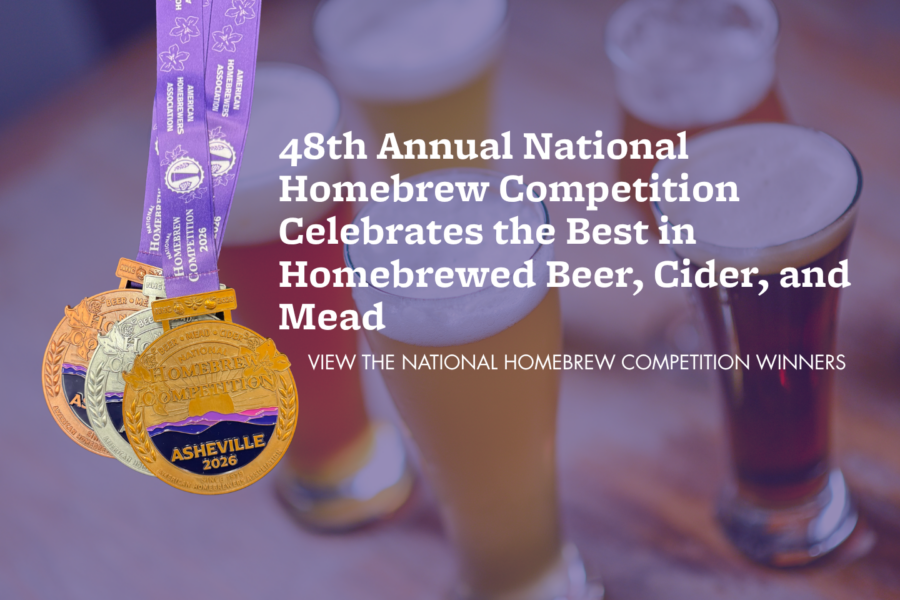
The American Homebrewers Association (AHA), the primary national nonprofit organization committed to the advancement and celebration of the homebrewing hobby, has officially revealed the medalists for the 2026 National Homebrew Competition (NHC). The announcement took place during a high-profile awards ceremony at the annual Homebrew Con, held this year in the historic brewing hub of Asheville, North Carolina. Marking its 48th iteration, the competition continues to serve as the definitive benchmark for amateur fermentation excellence, awarding a total of 120 medals across 40 distinct categories that span the full spectrum of beer, mead, and cider.
Beyond the recognition of individual beverages, the 2026 ceremony honored eight standout individuals, clubs, and organizations for their profound contributions to the homebrewing ecosystem. This year’s event solidified the NHC’s standing as the world’s largest and longest-running homebrew competition, a legacy that began in 1979 in Boulder, Colorado. Since its inception, the competition has evaluated more than 170,000 entries, providing a critical platform for hobbyists to transition into the professional brewing ranks and influencing the broader craft beer movement globally.
The 2026 Competition Landscape and Participation Data
The 2026 National Homebrew Competition saw a robust turnout, reflecting the enduring popularity of home fermentation despite shifting beverage trends. A total of 3,575 entries were submitted by 1,054 AHA members. The geographical diversity of the field was particularly notable, with entries arriving from 46 U.S. states and Washington, D.C. On the international stage, seven different countries were represented, highlighting the global reach of the American Homebrewers Association’s standards and influence.
The logistical undertaking of the NHC is vast, requiring a two-stage judging process to ensure every entry receives a fair and rigorous evaluation. The First Round of judging was distributed across nine key American cities, chosen for their strong brewing cultures and access to certified judges. These regional hubs included San Diego, California; Chicago, Illinois; Indianapolis, Indiana; Kansas City, Missouri; Longmont, Colorado; Philadelphia, Pennsylvania; San Francisco, California; Seattle, Washington; and Tampa, Florida.
Following the regional eliminations, the highest-scoring entries advanced to the Final Round, which took place on June 17 and 18 in Asheville. This final phase involved a concentrated panel of master-level judges who determined the gold, silver, and bronze medalists for each category. The selection of Asheville as the host city provided a fitting backdrop, as the city is frequently cited as "Beer City USA" due to its high concentration of craft breweries and a local economy deeply intertwined with the fermentation arts.
Analyzing Style Trends: The Rise of Lagers and Belgian Classics
One of the most telling aspects of the NHC is the "Most-Entered Style Categories" data, which serves as a barometer for current trends and technical interests among homebrewers. In 2026, the data indicated a significant lean toward technical precision and traditional European styles.
The "Dark European Lager" category (Table 7) emerged as the most competitive field with 152 entries. The popularity of styles such as Munich Dunkel and Schwarzbier suggests a growing mastery among homebrewers in managing the delicate balance of malt complexity and clean fermentation profiles required for lagers. Following closely was "Pale European Beer" (Table 2) with 137 entries, encompassing styles like Helles and German Leichtbier. This trend highlights a shift away from the "hop-heavy" dominance of previous decades toward more subtle, sessionable, and technically demanding "brewer’s beers."
Rounding out the top three was "Strong Belgian Ale" (Table 26), which garnered 123 entries. The inclusion of this category reflects the homebrewer’s perennial fascination with complex yeast phenols and high-gravity brewing. These three categories alone accounted for over 10% of the total competition entries, showcasing a community that is increasingly focused on historical accuracy and sophisticated brewing techniques.
Major Awards and Individual Achievements
While category medals celebrate specific beverages, the NHC’s Major Awards recognize the pinnacle of overall brewing proficiency. These awards are calculated based on a points system or specific "Best of Show" judging rounds. The 2026 ceremony saw the presentation of six major accolades:
- Homebrewer of the Year Award: Recognizing the individual who demonstrated the highest level of consistent excellence across multiple entries.
- Cidermaker of the Year Award: Awarded to the top-scoring entrant in the cider and perry categories.
- Meadmaker of the Year Award: Celebrating the most outstanding entries in the mead categories, from traditional to fruit-infused melomels.
- National Homebrew Club of the Year: Awarded to the club whose members earned the most points throughout the competition.
- Gambrinus Club Award: Recognizing the club with the highest number of points per capita, often highlighting smaller, highly specialized groups.
- Samuel Adams Ninkasi Award: Named after the Sumerian goddess of beer, this prestigious trophy is given to the brewer who accumulates the most points in the final round of judging.
In addition to these performance-based honors, the AHA presented Annual Recognition Awards to those who foster the community’s growth. The "Homebrew Shop of the Year Award" highlighted a local retailer providing exceptional education and supplies, while the "AHA Advocacy Award" honored individuals or groups who have worked to improve homebrewing laws and regulations at the state or federal level.
Leadership Perspectives and Community Impact
Charlie Harr, Chair of the National Homebrew Competition, offered insights into the caliber of this year’s field during the awards presentation. Harr emphasized that the technical skill displayed in 2026 reached new heights, noting that the distinction between amateur and professional quality has become increasingly blurred.
“Every year, I continue to be impressed by the rising quality of entries in the National Homebrew Competition,” Harr stated. “The creativity, technical skill, and care that homebrewers, meadmakers, and cidermakers bring to this competition is remarkable. Earning a medal at the NHC is an incredible achievement, but every entrant should be proud to have brewed and shared their work on this stage.”
Harr also pointed to the essential role of the volunteer network, particularly the Beer Judge Certification Program (BJCP). The NHC relies on hundreds of certified judges who volunteer their time to provide written feedback for every single entry. This feedback loop is often cited by participants as the most valuable aspect of the competition, allowing them to refine their processes and improve their craft regardless of whether they take home a medal.
The Economic and Cultural Legacy of the AHA
Founded in 1978 by Charlie Papazian, the American Homebrewers Association has grown from a small group of enthusiasts in Colorado to a powerful national advocate for the hobby. The organization’s dual structure as a 501(c)(6) membership body and a 501(c)(3) foundation (the A-Ha Foundation) allows it to balance member services with broader educational and charitable goals.
The NHC is more than a contest; it is a cornerstone of the $26 billion craft brewing industry. Many of the most successful craft breweries in the United States, including Sierra Nevada Brewing Co., Dogfish Head Craft Brewery, and Bell’s Brewery, trace their origins directly to homebrewing roots and early successes at the NHC. By validating the quality of amateur beer, the competition provides the confidence and credentials necessary for hobbyists to seek investors and open commercial taprooms.
Furthermore, the 2026 event in Asheville highlighted the symbiotic relationship between homebrewers and the commercial sector. Local sponsors like Hi-Wire Brewing and the Renaissance Hotel played pivotal roles in hosting the thousands of attendees and managing the logistics of cold storage and entry distribution. Such partnerships underscore the "joy and volunteerism" that remain central to the AHA’s mission.
Conclusion: Looking Toward the Future of Fermentation
As the 2026 National Homebrew Competition concludes, the focus of the AHA shifts toward the upcoming year’s educational initiatives and legislative efforts. The organization continues to provide unmatched resources through Zymurgy magazine and its digital platforms, ensuring that the next generation of brewers has access to validated recipes and technical guidance.
The success of the 2026 NHC in Asheville serves as a testament to the resilience of the homebrewing community. Despite the challenges of a globalizing market and changing consumer preferences, the passion for "brewing it yourself" remains a vibrant and essential part of American culture. The 3,575 entries evaluated this year represent 3,575 stories of experimentation, patience, and a commitment to the art of fermentation. For the winners, the 120 medals awarded are not just tokens of victory, but milestones in a journey of craftsmanship that continues to push the boundaries of what is possible in a five-gallon carboy.