The revival of the Grain Gathering in Washington State’s Skagit Valley marked a significant milestone for regional agriculture, artisanal baking, and grain science. Hosted from July 19 to July 21 by the Washington State University (WSU) Breadlab in collaboration with the Washington State Department of Agriculture (WSDA), the event returned after an eight-year hiatus. Operating under the central theme “Nourishing Communities,” the three-day conference convened more than 300 farmers, wheat breeders, millers, professional bakers, and home enthusiasts. The program featured field walks, masterclasses, and hands-on milling demonstrations designed to examine the entire supply chain of bread production—from seed selection to the final bake.
Main Facts of the Event
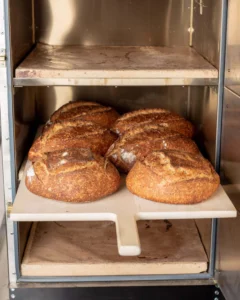
The Grain Gathering functioned as a collaborative symposium rather than a traditional academic conference. Attendees engaged in technical discussions regarding falling numbers, optimal mixing techniques, and the logistics of community bakery management. A central attraction of the weekend was a solar-powered mobile bakery and mill constructed by California-based baker Marc Benoit. Built inside the bed of a truck, the unit housed a mill, mixer, workbench, and a RackMaster bread oven, allowing the crew to mill identity-preserved grains and produce dozens of sourdough country loaves, large-format focaccia, baguettes, and bialys directly adjacent to WSU research fields.
The collaboration brought together distinct agricultural inputs from regional producers, including Moon Family Grain, Chimacum Valley Grainery, and Palouse Heritage. Varieties such as Hollis, Chimacum Confluence, and Palouse Heritage Elwha River Spelt were milled on-site, demonstrating the feasibility of decentralized, identity-preserved grain processing.
Chronology and Background
The conceptual framework of the Grain Gathering originated from a growing need to address structural disconnects within the modern grain economy. Historically, the commoditization of wheat has prioritized yield, uniformity, disease resistance, and ease of harvest, often at the expense of flavor, nutritional density, and agricultural diversity. Under the direction of researchers at the WSU Breadlab, historical and regionally adapted wheat varieties have been developed to challenge this paradigm.
Over the three-day schedule, the chronology of events emphasized the interconnected stages of bread production:
- Day One: Focused on agronomy and wheat breeding, featuring tours of WSU Breadlab fields and discussions on developing populations of spelt, heritage grains, and locally adapted wheat varieties like Salish Blue and Skagit 1109.
- Day Two: Explored the mechanics of milling and distribution, highlighted by tours of Cairnspring Mills and operational demonstrations of Marc Benoit’s mobile solar-powered bakery trailer.
- Day Three: Concentrated on baking science, fermentation, and community integration, featuring masterclasses led by notable bakers such as Jeffrey Hamelman, Andrew Heyn, Blair Marvin, and regional artisans.
Supporting Data and Economic Analysis
The economics of the artisanal grain movement formed a core component of the symposium’s panel discussions. In the conventional commodity grain system, harvested wheat is aggregated into uniform silos, stripping away its agricultural identity and detaching the final product from the farmer’s specific production practices. Consequently, premiums associated with sustainable soil management and targeted crop care rarely reach the grower.
In contrast, identity-preserved grain models maintain a direct chain of custody, ensuring that the farmer’s name accompanies the flour to the baker and ultimately to the consumer. Financial models presented during the sessions indicated that decentralized mobile milling and baking units allow operators to capture multiple tiers of the supply chain—specifically retaining the margins typically claimed by separate millers, distributors, and retail middle-men. When integrated directly into farm operations, these mobile units can establish an alternative revenue stream for rural producers, shifting economic value back to the agricultural source.
Furthermore, economic analyses of artisanal baking suggest that while standard loaves retail between $6 and $12, consumer willingness to pay correlates closely with traceability and perceived health benefits. The inclusion of regionally specific, freshly milled whole grains addresses growing consumer demand for nutrient-dense staple foods without sacrificing baking performance.
Official Responses and Industry Perspectives
Participants and organizers emphasized the collaborative nature of the event in bridging traditional divides within the food system. Kevin Morse, founder of Cairnspring Mills, noted the importance of scaling local milling infrastructure to support regional growers.
"Connecting the grower directly to the commercial and home kitchen changes the entire dynamic of food security and quality," Morse stated during industry discussions.
Wheat breeders and researchers stressed the necessity of revising selection criteria for new grain varieties. Traditional breeding programs have historically excluded flavor and micronutrient content from their primary scorecards. The WSU Breadlab’s approach incorporates baking trials directly into the breeding cycle, ensuring that newly developed populations—such as Skagit 1109 and Salish Blue—perform successfully in professional and home ovens while retaining distinctive culinary profiles.
Distinguished bakers in attendance, including veteran author and baker Jeffrey Hamelman and Elmore Mountain Bread founders Andrew Heyn and Blair Marvin, underscored the educational value of cross-disciplinary engagement. By placing breeders, farmers, and bakers under a single operational tent, the event fostered a mutual understanding of the logistical and agronomic constraints governing each sector of the supply chain.
Broader Impact and Implications
The conclusions drawn from the 2026 Grain Gathering extend beyond regional agriculture in the Pacific Northwest, offering a blueprint for localized food economies nationwide. As consumer interest in gut health, sustainable agriculture, and transparency continues to rise, the demand for locally sourced, freshly milled flour is expected to grow.
The proliferation of small-scale electric stone mills for home kitchens reflects a broader consumer trend toward decentralized food processing. By substituting standard commodity flour with identity-preserved, regionally grown grain varieties, home bakers and independent commercial operators alike are participating in an incremental restructuring of the grain supply chain.
Ultimately, the event demonstrated that systemic changes in agriculture do not require an immediate, total overhaul of established industrial systems. Instead, meaningful shifts can be achieved through localized adaptations: adopting specific identity-preserved grain varieties, supporting regional millers, and recognizing the agricultural labor embedded within a staple food item. Through continued collaboration between research institutions, agricultural producers, and culinary professionals, the framework established in the Skagit Valley provides a viable model for the future of grain production and baking.