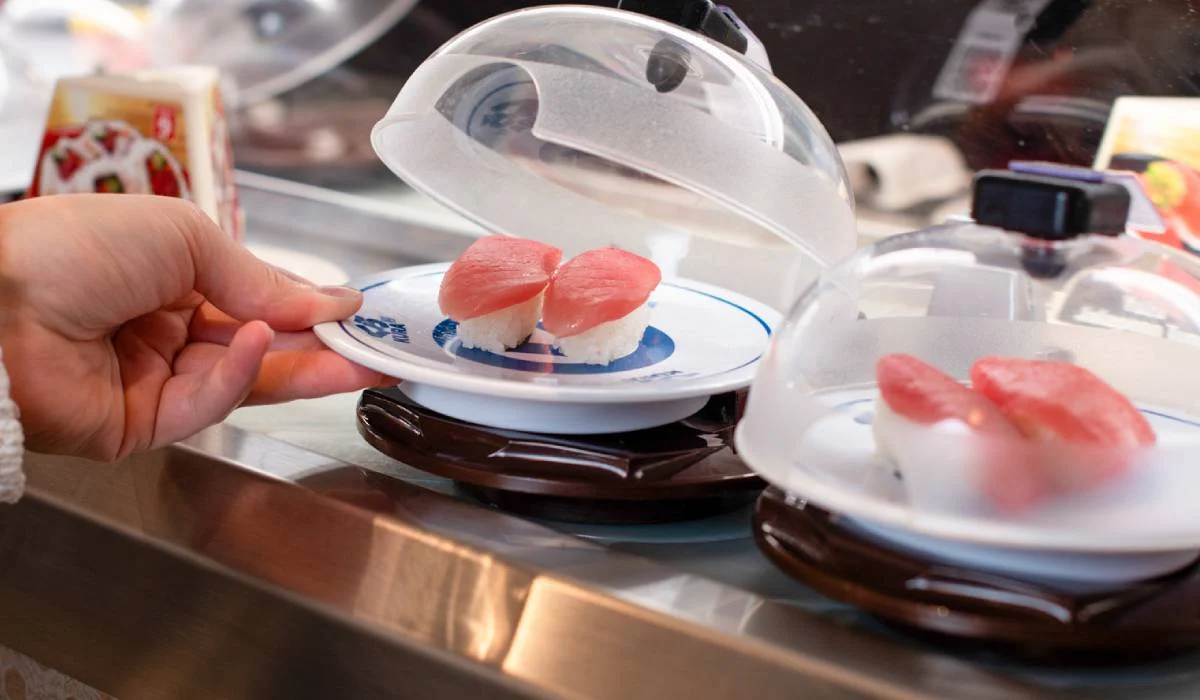

Kura Sushi USA, the innovative revolving sushi chain that has redefined the technology-driven dining experience in North America, recently concluded its fiscal third quarter with a financial performance that highlighted a stark contrast between macroeconomic pressures and internal operational mastery. While the brand grappled with a noticeable softening in guest traffic and the looming shadow of increased food costs driven by international tariffs, it managed to deliver one of its most robust margin expansions in recent history. This performance was not achieved through the common industry practice of aggressive price hikes, but rather through a meticulous focus on labor productivity, technological integration, and a strategic "value gap" that has begun to attract a new demographic of high-spending first-time visitors.
Despite the immediate challenges of a 5.1 percent decline in guest traffic, Kura Sushi reported a restaurant-level operating margin of 19.1 percent, representing a 90-basis-point improvement over the previous year. This achievement is particularly noteworthy given that food costs rose by approximately 200 basis points due to tariffs on imported Japanese ingredients. The ability to offset these costs while maintaining a competitive pricing structure has positioned the brand as a resilient player in the casual dining sector. According to William Blair analyst Sharon Zackfia, the underlying fundamentals of the business remain strong enough to support a long-term trajectory toward 300 restaurant locations and an estimated $1.3 billion in annual sales.
Financial Performance and the Resilience of the Bottom Line
In the third fiscal quarter, Kura Sushi’s total revenue surged to $85.9 million, a significant jump from the $74 million reported in the same period the previous year. This 16 percent increase in top-line revenue was primarily driven by the company’s aggressive unit expansion. During the quarter, Kura opened seven new restaurants, bringing its total footprint to 91 locations by the end of the period. Since the quarter’s close, three additional locations have been inaugurated, keeping the company on a steady path toward its goal of 16 new openings for the full fiscal year.
The company’s adjusted EBITDA (Earnings Before Interest, Taxes, Depreciation, and Ambitious) saw a growth of more than 20 percent, reaching $6.6 million. Adjusted EBITDA margins also saw an uptick of 40 basis points, landing at 7.7 percent. While same-store sales experienced a marginal dip of 0.4 percent, the impact was softened by a 4.7 percent increase in the combination of menu pricing and product mix.
CEO Jimmy Uba emphasized that the quarter’s success was a testament to the brand’s ability to "control what we can control." In an era where many restaurant groups are struggling with bloated labor costs and dwindling margins, Kura Sushi’s focus on "operational efficiency" has allowed it to navigate a complex economic landscape characterized by fluctuating gas prices and shifting consumer attention.
Analyzing the Traffic Slowdown: The "World Cup" and "Gas Price" Factors
Management attributed the 5.1 percent decline in guest traffic to a combination of external factors that disproportionately affected their core markets. A significant portion of Kura Sushi’s footprint is concentrated in California, a state that saw a dramatic spike in gas prices during the spring and early summer. Because Kura Sushi is often a "destination" dining experience, higher fuel costs can lead to a reduction in visit frequency, even if the brand’s perceived value remains high.
Additionally, executives pointed to the distraction of the FIFA World Cup as a temporary headwind. The global sporting event historically shifts consumer behavior away from traditional dining out toward home-based viewing or sports bar environments. However, the company was quick to note that while the frequency of visits decreased, the behavior of the guests inside the restaurant remained highly favorable.
One of the most encouraging data points from the quarter was the "positive mix," which executives described as a major surprise. Guests are consistently ordering more items per visit, including higher-margin beverage options and premium "Kura Sushi Reserve" items. This indicates that while consumers may be dining out less often, they are not "trading down" or being frugal once they are seated at the conveyor belt.
The Value Gap and the First-Time Guest Phenomenon
Kura Sushi has deliberately maintained a restrained pricing strategy, with an effective price increase of only 4.5 percent during the quarter. This is significantly lower than the double-digit price hikes seen across many competing sushi concepts and general casual dining chains. This restraint has created a "value gap" that is now working in the brand’s favor.
Interestingly, average check growth is currently outpacing expectations among first-time guests and non-loyalty members. CEO Jimmy Uba explained that guests who are accustomed to the high prices of traditional sit-down sushi restaurants are often pleasantly surprised by Kura’s affordability. "They come into our restaurant with those higher price expectations," Uba said during the earnings call. "They see how much cheaper we are than they expect, and so they end up spending more as a result."
This psychological shift has led to an increase in the number of sushi plates ordered per person and a higher attachment rate for premium appetizers and desserts. Management hopes that as macroeconomic pressures like gas prices ease, these higher average checks will persist, leading to explosive growth when traffic eventually rebounds.
Operational Innovations and Labor Productivity
Perhaps the most significant contributor to the margin beat was the dramatic reduction in labor costs. Labor expenses fell to 30.6 percent of sales, down from 33.1 percent a year ago. This 250-basis-point improvement was driven by a series of technological and operational initiatives that have streamlined the back-of-house and front-of-house workflows.
The rollout of a new reservation system, which was completed systemwide by the fourth quarter of the previous year, has allowed for better guest flow management and more accurate staffing schedules. By reducing "dead time" and optimizing the number of servers and kitchen staff needed during peak hours, Kura has been able to significantly outperform its original labor cost reduction targets.
Looking toward the future, Kura Sushi is doubling down on its reputation as a "tech-first" restaurant. The company is preparing for the introduction of robotic dishwashers, scheduled for a wider rollout by fiscal 2027. This move is expected to provide a substantial tailwind to margins by automating one of the most labor-intensive and high-turnover positions in the restaurant industry.
Furthermore, the brand is redesigning its signature "Bikkura Pon" prize system. Currently, the system automatically dispenses a capsule toy after a guest inserts 15 plates into the table’s disposal slot. The new iteration will give guests the choice between a toy or a dessert voucher for a future visit. This change serves a dual purpose: it reduces the rising costs of sourcing and shipping merchandise from Japan while simultaneously creating a powerful incentive for repeat visits. Management estimates this initiative alone could contribute up to 50 basis points of margin improvement over time.
Navigating Development Delays and Revised Guidance
Despite the strong operational performance, Kura Sushi was forced to lower its full-year revenue outlook due to unforeseen delays in its development pipeline. The company now expects fiscal 2024 sales to land between $330.5 million and $331.5 million, a slight decrease from the previous guidance of $333 million to $335 million.
The revision is primarily attributed to permitting and inspection bottlenecks. Management noted that four restaurant openings were pushed back, resulting in roughly six "lost restaurant months" of revenue. These delays were largely tied to unexpected fire inspection requirements in various municipalities. In one specific instance in North Carolina, the company was required to undergo a third-party inspection of its signature conveyor belt system—a request that had never occurred in any of its previous 93 openings.
"We do bake into our expectations a certain degree of delays," Uba admitted. "But for so many to follow on each other at the same time and for them to be much longer than we typically experience, that was what was so unexpected."
Analyst Sharon Zackfia noted that these delays are structural and bureaucratic rather than a reflection of poor restaurant performance. She pointed out that two-thirds of the revenue guidance reduction was purely due to these timing issues.
Strategic Outlook: New Markets and IP Collaborations
Kura Sushi’s growth strategy for the coming year involves a pivot toward new market entries. By focusing on entering new states and cities rather than "infilling" existing territories like Los Angeles or Dallas, the company aims to reduce the "cannibalization" of sales from existing units. This strategy is expected to bolster same-store sales growth by ensuring that each new unit captures a fresh customer base.
The company is also leaning heavily into its "eat-ertainment" identity through high-profile intellectual property (IP) collaborations. For the upcoming fiscal year, Kura has secured eight major partnerships, including collaborations with Persona 6, The Apothecary Diaries, and Nintendo’s iconic Yoshi character. These partnerships drive significant traffic among younger demographics and collectors who visit specifically to acquire limited-edition Bikkura Pon prizes.
In addition to these marketing efforts, Kura Sushi plans to increase the frequency of its "Kura Sushi Reserve" promotions from nine to 12 per year. These limited-time offerings feature premium ingredients like bluefin tuna or Wagyu beef, which help drive higher average checks. A new, tiered rewards program is also on the horizon for fiscal 2027, designed to deepen guest loyalty and increase visit frequency.
Implications for the Broader Industry
The performance of Kura Sushi serves as a case study for the modern restaurant industry. It demonstrates that in a high-inflation environment, brands that leverage technology to drive efficiency can maintain profitability even when consumer traffic is volatile. By focusing on labor productivity and creating a unique, value-driven experience, Kura Sushi is carving out a significant niche that bridges the gap between fast-casual convenience and full-service entertainment.
The analyst community remains largely optimistic. Despite the trimmed revenue guidance, William Blair’s Zackfia reiterated an "Outperform" rating, suggesting that the long-term unit growth opportunity remains fully intact. As Kura Sushi nears the 100-unit milestone, its ability to scale its unique revolving sushi model across the United States will be a key story for investors and industry observers alike. If the brand can maintain its 20 percent annual unit growth while continuing to innovate in the back-of-house, the path to $1.3 billion in sales may be well within reach.