
A methodical approach to weekly meal planning and grocery shopping, refined over six years by an astute home economist and blog contributor, is demonstrating significant potential for enhancing household efficiency, reducing food waste, and alleviating the pressures of modern life, often encapsulated by the Norwegian term "tidsklemma." This bespoke system, rooted in a reusable, categorized paper list, offers a compelling alternative to ad-hoc shopping and even many digital planning applications, proving that sometimes, simplicity and tactile interaction yield superior results.
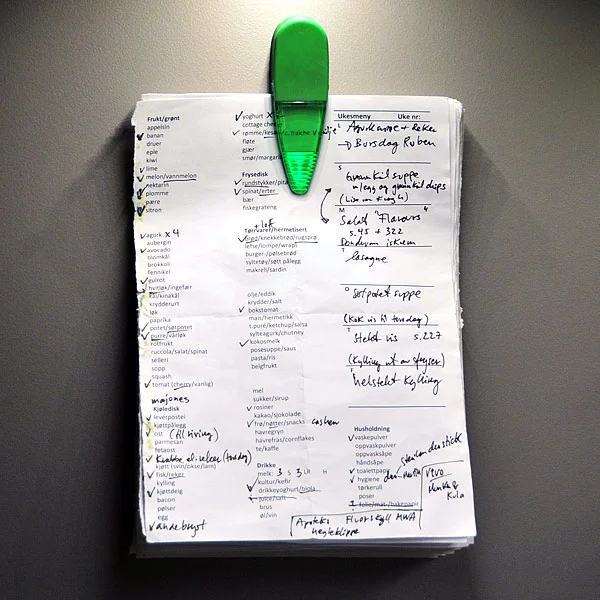
The genesis of this robust planning methodology traces back over half a decade, evolving from a basic shopping note into a comprehensive, dynamic template. Its developer, whose blog chronicled a recent three-year hiatus but continued culinary endeavors, attributes the family’s consistent ability to prepare home-cooked meals, despite demanding schedules, directly to this systematic approach. The core innovation lies in a generic, pre-populated grocery list, meticulously organized by food categories and designed to mirror the physical layout of a local supermarket. This foundational list serves as a weekly starting point, allowing for rapid customization through simple checkmarks and supplementary notes, thereby eliminating the repetitive task of compiling a new list from scratch each week.
The Evolution of a Practical Solution: A Chronological Development
The journey of this grocery list system began approximately six years ago, born out of a common household challenge: the time-consuming and often inefficient process of weekly meal planning and subsequent grocery acquisition. Initially, the list was likely a rudimentary compilation of frequently purchased items. Over time, through continuous use and iterative refinement, it underwent significant transformation. Each week, as the family’s dietary preferences evolved, new products became staples, or certain items were no longer needed as children grew, the list was subtly adjusted. This continuous feedback loop, driven by practical experience in the kitchen and the aisles of the supermarket, allowed the list to become increasingly tailored and effective.
The developer notes that the list has been "compiled and adjusted over the last 6 years," reflecting "our family, what we like to eat at the moment and what is available in our grocery store." This statement highlights the organic and adaptive nature of the system, underscoring its ability to remain relevant and highly personalized. The practice of reviewing previous weeks’ lists when printing new batches further contributes to this ongoing refinement, ensuring that the template remains current and optimized for the household’s specific needs. This iterative development process is crucial, transforming a static document into a living tool that genuinely supports the family’s culinary and logistical demands.
The Unsung Virtues of Paper: A Cognitive and Practical Advantage
In an era dominated by digital solutions, the system’s proponent makes a counterintuitive yet strongly argued case for the enduring superiority of a paper-based list. While numerous grocery list applications are available, the developer asserts that "nothing beats paper for this purpose." This preference is not merely anecdotal but is supported by several practical and cognitive advantages that digital platforms often struggle to replicate.
Firstly, the "superb resolution" of paper allows for a comprehensive overview of the weekly menu and the entire shopping list on a single, compact A5-sized sheet. This immediate visual accessibility contrasts sharply with digital interfaces, which often require scrolling or switching between screens, fragmenting the user’s focus and potentially hindering a holistic view of the week’s plan. Cognitive psychology research often highlights the benefits of physical, spatial organization for memory and planning. Being able to see all items at a glance, arranged logically, can significantly reduce cognitive load and improve recall during the shopping trip.
Furthermore, the physical nature of a paper list offers unmatched portability and practicality. It can be folded and slipped into a pocket, remaining accessible without concern for battery life, network connectivity, or screen glare. The tactile act of ticking off items as they are placed in the cart provides a satisfying sense of accomplishment and clear progress, a sensory feedback loop that can be less pronounced with digital checkmarks. The ample space for handwritten notes and specifications, even allowing for the use of the reverse side, provides a level of flexibility and spontaneity that many rigid digital templates cannot match. This allows for last-minute additions, price comparisons, or reminders specific to the store layout, enhancing the list’s utility in real-time.
Beyond immediate utility, paper lists offer an effortless archival system. Printing multiple copies at once, perhaps 10 or 20, ensures a readily available supply. When these run low, a quick review of past weeks’ lists facilitates a natural update cycle for the generic template. This archival capability also provides a historical record of consumption patterns, which can be invaluable for budgeting, identifying seasonal trends, or simply reminiscing about past meals. The ease of physical storage and retrieval further underscores the practical advantages of this analog approach.
Strategic Meal Planning: Mitigating the "Tidsklemma"
A critical component of this grocery planning system is its seamless integration with weekly meal planning. The list template includes dedicated space for the week’s menu, often referencing specific recipes with a simple page number from a cookbook. This dual function serves as a powerful aid, ensuring that the shopping list is directly aligned with planned meals and providing an invaluable "additional reminder" while navigating the grocery aisles. A quick glance at the menu can frequently jog the memory about items that might have been overlooked during the initial list compilation.
This structured approach directly confronts what Norwegians refer to as "tidsklemma"—a societal phenomenon describing the pervasive feeling of being pressed for time, particularly among individuals juggling full-time employment and family obligations. While there is no direct English translation, the concept encapsulates the struggle to balance work, family, and personal life, often leading to compromises in areas like healthy eating or home cooking. For many, this time crunch leads to reliance on convenience foods, frequent takeout, or last-minute, less-than-optimal meal choices.
The developer explicitly states that while a spontaneous, inspiration-driven approach to cooking might appeal to some, it is simply not feasible for those in the throes of "tidsklemma." By planning dinners a week in advance and linking them directly to a pre-organized grocery list, the system proactively addresses this time constraint. It reduces decision fatigue, streamlines the shopping process, and ultimately makes home cooking more accessible and less stressful. This proactive planning, therefore, is not about rigid adherence but about creating a framework that supports healthier, more economical eating habits without demanding excessive time investment.
However, the system also acknowledges the importance of flexibility. The proponent advises that it is crucial to "sometimes deviate from your weekly dinner plan." Life happens—spontaneous invitations, unexpected exhaustion, or simply a craving for something unplanned. The system is designed to provide a robust default, not an unbreakable chain. This pragmatic blend of planning and adaptability ensures that the system remains a supportive tool rather than a restrictive burden, reinforcing its utility in real-world scenarios.
Broader Impact and Implications: Economic, Environmental, and Psychological Benefits
The widespread adoption of such a systematic approach to grocery planning carries significant implications across several domains: economic, environmental, and psychological.
Economic Implications: By fostering disciplined shopping habits, a pre-compiled, categorized list significantly reduces impulse purchases. Studies consistently show that unplanned items contribute substantially to a household’s grocery bill. With a clear list and a pre-defined menu, shoppers are less likely to be swayed by marketing ploys or sudden cravings, leading to more intentional spending. Furthermore, planning meals in advance and purchasing only what is needed directly translates to reduced food waste, saving money on items that might otherwise spoil. Estimates from various consumer reports suggest that an average household can save hundreds to over a thousand dollars annually by effectively planning meals and grocery shopping. In an era of increasing food inflation, such savings are more critical than ever, making efficient planning a cornerstone of household financial management.
Environmental Implications: Food waste is a major global concern, contributing to greenhouse gas emissions and inefficient resource utilization. According to the Food and Agriculture Organization (FAO) of the United Nations, roughly one-third of the food produced globally for human consumption is lost or wasted. In developed nations, a significant portion of this waste occurs at the household level. By aligning grocery purchases directly with a weekly meal plan, this system inherently minimizes over-buying and subsequent spoilage. When consumers buy only what they intend to cook and consume, the amount of edible food discarded from their homes dramatically decreases. This reduction in food waste translates directly into a smaller carbon footprint, less demand on agricultural resources, and a more sustainable consumption pattern. The archival nature of the paper lists could also serve as an informal audit tool, allowing families to identify recurring waste patterns and adjust future purchases accordingly.
Psychological Benefits: The "tidsklemma" concept points to a broader issue of mental overload in modern life. Decision fatigue, the deteriorating quality of decisions made after a long session of decision-making, is a common challenge. Meal planning and grocery shopping can be significant contributors to this fatigue. By automating a substantial portion of the planning process through a generic, adaptable list, the system reduces the mental burden on individuals. It frees up cognitive resources that would otherwise be spent repeatedly generating shopping lists or deciding what to cook. This reduction in mental load can lead to lower stress levels, a greater sense of control over household management, and more mental energy available for other tasks or leisure activities. The satisfaction derived from an organized, efficient shopping trip and the consistent ability to provide home-cooked meals can also contribute positively to overall well-being.
Comparison with Emerging Trends and Expert Perspectives
While the market is flooded with digital meal planning apps and the rise of meal kit delivery services, this paper-based system presents a unique blend of benefits. Meal kit services, for instance, offer convenience by delivering pre-portioned ingredients, directly addressing "tidsklemma." However, they often come with a higher price point per meal and limit flexibility in ingredient choice and recipe adaptation. Digital apps promise organization and accessibility but can suffer from notification overload, screen fatigue, and the inherent friction of navigating a digital interface while physically shopping.
Productivity experts frequently advocate for "externalizing" tasks to reduce cognitive load. A well-structured paper list perfectly embodies this principle, offloading the mental work of remembering items and organizing them. Financial advisors often recommend meal planning as a primary strategy for budget control, a practice directly facilitated by this system. Furthermore, environmental sustainability advocates would commend any system that demonstrably reduces food waste at the consumer level. This simple paper list, therefore, aligns with best practices across several expert domains, offering a low-tech yet highly effective solution to complex modern challenges.
Accessibility and Future Adaptability
To facilitate wider adoption, the developer has made the latest iterations of the generic list available for download in various formats: Norwegian A4, English A4, and English legal size Word documents. This initiative underscores the system’s inherent adaptability; while the initial template reflects one family’s specific preferences and local store layout, its fundamental structure is universally applicable. Users are encouraged to download a template and personalize it to their unique family dynamics, dietary requirements, and local shopping environment.
The expectation is that "no two persons will end up with identical lists," reinforcing the principle that the list will always be "a work-in-progress." This continuous evolution is not a flaw but a feature, allowing the system to remain dynamically responsive to changing lifestyles, culinary trends, and personal preferences. As families grow, dietary needs shift, or local grocery stores alter their layouts, the list can be easily modified, ensuring its long-term relevance and effectiveness. This blend of structured starting point and flexible adaptation positions the system as a powerful, enduring tool for household management in an ever-changing world.
Ultimately, this meticulously refined paper-based grocery planning system stands as a testament to the power of thoughtful, iterative design in addressing everyday challenges. By leveraging the tangible simplicity of paper and integrating a holistic approach to meal and shopping planning, it offers a robust, accessible, and highly effective strategy for optimizing household efficiency, conserving resources, and fostering a calmer, more deliberate approach to daily living amidst the relentless pace of modern life.