
The preservation of seasonal produce through home canning has experienced a significant resurgence as consumers prioritize food security, traceability, and the reduction of chemical additives in their diets. Among the various specialty crops gaining traction in domestic kitchens is the tomatillo (Physalis philadelphica), a staple of Mexican cuisine that offers a unique tartness and firm texture. To ensure the safety and longevity of these preserves, the United States Department of Agriculture (USDA) has established rigorous protocols for canning whole, plain tomatillos. These guidelines, most recently updated in the "Complete Guide to Home Canning" (Agriculture Information Bulletin No. 539, 2015), emphasize the necessity of acidification and specific processing times to mitigate the risk of foodborne illnesses, such as botulism. Unlike the standard procedure for tomatoes, which involves blanching and peeling, the canning of tomatillos allows the skin to remain intact, simplifying the preparation phase while requiring strict adherence to thermal processing standards.
Botanical Context and Culinary Significance
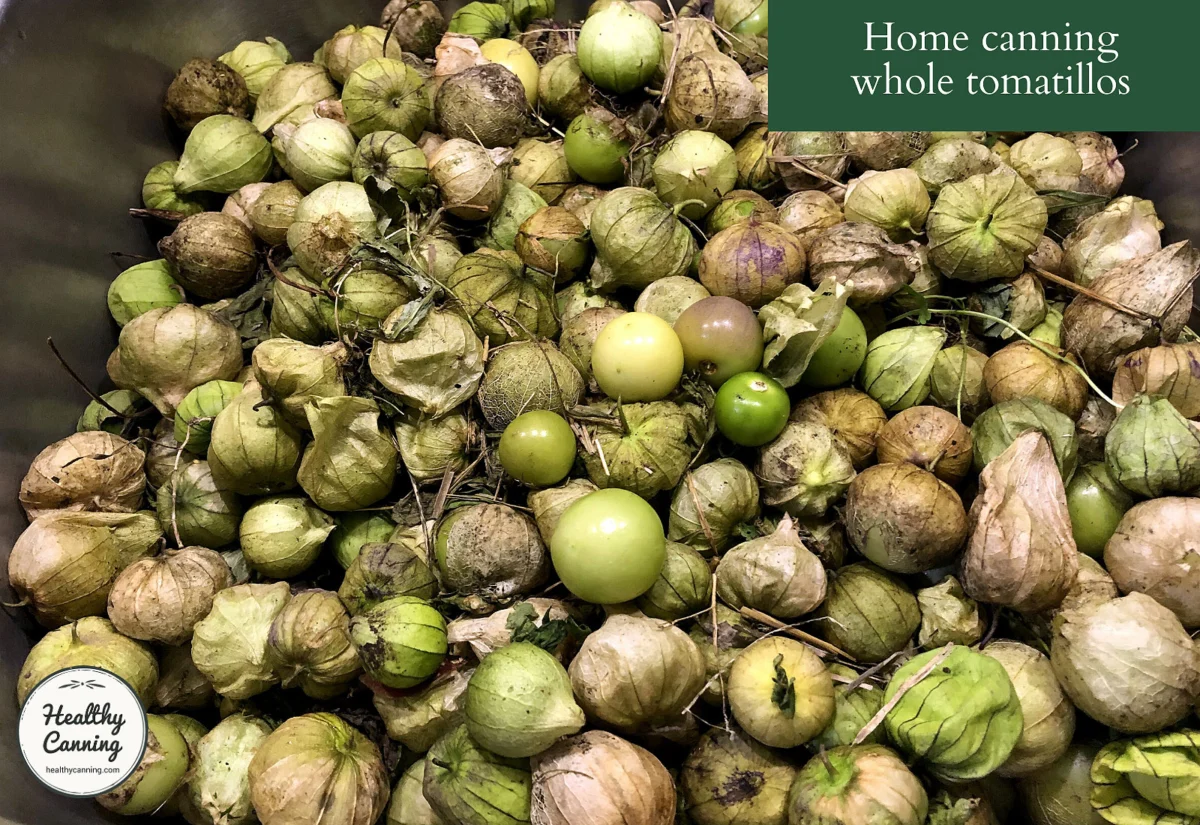
The tomatillo, often referred to as the Mexican husk tomato, is a member of the nightshade family, though it is more closely related to the Cape gooseberry than the common tomato. Encased in a papery calyx or husk, the fruit is known for its high pectin content and acidic profile. Historically, tomatillos have been central to Mesoamerican diets for millennia, predating the arrival of Europeans in the Americas. In modern culinary applications, they serve as the foundational ingredient for salsa verde, various moles, and stews.
From a preservation perspective, the tomatillo presents a distinct advantage. While tomatoes often require extensive labor to peel and de-seed, tomatillos are processed whole after the removal of the husk. The fruit’s natural pH typically hovers around 3.83, making it significantly more acidic than many commercial tomato varieties. However, despite this natural acidity, the USDA mandates the addition of external acidifiers during the canning process to ensure a consistent safety margin, as individual fruit acidity can vary based on soil conditions, ripeness, and cultivar.

Preparation Standards and Quantitative Guidelines
Successful home canning begins with precise raw material estimation and preparation. Agricultural data suggests that for every one-liter jar (approximately one US quart), a processor should anticipate needing roughly one kilogram (two pounds) of fresh tomatillos. These figures are approximate, as the size and density of the fruit will dictate how many can be efficiently packed into the glass vessels.
The preparation phase involves several critical steps:
- Husking: The papery outer husks must be removed and discarded.
- Cleaning: Tomatillos naturally produce a sticky, resinous film (saponins) on their skin. This must be washed off using cool water.
- Integrity Check: Only firm, blemish-free fruit should be selected for canning. Any fruit showing signs of rot or insect damage must be excluded to prevent spoilage of the entire batch.
- Simmering: Before packing, the husked and washed tomatillos are typically simmered in boiling water for approximately two to three minutes. This softens the fruit slightly, allowing for a tighter pack and exhausting internal air, which helps prevent "floating" in the jar and ensures a better vacuum seal.
The Mandatory Role of Acidification
One of the most critical safety components of the USDA procedure is the requirement for acidification. Even when utilizing high-pressure canning methods, the addition of an acidifier is non-negotiable. This is because the established thermal processing times for tomatillos were designed based on a specific acidity level to ensure the destruction of Clostridium botulinum spores.
Processors have three primary options for acidification per one-liter (quart) jar:
- Lemon Juice: Two tablespoons of bottled lemon juice. (Bottled juice is required over fresh to ensure a standardized pH level).
- Lime Juice: Two tablespoons of bottled lime juice. This is often preferred for tomatillos as the flavor profile complements the fruit’s natural citrus notes.
- Citric Acid: One-half teaspoon of USP-grade citric acid granules.
For half-liter (pint) jars, these amounts are halved. While salt is often added (typically one teaspoon per quart), it is strictly for seasoning and does not contribute to the preservation or safety of the product.
Thermal Processing Methods: A Comparative Analysis
The USDA provides three approved methods for processing tomatillos: water bath canning, steam canning, and pressure canning. Each method has specific time and pressure requirements that must be adjusted based on the processor’s altitude.
Water Bath and Steam Canning
Water bath canning remains the most accessible method for home processors. It involves submerging filled jars in boiling water (212°F / 100°C) for a set duration. Steam canning, a more water-efficient alternative, uses a shallow reservoir of water to create a steam environment around the jars.
For these methods, the processing times are:

- Half-liter (Pint) Jars: 40 minutes.
- One-liter (Quart) Jars: 45 minutes.
It is important to note that steam canning is only recommended if the total processing time—including altitude adjustments—does not exceed 45 minutes. If the time exceeds this limit, there is a risk that the canner may boil dry, compromising the safety of the batch.
Pressure Canning
Pressure canning is often misperceived as a method that eliminates the need for acidification. However, in the case of tomatillos, the pressure canning process is primarily a time-saving measure rather than a substitute for acidity.
The weighted-gauge pressure requirements for both pint and quart jars are as follows:
- 5 Pounds of Pressure: 15 minutes (at altitudes of 0–1,000 feet).
- 10 Pounds of Pressure: 10 minutes (at altitudes of 0–1,000 feet).
- 15 Pounds of Pressure: 1 minute (at altitudes of 0–1,000 feet).
At altitudes above 1,000 feet, these pressures must be increased (e.g., 10 pounds becomes 15 pounds) to compensate for the lower boiling point of water.
Chronology of the Canning Procedure
The following timeline outlines the standard workflow for a successful canning session:
- Zero Hour: Sterilize jars and prepare canning equipment.
- 0:30: Husk and wash tomatillos; begin heating the canning water.
- 1:00: Simmer tomatillos in boiling water for 2–3 minutes.
- 1:15: Add the required acidifier to hot jars. Pack the hot tomatillos into jars, leaving a 2 cm (1/2 inch) headspace. Fill the remaining space with boiling water or the cooking liquid.
- 1:30: Remove air bubbles, wipe jar rims, and apply two-piece lids.
- 1:45: Begin thermal processing (40–45 minutes for water bath).
- 2:30: Remove jars from the canner and allow them to sit undisturbed for 12 to 24 hours to ensure a proper vacuum seal.
Nutritional Profile and Dietary Implications
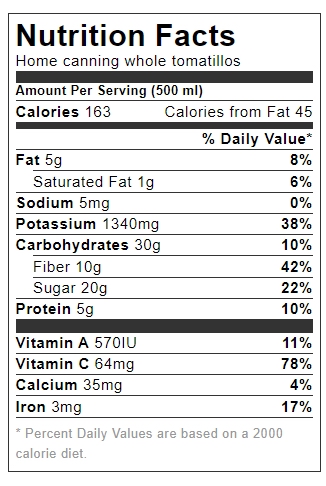
Canned tomatillos are an excellent addition to a health-conscious pantry. A half-liter (pint) serving of plain canned tomatillos contains approximately 163 calories. They are a significant source of dietary fiber (10g) and potassium (1340mg), which is essential for cardiovascular health. Additionally, they provide Vitamin C (64mg) and Vitamin A, though some Vitamin C may be lost during the high-heat processing. Because the home-canning process allows for the omission of salt, these preserves are ideal for individuals on low-sodium diets, containing only about 5mg of naturally occurring sodium per serving.
Culinary Applications and Market Insights
Industry experts and culinary historians note that canned tomatillos are best suited for "cooked" applications. Because the canning process effectively "cooks" the fruit, they lack the crisp texture required for fresh salsa cruda. However, they are ideal for sauces that are simmered or roasted.
Martha Rose Shulman of The New York Times suggests that 11 ounces of canned tomatillos can generally substitute for one pound of fresh fruit in recipes. Since the canned version is already softened, the initial simmering or broiling steps found in many traditional recipes can be bypassed. Furthermore, The Joy of Cooking highlights their utility as a direct condiment for grilled seafood and poultry, where their acidity cuts through the richness of the proteins.
Broader Impact and Conclusion
The standardization of home canning for tomatillos represents a broader movement toward scientific literacy in home food preservation. By following USDA-tested recipes, home cooks contribute to a safer food system and reduce domestic food waste. The ability to preserve tomatillos allows for the enjoyment of Mexican and Central American flavors year-round, regardless of local growing seasons.
As food prices fluctuate and global supply chains remain sensitive to disruption, the mastery of high-acid preservation techniques provides a vital layer of household resilience. The tomatillo, with its high yield and robust nutritional profile, stands as a premier candidate for those looking to expand their home preservation repertoire beyond traditional pickles and jams. Adhering to the 2015 USDA guidelines ensures that this vibrant, tart fruit remains a safe and delicious staple in the modern larder.