
The storage and preservation of maple syrup represents a significant challenge for consumers who purchase the product in bulk quantities. While maple syrup is a staple of North American pantries, its high sugar content and unique chemical composition require specific handling to prevent spoilage, primarily through mold colonization and fermentation. Industry experts and agricultural extension services emphasize that while unopened syrup can maintain quality for extended periods, the transition from a sealed commercial container to a household environment introduces various contamination risks that necessitate a scientific approach to food safety and quality maintenance.
The Scientific Foundation of Maple Syrup Stability
To understand the requirements for storing maple syrup, one must first examine the regulatory and chemical standards that define the product. In North America, the transformation of maple sap into syrup is governed by strict density requirements. According to the North American Maple Syrup Council, the legally required density for maple syrup must fall between 66° and 68° Brix. The Brix scale measures the sugar concentration in a liquid, where one degree Brix is roughly equivalent to one percent sugar content.
This specific range is critical for both safety and quality. If the syrup falls below 66° Brix, the water activity remains high enough to allow for the growth of yeast and molds, leading to fermentation and spoilage. Conversely, if the density exceeds 68° Brix, the solution becomes supersaturated, causing sugar crystals (sucrose) to precipitate out and settle at the bottom of the container.

The acidity of maple syrup also plays a role in its preservation. The Food and Drug Administration (FDA) cites an average pH of 5.15 for maple syrup, placing it in the low-acid food category (pH above 4.6). In many low-acid foods, this would present a risk for Clostridium botulinum spores. However, the high sugar concentration in maple syrup creates a low "water activity" environment. This means that while water is present, it is chemically "bound" to the sugar molecules and unavailable for microbial use, effectively inhibiting the germination of dangerous pathogens.
Chronology of Storage: From Purchase to Consumption
The lifespan of maple syrup is dictated by a timeline that begins the moment the product is packaged by the producer. Understanding this chronology is essential for consumers managing bulk inventories.
Phase I: Unopened Shelf Storage
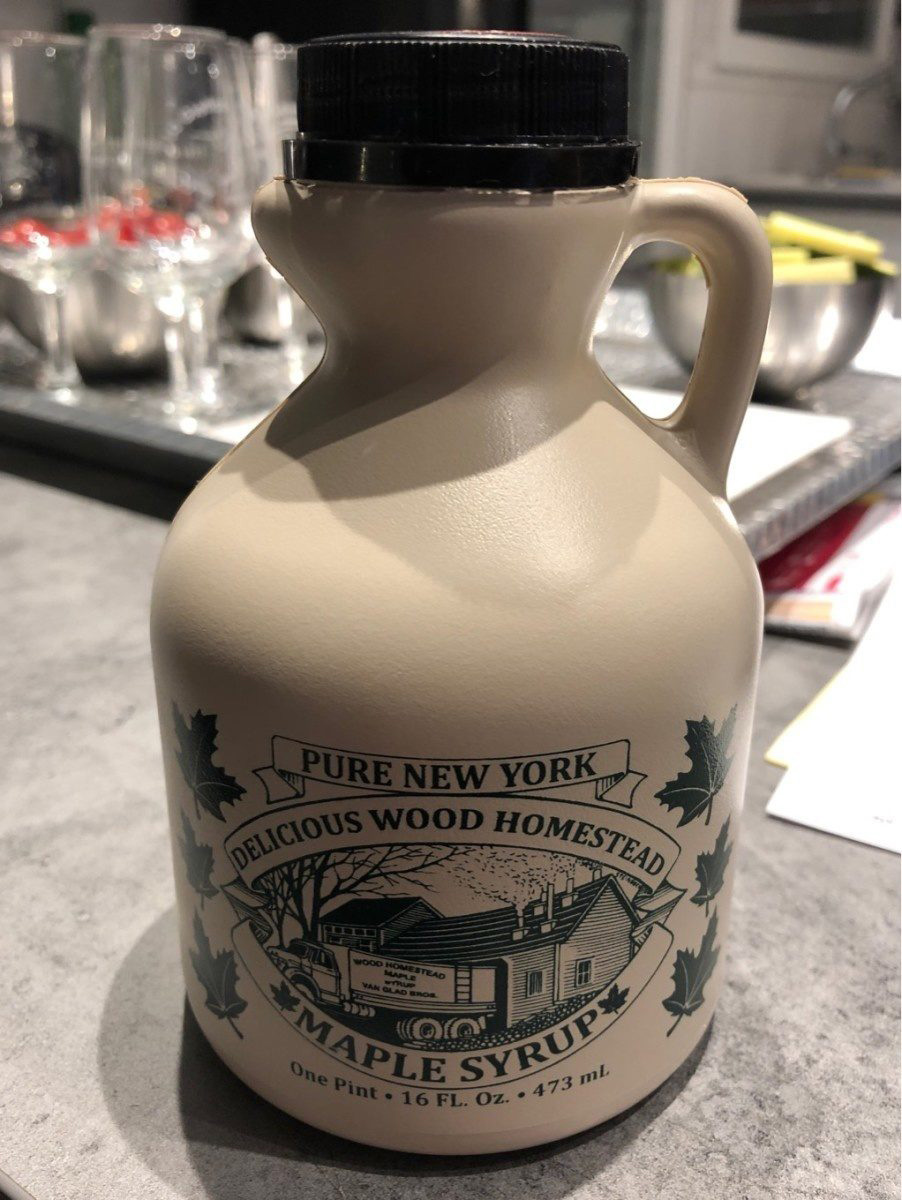
Unopened containers of maple syrup generally possess a long shelf life at room temperature, provided they are made of non-porous materials. Glass bottles, metal tins, and squeeze-type plastic containers act as effective oxygen barriers. However, a notable exception exists for the traditional beige or grey plastic jugs often associated with artisanal producers. The Quebec Maple Syrup Producers Association (QMSP) has noted that these specific plastic receptacles are not foolproof barriers to oxygen. Over time, oxygen can permeate the plastic, leading to quality degradation even if the seal remains intact. Consequently, experts recommend that even unopened beige plastic jugs be stored in refrigeration to prolong the product’s life.
Phase II: The Post-Opening Environment
The moment the seal on a maple syrup container is broken, the product is exposed to ambient air, which invariably contains mold spores. Once contaminated by the environment, the syrup is no longer suitable for room-temperature storage. At this stage, the syrup must be moved to a refrigerator. While the cold temperatures of a refrigerator slow the metabolic processes of mold, they do not stop them entirely. Consumers using large quantities over several months may still encounter mold growth on the surface of the syrup if it remains in the refrigerator for too long.
Phase III: Long-Term Stabilization via Freezing
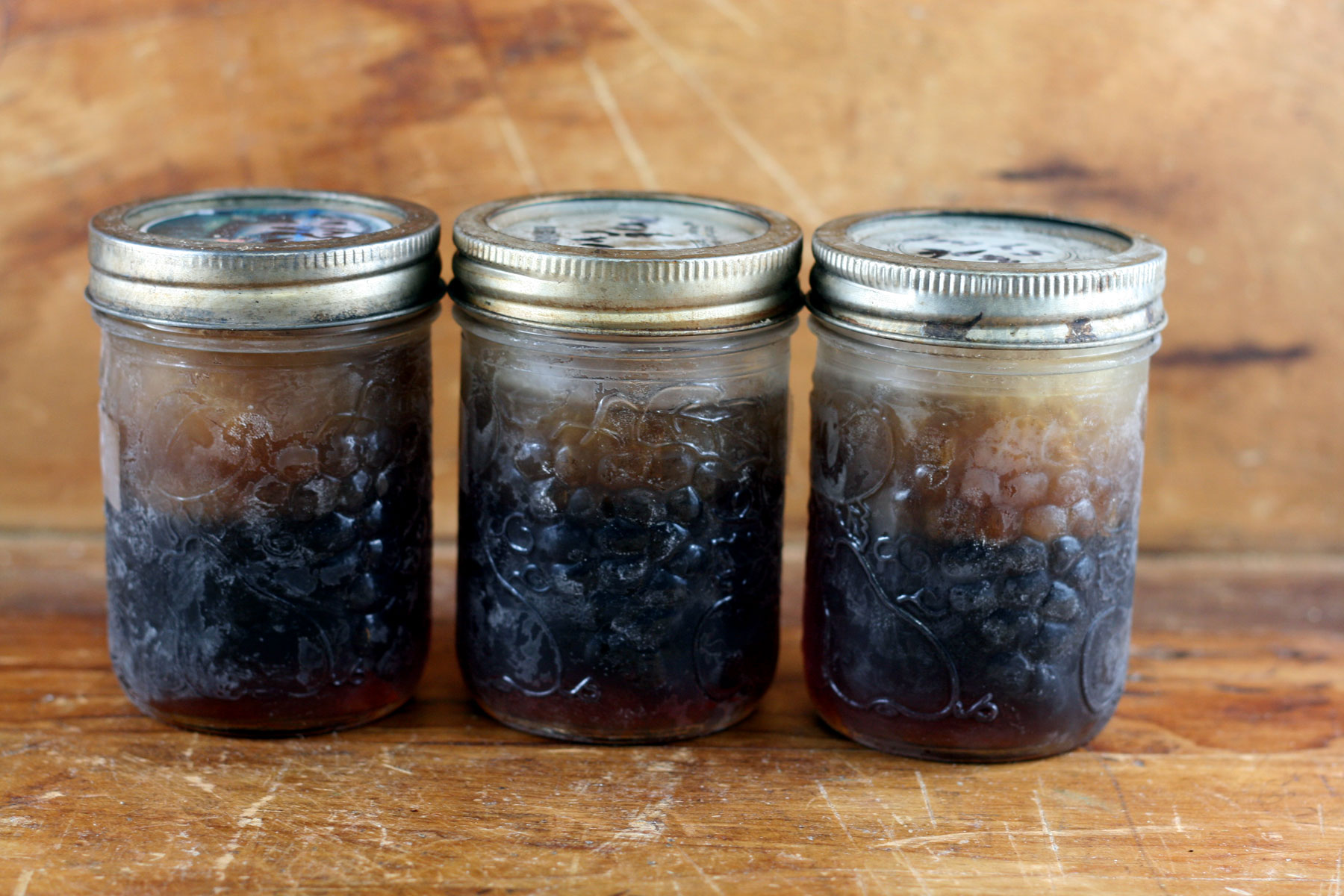
For bulk purchases that cannot be consumed within a few months, freezing is the internationally recognized "gold standard" for home preservation. Unlike water, maple syrup does not freeze into a solid block due to its high sugar concentration. Instead, it becomes highly viscous, taking on a texture similar to chilled honey. This state prevents all microbial growth and preserves the delicate flavor compounds that can be lost through repeated heating or prolonged refrigeration.
Supporting Data on Freezing and Quality Retention
Data from the Vermont Maple Sugar Makers’ Association and various university extension services support freezing as the most effective method for maintaining "Grade A" quality. Research indicates that maple syrup can undergo multiple freeze-thaw cycles without a significant loss in sensory quality, provided that any condensation forming on the surface is stirred back into the syrup upon thawing.
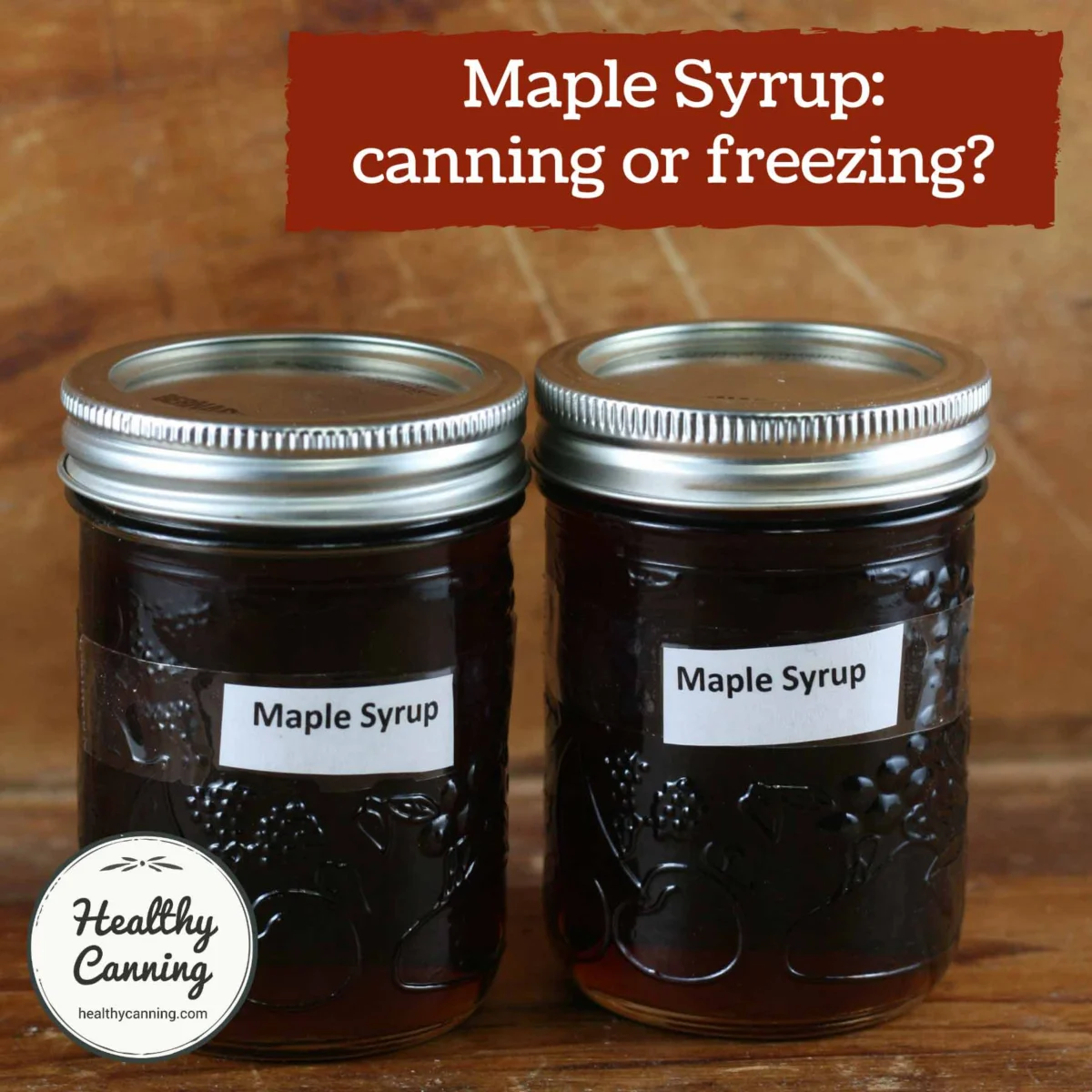
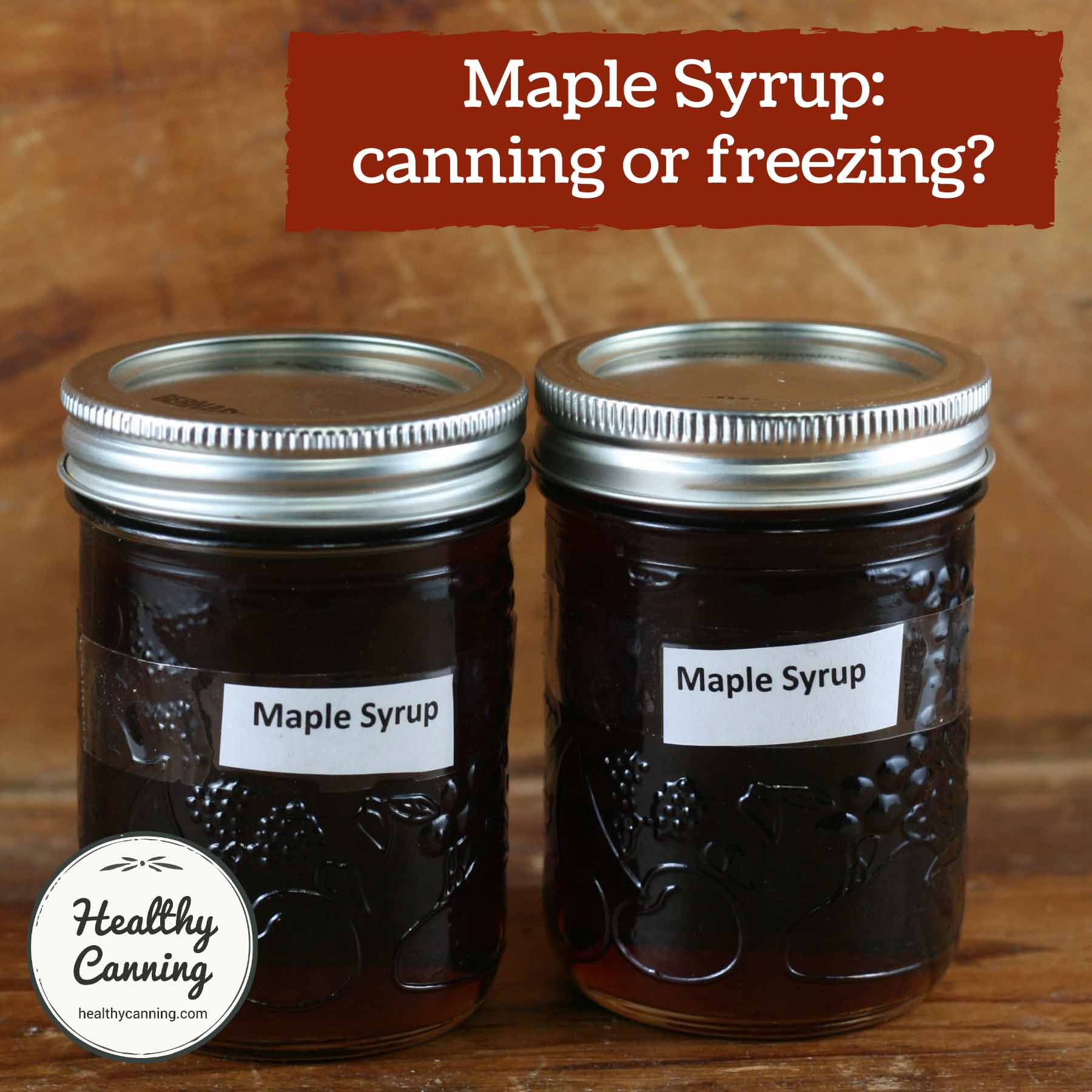
When preparing syrup for the freezer, the choice of container is paramount. Glass Mason jars are preferred over plastic, as glass is entirely impermeable to oxygen and does not leach flavors. However, the physical principle of expansion must be accounted for. The National Center for Home Food Preservation (NCHFP) provides specific headspace guidelines for freezing syrups:
- Pint jars: Require 1/2 inch (1.25 cm) of headspace.
- Quart jars: Require 1 inch (2.5 cm) of headspace.
These gaps allow for the slight expansion of the liquid and the air pocket, preventing the glass from shattering under pressure.
The Technical Challenges of Home "Canning"
While some consumers attempt to "re-can" bulk maple syrup into smaller jars for room-temperature storage, agricultural experts generally discourage this practice for home users. This process is more accurately described as "bottling" or "hot packing," as it lacks the standardized pressurized or boiling-water processing times associated with traditional home canning.
The Hot Pack Protocol
In commercial settings, the "hot pack" method involves heating the syrup to a precise range of 82°C to 85°C (180°F to 185°F). This temperature is high enough to kill most yeast and mold spores but low enough to avoid damaging the syrup. If the temperature exceeds 90°C (194°F), several quality issues arise:
- Sugar Sand Precipitation: Dissolved minerals, primarily calcium malate, precipitate out of the solution, creating a cloudy appearance and a gritty sediment known as "niter" or "sugar sand."
- Stack Burn: If syrup is bottled too hot and not cooled rapidly, it continues to "cook" inside the jar. This leads to a darkening of the color and a scorched flavor profile, a condition industry professionals call "stack burn."
The Inversion Technique
A critical component of the bottling process is "inversion." Once the jar is filled with hot syrup and capped, it is turned upside down for five to ten minutes. This ensures that the hot liquid comes into direct contact with the underside of the lid and the neck of the bottle, areas where mold spores often linger.
Despite these measures, the University of Maine Cooperative Extension conducted a study highlighting the fallibility of this method in non-commercial settings. In a sample of 34 maple syrup containers submitted by small-scale producers, 32 were found to be contaminated with fungi. This data suggests that achieving true sterility outside of a controlled industrial environment is exceedingly difficult, reinforcing the recommendation for freezing as a safer alternative for home use.
Official Responses and Expert Recommendations
Governmental and academic bodies have reached a consensus on the hierarchy of storage methods. The Ontario Ministry of Agriculture, Food and Rural Affairs (OMAFRA) emphasizes that while hot packing is the industry standard, it does not guarantee the destruction of all heat-resistant mold spores. They recommend that home consumers prioritize refrigeration and freezing to avoid product loss.
Purdue University’s Extension Services and Ohio State University Extension both explicitly state that heating and re-canning syrup can alter its delicate flavor and color. Their official guidance suggests that consumers should only keep in the refrigerator what they can use in a "reasonable time" and freeze the remainder in glass freezer-safe jars immediately upon purchase.
Broader Impact and Implications for Consumers
The implications of improper maple syrup storage are both economic and safety-related. Maple syrup is a premium agricultural product; the loss of a bulk gallon due to mold represents a significant financial waste for a household. Furthermore, while many traditionalists suggest simply "skimming the mold" off the top and boiling the syrup, modern food safety experts advise against this. Some molds produce mycotoxins that can migrate deep into the liquid, remaining even after the visible mold and heat-sensitive spores are removed.
As the global maple syrup market continues to expand—with Quebec alone producing over 70% of the world’s supply—the education of the end-consumer becomes vital. The shift toward bulk purchasing and "homesteading" practices requires a concomitant shift in understanding food chemistry. By utilizing the freezer as a primary storage tool, consumers can enjoy the seasonal harvest of the maple woods year-round without compromising the integrity or safety of this culturally significant sweetener.