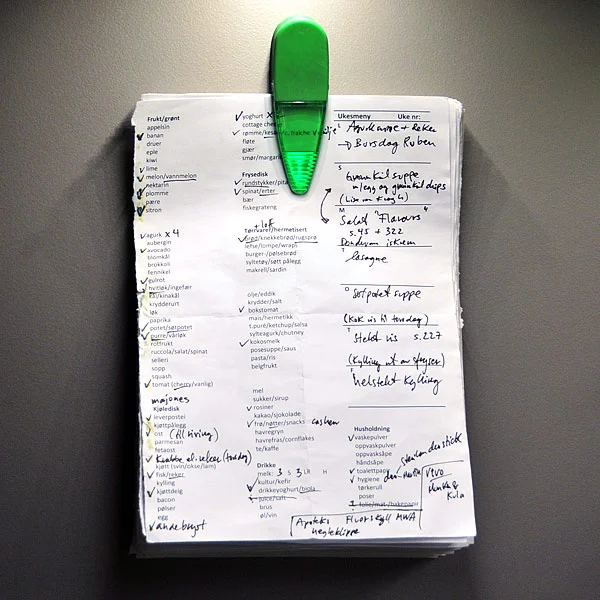

Following a prolonged period of silence, a notable voice in practical household management has re-emerged, championing a surprisingly low-tech yet highly effective method for streamlining weekly meal planning and grocery shopping. The core of this system, developed and refined over six years by an individual keen on optimizing domestic routines, is a customizable, pre-populated paper grocery list. This approach, shared recently, posits that despite the proliferation of digital alternatives, the tactile simplicity of paper offers unparalleled advantages for busy households navigating the complexities of modern life, particularly in cultures grappling with phenomena like Norway’s "tidsklemma" – a pervasive sense of time scarcity.
The Modern Predicament: Time Scarcity and Decision Fatigue
Contemporary life often presents individuals and families with a daunting array of demands. Full-time employment, childcare responsibilities, social engagements, and personal pursuits leave many feeling perpetually pressed for time. This "time crunch," or "tidsklemma" as it is colloquially known in Norway, signifies a constant struggle to balance numerous obligations, often leading to increased stress and a decline in well-being. A 2022 study by the American Psychological Association, for instance, highlighted that a significant percentage of adults report feeling overwhelmed by daily tasks, with household management frequently cited as a major contributor to stress.
Within this landscape, meal preparation and grocery shopping emerge as significant time and energy drains. Research from the U.S. Department of Agriculture (USDA) indicates that American households spend an average of 1.5 to 2 hours per week on grocery shopping alone, not including the time spent planning meals or preparing food. Furthermore, the mental load associated with deciding "what’s for dinner" every night, compiling shopping lists from scratch, and navigating supermarket aisles can lead to decision fatigue, a phenomenon where the quality of decisions deteriorates after a long session of decision-making. This often results in impulse purchases, forgotten items, multiple trips to the store, and ultimately, increased food waste and expenditure. The Food and Agriculture Organization (FAO) estimates that roughly one-third of the food produced globally for human consumption is lost or wasted, with significant portions occurring at the household level due to poor planning and over-purchasing.
The Genesis of an Efficient System: A Six-Year Evolution
The proponent of this paper-based system, a seasoned home manager, developed it out of a necessity to reclaim time and reduce stress associated with weekly meal preparations. The system’s inception dates back over six years, undergoing continuous refinement to adapt to changing family needs, dietary preferences, and even the layout of the local supermarket. Initially, the process involved starting a grocery list from scratch each week, a repetitive and inefficient exercise. The breakthrough came with the creation of a generic, comprehensive list – a foundational document that encompasses all items typically purchased from the grocery store.
This master list is meticulously organized. It categorizes items logically, mirroring common food groups such as produce, dairy, meats, pantry staples, and household goods. Crucially, its structure is also designed to align with the physical layout of the user’s primary supermarket. This strategic arrangement minimizes backtracking and ensures a more fluid, time-efficient shopping experience. By categorizing items and mapping them to the store’s flow, the system effectively transforms a potentially chaotic shopping trip into a focused, almost intuitive exercise.
Operational Mechanics: Simplicity as a Virtue
The operational simplicity of the system is its hallmark. Rather than generating a new list each week, the user begins with a pre-printed template of their generic list. For the upcoming week, specific items required are simply ticked off. The list also incorporates ample blank space, allowing for the addition of unique items, specific brands, or detailed specifications that might not be on the generic list. This blend of pre-structuring and flexibility is key to its enduring utility.
Central to this efficiency is the integration of a weekly dinner plan directly onto the same document. By allocating space for the week’s menu, often referencing specific cookbook page numbers for recipes, the list serves a dual purpose. It not only guides shopping but also acts as a visual reminder of upcoming meals. This immediate correlation between planned meals and required ingredients significantly reduces the likelihood of forgetting crucial items while in the store, a common frustration for many shoppers. The physical presence of the menu on the shopping list acts as a subconscious prompt, reinforcing the connection between what is needed and why.
The Enduring Appeal of Paper in a Digital Age
In an era dominated by smartphone applications designed for every conceivable task, the system’s reliance on paper might seem counterintuitive. However, its advocate firmly asserts that "nothing beats paper for this purpose." This claim is substantiated by several practical advantages:
- "Superb Resolution" and Comprehensive Overview: A single A5-sized piece of paper (or A4/legal size, as templates are provided) offers a complete, high-resolution overview of both the weekly menu and the entire shopping list. Unlike digital apps that often require scrolling or switching between screens, paper provides an immediate, holistic perspective. This allows for quick mental cross-referencing and avoids the cognitive burden of navigating digital interfaces.
- Portability and Convenience: A folded paper list can be easily slipped into a pocket, providing unobtrusive access during shopping. This contrasts with the potential for digital distractions from phone notifications or the inconvenience of juggling a phone while pushing a cart and managing other tasks.
- Flexibility for Notes: The physical nature of paper provides ample space for spontaneous notes, last-minute additions, or specific details about items. The back of the sheet offers additional space if needed, a level of flexible annotation often cumbersome in structured digital formats.
- Archivability and Iterative Improvement: The paper lists are easily archived. By reviewing past weeks’ lists, the user can quickly identify trends, seasonal necessities, or items that have become redundant. This iterative review process is crucial for the system’s continuous adaptation. For instance, items frequently purchased when children were younger may now be removed, reflecting evolving family demographics and preferences. This continuous feedback loop ensures the list remains relevant and optimized.
This preference for paper also taps into a broader trend of "digital detox" and the appreciation for tangible tools. In an increasingly digital world, some individuals are actively seeking analog solutions to reduce screen time and mental clutter, finding that physical tools can enhance focus and simplify tasks that have become overly complicated by technology.
Broader Impact and Implications
The adoption of such a systematized approach to meal planning and grocery shopping carries significant implications beyond mere convenience:
- Enhanced Time Management: By pre-planning and streamlining the shopping process, individuals can reclaim valuable time that would otherwise be spent on daily decision-making or multiple store trips. This time can then be reallocated to other pursuits, improving overall work-life balance.
- Financial Savings: A well-planned grocery list reduces impulse purchases and ensures that only necessary items are bought. This proactive approach can lead to substantial savings on the weekly grocery bill. Moreover, by aligning purchases with a meal plan, the system inherently reduces food waste, preventing money from being spent on items that ultimately go unused.
- Reduced Mental Load and Stress: The elimination of daily meal-planning decisions and the stress of forgotten items significantly reduces cognitive load. This mental freedom can contribute to a greater sense of calm and control over household responsibilities.
- Promotion of Home Cooking and Healthier Eating: By making meal planning easier and more efficient, the system encourages more frequent home cooking. This often correlates with healthier eating habits, as home-cooked meals typically involve fresh ingredients and less processed foods compared to convenience meals or takeout.
- Environmental Sustainability: A direct consequence of reduced food waste at the household level is a positive environmental impact. Less wasted food means less energy and resources expended on production, transportation, and disposal.
- Adaptability and Personalization: While the shared templates offer a starting point, the core principle of a customizable, evolving list makes it universally adaptable. No two families are identical, and the system’s strength lies in its capacity to be tailored to individual tastes, dietary needs, and local market conditions.
Strategic Flexibility: The Importance of Deviation
Despite advocating for a structured approach, the system’s proponent also stresses the importance of flexibility. While planning a week ahead makes home cooking more feasible, acknowledging "tidsklemma" means recognizing that spontaneous events or moments of exhaustion will occur. "An important rule if you shop weekly is to sometimes deviate from your weekly dinner plan!" the advocate emphasizes. Whether it’s an impromptu dinner invitation or a need for a quick takeout meal on a particularly grueling day, the system is designed to absorb these deviations without undermining its overall effectiveness. The structure provides a default, allowing for deliberate and guilt-free departure when circumstances warrant. This balance between planning and adaptability is crucial for long-term adherence and effectiveness.
Empowering Households with Practical Tools
In an effort to empower others to adopt similar efficiencies, the generic grocery list templates have been made available for download in various formats (Norwegian A4, English A4, and English Legal size Word documents). This open-source approach to household management underscores the belief that simple, well-designed tools can have a profound impact on daily life.
This renewed focus on practical, analog solutions serves as a reminder that not every problem requires a high-tech answer. Sometimes, the most effective innovations are those that harness fundamental principles of organization and human psychology, leveraging the enduring strengths of tools like paper to bring order and efficiency to the demanding rhythm of modern living. The personalized paper grocery list, a testament to iterative design and practical utility, offers a compelling counter-narrative to digital dependency, proving that sometimes, the simplest solutions are indeed the most profound.