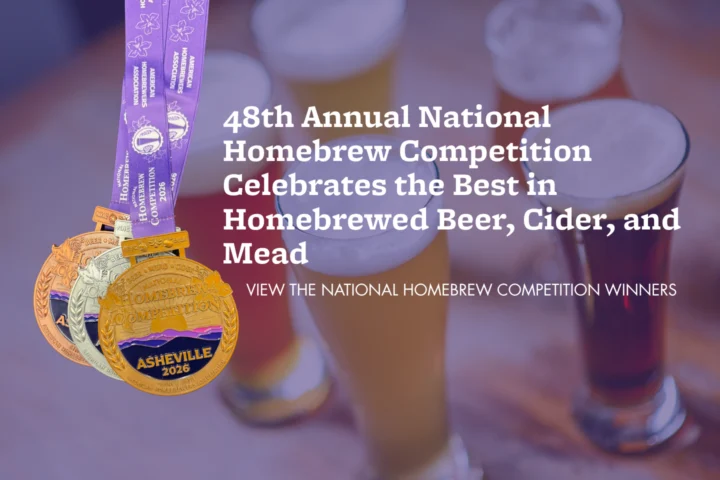

The American Homebrewers Association (AHA) has officially concluded its 48th annual National Homebrew Competition (NHC), crowning the top amateur brewers, meadmakers, and cidermakers in the world during a gala awards ceremony held in Asheville, North Carolina. On June 20, 2026, the organization recognized the pinnacle of fermentation excellence, awarding 120 medals across 40 distinct style categories. The ceremony served as the grand finale to Homebrew Con, the premier educational and social gathering for the homebrewing community, which drew thousands of enthusiasts to the heart of the Blue Ridge Mountains.
This year’s competition underscored the enduring popularity and increasing sophistication of the homebrewing hobby. With 3,575 entries submitted by 1,054 AHA members, the event solidified its standing as the world’s largest and longest-running homebrew competition. Participants represented 46 U.S. states, Washington, D.C., and seven different countries, highlighting the global reach of the American-led homebrewing movement.
A Rigorous Multi-Stage Evaluation Process
The journey to the podium in Asheville was a multi-month endeavor involving rigorous sensory analysis and logistical coordination. The 2026 competition followed a two-stage judging format designed to manage the high volume of entries while ensuring every beverage was evaluated by qualified experts.
The first round of judging took place earlier in the spring across nine regional hubs. These strategic locations—San Diego, California; Chicago, Illinois; Indianapolis, Indiana; Kansas City, Missouri; Longmont, Colorado; Philadelphia, Pennsylvania; San Francisco, California; Seattle, Washington; and Tampa, Florida—allowed for the efficient processing of thousands of bottles. Only the highest-scoring entries from these regional sites advanced to the final round.
The final evaluation phase occurred on June 17 and 18 in Asheville, just days before the winners were announced. During these sessions, a panel of elite judges, many certified through the Beer Judge Certification Program (BJCP), conducted blind tastings to determine the gold, silver, and bronze medalists. The criteria for these awards are notoriously stringent, requiring beers to not only be free of technical flaws but to also perfectly exemplify the stylistic parameters of their respective categories.
Dominant Styles and Trends in 2026
The 2026 competition saw a notable shift in entry trends, with traditional European styles seeing a resurgence in popularity among the nation’s top homebrewers. While American IPAs have historically dominated entry counts, this year’s "Most-Entered Style Categories" reflected a sophisticated focus on technical brewing and fermentation control.
The Dark European Lager category (Table 7) emerged as the most competitive field with 152 entries. This category includes demanding styles such as Munich Dunkel and Schwarzbier, which require precise temperature control and long conditioning periods. Following closely was the Pale European Beer category (Table 2) with 137 entries, encompassing clean, crisp styles like Helles and German Leichtbier. The third most-entered category was Strong Belgian Ale (Table 26), which saw 123 entries, showcasing the homebrew community’s affinity for complex yeast profiles and high-gravity brewing.
Industry analysts suggest that the pivot toward lagers and traditional European styles indicates an "elevation of craft" within the hobby. "Homebrewers are no longer just looking for the biggest hop hit," noted one BJCP Master Judge during the event. "They are challenging themselves with subtle, balanced styles where there is nowhere for a brewing flaw to hide."
Major Awards and Individual Excellence
Beyond the 40 style categories, the AHA presented six major awards recognizing overall brewing excellence and contributions to the community. These prestigious honors include the Cidermaker of the Year and Meadmaker of the Year, which celebrate mastery in non-beer fermentation.
The "Homebrew Shop of the Year" and the "AHA Advocacy Award" were also highlights of the evening. These awards recognize the infrastructure and the individuals that sustain the hobby. The local homebrew shop remains the "front line" of the industry, providing both supplies and education to beginners, while advocacy efforts often focus on legislative changes to protect the rights of homebrewers to share their creations at festivals and competitions.
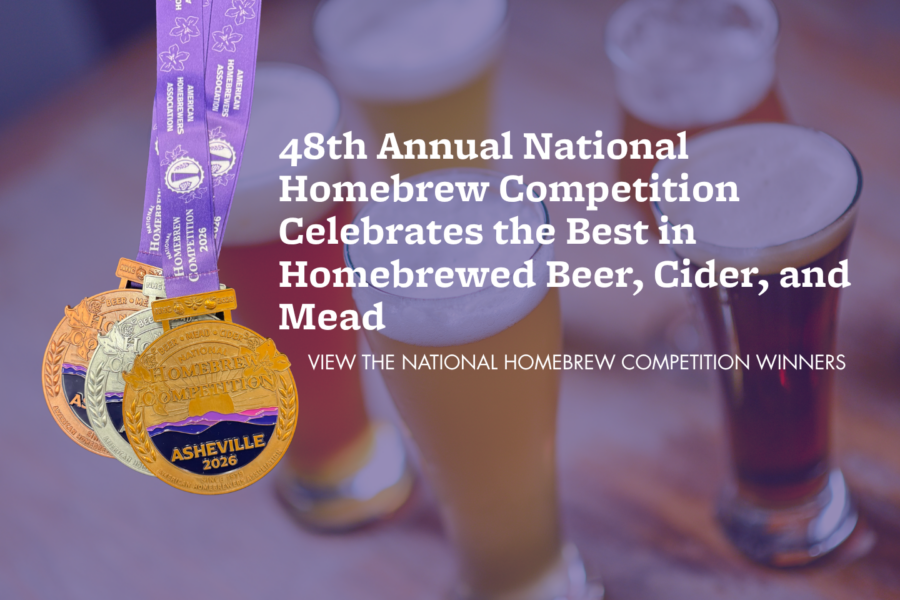
Charlie Harr, Chair of the National Homebrew Competition, emphasized the significance of these achievements during his address to the attendees. "Every year, I continue to be impressed by the rising quality of entries," Harr stated. "The creativity, technical skill, and care that homebrewers, meadmakers, and cidermakers bring to this competition is remarkable. Earning a medal at the NHC is an incredible achievement, but every entrant should be proud to have brewed and shared their work on this stage."
Historical Context: From Boulder to Asheville
The 2026 competition marks nearly half a century of organized homebrewing in the United States. The inaugural AHA National Homebrew Competition was held in 1979 in Boulder, Colorado, featuring only 34 entries. At that time, homebrewing had only recently been federally legalized following the passage of H.R. 1337, signed by President Jimmy Carter in late 1978.
Since its humble beginnings, the NHC has evaluated more than 170,000 entries. It has served as a primary "talent pipeline" for the professional craft brewing industry. Many of the most celebrated figures in modern brewing—including the founders of Sierra Nevada Brewing Co., Dogfish Head Craft Brewery, and Bell’s Brewery—started as homebrewers and often competed in the NHC during their early years.
The choice of Asheville as the host city for 2026 was a symbolic nod to the city’s reputation as "Beer City USA." With one of the highest numbers of breweries per capita in the country, Asheville provided a fitting backdrop for the thousand-plus enthusiasts who traveled to attend Homebrew Con. The event utilized local infrastructure, including Hi-Wire Brewing, which assisted in receiving final round entries, and the Renaissance Hotel, which hosted the culminating ceremony.
Institutional Support and Community Impact
The success of the 2026 NHC was supported by a network of nonprofit and corporate partners. The Beer Judge Certification Program (BJCP) provided the standardized framework for evaluation, ensuring that every entry was judged fairly against recognized style guidelines.
The American Homebrewers Association, which operates as both a 501(c)(6) membership organization and a 501(c)(3) supporting organization via the A-Ha Foundation, continues to use the competition as a vehicle for education. The AHA provides its members with validated recipes from the competition, allowing brewers of all skill levels to learn from the techniques of medal winners.
The economic impact of the event on the host city is also significant. Homebrew Con typically generates millions of dollars in local revenue through hotel stays, dining, and tourism. For the homebrewing community, however, the value is largely social. The "Club Night" event, a staple of the convention, allowed brewing clubs from across the country to pour their unique creations for one another, fostering a sense of camaraderie that defines the hobby.
Analysis: The Future of Homebrewing
While the 2026 NHC celebrated tradition, it also hinted at the future of the hobby. The inclusion of seven countries in the entry pool suggests a growing internationalization of the AHA’s standards. Furthermore, the high entry counts in technical categories like European Lagers suggest that homebrewers are increasingly utilizing advanced technology, such as automated fermentation chambers and digital sensors, to achieve professional-level results at home.
The competition also serves as a barometer for the broader craft beer industry. Historically, styles that gain traction in the NHC often appear on commercial taproom menus 18 to 24 months later. The current trend toward "clean" and "sessionable" lagers among homebrewers may signal a continued cooling of the "extreme beer" era in favor of drinkability and technical perfection.
As the awards ceremony concluded, the AHA looked forward to the 2027 cycle, which will continue the tradition of pushing the boundaries of what can be created in a home kitchen or garage. For the winners in Asheville, the medals represent more than just a trophy; they are a validation of months of experimentation, patience, and a deep-seated passion for the art of fermentation.
The full list of winners and their winning recipes will be made available to AHA members through Zymurgy magazine and the official AHA website, ensuring that the innovations celebrated in Asheville will continue to inspire the next generation of brewers worldwide.