
The quest for the perfect sourdough bagel is a journey marked by constant refinement and a deep dive into the nuances of fermentation, flour selection, and technique. For bakers who find themselves continually drawn back to the bench, seeking that elusive balance of texture and flavor, a new iteration of the sourdough bagel has emerged. This refined recipe, born from a series of thoughtful experiments, aims to deliver a lighter, glossier, and more complex bagel experience, diverging from traditional expectations while honoring the core principles of sourdough baking.
At its heart, this evolution of the sourdough bagel stems from a desire to explore the subtle interplay of ingredients and processes. Questions like, "What if the levain contributed some of the sweetness?" or "What if a blend of flours offered more character?" have guided the development of this updated formula. The result is not a radical departure, but rather a sharpening of an already beloved recipe, much like the meticulous adjustments made to achieve the ideal sourdough bread.
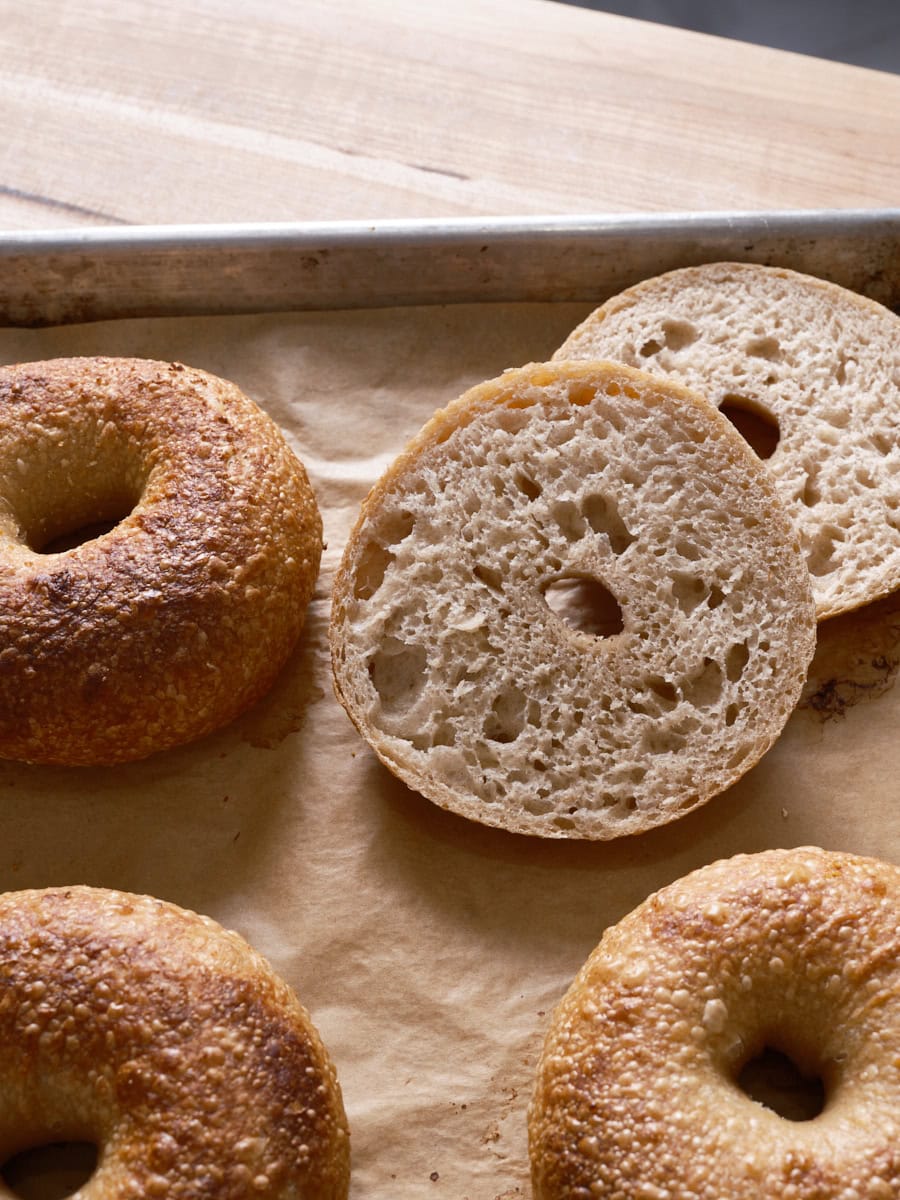
The journey to this "new wave" sourdough bagel involved a deliberate, one-variable-at-a-time approach. The flour blend was the initial focus, transitioning from a single flour to a sophisticated mix incorporating high- and medium-protein white flours, complemented by the nutty depth of whole wheat and the subtle earthiness of whole rye. This combination aims to achieve a more tender and open crumb, a departure from the denser, more uniform structure often associated with traditional bagels.
Further innovation came with the levain. By introducing a small amount of sugar, the levain’s balance was subtly shifted, favoring yeast activity over pronounced sourness. This ensures that the final bagel carries a gentle tang rather than an overwhelming acidity. The shaping technique also underwent a transformation, moving to the "poke method," a simpler and more forgiving approach for higher-hydration doughs, leading to a more even and consistent ring.
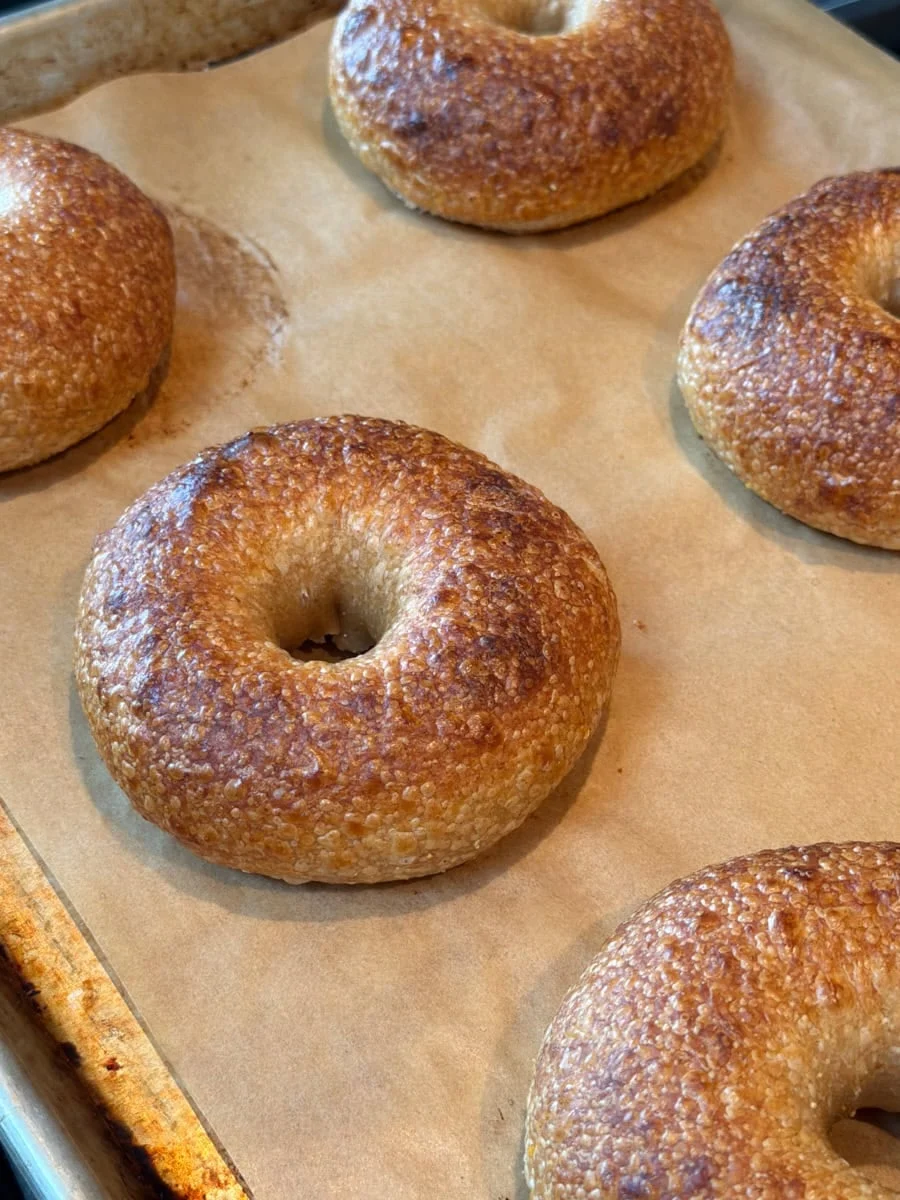
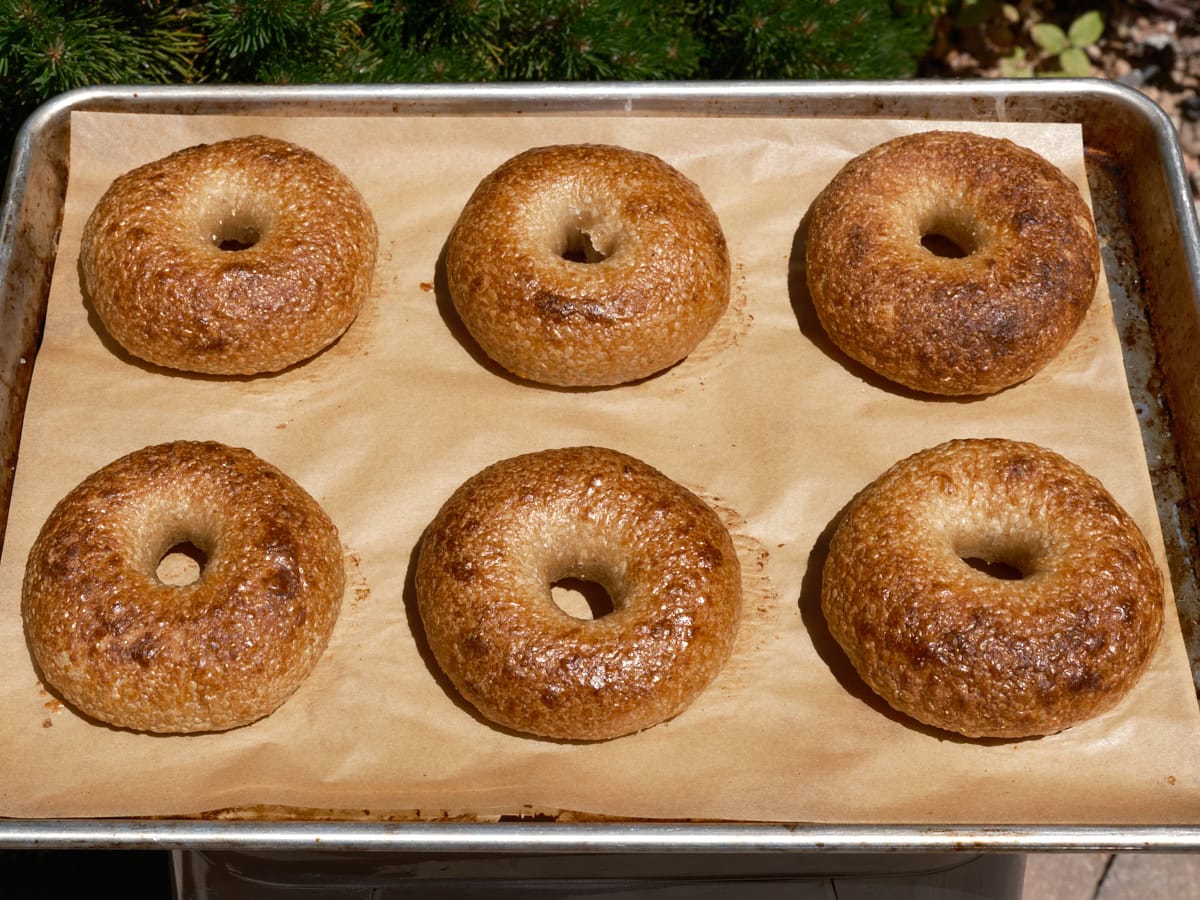
Perhaps the most impactful change is the overnight cold retard. This extended rest in the refrigerator dramatically influences the crust and flavor profile. The crumb opens up slightly, the crust develops more appealing blisters, and the overall flavor profile becomes more complex, boasting a delightful crispness and a rich, inviting color that speaks to a truly artisanal bake. This deliberate approach to fermentation and resting is crucial in achieving the desired textural and flavor nuances.
A Shift Towards Modern Bagel Craftsmanship
This "new wave" sourdough bagel represents a distinct stylistic choice, aligning with the aesthetic and textural preferences seen in contemporary artisanal bakeries. Unlike the more traditional New York-style bagel, characterized by its chewy texture, thicker crust, and closed crumb, this newer iteration embraces a lighter profile. It mirrors the sought-after qualities of establishments like Courage Bagels in Los Angeles, known for their glossy, blistered crusts that are both slightly crispy and delightfully irregular. The crumb structure is also more open, offering a more tender bite.
Mastering the Art: Shaping, Boiling, and Baking Techniques
The success of these new wave sourdough bagels hinges on a few key techniques, honed through extensive practice and observation:
-
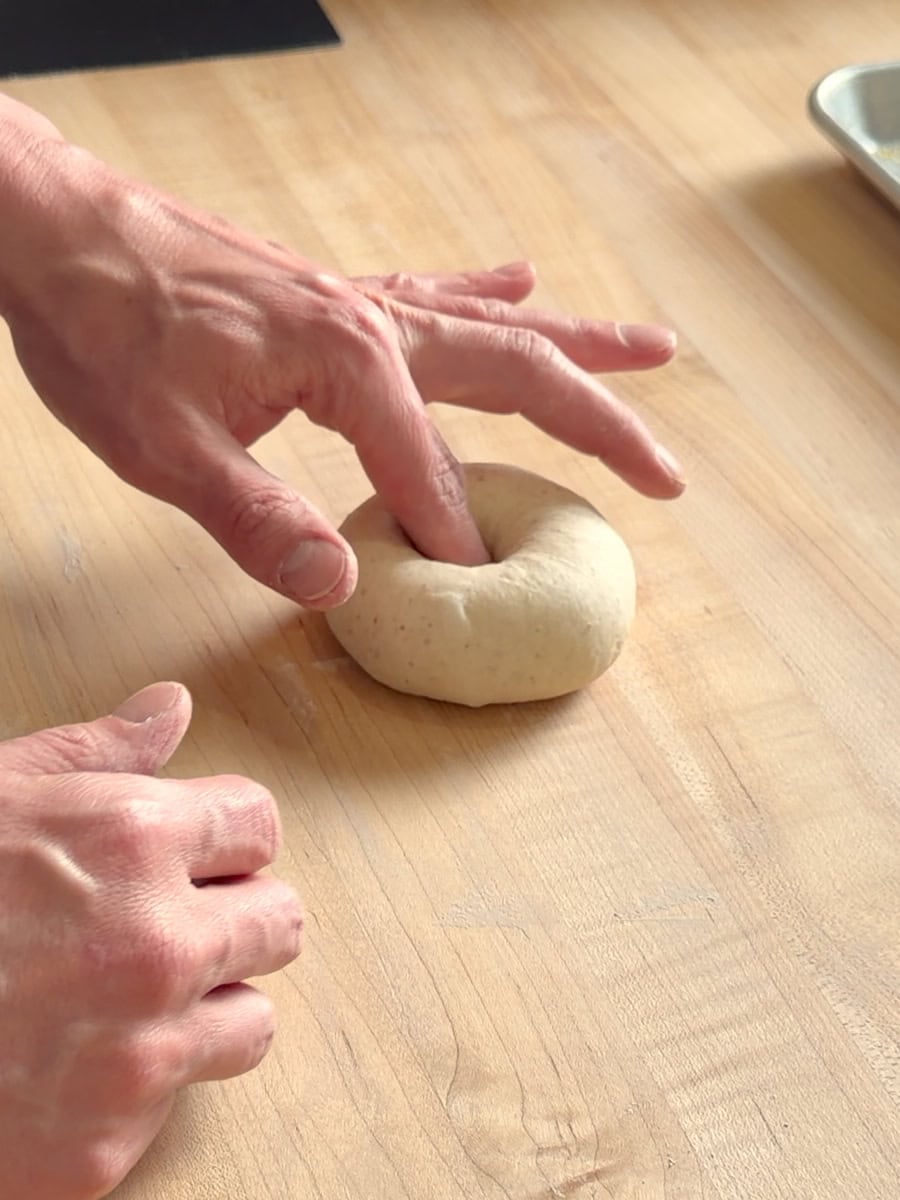
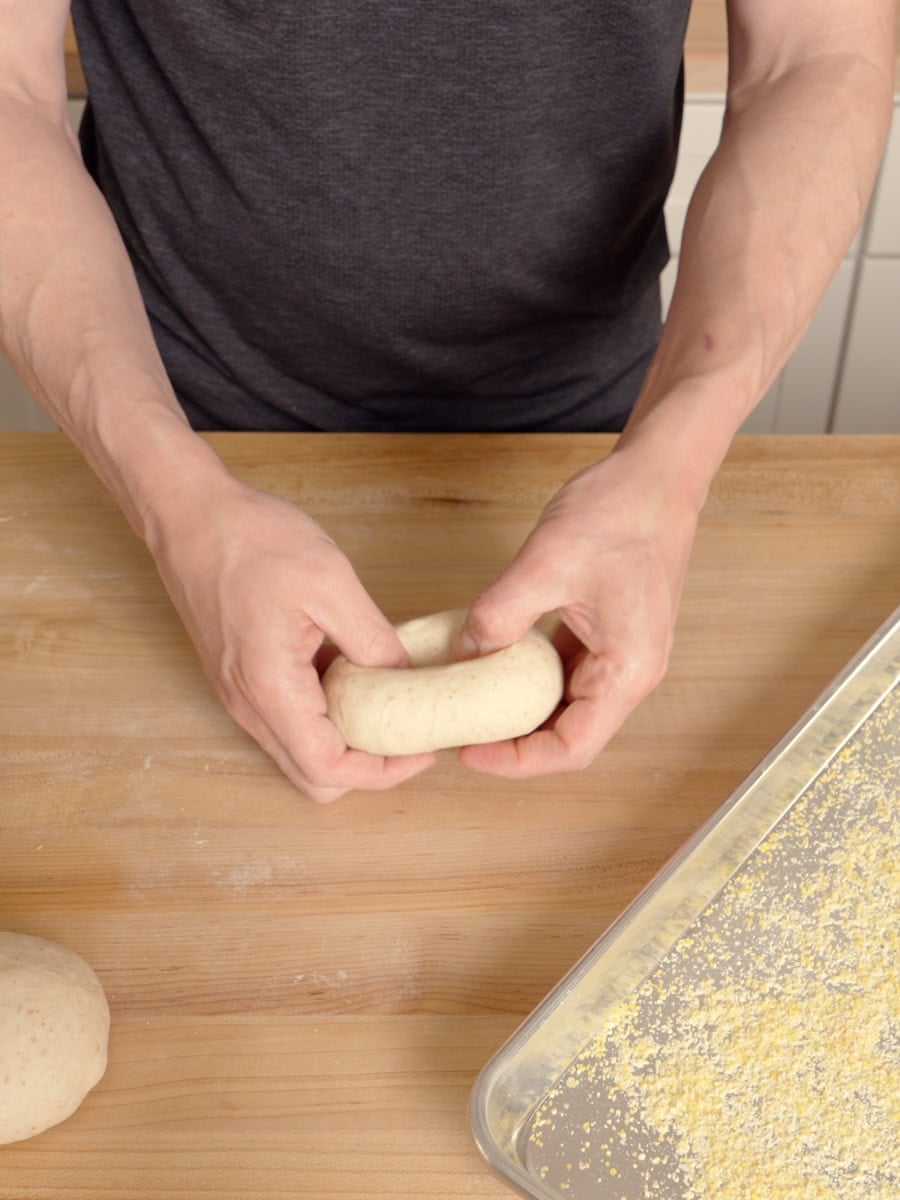
The Poke Method for Shaping: This technique simplifies the process, especially with higher hydration doughs. Instead of rolling ropes and joining ends, which can lead to separation during boiling, the poke method involves pressing a finger through the center of a dough ball and gently stretching it open. This not only prevents structural integrity issues but also contributes to a more uniform ring shape, crucial for even cooking and aesthetic appeal.
-
The Indispensable Overnight Retard: While same-day baking is possible, the overnight cold proof is highly recommended. This extended period in the refrigerator allows flavors to deepen and complexify, creating a more nuanced taste profile. It also offers a significant scheduling advantage, allowing for shaping one evening and boiling and baking the following morning, streamlining the often-time-consuming sourdough process.
-
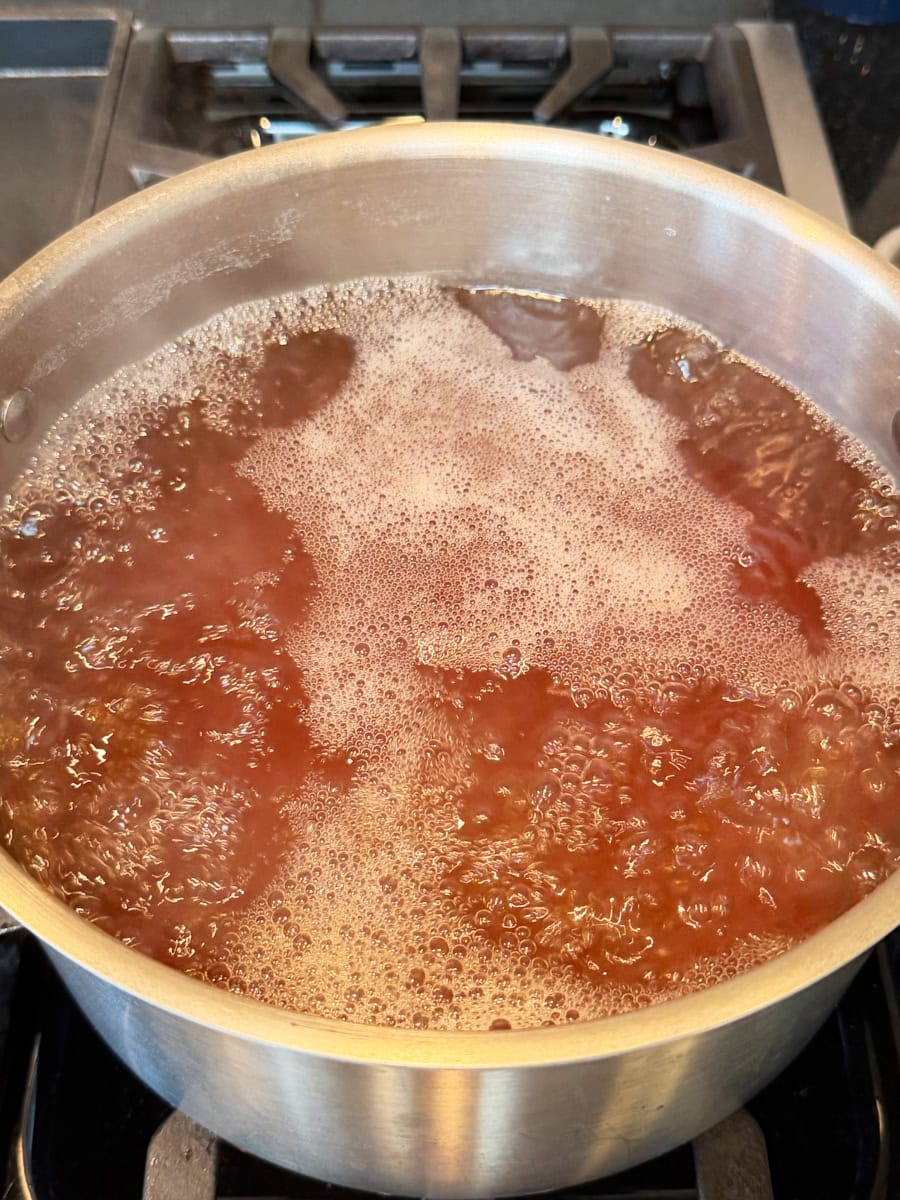
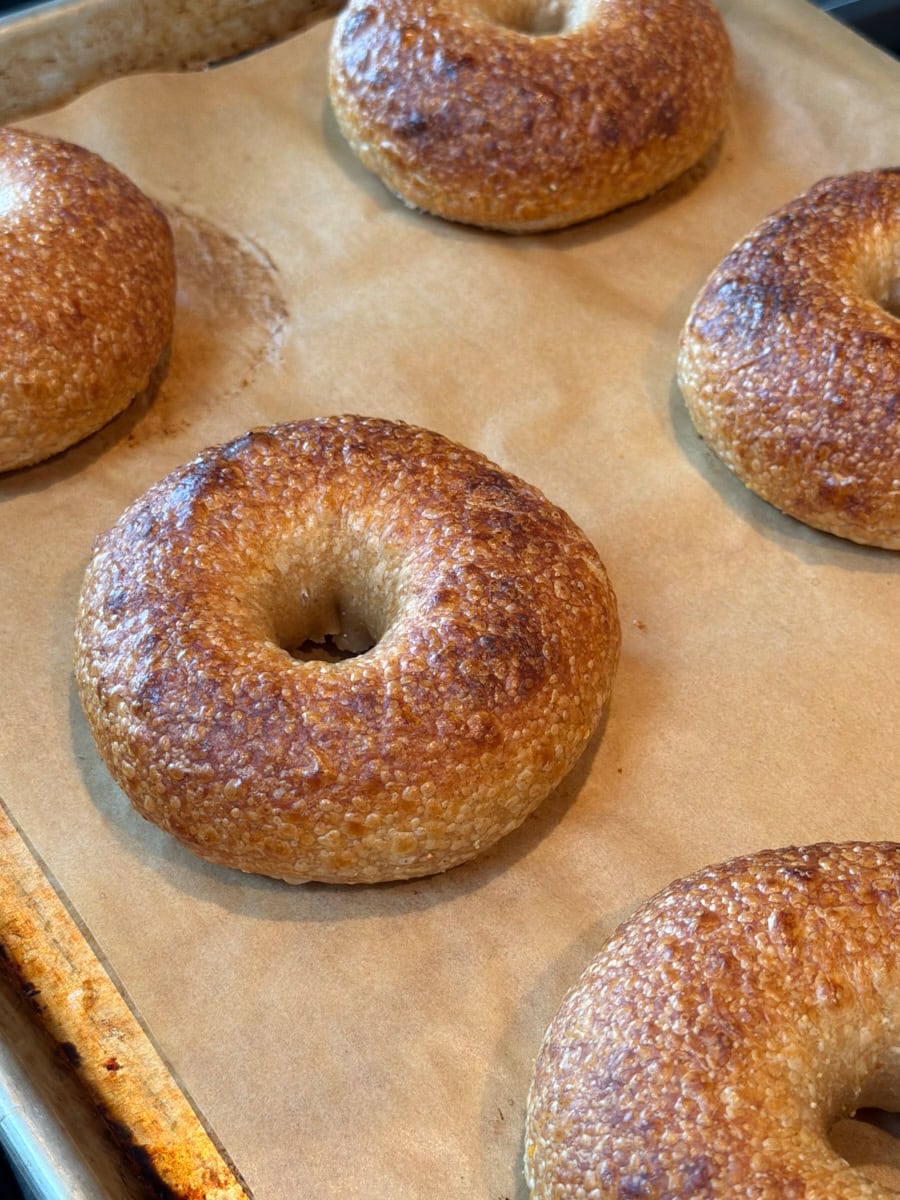
The Alchemy of the Boil Water: The boiling bath is a critical step that significantly impacts the bagel’s crust. The inclusion of ample barley malt syrup is a classic technique that imparts a signature malty flavor and promotes superior browning. The addition of baking soda to the water increases its alkalinity, further enhancing crust coloration and contributing to the desirable glossy finish. The water should appear noticeably dark after these ingredients are added.
-
Boil Time and Intensity: The duration of the boil is directly linked to the crust’s texture. A shorter boil, around 20 to 30 seconds per side, results in a thinner, crispier crust. Conversely, a longer boil builds more chew and a denser skin. For this specific dough, a shorter boil is preferred to achieve a crust with plenty of bite without becoming leathery. The water must be at a vigorous, rolling boil throughout the process.
-
The Power of a Preheated Surface: Similar to sourdough pizza or hearth bread, the foundation for a great bagel crust lies in intense, direct heat from below. A baking steel is considered ideal for its heat retention and conductivity, though a thick baking stone can also yield excellent results. Preheating the steel or stone for at least one hour is essential to ensure rapid oven spring and a well-developed bottom crust.
-
The Role of Steam: Introducing steam into the oven immediately after loading the bagels is another crucial element. Just as it benefits other bread doughs, steam helps to keep the surface of the bagels moist and pliable during the initial stages of baking, encouraging the formation of microblisters and contributing to a superior crust texture.
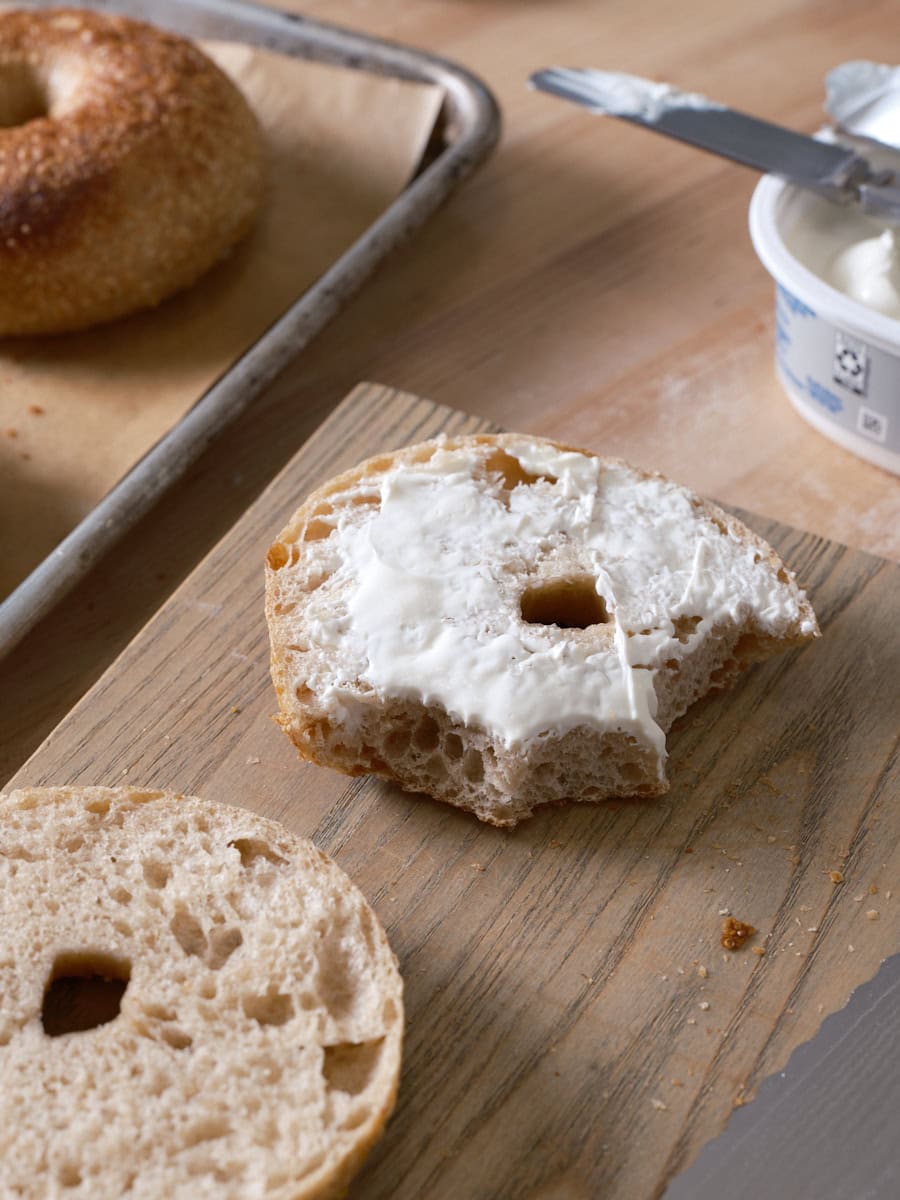
The ultimate goal of this meticulously developed recipe is to create a sourdough bagel that feels intentional and refined. These bagels are designed to be light yet satisfying, with a subtle chew, a crisp exterior, a distinct malty sweetness, and enough whole grain to impart character without becoming heavy. They are crafted to be enjoyed in their purest form, perhaps with just a simple spread of cream cheese, allowing their inherent quality to shine.
A Detailed Baking Schedule and Flour Philosophy
The preparation of these new wave sourdough bagels is a multi-day affair, allowing for the intricate development of flavor and texture:
-
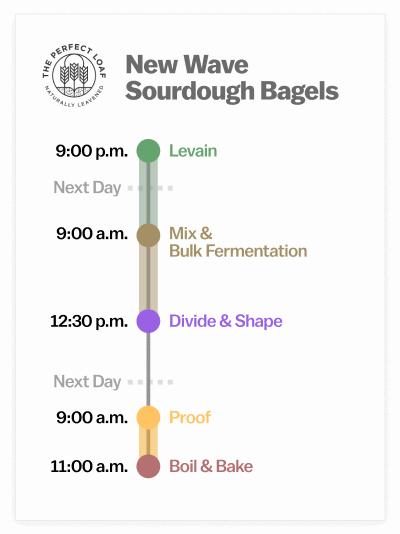
Day One: The process begins the evening before mixing by preparing a sweet levain. This preferment, enriched with a small amount of sugar, ferments overnight, setting the stage for a less sour final product.
-
Day Two: The following morning, the main dough is mixed, followed by a bulk fermentation period. The dough is then shaped and undergoes a cold proof (retard) in the refrigerator, typically overnight.
-
Day Three: The bagels are then brought to room temperature for a final proof before being boiled and baked. This schedule offers flexibility; while the overnight cold proof is recommended for optimal flavor, a same-day option exists by proofing the shaped dough at room temperature for 2 to 3 hours.
The flour selection is a cornerstone of this recipe, contributing significantly to the final outcome. A blend of high-protein white flour (12-14% protein) provides the essential chew and structure characteristic of bagels. A medium-protein bread flour, such as Central Milling’s Artisan Bakers Craft, forms the next significant portion, bringing a finely milled quality and robust bread-making properties. The remaining 15% is dedicated to whole wheat and whole rye flours. These are not included for nutritional benefits alone but are integral to developing a complex flavor profile. The whole wheat adds a warm, nutty depth, while the rye contributes a subtle earthiness and aids in fermentation and crust browning, creating a bagel with layered character without being overly dense.
The Sweetening Trio: Barley Malt Syrup, Diastatic Malt, and Sugar
This recipe ingeniously employs three distinct sweeteners, each serving a unique purpose:
-
Barley Malt Syrup: This is the quintessential bagel sweetener, both incorporated into the dough and used in the boiling water. It provides the signature malty flavor, a balanced sweetness with a hint of bitterness, and a deeply savory undertone. Crucially, it also acts as a natural browning agent during baking.
-
Diastatic Malt Powder: A powerful ingredient, diastatic malt powder differs significantly from barley malt syrup. Its active enzymes break down starches into sugars during fermentation and baking, leading to improved crust color, enhanced oven spring, and a more open crumb structure. A mere 1% of the flour weight is typically used, demonstrating its potency.
-
Superfine (Caster) Sugar: Added exclusively to the levain, this sugar acts as a catalyst for yeast activity. This "sweet levain" or "sweet starter" approach encourages a vigorous rise while minimizing the transfer of sourness to the final bagel dough, ensuring a mild tang.
The "New Wave Sourdough Bagel" Recipe
This recipe is meticulously designed to yield twelve 130-gram bagels, with a total dough weight of 1,620 grams to account for minor losses during preparation. The formula can be easily scaled up or down using baker’s percentages.
Vitals:
- Total Dough Weight: 1,620 grams
- Prefermented Flour: 10.0%
- Hydration: 68.0%
- Yield: Twelve 130-gram bagels
Total Formula:
- High-protein white flour (12-14% protein): 406g (45.0%)
- Medium-protein white flour (Central Milling Artisan Bakers Craft or strong bread flour): 361g (40.0%)
- Whole wheat flour: 90g (10.0%)
- Whole rye flour: 45g (5.0%)
- Fine sea salt: 18g (2.0%)
- Barley malt syrup (or honey): 23g (2.5%)
- Superfine (caster) sugar: 18g (2.0%)
- Diastatic malt powder: 9g (1.0%)
- Water 1 (levain and mix): 542g (60.0%)
- Water 2 (mix; bassinage): 72g (8.0%)
- Fine sea salt: 18g (2.0%)
- Ripe sourdough starter (100% hydration): 36g (4.0%)
The target final dough temperature for this recipe is between 76-78°F (24-26°C).
Method:
1. Prepare the Levain (Day One, 9:00 p.m.):
Combine 90g of medium-protein white flour, 81g of water, 18g of superfine sugar, and 36g of ripe sourdough starter in a tall jar. Mix until the sugar is dissolved and the starter is fully incorporated. Cover and let ferment at room temperature (74-76°F / 23-24°C) for 12-14 hours, or until significantly risen, bubbly, and sweet-smelling.
2. Mix (Day Two, 9:00 a.m.):
- With a mechanical mixer: Combine all flours, levain, barley malt syrup, diastatic malt powder, salt, and Water 1 in the mixer bowl. Mix on low speed for 1-2 minutes until a shaggy mass forms. Increase speed to medium (120-130 RPMs) and mix for 5 minutes. Rest for 5 minutes. Gradually add Water 2 over 5 minutes, then continue mixing until the dough is smooth, strong, and pulls cleanly from the bowl, feeling firm but not sticky.
- By hand: Combine all dry ingredients and flours in a large bowl. Add the levain, barley malt syrup, diastatic malt powder, and Water 1. Mix thoroughly until no dry flour remains. Use the slap-and-fold technique for 5-6 minutes. Rest for 5 minutes. Gradually incorporate Water 2 while continuing to knead for another 4-5 minutes until the dough is smooth and cohesive.
Target a final dough temperature of 76-78°F (24-26°C).
3. Bulk Fermentation (9:30 a.m. to 12:30 p.m. – 3 hours):
Allow the dough to rest at warm room temperature (74-76°F / 23-24°C) for approximately 3 hours. No folds are necessary due to the thorough mixing and stiff dough consistency.
4. Divide and Shape (12:30 p.m.):
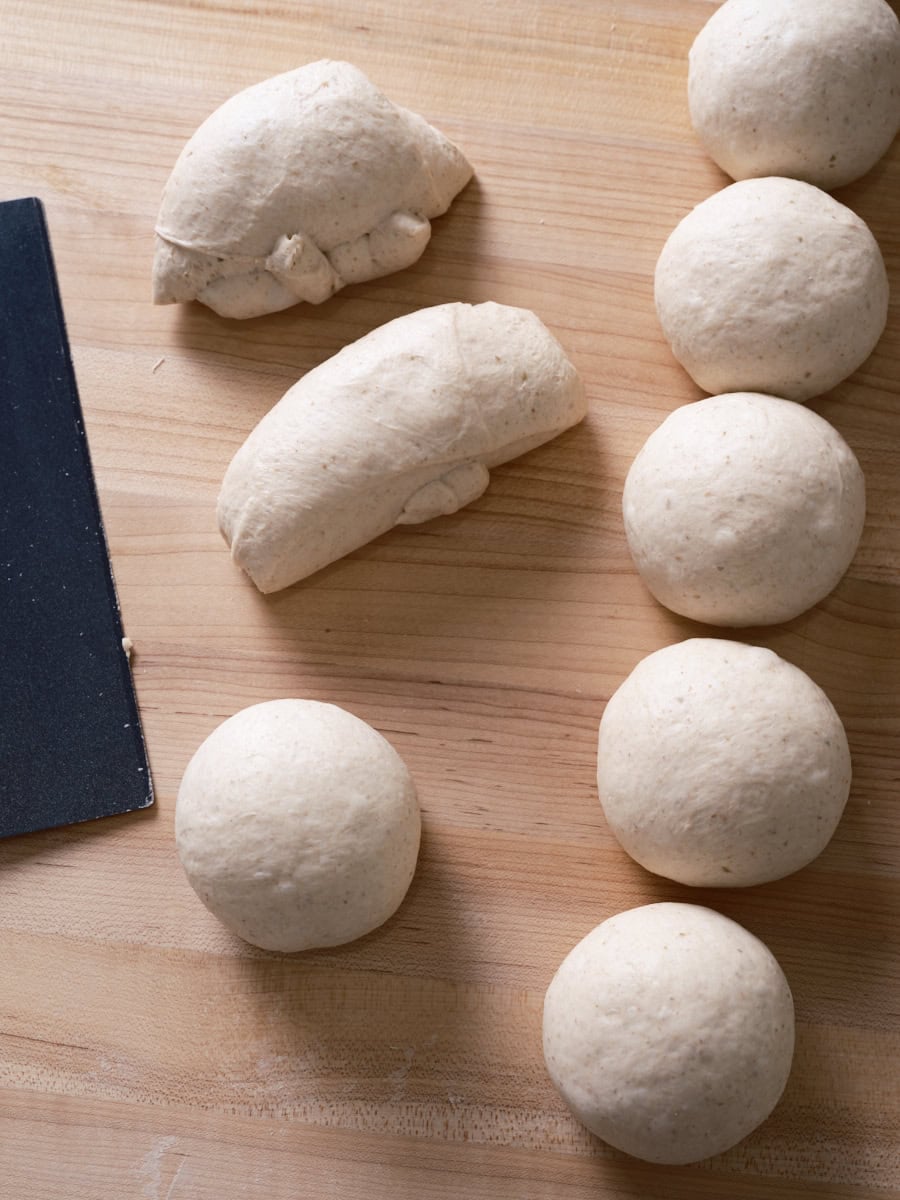
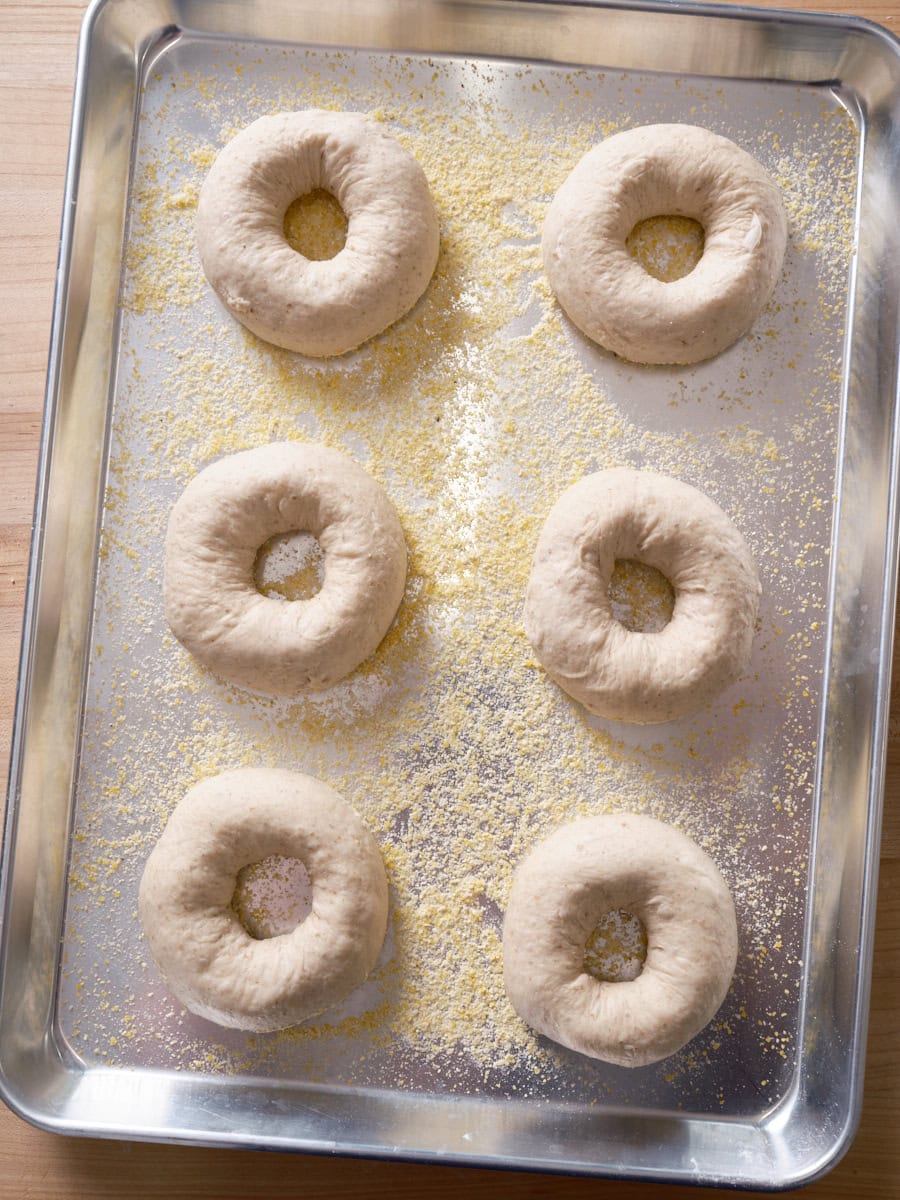
Lightly sprinkle two half-sheet pans with medium cornmeal or white flour. Gently turn the dough onto a lightly floured surface and divide it into twelve 130-gram pieces. Shape each piece into a tight ball by folding the edges to the center and rolling it down, ensuring a smooth top and a pinched seam. Then, use your index finger to poke through the center of each ball and gently stretch the dough into a ring shape, aiming for a hole of 2 to 2.5 inches in diameter, as it will shrink during proofing. Place shaped bagels onto the prepared sheet pans, leaving some space between them.
5. Overnight Retard (1:00 p.m. to 9:00 a.m. – Day Three Morning):
Cover the sheet pans with lids and refrigerate overnight.
6. Proof (Day Three, 9:00 a.m.):
Remove the bagels from the refrigerator and let them proof at warm room temperature for two hours. Concurrently, preheat your oven to 500°F (260°C) with a baking steel on the middle rack, allowing at least one hour for preheating. If your oven lacks convection, set it to 525°F (270°C).
7. Boil (11:00 a.m.):
Prepare the boiling water by adding 1 gallon of water, 1 teaspoon of baking soda, and 5 tablespoons of barley malt syrup to a large pot. Bring to a vigorous rolling boil. Set up a wire rack over a sheet pan for drained bagels. Have toppings ready. Working in batches of 2-3, gently lower bagels into the boiling water, smooth side down first. Boil for 20-25 seconds per side, then flip and boil for another 20-25 seconds. Remove with a slotted spatula, allow excess water to drain, and immediately dip the tops into desired toppings while the surface is still tacky. Place topping-side up on a parchment-lined sheet pan or peel.
8. Bake (11:15 a.m.):
Transfer one sheet pan with 6 bagels to the preheated baking steel. Bake for 10 minutes. Rotate the pan and reduce the oven temperature to 450°F (230°C) for an additional 5 minutes, or until the bagels are a deep golden brown. Transfer to a wire rack and let cool for at least 15-20 minutes before slicing to allow the interior to set.
These new wave sourdough bagels offer a compelling alternative for bakers seeking a more refined and contemporary take on this beloved staple. Their creation is a testament to the power of thoughtful experimentation and the enduring appeal of sourdough baking.