
In the rapidly expanding realm of professional coaching, where individuals and organizations seek expert guidance to unlock their full potential, a critical focus has emerged on refining the craft of coaching itself. At the forefront of this movement is Kate Solovieva, a distinguished figure whose insights are shaping the next generation of coaches. As a former professor of psychology, a Precision Nutrition (PN) master coach, and PN’s director of community engagement, Solovieva occupies a unique vantage point, specializing not just in coaching clients, but in coaching other coaches. Her oft-quoted tagline, "I work with coaches and other people who know too much," encapsulates her deep understanding of the intellectual and practical hurdles faced by those dedicated to guiding others.
Solovieva’s extensive experience, derived from her roles as an instructor for PN’s Level 2 Master Health Coaching Certification, a facilitator for PN’s private online coaching communities, and a coach in her private practice, provides her with an unparalleled, front-row perspective on the myriad questions and challenges confronting both nascent and veteran coaches. This intimate knowledge of the coaching ecosystem allows her to observe firsthand the triumphs and missteps that characterize professional development in the field. Drawing from this rich tapestry of experience, Solovieva has identified three prevalent mistakes that, if unaddressed, can impede a coach’s journey toward impactful and sustainable success. Her overarching goal in highlighting these areas is not to critique, but to empower, fostering an environment where peers can achieve profound professional growth and deliver exceptional client outcomes. This article delves into these common pitfalls, offering actionable solutions grounded in best practices and psychological principles, ultimately aiming to elevate the standards of the coaching profession.
Challenge 1: Balancing Expertise with Entrepreneurship – The Sales Imperative
One of the most significant initial hurdles many aspiring coaches encounter is an imbalanced focus on acquiring theoretical knowledge at the expense of practical client acquisition. Solovieva articulates a coaching business as a "three-legged stool," with legs representing coaching, marketing, and sales. The vast majority of individuals entering the coaching profession are driven by a genuine desire to become the most competent coach possible, often leading them to prioritize extensive certification and continuous learning. While this dedication to mastery is commendable, Solovieva cautions that "information and theory only get you so far." The paradox lies in the fact that genuine coaching expertise is honed through real-world application, not in isolation. As she succinctly puts it, "You cannot become the best coach you can be in a vacuum, talking to yourself in your office."
This inclination to defer client engagement until one feels "complete" in their knowledge base is a pervasive and often detrimental mindset. Industry data frequently indicates that a substantial percentage of new businesses, including coaching practices, struggle or fail within their first few years, often due to insufficient client acquisition rather than a lack of product or service quality. The pursuit of twelve certifications before actively seeking clients, while seemingly diligent, can result in lost opportunities for practical experience, market feedback, and revenue generation. Coaches who embrace the sales process earlier, even with a foundational level of knowledge, gain a significant advantage. They begin accumulating invaluable coaching experience, refining their approach through direct interaction, and building a sustainable business much sooner than their perfectionist counterparts. This iterative process of learning-by-doing is a cornerstone of entrepreneurial success, allowing for organic growth and adaptation.
Solution: Embracing the Coaching Identity Over the Expert Persona
The natural desire to perform exceptionally well often drives coaches to seek an exhaustive knowledge base, hoping to be perceived as an infallible expert capable of answering any client query. This can lead to a sense of discomfort, or even "mortification," when confronted with questions they cannot immediately address. However, Solovieva argues that the assumption of needing to be an omniscient authority is fundamentally flawed. "When I show up to a coaching conversation, my role is not ‘the expert,’" she asserts.
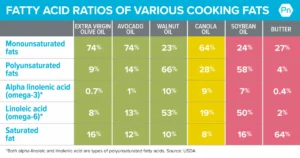
While a baseline understanding of core principles (e.g., nutrition, fitness, psychology) is non-negotiable for credibility, the essence of coaching lies not in delivering lectures or showcasing encyclopedic recall of minutiae. Clients typically do not require more raw information; rather, they need guidance in applying information relevant to their unique context, overcoming obstacles, and fostering sustainable behavioral change. A coach’s primary function is to facilitate discovery and action, not merely to disseminate facts. For instance, when a client poses a specific question about a complex topic like seed oils, an expert might launch into a detailed scientific explanation. A coach, however, might respond with, "That’s a great question. I can get you some information on that if you’d like, but I’m curious, why do you ask?" This subtle shift in approach—from providing an immediate answer to exploring the client’s underlying motivation—is transformative.
By delving into the "why," the coach uncovers the client’s true concerns, values, and objectives. Perhaps the client heard a friend lost weight by cutting seed oils and is seeking a similar outcome. This revelation allows the coach to address the client’s actual goal (weight loss) with far more effective and personalized strategies, which may have little to do with the initial inquiry about seed oils. This client-centered approach not only builds deeper rapport and trust but also ensures that the coaching interventions are precisely tailored to what truly matters to the individual. Therefore, coaches should aim for a firm grasp of foundational principles, but more importantly, cultivate the skill of strategic inquiry, empowering clients to find their own solutions rather than simply dispensing information.
Challenge 2: The Peril of Projection – Recognizing Client Individuality
A subtle yet pervasive mistake among coaches is the unconscious assumption that clients share their values, motivations, and experiences. While it may seem obvious that clients are distinct individuals, the human tendency to project one’s own worldview can be particularly strong when a coach feels a natural rapport or "vibe" with a client. Most coaches are drawn to their profession because they deeply value health, fitness, personal growth, and well-being. It is easy, therefore, to assume that clients hold these same values with the same intensity. However, this is frequently not the case. Solovieva candidly states, "There’s nothing inherently superior about valuing your health. If you do, yes, you’ll probably experience better health and live longer. But not everyone shares those values. That’s a tough one to swallow."
This projection can manifest in various ways: recommending dietary changes that conflict with a client’s cultural background, suggesting exercise routines that don’t fit their schedule or physical capabilities, or setting goals that lack personal meaning for them. When coaches operate under these unexamined assumptions, they risk proposing behaviors that are impractical, undesirable, or irrelevant to the client’s actual life. This inevitably leads to client frustration, disengagement, and a sense that the coach doesn’t "get" them. For the coach, it can breed feelings of inadequacy or being a "bad" coach, perpetuating a cycle of ineffectiveness and disillusionment. Psychological research consistently highlights the diversity of human motivation and the importance of individual differences in behavior change. A one-size-fits-all approach, even when well-intentioned, rarely yields sustainable results.
Solution: Deep Dive into Client Baseline and Readiness for Action
The antidote to assumptive coaching is an unwavering commitment to curiosity and an open mind. Coaches must consciously check their biases at the door, approaching each client interaction as a fresh exploration. This involves asking incisive questions designed to uncover the client’s unique context, values, and readiness for change. Questions such as, "What inspired you—or pushed you—to come in today?" "Why is that goal meaningful to you?" and "What skills do you have today that might help you achieve your goal? What skills do you feel you might be missing?" are crucial for building an accurate picture of the client’s baseline.
Active listening is paramount in this phase, allowing the coach to absorb the nuances of the client’s narrative without imposing their own interpretations. This practice becomes even more challenging, yet more critical, when clients present with seemingly similar experiences or goals to the coach (e.g., both are single parents, training for a marathon, or cancer survivors). While relating to a client can build rapport, it’s vital to differentiate between shared experiences and identical experiences. Solovieva suggests acknowledging commonality while inviting individuality: "I know what [insert shared experience] has been like for me, but what has [insert shared experience] been like for you?" This phrasing validates the client’s experience while simultaneously prompting them to articulate their unique perspective.
Once a comprehensive understanding of the client’s values, priorities, and true motivations for change is established, the coach can then objectively assess what actions the client is truly ready, willing, and able to undertake. This assessment must be free of assumptions about what should be easy or difficult. For example, a coach who finds meal prepping simple must not assume the same for a client facing significant time constraints or lacking culinary skills. Tools like Precision Nutrition’s "Ready, Willing, and Able Worksheet" provide a structured framework for this collaborative assessment, ensuring that proposed strategies are realistic, sustainable, and meaningful to the client, thereby maximizing the likelihood of adherence and success.
Challenge 3: Navigating Emotional Investment – Detaching from Client Outcomes
The third common pitfall, and arguably the most emotionally challenging, is a coach becoming excessively attached to their clients’ results. This phenomenon is deeply rooted in the very nature of coaching: a profound desire to help and witness client success. As Solovieva acknowledges, "There’s a reason we go into coaching. It’s because we care and we want to help clients. We want to see them succeed." This inherent empathy and drive to facilitate positive change is a fundamental strength, making the potential for emotional over-investment a double-edged sword.
Coaches meticulously craft plans and establish habits with clients, only to face the harsh reality that clients may or may not execute those plans. "They walk off and either do the thing or don’t do the thing. That’s brutal," Solovieva notes. Regardless of how well-researched, foolproof, or passionately delivered the advice, a coach ultimately has no direct control over a client’s actions or the outcomes they achieve. This lack of control can lead to profound frustration, disappointment, and even heartbreak when clients struggle, fail to adhere to plans, or do not achieve their desired results. While these feelings are normal and often indicate that the work holds deep meaning for the coach, there is a critical boundary that, once crossed, becomes detrimental. Solovieva cautions against "caring more than the client themselves."
Precision Nutrition frequently uses the concept of "care units" as a currency of coaching. Care units represent the finite amount of time, energy, attention, authenticity, and "heart" a coach can invest in helping a client. Similarly, clients possess their own limited supply of care units to dedicate to their personal change and growth projects. In most cases, a client’s capacity for care units, while genuine, will be less than that of a dedicated coach—and this is entirely normal. The critical advice for coaches is to "care one care unit less than your client does." This isn’t about apathy; it’s about maintaining a healthy professional distance that protects the coach from burnout while empowering the client to take full ownership of their journey. Over-caring can inadvertently disempower clients, creating a dynamic where the coach shoulders too much responsibility, potentially leading to client dependency or resentment.
Solution: Establishing Clear Boundaries and Defining Roles
Maintaining an appropriate level of emotional investment while still effectively supporting clients requires clear delineation of responsibilities. Solovieva emphasizes the importance of a coach being "very, very clear on what my role is as a coach." This clarity allows coaches to objectively assess their performance: "Did I show up? Did I follow up? Did I coach this person to the best of my ability?" By focusing on their own accountabilities, coaches can avoid the trap of internalizing client failures.
For example, a coach’s responsibilities might include providing evidence-based guidance, offering consistent check-ins, delivering personalized strategies, and creating a supportive environment. Conversely, the client is responsible for actively participating, implementing agreed-upon actions, communicating challenges, and ultimately, making choices that align with their goals. This division of labor should ideally be established early in the coaching relationship. Some coaches prefer open, conversational agreements, while others opt for formal contracts outlining deliverables and expectations. This initial communication also serves as a crucial "vetting" process for coach-client fit.
Solovieva illustrates this with an example: if a prospective client demands daily texts, personal grocery shopping, and constant external motivation, she would discern that the fit is not right. This upfront clarity prevents future friction, managing expectations and preventing burnout for the coach. It also protects the coach-client relationship in challenging scenarios, such as when a client "ghosts" before a paid contract concludes. Solovieva’s approach to such situations exemplifies healthy boundaries: "When somebody doesn’t reply to me, I don’t take it personally. It’s not their job to reply, but it is my job to check in." She will continue her professional outreach attempts until the contract ends, concluding with an open-door message of support. This demonstrates care without over-investment, preserving the coach’s energy and professional integrity.
Beyond the Pitfalls: Celebrating the Passion of Coaching
While this exploration has focused on common "mistakes," it’s crucial to acknowledge the underlying motivations. If coaches find themselves falling into these patterns, it is almost invariably a testament to their deep commitment and genuine desire to help. This passion, rather than being a flaw, is a fundamental strength of the profession. These identified challenges are not signs of incompetence but rather common developmental stages in a coach’s journey, offering opportunities for growth and refinement. By understanding and addressing these tendencies, coaches can transcend initial limitations and amplify their potential for both personal success and profound client impact.
The Broader Impact: Elevating Industry Standards
The insights shared by Kate Solovieva are more than just practical tips for individual coaches; they represent a significant contribution to the professionalization of the entire coaching industry. As the demand for coaching services continues to grow—with market analyses projecting substantial growth in the coming years—the need for highly skilled, ethically grounded, and emotionally intelligent practitioners becomes paramount. By emphasizing the balance between business acumen and coaching mastery, the importance of individualized, client-centered approaches, and the critical role of healthy professional boundaries, Solovieva’s work helps to set higher standards for excellence. Organizations like Precision Nutrition play a vital role in disseminating such foundational knowledge, equipping coaches with not just the "what" but also the "how" of impactful practice. The journey of becoming an exceptional coach is one of continuous learning, self-reflection, and a commitment to refining one’s craft, ultimately leading to a more effective and respected profession dedicated to sustainable human flourishing. For those inspired to embark on or further their coaching journey, resources like the PN Level 1 Nutrition Coaching Certification offer structured pathways to acquire the competencies needed to make a real difference, fostering sustainable nutrition and lifestyle habits that profoundly improve physical and mental health.