
For ten years, professional kitchens worldwide have relied on the PolyScience Classic Series Immersion Circulator, a device that has become a benchmark for sous vide cooking. Despite its discontinuation, the Classic Series remains a highly sought-after piece of equipment, celebrated for its robust performance and unwavering accuracy. This article delves into the legacy of this iconic circulator, its technical specifications, its impact on professional culinary practices, and the reasons behind its enduring appeal, even as newer, more compact models emerge.
A Legacy of Precision: The Rise of the PolyScience Classic Series
The PolyScience Classic Series Immersion Circulator emerged at a pivotal moment in the evolution of professional cooking. Sous vide, a method of cooking food in vacuum-sealed bags in a precisely temperature-controlled water bath, was gaining traction in high-end restaurants for its ability to deliver unparalleled consistency and texture. PolyScience, a company with a strong background in scientific instrumentation, recognized the need for reliable and accurate sous vide equipment for these demanding environments.
The Classic Series, launched at a time when commercial sous vide machines were less common and often bulky, quickly distinguished itself. Its industrial design, coupled with exceptional performance metrics, made it a favorite among chefs who valued durability and precision above all else. Unlike many contemporary home-use models, the Classic Series was built to withstand the rigors of a professional kitchen, operating for extended periods without compromising accuracy. This reliability cemented its reputation as the "gold standard" for many years.
Technical Prowess: Performance and Engineering
The PolyScience Classic Series Immersion Circulator boasted a suite of features that contributed to its superior performance. It was capable of maintaining water baths of up to 8 gallons, a significant capacity that allowed for the simultaneous cooking of multiple dishes or larger cuts of meat. This scalability was crucial for busy restaurant operations.
A key differentiator was its dual-speed water pump. This innovative feature allowed for more precise control over water circulation, ensuring even heat distribution throughout the bath. This meticulous circulation is fundamental to the sous vide method, preventing hot or cold spots that could lead to uneven cooking.
The temperature accuracy of the Classic Series was particularly noteworthy. It maintained desired temperatures within an astonishing +/- 0.09 degrees Fahrenheit, a level of precision that surpassed even some of its contemporary commercial counterparts, including PolyScience’s own later "Chef" series (later rebranded as the "Creative" series), which typically achieved +/- 0.1 degrees Fahrenheit. While the difference of 0.01 degrees Fahrenheit might seem negligible in a real-world scenario, for chefs striving for absolute perfection, this minute advantage represented a commitment to the highest standards of culinary science. This unwavering consistency meant that a recipe cooked today would yield the exact same result tomorrow, a critical factor for menu planning and customer satisfaction.
Design and User Interface: Functionality Meets Durability
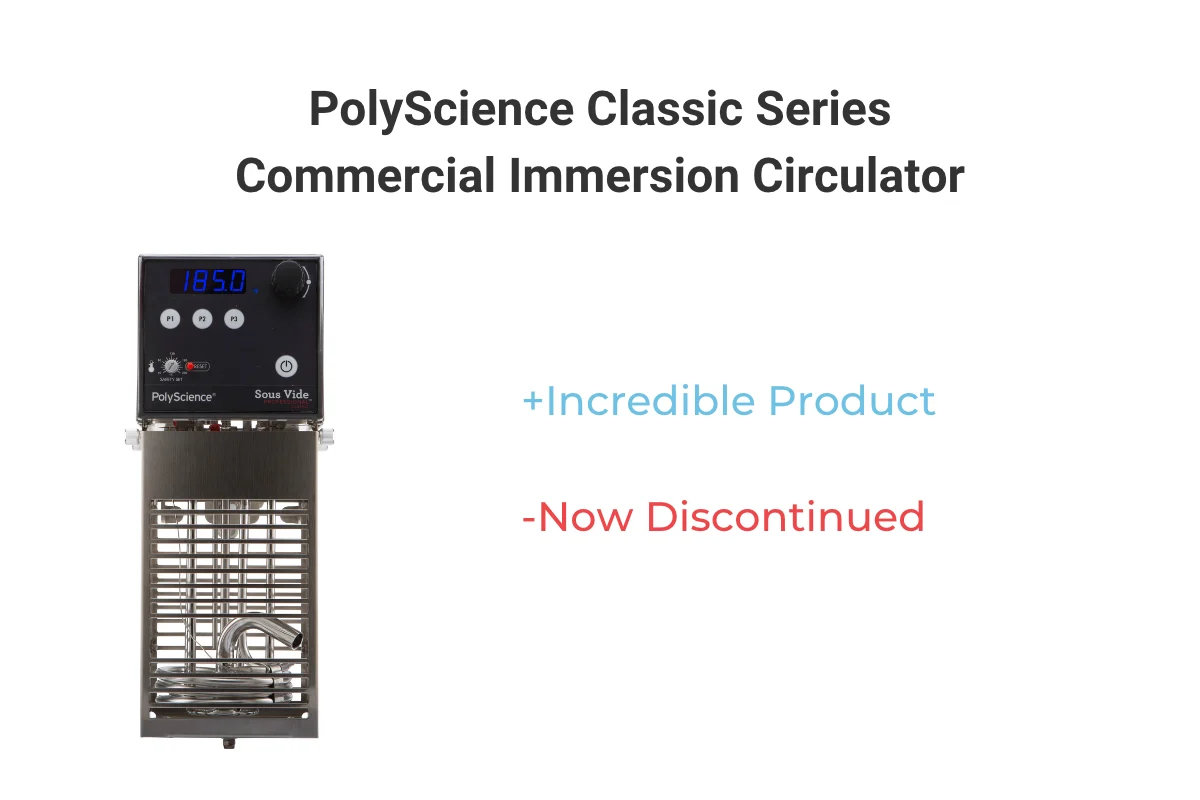
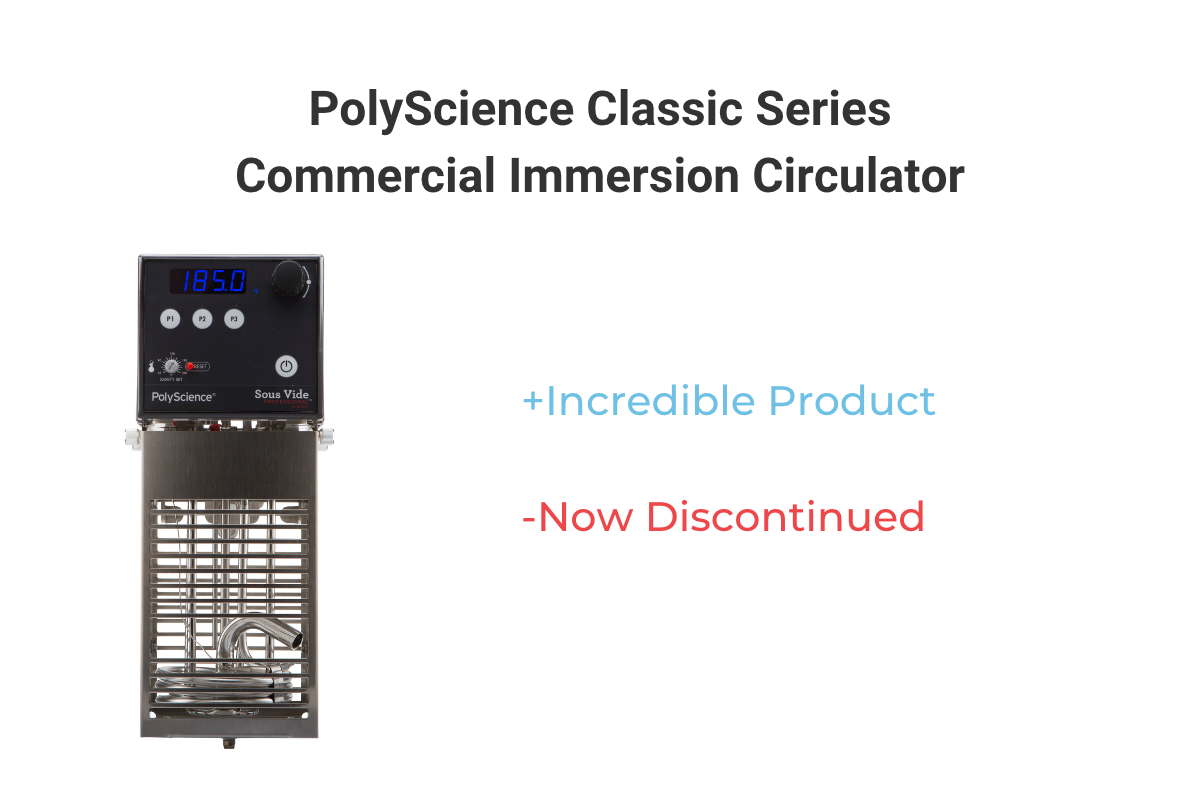
Beyond its technical capabilities, the design of the PolyScience Classic Series was a testament to its professional-grade intent. Its industrial aesthetic was not merely for show; it was deeply functional. The open metal cage at the bottom of the unit provided direct visibility to the stainless steel heating coil and pump, allowing users to easily monitor the core components. This cage was also removable, significantly simplifying the process of cleaning and maintenance – a vital consideration in a fast-paced kitchen environment where hygiene is paramount.
The control system was elegantly simple yet highly effective. A single rotating knob served as the primary interface, allowing users to set the desired temperature with ease. This knob also enabled a "lock-out" mode, preventing accidental temperature adjustments during the cooking process, a common concern in kitchens where equipment might be bumped or moved.
Furthermore, the Classic Series featured three programmable preset functions. These allowed chefs to store and quickly access frequently used temperature settings for specific dishes or cooking techniques. This feature streamlined workflows and reduced the time spent on repetitive adjustments, further enhancing the efficiency of the circulator in a professional setting.
The End of an Era: Discontinuation and Market Transition
The reign of the PolyScience Classic Series Immersion Circulator came to an end following the acquisition of PolyScience’s culinary division by Breville. This transition marked a significant shift in the market, with Breville focusing on newer, more compact, and often more cost-effective models for both commercial and home use. The Classic Series, a testament to a different era of professional culinary equipment, was phased out of production.
This discontinuation, while a loss for enthusiasts of the original design, coincided with broader trends in kitchen technology. Modern immersion circulators have indeed become smaller, more powerful, and more energy-efficient, often incorporating Wi-Fi connectivity and advanced app controls. These advancements cater to a wider audience, including home cooks and smaller culinary operations.
However, the legacy of the Classic Series endures. Its robustness, precision, and the sheer number of professional kitchens it served have cemented its place in culinary history. For those seeking a piece of this legacy, the secondary market, particularly auctions from closing restaurants, presents an opportunity to acquire these machines at bargain prices.
The Future of PolyScience Sous Vide: The Creative Series
While the Classic Series is no longer manufactured, PolyScience, under the Breville umbrella, continues to offer sous vide immersion circulators. The "Creative Series" is positioned as the successor, aiming to blend the brand’s heritage of precision with modern design and portability. These newer models are generally more compact, making them easier to store and transport, and often come with enhanced features to appeal to a contemporary user base.

For chefs and culinary enthusiasts looking for a direct replacement or a modern alternative that carries the PolyScience lineage, the Creative Series is a logical next step. It aims to capture the essence of the original’s performance while adapting to the evolving demands of the culinary world.
Broader Implications for the Culinary Industry
The story of the PolyScience Classic Series Immersion Circulator is more than just a product lifecycle. It reflects the broader technological advancements that have transformed professional kitchens. The widespread adoption of sous vide, facilitated by reliable equipment like the Classic Series, has enabled chefs to achieve new levels of precision, consistency, and creativity. It has democratized techniques that were once exclusive to the most avant-garde kitchens, allowing for the consistent production of high-quality dishes at scale.
The emphasis on durability and straightforward functionality in the Classic Series highlights a core value in professional kitchens: tools must be reliable and easy to maintain. While modern technology offers exciting new possibilities, the fundamental need for robust, dependable equipment remains unchanged. The enduring popularity of the Classic Series on the used market is a testament to this enduring principle.
Furthermore, the evolution from the industrial, robust Classic Series to the more compact and connected Creative Series mirrors the shift in the culinary landscape. As culinary education becomes more accessible and the lines between professional and home cooking blur, the demand for versatile, user-friendly equipment grows. However, the foundational principles of precision and consistency, championed by the original PolyScience circulator, continue to guide innovation in the field.
Recommendations for Continued Sous Vide Excellence
For those seeking to replicate the sous vide experience with modern equipment, several commercial immersion circulators are available that offer significant power, efficiency, and cost-effectiveness compared to older models. These newer machines often incorporate advanced digital controls, faster heating elements, and more sophisticated circulation systems, all within a more compact footprint.
When pairing an immersion circulator with vacuum sealing technology, selecting a reliable commercial vacuum sealer is paramount. The ability to create a strong, consistent vacuum seal is crucial for the success of sous vide cooking, ensuring that food is fully submerged and protected during the cooking process.
While the PolyScience Classic Series Immersion Circulator may no longer be in production, its impact on the culinary world is undeniable. It stands as a monument to precision engineering and a testament to the transformative power of sous vide cooking. For those fortunate enough to find one, or for those seeking a modern successor, the pursuit of perfectly cooked food continues, with the legacy of PolyScience playing a significant role in shaping its trajectory.