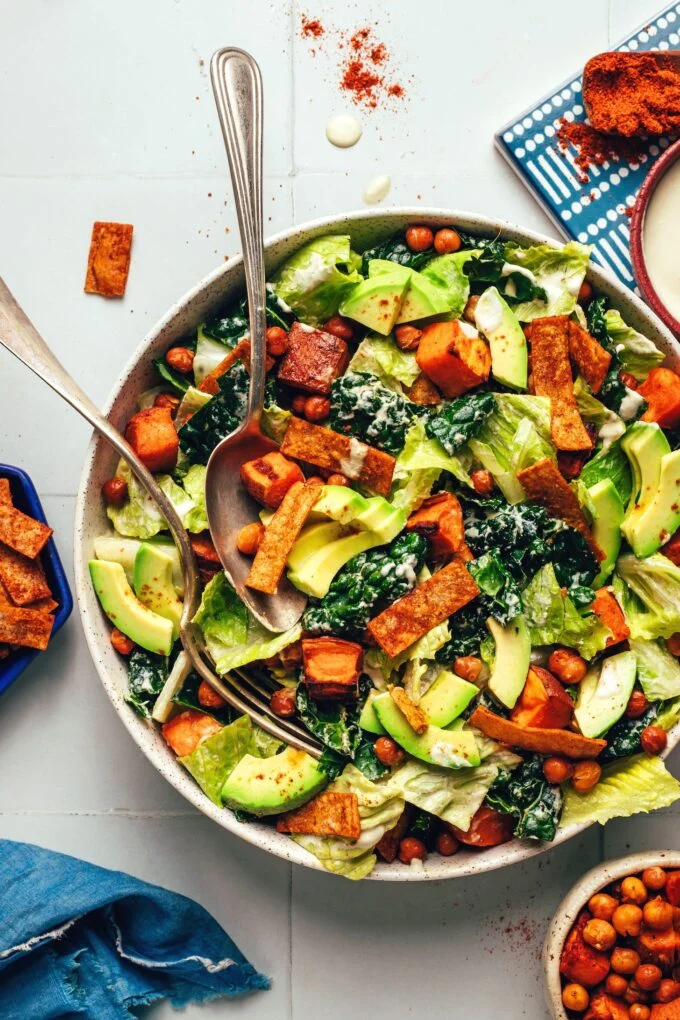

The modern culinary landscape is witnessing a significant shift toward plant-based diets, driven by health consciousness, environmental concerns, and a growing demand for efficiency in the kitchen. A prominent example of this trend is the Vegan Sweet Potato Chickpea Taco Salad, a nutrient-dense meal that emphasizes whole-food ingredients while maintaining a strict 30-minute preparation window. This dish reflects a broader movement within the food industry to provide "speed-to-table" solutions that do not compromise on nutritional integrity or flavor complexity. By utilizing high-fiber legumes, complex carbohydrates, and healthy fats, this recipe represents a sophisticated evolution of the traditional Tex-Mex taco salad, which has historically relied on processed meats and heavy dairy components.

Nutritional Profile and Core Ingredients
The foundational elements of the Vegan Sweet Potato Chickpea Taco Salad are roasted sweet potatoes and chickpeas, both of which are celebrated in the dietetic community for their dense micronutrient profiles. According to data from the United States Department of Agriculture (USDA), one medium sweet potato provides over 400% of the daily required intake of Vitamin A, which is essential for immune function and vision. Furthermore, the inclusion of chickpeas (Cicer arietinum) introduces a significant source of plant-based protein and dietary fiber.
A single serving of this taco salad provides approximately 442 calories, 12.6 grams of protein, and 11.9 grams of fiber. The high fiber content is particularly noteworthy, as it represents nearly half of the daily recommended intake for adults, aiding in digestive health and blood sugar regulation. The fat profile is primarily composed of monounsaturated and polyunsaturated fats (10.1g and 4.6g respectively), largely derived from avocado oil and cashews, which are linked to improved cardiovascular health.

The salad’s green base utilizes a combination of romaine lettuce and kale. This choice is strategic; romaine provides a hydrating, crunchy texture, while kale offers a robust nutritional boost, including Vitamins K and C. The dressing—a jalapeño cashew blend—serves as a dairy-free alternative to traditional sour cream or cheese-based dressings. By blending cashews with nutritional yeast and miso paste, the recipe achieves a "cheesy" umami flavor profile through fermentation-derived ingredients rather than animal products.
The Evolution of the Taco Salad: A Historical Context
The taco salad has a storied history in American cuisine, originating as a Tex-Mex fusion dish in the mid-20th century. Elmer Doolin, the founder of Frito-Lay, is often credited with popularizing the concept through the "Tacupa" in the 1960s, which served taco ingredients inside a fried corn chip bowl. Over the decades, the dish became a staple of fast-food menus, often criticized for its high sodium and saturated fat content.

The 2024 iteration of the taco salad, as seen in the sweet potato and chickpea variant, marks a departure from these caloric origins. Modern consumers are increasingly seeking "functional foods"—ingredients that offer health benefits beyond basic nutrition. The transition from ground beef to roasted chickpeas reflects a global trend; according to Grand View Research, the global vegan food market was valued at approximately USD 26.83 billion in 2021 and is expected to expand at a compound annual growth rate (CAGR) of 10.1% through 2030. This growth is fueled by a demographic shift toward "flexitarianism," where consumers actively reduce meat intake without necessarily committing to a total vegan lifestyle.
Chronology of Preparation: The 30-Minute Efficiency Model
In an era defined by time scarcity, the ability to produce a gourmet-level meal in 30 minutes is a critical factor for home cooks. The preparation of the Vegan Sweet Potato Chickpea Taco Salad follows a precise chronological workflow designed to maximize efficiency through multitasking:

- Minute 0–5: Oven Calibration and Preparation. The process begins with preheating the oven to 400°F (204°C). During this time, the sweet potatoes are cubed and the chickpeas are drained and patted dry. Moisture removal is a critical technical step to ensure the chickpeas achieve a "smoky" and slightly crunchy texture rather than steaming in the oven.
- Minute 5–25: Roasting Phase. The vegetables are tossed in avocado oil, chili powder, and smoked paprika. Avocado oil is selected for its high smoke point (approximately 520°F), which prevents the formation of free radicals during the roasting process. While the tray is in the oven, the "dead time" is utilized for secondary tasks.
- Minute 10–15: The Dressing Emulsification. The jalapeño cashew dressing is prepared using a high-speed blender. This involves combining raw cashews (often soaked to improve creaminess), water, lime juice, nutritional yeast, miso, and garlic. The use of a blender allows for the mechanical breakdown of cashew fats into a stable emulsion, mimicking the mouthfeel of heavy cream.
- Minute 15–25: Greens and Toppings. The romaine and kale are washed and chopped. Simultaneously, tortilla chips are prepared. The recipe allows for store-bought chips for speed or homemade spiced strips for those seeking to control sodium levels.
- Minute 25–30: Assembly. Once the roasted elements are removed from the oven, they are combined with the fresh greens while still warm. This slight wilting of the kale improves its digestibility and texture.
Economic and Environmental Implications
The reliance on chickpeas and sweet potatoes as primary protein and carbohydrate sources carries significant economic and environmental benefits. Legumes are among the most cost-effective protein sources globally. In a period of fluctuating meat prices and inflation, the "bean-based" meal offers a stable, low-cost alternative for families.
From an environmental perspective, the production of chickpeas requires significantly less water and land than beef or poultry. According to the Water Footprint Network, it takes approximately 15,415 liters of water to produce one kilogram of beef, compared to only 4,055 liters for a kilogram of pulses (legumes). Furthermore, chickpeas are nitrogen-fixing crops, meaning they improve soil health by returning nitrogen to the earth, reducing the need for synthetic fertilizers. This aligns the recipe with the growing "climatarian" diet, where food choices are made based on their carbon footprint.

Expert Reactions and Health Analysis
Nutritionists have largely lauded the move toward high-fiber, plant-centric salads. Dr. Joan Sabaté, a professor of nutrition and epidemiology at Loma Linda University, has frequently highlighted the "synergistic effect" of plant-based diets on longevity. Experts note that the combination of Vitamin C (from the lime juice and peppers) and non-heme iron (from the chickpeas and kale) in this salad is an example of optimal nutrient pairing; Vitamin C significantly enhances the absorption of plant-based iron.
However, some health professionals provide a cautionary note regarding the sodium content often found in "taco" flavorings and store-bought tortilla chips. The recorded sodium for this recipe is 967 mg per serving, which is nearly 42% of the daily limit recommended by the American Heart Association. Analysts suggest that home cooks can mitigate this by using low-sodium canned chickpeas and replacing store-bought chips with toasted pepitas (pumpkin seeds) to maintain the "crunch" while reducing salt and processed carbohydrate intake.

Broader Impact on the Food Industry
The popularity of recipes like the Vegan Sweet Potato Chickpea Taco Salad is forcing the restaurant and grocery industries to adapt. We are seeing an increase in "meal kit" services that prioritize these specific ingredients, as well as a surge in "fast-casual" restaurant chains (such as Sweetgreen or Chopt) that center their menus around similar grain-and-legume-based bowls.
The "Minimalist Baker" philosophy—which popularized this specific recipe—emphasizes that plant-based eating should be accessible, requiring ten ingredients or less, one bowl, or 30 minutes of preparation. This democratization of healthy eating is a vital component in addressing the global obesity epidemic. By removing the "complexity barrier," more households are likely to integrate meatless meals into their weekly routines.

As the global community continues to grapple with the dual challenges of public health and climate change, the humble taco salad, reimagined through a vegan lens, serves as a microcosm of a larger societal shift. It proves that the future of food is likely to be found in the intelligent application of simple, earth-grown ingredients, processed with minimal intervention and maximum efficiency. In the final analysis, the Vegan Sweet Potato Chickpea Taco Salad is not merely a meal; it is a data point in the ongoing transformation of the human diet toward sustainability and wellness.